One Snow Haiku

Snowfall by Debbie Suggs

Snowfall by Debbie Nemer Suggs


Swiftly falling snow

Our footprints disappear ~

Were we ever there?


snow symbol

I would like to thank my dear friend, Debbie Suggs, for the use of her beautiful snowfall photograph (c) 2015.  Debbie and I wrote and published a book, A Giving Garden, in 2009. Her beautiful photographs have always inspired me.

Ginger Tea

steaming tea pot

1.

curls of steam
a pot of ginger tea
fragrant this night

2.

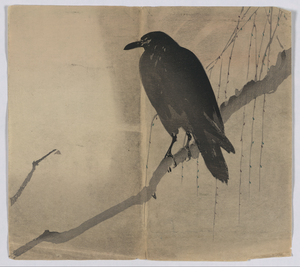
silent crow …
holding tight in
winter wind

Crow on a Willow Branch, Japanese woodprint, Library of Congress woodprint

Crow on a Willow Branch, Japanese woodprint,    Library of Congress

Winter Moon Haiku

full moon clairmont courier

Winter Moon Haiku

These haiku were first published PoetsOnline in response to a prompt for winter haiku. In the summer of 2011, I was contacted by the American composer, Paul Carey, who asked permission to use the haiku for a commissioned composition. These were used as lyrics for “Winter Moon” by Paul Carey, a piece for women’s chorus in 2011. The work was premiered on December 8, 2011 by the Clark College Women’s Choir (directed by April Duvic).

Sadly, I’ve never gotten to hear the musical piece since I’m on the east coast and Clark College is in Vancouver, Washington. It would be my dream to get a download of that performance, but enough time has passed that I believe that won’t happen. Still, it was a true honor to be asked to use my haiku in a composition.

I’ve decided to post these haiku today because yesterday was the first full moon of the new year, 2015. Often called the Wolf Moon or Old Moon, the full moon is always a magnicent display for us to observe. I have always felt I could write more freely and easily during a full moon, though I have no proof of that. It’s just a gut feeling of a single poet.  Because these were published as part of a composition, the haiku won’t appear in any journals, so I’d like to share them with the readers of this blog. Otherwise they lie dormant in my poetry folder along with so many of their friends.

I offer good wishes to each of you for the new year. 

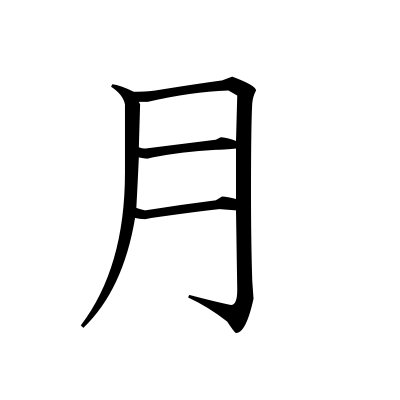
tsuki-moon


night snow

boughs dreaming

of first blossoms

Winter

Fog filled woods~

even the winter moon

has lost its way

WOLF_MOON_CANU-2015JAN05_022145_923.jpg

a winter walk

footprints

tell no tales

Full Moon


the blue moon

silently closes the door

upon the year

End


Four Late October Small Poems

Weaving Light 6 (c) 2012 by Karen McRae

Weaving Light 6 (c) 2012 by Karen McRae

1:

dusk winds weave
seed pods in silken strings
spirits dancing

2:

morning’s breath
slips by so silently
a shiver of frost

3:

perhaps a portent
of what winter will bring
this woven white light

4:

just as a cloud forms
and suddenly dissipates
so a thought begins

Weaving Light 13 (c) 2012 by Karen McRae

Weaving Light 13 (c) 2012 by Karen McRae

These beautiful photographs of Goat’s-beard seed heads are by the very talented Karen McRae. They appear on her blog: The Frayed Edges of Waking August 12, 2012 by Karen McRae) http://drawandshoot.me/2012/08/12/the-frayed-edges-of-waking/

Many thanks, Karen, for allowing me to use your breathtaking photos that inspired these four small poems.      

                                               ~ Mary ~

Weaving Light 11 (c) 2012 by Karen McRae

Weaving Light 11 (c) 2012 by Karen McRae

Four Autumn Haiku


Today is the first day of autumn, and for my writing practice in the next few weeks I’ll begin a series of autumn or fall poems. This is my favorite season, my soul season. I’ve done a few different types of haiku ranging from traditional 17 syllables to a poem in a single line. Do you have a favorite?

1.

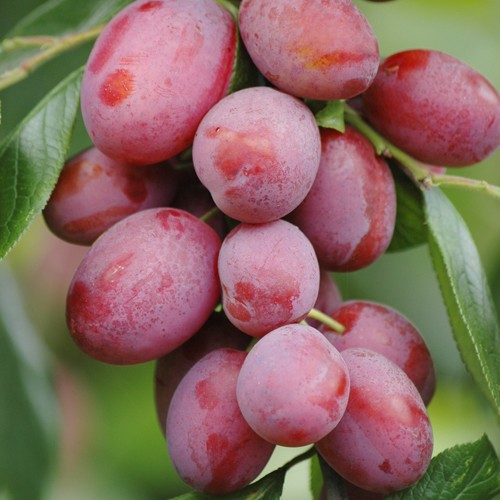
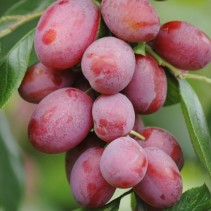
biting into a Victoria plum, such guilty pleasure
253871

2.

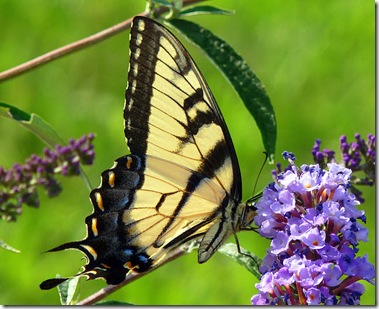
spent blossoms–
the last swallowtail
sips alone
best swallowtail pic

3.

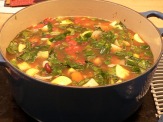
soup 1

the season’s first soup
almost ritually cooked
stirs our senses

4.

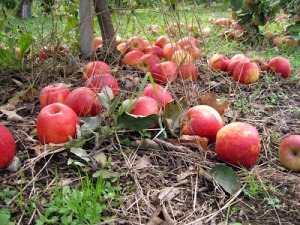
sweet windfall apples…
bruised memories
autumn of long ago
fallen apples

Modern English language haiku are not always seventeen syllables. A haiku can be many things, but always it is a brief poem with a strong image that evokes a season and a moment of time captured simply in lyrical language. Scroll to the bottom of today’s blog to find a list of essential qualities of haiku.

The following list from the wonderful journal, Heron’s Nest, lists important qualities that make a haiku.

 Here are some qualities we find essential to haiku:

  • Present moment magnified (immediacy of emotion)
  • Interpenetrating the source of inspiration (no space between observer and observed)
  • Simple, uncomplicated images
  • Common language
  • Finding the extraordinary in “ordinary” things
  • Implication through objective presentation, not explanation: appeal to intuition, not intellect
  • Human presence is fine if presented as an archetypical, harmonious part of nature (human nature should blend in with the rest of nature rather than dominate the forefront)
  • Humor is fine, if in keeping with “karumi” (lightness) – nothing overly clever, cynical, comic, or raucous
  • Musical sensitivity to language (effective use of rhythm and lyricism)
  • Feeling of a particular place within the cycle of seasons