Redlights, June 2018:
when you were six
I longed to keep you
that age forever
once upon a time
I knew you so well

Dedicated to my son, Adam.
.

Redlights, June 2018:
when you were six
I longed to keep you
that age forever
once upon a time
I knew you so well
Dedicated to my son, Adam.
.
Frogpond 2018 Volume 41 Number 2 (Haiku Society of America
the vastness
of a Condor’s Wings
Grand Canyon
Mary Kendall

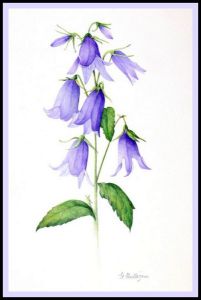
Campanula sp, Blue Bellflower. – Watercolour by Greta Mulligan (Australia)


This tanka art piece is the second in my Dream Time series of poems. To read the first poem in the series (on this blog), follow this link:
As you’ll notice the two poems are quite different in style and content, but I’ve grouped them together in Dream Time since both were written while poised on that slender edge of dreaming into another time and place.

A Special Word of Thanks:
A big thank you to my dear husband, Ritchie D. Kendall, who took this photograph on a hill in Greenwich in 2013 when we were living in London.
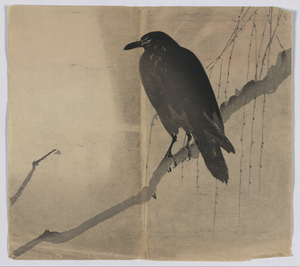
Crow on a Willow Branch, Japanese woodprint, Library of Congress woodprint

American Beech Trees, (c) Photograph by Jim Clark
It was a very exciting moment last week for me to open up the latest issue of Moonbathing, a journal of women’s tanka, and see one of my own tanka included. To be in the company of so many very talented tanka poets is a highlight of my year.
Published by poet and editor, Pamela A. Babusci, Moonbathing is a journal that showcases the many sides of tanka. The poems cover a wide variety of experiences, emotions and subjects…and all written by talented women poets.
Here is my tanka:
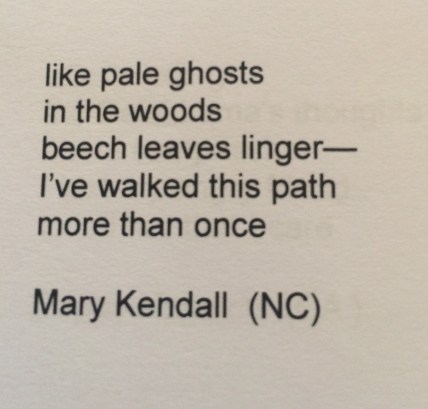

Moonbathing is edited and published by Pamela A. Babusci
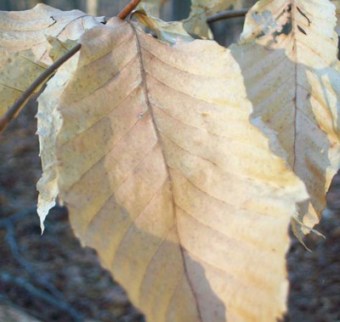
American Beech Leaves, (c) Photo by Walter Reeves
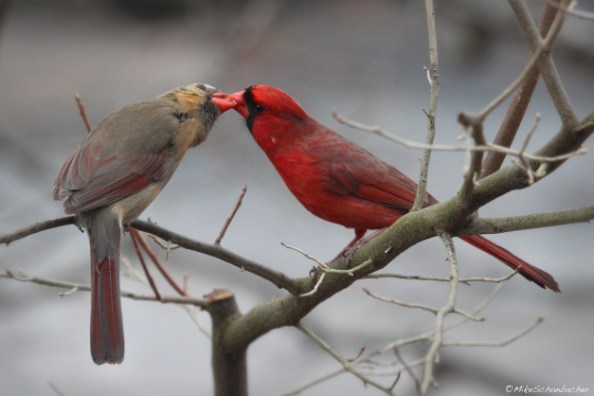
From the window
I watch the cardinal
shuck a sunflower seed,
and, beak to beak,
like a passionate kiss,
he passes it to her,
his paler partner.
I imagine then
that I see the gleam
in his lusty eye.

Note on Photograph: I can find no other attribution for this photograph other than it was taken in Woods Hole, Massachusetts in 2014. It has appeared in a number of online birding sites. My thanks to the anonymous (but talented) photographer for capturing this tender moment.
I’d like to share a tanka that is currently appearing in Ribbons, Tanka Cafe, Winter 2015

Junco, photo by Kathy Adams Clark
winter light
shadows linger low
behind us—
dark-eyed juncos
scurry past our feet

Juncos, photo by Brian Cunningham
This poem appeared in Ribbons, Tanka Cafe, Winter 2015
This is the publication of the American Tanka Society,

Haiga by Mary Kendall
This was written for a prompt on the spring equinox for a favorite small poem poetry group I belong to called “seize the poem.” I’m enjoying creating this mix of haiku and photography, and I think I finally got the words correctly balanced on the picture, so I’m sharing it here as well. The photo is my own taken in the sculpture garden of the Rodin Museum in Paris this month.
barely spring–
rowers churning water
silver slips away

Snowfall by Debbie Nemer Suggs
Swiftly falling snow
Our footprints disappear ~
Were we ever there?
I would like to thank my dear friend, Debbie Suggs, for the use of her beautiful snowfall photograph (c) 2015. Debbie and I wrote and published a book, A Giving Garden, in 2009. Her beautiful photographs have always inspired me.
Wild Water: Three Tanka
1.
throughout the long day
the wild water crashes
again and again—
memories of you silently
slip under water
2.
as evening comes
the tide begins to swell
in the empty sound,
one lone boat
longing to set sail
3.
foghorn rasping
deep and low—
a bleak song
of ships surrendering
to savage waves
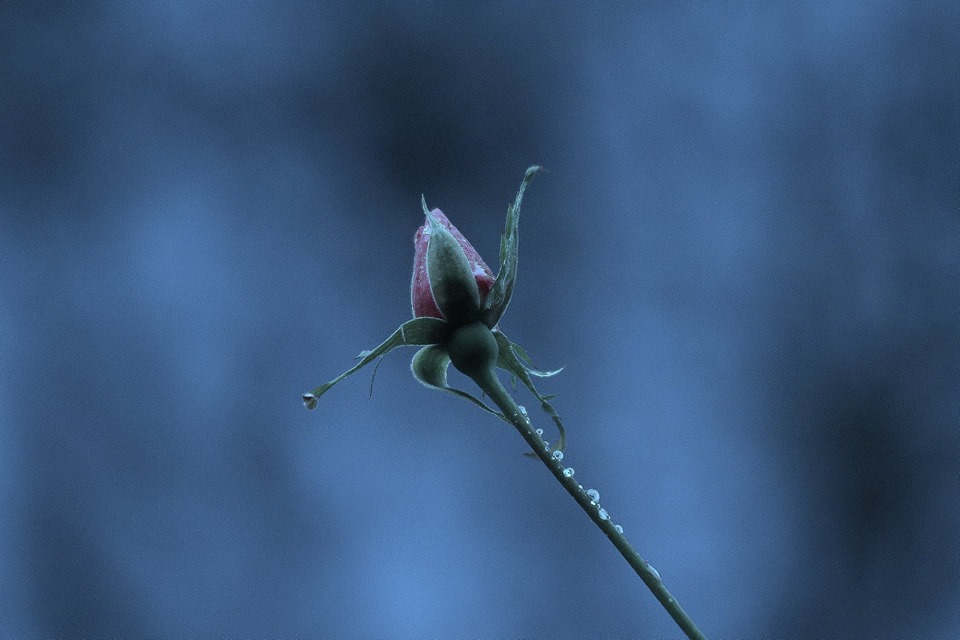
(Photograph © 2014 by Harald Illsinger)
Frosted rosebud
caught in the night,
Awakening to the fog
of a December dawn.
This sweet pale rosebud
delicately iced over,
Thin slick of frost
lightly brushed on
As if an angel chose
to paint, capturing
The morning’s canvas
where season changes
To season, autumn
turning into winter,
Short days giving in
to long nights of silence
As your fragile calyx
gives you up to the day.
 Many thanks to photographer Harald Illsinger for allowing me to use his beautiful photograph, ‘Frosty Morning,’ (c) 2014)

While visiting my brother and his wife this summer in East Aurora, New York, we experienced a truly wonderful and unexpected visit from three pileated woodpeckers at the suet feeder Jim had filled. His wife, Paulett, said the woodpeckers were frequent visitors to their lovely back garden. This was a first for me. Although I’ve been an on again, off again birdwatcher for most of my adult life, I’ve only seen one pileated woodpecker in person before. Seeing three at the same time was simply brilliant. Watching their acrobatics as they fed on the suet, flew back and forth to peck at a tree, and generally manoeuvered their rather large bodies in amazinglying agile ways was pure delight. After a feeding frenzy, they flew away and it felt amazingly still and empty where they had been. Much like a visit with beloved family and friends, the ‘after’ part comes all too soon and leaves a void in our hearts. This poem is dedicated to Jim and Paulett, two of the kindest and most caring people I know. Thank you for sharing your home, your family and your amazing woodpeckers with us.

Dining with the Woodpeckers
In the late August garden
The quiet afternoon now
Comes to a languorous close.
Out of nowhere, a flash of red,
Bright scarlet crests crowning
Zebra-patterned feathers.
Three Pileated woodpeckers
Begin to feast at the suet feeder,
Fluttering, flying tree to tree,
Tree to feeder, alternately
Pecking at thick maple bark,
Then shifting to soft silky suet.
The youngest, now the size of its parents,
Joins in to grab his share, and father
And mother dutifully give way.
For a few Cirque des Oiseaux moments
All three woodpeckers hang right side up
And upside down, their brilliant red heads
Flash like stop lights in the early evening sun.
We sit around the table eating an early supper
And sipping local wine. Conversation drifts
As we watch in these avian acrobatics.
Just as quickly as they arrived, so soon are
They are gone. More wine is poured,
Seconds of hot buttered corn and fresh
Heirloom garden tomatoes are passed
From one to the other. Like the birds,
We share this meal together, enjoying
The richness of what the day has given.
A light wind blows the leaves outside,
A beautiful evening for us to be together
Knowing that summer will end all too soon.

Picture by Beth Brandkamp
Yes, this is the second time you’ve seen this picture in my blog. It was posted with a poem, Daybreak, in late August and now it reappears to accompany a second poem it also inspired, Daybreak II. A single picture on paper, on the screen or in the memory has a powerful, persuasive control of our imagination. This beautiful photo by my friend and photographer, Yolanda Litton, has done just that.

Early Morning at Bagnegrole (Photograph by Yolanda Litton)
I’ve included an audio clip of me reading the poem. Click on the link below and wait a few seconds.
Daybreak (2)
Waking up in at daybreak in the south of France
Is as if I were stepping into someone else’s life.
So far from my own home, this wistful morning fog
Rises slowly to reveal a house of soft honeyed stone.
The slope of a sharply pitched roof holds a tall chimney
Where the swifts are now resting after a long evening hunt.
Somewhere a rooster crows with the energy that only
The young can bring to a new day. Out of nowhere,
A soft gray cat tip-toes by, looks up at me and blinks
Its eyes in that inscrutable feline way and disappears.
I stand here leaning on the windowsill, wondering
What my life would be like had I been born here.
The smell of freshly brewed coffee wafts up from
The kitchen below. One lone church bell rings
Calling its faithful to prayer. But nature’s beauty
Is my religion, my serenity, my salvation, my Eden.
Today is the first day of autumn, and for my writing practice in the next few weeks I’ll begin a series of autumn or fall poems. This is my favorite season, my soul season. I’ve done a few different types of haiku ranging from traditional 17 syllables to a poem in a single line. Do you have a favorite?
1.
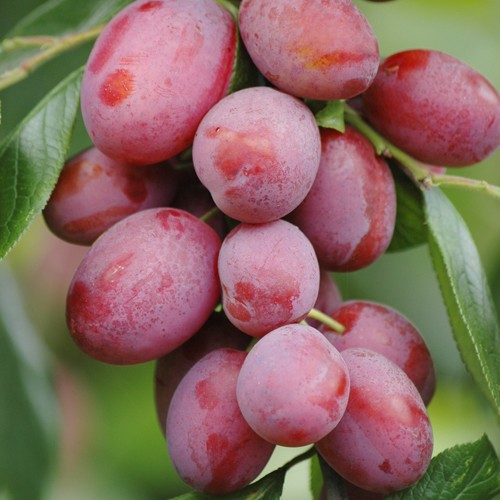
biting into a Victoria plum, such guilty pleasure
2.
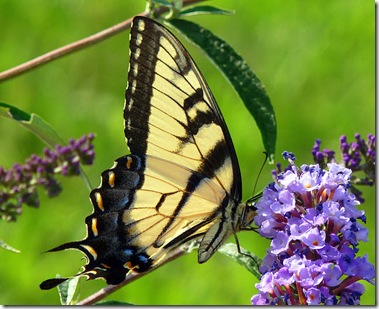
spent blossoms–
the last swallowtail
sips alone
3.

the season’s first soup
almost ritually cooked
stirs our senses
4.
sweet windfall apples…
bruised memories
autumn of long ago

Modern English language haiku are not always seventeen syllables. A haiku can be many things, but always it is a brief poem with a strong image that evokes a season and a moment of time captured simply in lyrical language. Scroll to the bottom of today’s blog to find a list of essential qualities of haiku.
The following list from the wonderful journal, Heron’s Nest, lists important qualities that make a haiku.
Here are some qualities we find essential to haiku:
The First Coyote
Shadowed by trees, it was alert,
Watching those on the porch.
Tall, thin, a knife sharp gaze,
This coyote knew its way around.
The startled man cradled the cat
And called the nervous dogs back
Inside the house, far away from
This lurker in the evening woods.
Was it waiting for a squirrel or
Rabbit? You couldn’t tell this far
Away, yet clearly it was patient
And after tonight’s dinner.
How else could it survive
If not for foraging here and
There, waiting for a quick
Capture, meat for a day or two.
This was the first coyote seen
In the neighborhood, and now
I open the window late at night
To listen to it sing to the moon.
A friend and former teaching colleague of mine, Patti Hardee Donnelly, is a superb photographer whose work I’ve long admired. A small offshoot of her photography has been her finding small HEARTS in many forms in nature and in life. I am often surprised, frequently amused, and always delighted by what Patti comes across in her daily life. This summer she posted this beautiful picture of an old tree stump she came across very early one morning on her daily run. I was mesmerized by the beauty of it, the color and texture and most of all by the image I saw within the heart. I know that if I had been walking that path that morning, I would have totally missed this beautiful creation of nature.
Thank you, Patti, for your amazing photo and talent. It immediately inspired me to write this poem, which is dedicated to you.
I’ve recorded an audio of me reading this poem. To hear it, simply click on the link below. It will take a few seconds before it begins.
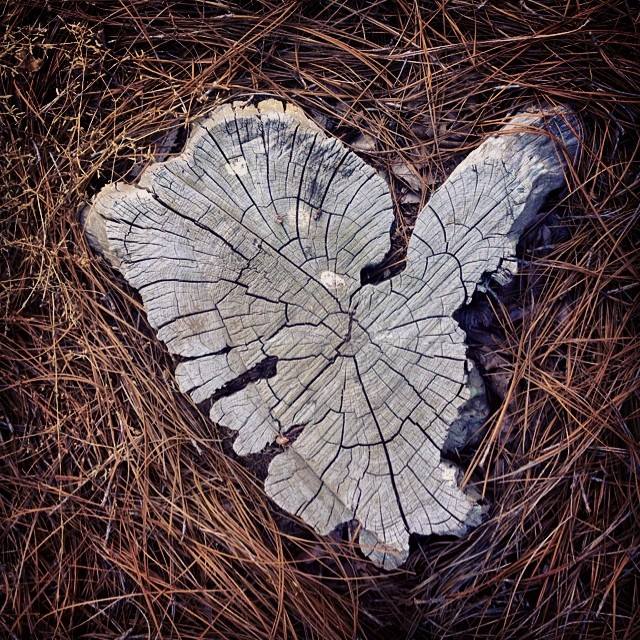
Heartwood (photo by Patti Hardee Donnelly © 2014)
Heartwood
~for Patti Hardee Donnelly
This heartwood is no more
Than a bit of grey crackling,
More a silvered wood fungus
Than what was once the lifeline
Of a tree, an umbilical hotline
From the sun to the leaves
Down to roots fastened in earth.
Now this aging heart of wood
Reveals elegant scalloped wings,
An angel dancing, a floor
Made of rough pine straw
Softening her delicate steps.
In the silence of morning,
I glimpsed an angel,
But you found her heart.


