I don’t enter many poetry contests, but I do love to see what entries win or place in contests/competitions I enjoy and admire. There is always so much to learn from other writers, of course, and it is always an inspiration to see what others produce.
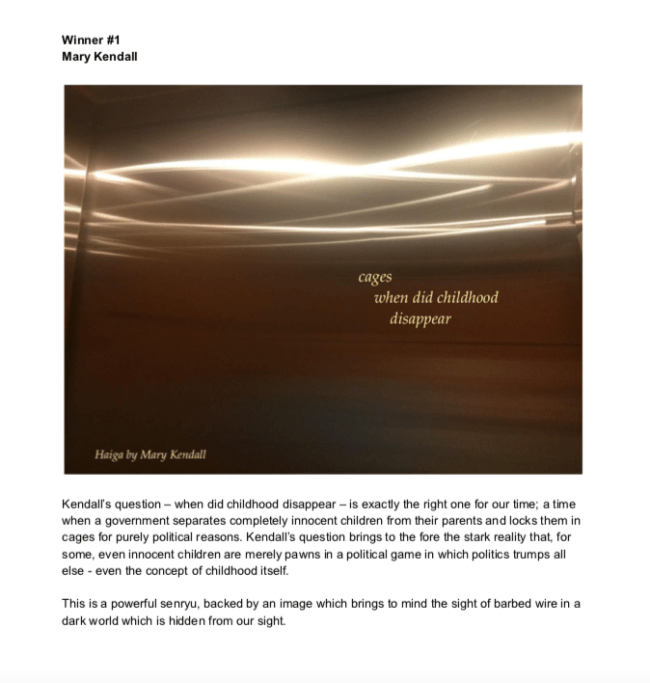
One competition I really wanted to enter was the Fourth Annual Jane Reichhold Memorial HaigaCompetition, which is co-hosted by Failed Haiku and Prune Juice, two of the very finest Senryu journals around. It is divided into two groups: the Traditional (i.e., with original drawn art) Category (judged by Ron C. Moss) and the Photographic/Mixed Media Category (judged by Steve Hodge). My two entries were in the second category using photographs I had taken. One was left untouched and the other was embellished by some art programs I enjoy using on my iPad.
Imagine my surprise when I found out one of my entries won First Place in the Photographic/Mixed Media Category and the other one got an Honorable Mention! Yes, I was over the moon. It’s a double honor indeed. All the other entries selected in both categories were wonderful. I really can’t imagine how an editor selects one over another, but they do. My thanks to editor, Steve Hodge for selecting both of my haiga in this competition. I am deeply honored. Thanks also to Mike Rehling and Brent Goodman who edit Failed Haiku and Prune Juice.
I’ve included the comments of the editor because it’s always great to hear someone else’s interpretation and response to a poem.
Prune Juice, A Journal of Senryu, Kyoka, Haibun and Haiga, Issue 26 – November 2018
~
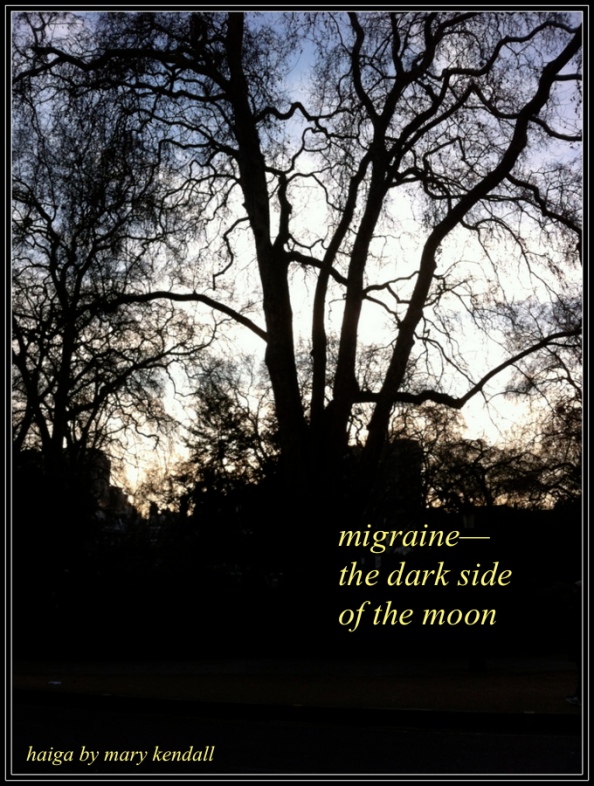
photography by Mary Kendall Highgate Cemetery, London
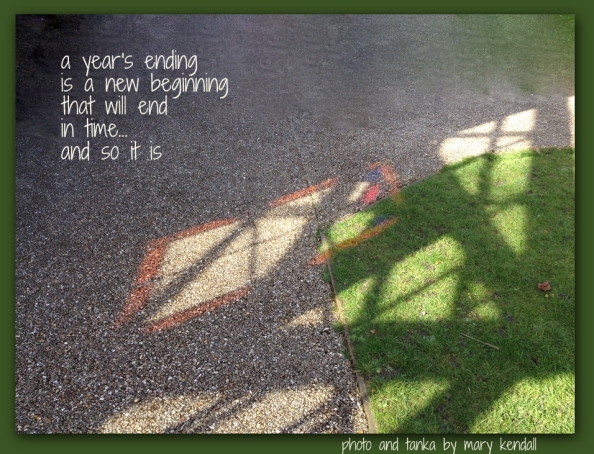
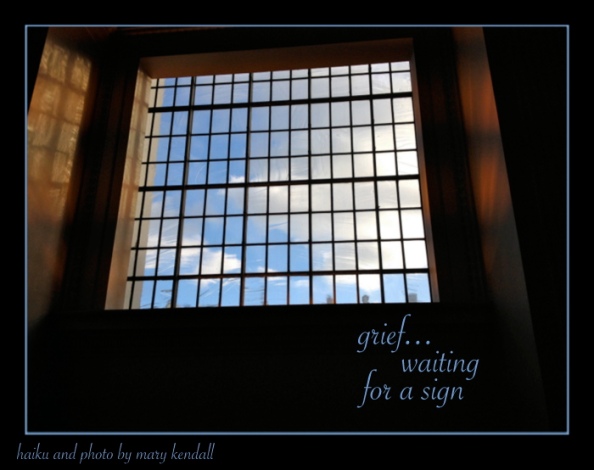
Photograph by Mary Kendall, Blackwood Farm, Hillsborough, North Carolina
~
My deepest thanks to Steve Hodge, editor. This was his last issue as editor of Prune Juice. It has been a joy and a wonderful learning experience working with Steve as an editor.
Cover art by Chase Gagnon (c) 2018
Here is the link to the full issue of this amazing journal. It includes the amazing prize winners of the Jane Reichhold Memorial Haiga Competition for 2018 (edited by Steve Hodge and Michael Rehling), pdf: pj-26-rev
Note: This tanka was written in 2015, and, to my surprise, Kathabela Wilson remembered it. She invited me to share it for her lovely column on Precious Children. What a lovely honor.
(I later created a piece of Tankart using a much different version of this tanka. It is on my blog.)
Published in Prune Juice, Journal of Senryu, Kyoka, Haibun & Haiga, Issue, 24, Spring 2018
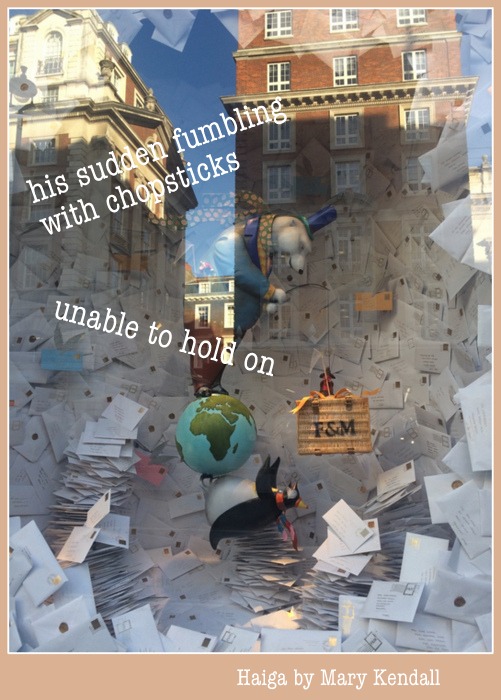
Note on the art work for this haiga:When we lived in London in 2017, I was enjoying the beautiful Christmas windows at Fortnum and Mason. You can see what is obviously a part of a window display in this haiga but superimposed on it is a reflection of the buildings that were on the opposite side of the street. It was pure luck (since I’m not much of a photographer and usually only use my iPhone) that the sun was right and I caught this interesting juxtaposition. Obviously it was perfect for pairing with a verse and this senryu seemed to fit the bill.
Last year I posted a request in a Face Book haiku/tanka writing group asking if anyone had a photo of Lily of the Valley that they were willing to share and allow me to use for a piece of tankart I was working on. A very quick response from the poet/photographer Maya Lyubenova gave me the perfect picture. I never really knew Maya. We’d never met, and we chatted only a few times on FaceBook in poetry groups and on Face Book Messenger. I was certainly a real fan of hers. Bulgarian by birth, Maya could compose gorgeous haiku in English. She could also pair her poems with her equally exquisite photographs to create haiga — visual poetry of the highest quality. I was touched by her generosity in allowing me to use the photo she had sent.
Only recently did I learn that Maya Lyubenova had passed away on December 30, 2016. Like so many, I mourn her loss as a person and as a poet and artist. I wish I had known her better, but I cannot change that. Her work still remains for us to look at, to study, to learn from and to be dazzled by … that will not end.
I’d like to dedicate my piece of tankart to Maya Lyubenova — our single connected piece of art. Thank you, Maya, for bringing so much beauty into this world. May you rest in peace.
Published in Gnarled Oak, Issue 10: Dark Water, November 2016:
My deepest thanks goes to Mike Keville, poet, photographer and friend, who so willingly allowed me to use this photograph for this piece. His pictures are often so revealing, allowing viewers to see something we might otherwise miss.
When it rains, it pours, or so the saying goes. This month I feel so fortunate to have so many things included in two of my favorite senryu journals, Failed Haiku and Prune Juice.
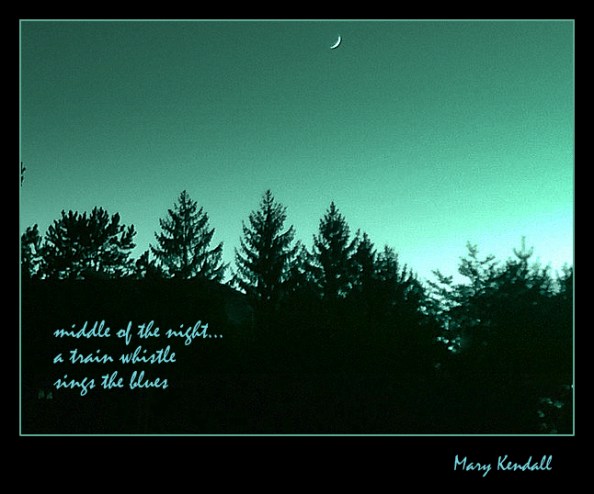
This haiga was published in Failed Haiku: A Journal of English Senryu, Volume 1, Issue 11, November 2016. My thanks to Michael Rehling, editor of this fine journal.
I took this photo in Regent’s Park, London, England, in 2015.
It’s an honor to have this haiga published in Prune Juice: A Journal of Senryu, Kyoka, Haibun and Haiga, Issue 20, November 16. My thanks to editor, Steve Hodge.
This photo was taken by me in a small cafe in Edinborough, Scotland in March, 2013.
And now my last tanka to appear in Frameless Sky 4 (Summer 2016), edited by Christine L. Villa. The beautiful photograph paired with this poem is byIrena Iris Szewczyk
To hear me read this tanka, simply click on the link below:
Notes:
My warmest thanks to Chrissi, for publishing this and my other pieces in Frameless Sky 4 and to Irena, for creating such a lovely picture and allowing my tanka to join it.
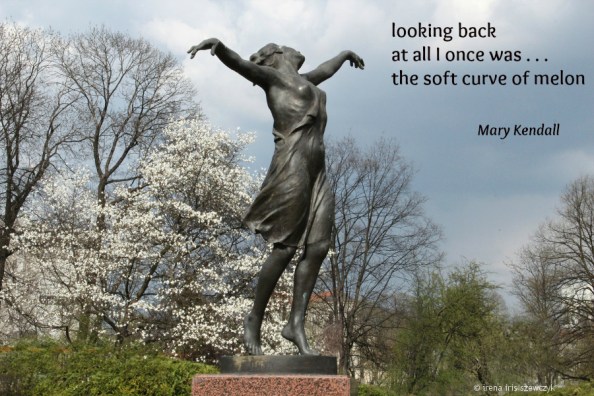
Another pairing of a tanka of mine with a stunning photography by Irena Iris Szewczyk that waspublished in Frameless Sky 4 (Summer 2016). I am amazed at how perfectly they matched…a big thank you to Christine L. Villa, editor of Frameless Skyfor her excellent work and to Irena Iris Szewczyk for her beautiful photograph.
In Frameless Sky 4, editor Christine L. Villa paired my haiku/senryu with a another lovely photograph of Irena Iris Szewczyk. My thanks go to IrenaIris Szewczyk and to Christine L. Villa, editor of Frameless Sky.
Words by Mary Kendall
Photograph by Irena Iris Szewczyk Frameless Sky 4, Summer 2016
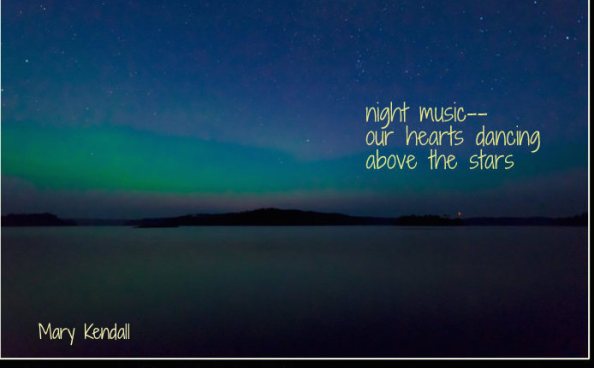
In Frameless Sky 4, my tanka was set to this beautiful photograph of Irena Iris Szewczyk. My warmest thanks to IrenaIris Szewczyk and to Christine L. Villa, editor of Frameless Sky. I will be posting others from this fine video publication in the next week.
A link to me reading this tanka is given below:
A Few Extra Notes:
Irena Iris Szewczyk is both a distinguished photographer and haiku poet.Irina blogs at Iris Haiku where she posts her photographs and her haiku: http://iris-haiku.blogspot.com
Her artwork for Frameless Sky 4 can be seen here: http://framelesssky.weebly.com/artwork.html
Christine L. Villa is editor of Frameless Sky.She is a distinguished poet herself. Her blog is called Blossom Rain and is located here: http://blossomrain.blogspot.com
Frameless Sky can be found here: http://framelesssky.weebly.com
The Ekphrastic Review: writing and art on art and writing, has published my poem, “Sunday Morning.”
Let me give you a brief “back story” on this poem. Many years ago, I stopped writing completely for around twenty-five years. Total silence in my life. I don’t know why it happened, but it did. After what can only be be termed a spiritual experience on a trip to the Fijordland in New Zealand, poetry somehow magically entered my life again. I can’t explain this. It just happened, and I know it happened for a reason. This poem was the first complete poem I wrote when my poetic “voice” returned, and it’s only been read by one other person until today. It’s taken me about fifteen years to gather courage to submit it anywhere. My deepest thanks to editor, Lorette C. Luzajic, for publishing this piece.
Here is the link to the journal: http://www.ekphrastic.net/ekphrastic/april-21st-2016
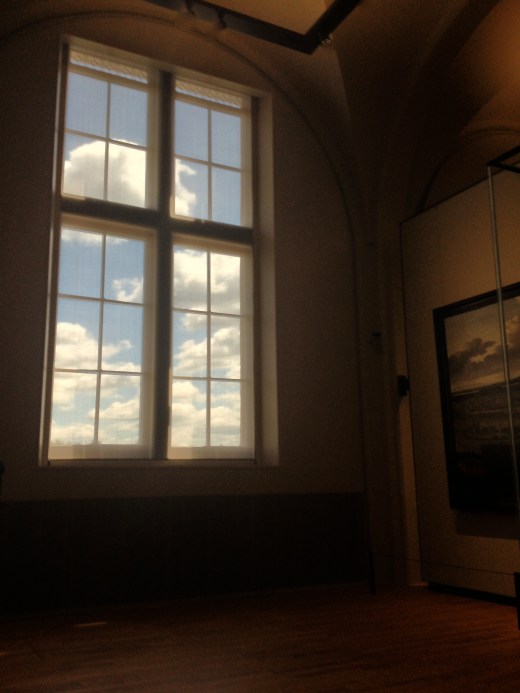
Rijksmuseum, Out the Window (c) 2013 Mary Kendall
Sunday Morning
Hymns unsung, prayers unsaid,
I sat by the window and prayed
for forgiveness one more time;
one more time I begged.
Holding the cup of coffee in my hand,
I hoped the warmth would fill me
where your words had left me cold,
but I knew nothing could do that—
fire can burn for hours and be unfelt.
Hymns unsung, prayers unsaid,
I lay down on the empty bed, pulling
the blanket across my cheek, turning
from the window, from the sky
and the sun, praying for some rest.
Note: The window in the photo is not, of course, the window of the poem. I love taking pictures of windows when I travel, especially indside looking out. This photo was taken in June 2013 when my husband and I were in Amsterdam, visiting the beautiful Rijksmuseum.
This photo haiga was created by me as a response to a prompt: ZENITH. This is one day in NaHaiWriMo (National Haiku Writing Month) on Facebook during the month of February.
As you’ll notice the two poems are quite different in style and content, but I’ve grouped them together in Dream Time since both were written while poised on that slender edge of dreaming into another time and place.
A Special Word of Thanks:
A big thank you to my dear husband, Ritchie D. Kendall, who took this photograph on a hill in Greenwich in 2013 when we were living in London.
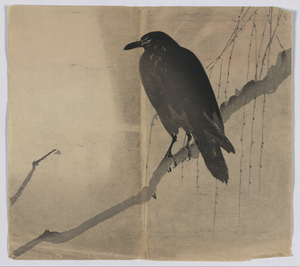
Crow on a Willow Branch, Japanese woodprint, Library of Congress woodprint
New Note as of March 11, 2016: This poem has just been published on a favorite online journal called Ekphrastic: Writing and Art on Art and Writing. A link to the journal: http://www.ekphrastic.net/ekphrastic/beauty-in-broken-pieces-by-mary-kendall
~ ~ ~
Readers of this blog don’t always notice its subtitle: One Poet’s Practice. I like to practice. I like to experiment. All poets do. Without stretching the mind, you fall into the pattern of repetition. Each poem starts sounding like the last or the next.
I have been writing a lot in short form poetry–haiku, haiga, tanka, and other small poems. Today, in an effort to go in a completely different direction, I offer you a very long, rambling poem–quite unlike me, I know. It is called “Beauty in Broken Pieces,” inspired by a lovely photograph taken in Dublin, Ireland by India Leigh Lassiter, herself a talented writer as well as photographer. Thank you, India, for allowing me to use your picture as a starting point for this poem.
To hear me read this poem, please click on the link below (give it a minute to load):
Blue Spiral, Dublin, Ireland (c) 2015 photograph by India Leigh Lassiter
Beauty in Broken Pieces…
Perhaps it was once a deep blue vase,
holding seven pale pink peonies
freshly cut one May morning…
the silence shattered
suddenly when
she lost her balance,
grabbed
the oval table
and together
crashed down,
one in splintered pieces,
the other dazed
watching the water
slowly spread
under the petals.
Or perhaps…
it was packed away in a doctor’s study,
an old cabinet filled with bottles…
cobalt blue bottles with faded labels,
the dark blue hinting of hidden secrets,
dangers that lay in long-dried residue
of those bottles that were shattered
and thrown upon a fire
that raged for hours,
flaring up in vivid hues
of acid green
and mustard yellow,
tipped with amber,
azure and moon,
the air once heavy
with poison
and dreams.
Or…maybe
there was no story.
Do you believe the whole really is bigger
than the sum of its parts?
And please, don’t let’s forget
there is always
perspective.
Large things are large,
but small things
are also large
if seen
close
up.
It is lovely, this small mosaic
made of glass in shades of blue,
blue so dark,
it might still hold the sound
of the ocean from the sand
that washed up and back
over and over
dancing on the ocean floor
before it became
the glass
we see…
for what is glass
but sand
and fire,
beach
and
star?
even
a simple
spiral
mosaic
in shades
of blue, pearl and silver
might hold the deep bass song
of the darkling ocean,
the glimmering
whispers
of clouds
above,
patterns spiraling through nature
like our thoughts about beauty,
reality or memory’s truth
Fibonacci gave it his name,
the Greeks gave it meaning
with their golden ratio…
it exists everywhere
… a simple nautilus shell,
the sunflower’s seed head
that turns to the sun,
and following its cue, the pinecone,
the hurricane, even the galaxy, the cosmos
and here with this Irish glass spiral
we come full circle of woman
with camera, snapping
a photo, capturing
the balance of
silvery bits
and pearl
to blue
done
just
so
.
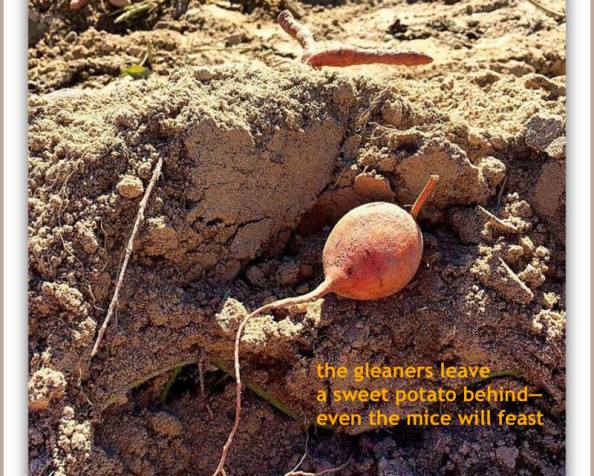
This beautiful photo was taken by a friend, Patti Hardee Donnelly. Patti is a Middle School Language Arts Teacher at the same school I retired from. Each grade level does regular community service, and the activities are varied. Last month, Patti took her Middle School Advisory to spend an afternoon of gleaning sweet potato fields. As they were working through the fields, Patti took this photograph. She very kindly let me ‘borrow’ it for this haiga.
The concept of gleaning is an ancient one. So long as people have planted fields of crops, others have followed in their wake to glean whatever food might be left behind. It doesn’t matter if the vegetables are picture perfect, so much as they provide food for those who are without. Taking a group of middle class students who are in no danger of starving is a very purposeful way of both doing community service and providing a life lesson to the students. The gleaned sweet potatoes do end up on dinner tables of people who are happy to have healthy, fresh produce. The students who do the gleaning, perhaps for the first and last time of their lives, surely learn a lot about the facts of poverty and hunger. They learn a lesson in simple compassion. How often do most of us come face to face with the pain of hunger? The answer for the majority of Americans is ‘rarely.’
Here in the United States, we have just celebrated Thanksgiving, a time in which we feast and share our meal with those we love. Soon our thoughts will move on to Christmas, Hannukah, Kwanza, winter solstice, New Year’s and a whole period of seasonal gift giving, sharing food and good spirit. Let’s stop for just a minute and think about all we are fortunate to have–we who go to bed in a comfortable place after having had adequate meals. For December, I’m going to spend some time thinking about the concept of gleaning, both the physical and metaphorical. Having borrowed Patti’s beautiful photo and ‘gleaned’ it for my haiga, I hope I can find other ways to give back to the world.
Thank you, Patti Hardee Donnelly, for allowing me to use this picture, but thank you also for teaching your students about the importance of compassion and service to others. I will always celebrate and salute teachers like you who make a real difference in so many lives.
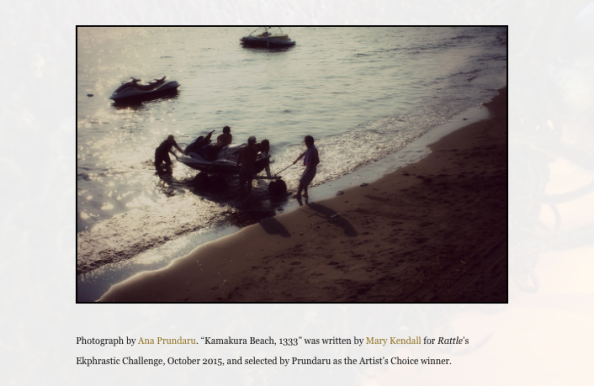
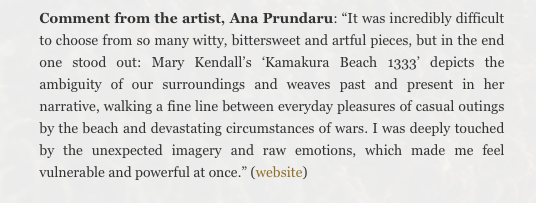
I am both speechless and honored by the selection of my poem, “Kamakura Beach, 1333” as the artist’s choice of the October ekphrastic challenge by Rattle, one of the finest contemporary poetry journals. The artist/photographer is Ana Prundaru. My thanks go to Ana for selecting my poem for this challenge. I am deeply touched by her very thoughtful and generous comments.
To read the poem or listen to the audio on Rattle, here is the link:
Note: there is an audio of me reading the poem on the Rattle page but I’ll include it here as well:
~
Kamakura Beach, 1333
The sea washed scarlet that night.
The tide rushed in—swelling and breaking—washing all traces out to sea on the waves of Kamakura Beach.
You know nothing of this, you who long for adventure and pleasure—youth who search desperately for meaning in lives that are too rich, too busy, and still so poor.
Your small boats arrive in early evening, the carmine sunset at your back, and you quickly gather driftwood, tinder, and fallen black pine branches to burn. You light the fire.
A trail of smoke begins funneling up to the starry sky. The fire burns hot and one by one, you feed it twigs, boughs, pine cones bursting into streams of sparks and wild flames.
And in your wanton rambling, one girl grows silent—she alone hears the hallowed chanting, the cries of battle, the shrieks of arrows piercing skulls, the stench of life exiting too abruptly.
She wanders over shallow rocks, her hand touching stone, knowing the pain hidden in the silence of eight hundred years. The rest of you are unaware…you laugh too loudly, move
too fast, not noticing the shifting colors of the setting sun. Listen and you will hear the shogun cries of warriors and farmers that once shook the sacred sands of Kamakura Beach.
Can you smell the fierce fires, the burning buildings, the blazing rafters crashing and lighting the darkening sky? Can you hear the screams of those buried here long ago?
Time slipped by like swifts at dusk darting in the fading sky. The fire raged on and on, and lives were ravished in a single breath. It was our fate to die on Kamakura Beach.
With Samurai mind and clean, sharp blows, the sacred sword was swift. One by one, we died…each of us choosing honor, this bleak beach now strewn with bones, bodies and blood.
You who come to visit—feel the cool churning lapis blue water, and see the late sun boldly brush red on sand, water and waves. Remember us—we who lie buried on Kamakura Beach.
Let your fires roar, let them spark in comets to the stars. Under the dark night skies long written in indigo and ink, we will walk together here on Kamakura Beach.
Morning tide will come—swelling and breaking—washing your presence out to sea— remembering our final night, a night of fire and blood, bone and bodies on Kamakura Beach.
Rattle also posted a download of a broadside that includes poem and picture side by side. It is so beautifully done with the shadows of the boat creating a subtle image under the poem. Very appropriate to this particular poem, I think.
Today, my favorite haiga was published in a favorite journal, Gnarled Oak. It is a lovely home for this haiga. Here it is along with the link to Gnarled Oak (check out all the great poetry in this journal). The editor, James Brush, releases one poem a day, a custom I love. It’s always a joy to see what each day holds. My thanks goes to James for accepting this piece.
The theme of old, worn wood (see June Haiku 1) continues in this poem. Amazing how beautiful things retain their magic despite age.
My thanks to photographer, Mike Keville, for allowing me to use his gorgeous boat photograph for this haiku. The textures and colours of this photo inspire many poems.
In the past five months I have been studying my much beloved tanka, haiku and small poems in order to become a better writer. Writers–and poets–need to keep growing as they go. As part of my interest in these lovely small poem forms, I have joined a number of exception online groups of poets who post their own writing. On several of the sites, “prompts” are given and sometimes a picture is given. People respond as they wish or not. Often comments are given. I can’t tell you what a thrill it is to get a “like” or even a comment by one of these poets who are so gifted and accomplished tanka and/or haiku poets, but even without the ‘likes,’ it feels wonderful to be a little more confident about sharing poems publicly. This morning, I’m posting several tanka I wrote this week to specific prompts.
I’m so excited to have a poem of mine included in the “Where I Live Poetry and Photography Series’ by Silver Birch Press. They have published two other poems of mine in other series, and It is always an honor to be included among their marvelous poetry selections. Thank you, Silver Birch Press!
.
Wherever you live, no matter where you might be, nighttime in summer reveals a very different world of sound. During the day we hear birds, breezes, people, mowers, airplanes, cars or sometimes just bees and hummingbird wings. At night, however, we must totally rely on our hearing to grasp all the different sounds that play out in the night chorus. Here in the south, in North Carolina where I live, summer nights are especially noisy. From frogs and owls to whipoorwills and katydids, there are times when it is absolutely deafening. I wish I had the expertise to identify all the different frogs our small garden pond must be home to. There is one frog that sounds much like what I imagine an alien creature would be like—high-pitched, very shrill and almost dizzying in its persistent song. It’s irritating enough to go inside.
.
Then there are the “call and response” night singers. I love those most of all. I can sit a long while listening to them. Occasionally I hear an owl, but lately it seems there are fewer around. I remember when we regularly had barred owls nesting in our woodland garden. Catching sight of one was always impressive, but hearing one in the middle of the night was truly haunting. I love to sit outside in our screened-in porch when it is dark. The dog often comes and sits with me listening and keeping me company. She makes no sound herself, knowing that we are the polite and attentive audience to this vast chorus of night.
.
Here is an audio recording of me reading this poem. Just click on the link below, wait a few seconds, and it will begin.
An audio of me reading this prose poem can be heard by clicking the link below. It will take a few seconds for the sound to begin.
It was the year we lived in London, some 25 years ago, when autumn began like any other autumn. The fall, the changing, the color shifting, the soft breezes, the sporadic thick fog and the leaves dancing, even floating upward at times. What I hadn’t anticipated, being so far north for the first time, was how short the days grew. How dark it became earlier and earlier all during that autumn. The days were ‘closing in.’ That’s what they called it, and I loved that phrase. It brought a certain comfort of pulling heavy curtains closed and shutting out the darkness. It was a time for wearing coats and warm sweaters, and I dressed my son in practical English clothing and soft grey mittens while he ran ahead enjoying what was left of the day. He was only three, but he knew the delight in using what was left of the day’s sunlight. I learned to enjoy the simple pleasures around me that came with this quiet season. Victoria plums were my new delight. They appeared at the Greengrocer’s shop just as autumn set in, later replaced by apples—Bramley and Cox’s Orange Pippins, names that twirled on the tongue and tasted as good. Burning leaves were an unexpected, half-loved sensory pleasure. The smoke was pungent, but it brought back memories of childhood. I loved even the rasp of raking, bamboo or metal combs gathering leaves in sacred piles waiting their turn to be sacrificed in an autumnal pyre. In the English light, I found the colors were softer, quieter than the brilliance of New England woodlands. Each morning I left my son at school and then walked through Hampstead Heath. I found my own favorite route through woods and meadows up to the large ponds. Purchasing a single cup of tea that warmed my hands, I made my way to that empty bench that faced the pond. I thought about all the people it had held before. And every day without fail a lone Scottish piper played his bagpipes as if on cue. Each day I sat and listened. A world so far from my own. From where he stood near the peak of Parliament Hill, the mournful songs became a wordless chanting, charging the air with a lamentation to this closing season, every day briefer, softer than the day before.
Lost in Reverie (c) 2014 by Iosatel, The Obvious and Hidden blog on WordPress (with his permission)
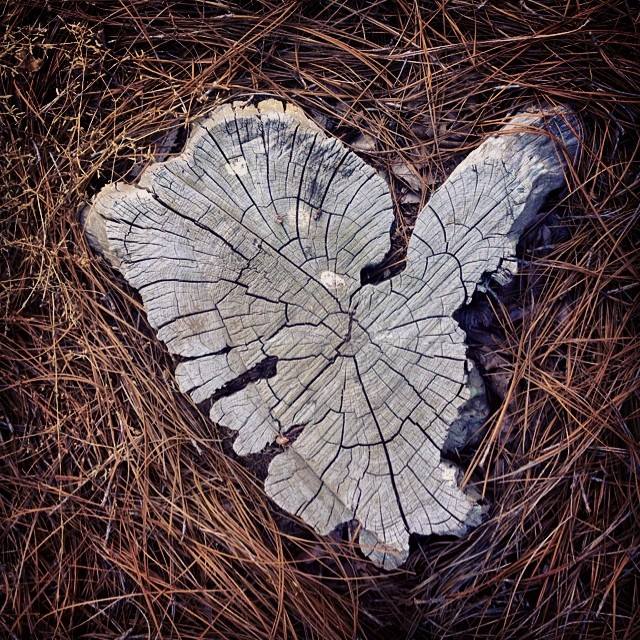
A friend and former teaching colleague of mine, Patti Hardee Donnelly, is a superb photographer whose work I’ve long admired. A small offshoot of her photography has been her finding small HEARTS in many forms in nature and in life. I am often surprised, frequently amused, and always delighted by what Patti comes across in her daily life. This summer she posted this beautiful picture of an old tree stump she came across very early one morning on her daily run. I was mesmerized by the beauty of it, the color and texture and most of all by the image I saw within the heart. I know that if I had been walking that path that morning, I would have totally missed this beautiful creation of nature.
Thank you, Patti, for your amazing photo and talent. It immediately inspired me to write this poem, which is dedicated to you.
I’ve recorded an audio of me reading this poem. To hear it, simply click on the link below. It will take a few seconds before it begins.



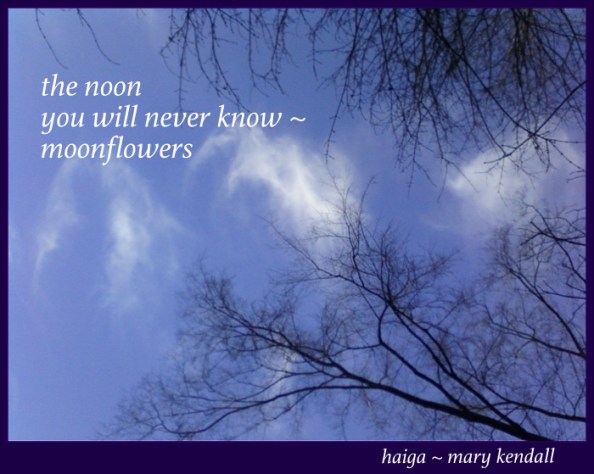


 This haiga was published in Wild Plum, a haiku journal, 2:2 Fall & Winter 2016.