Love Poems: After Forty Years (more tanka this week and a haiga, too)

In my last posting, I mentioned that this was a week of poems being published. Last time it was two tanka in Ribbons, this time it is two other tanka…and one haiga in a very beautiful and favorite journal of mine: hedgerow: a journal of small poems. Editor Caroline Skanne produces this publication weekly (it goes out on Friday afternoon, a highlight of the week for so many of us). This issue is #55. I’ll provide a link to the journal at the end of this posting so you can go and read all the other wonderful poems and visit mine. I’m so proud to be included with so many excellent poets.

My two tanka here are love poems. My husband and I were married in 1978, but we’ve been together for forty years. Where does the time go?

After Forty Years

you take my hand
when we walk together…
the last leaves
nearly
gone

.

a single glance
from your grey eyes
shifts
my world—
the earthquake of you

.

The haiga published in hedgerow #55 originally appeared in this blog. I am thrilled to have it officially published in an edited journal of this caliber.  Here it is.

Meditation Haiga (glass table)

I hope you all enjoy these poems. If you have a favorite, let me know.

When you have time, please visit the journal these were published in:

hedgerow #55, posted on November 13, 2015:  https://hedgerowpoems.wordpress.com/2015/11/13/55/

red pen2

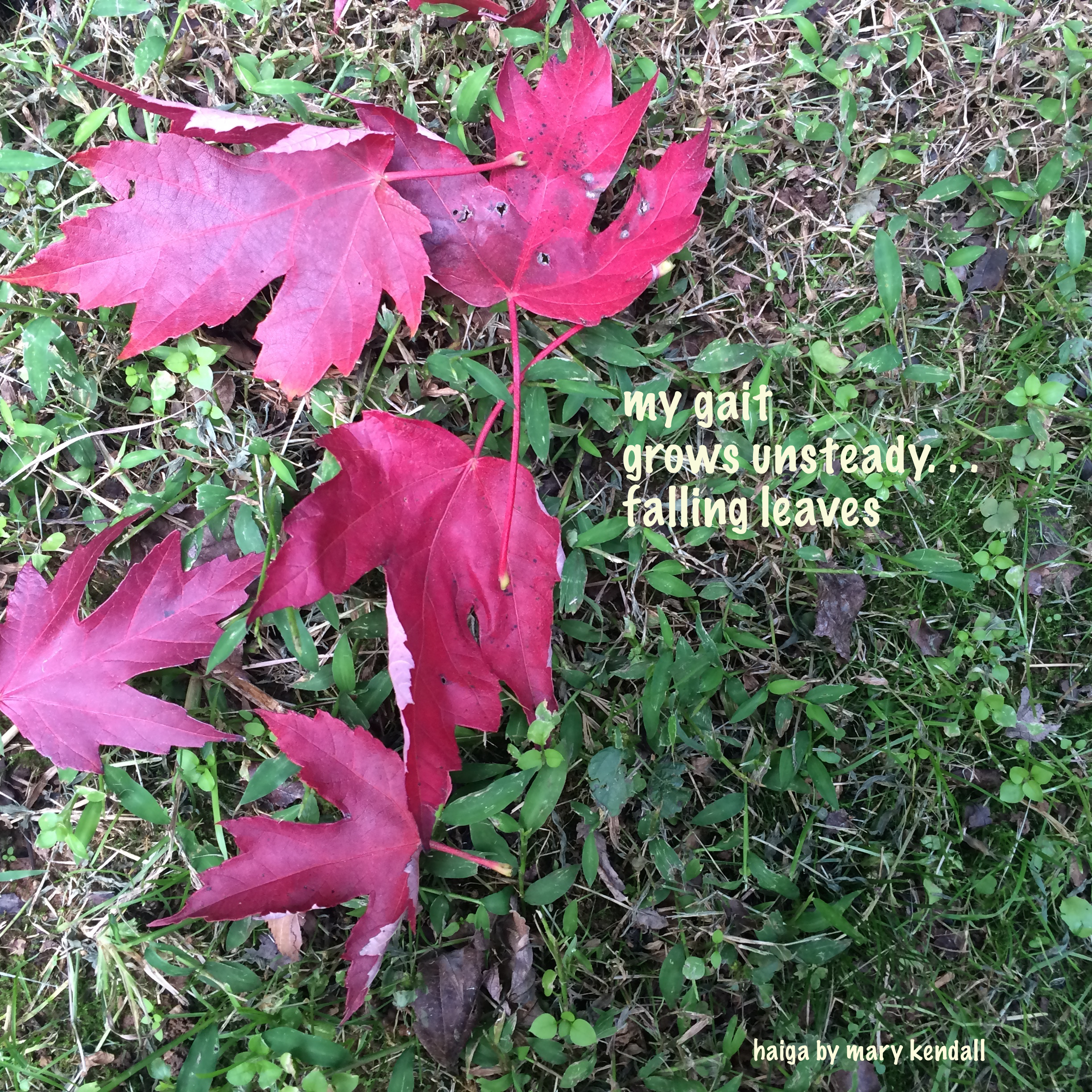
Some Small Poems for the Autumnal Equinox

autumn haiga 2015

This morning I woke up knowing a change was in the air. With intermitent gusts of wind, my garden feels different. From my porch where I sit writing this, I hear cardinals talking to one another in soft chirpy sounds, not full song. A nuthatch scampers up and down the tree trunks hoping to find a tasty insect for its mid-morning snack. What is clearer though is the background sound–the small insects that hum and buzz in notes I can’t clearly discern. All I hear is a constant high pitched sound–but it is a soft sound, not the commanding songs the cicadas sing. A chickadee now scolds someone, probably my dog who is suddenly interested in wandering in our back woods.

The breeze comes and goes. Wind chimes sing their beautiful songs. Leaves shudder and flow in the wind, then settle down to stillness. A large robin sits in the birdbath drinking in the water, probably for the last time before it makes its long migration down to southern Florida. Now a flock of crows jeers at something, most likely the red-tailed hawk that lives nearby. And since I’ve sat here long enough, a single butterfly sips from the last flowers of the purple buddleiah bush. It is a yellow swallowtail and probably the very last one I will see this year. There have been no others all week. A female cardinal visits the other bird bath. Luckily these beautiful red birds don’t migrate from here. They will stay all winter long, and I will put birdseed out for them each day. 

Autumn has always been my favorite season since I was a little girl. I grew up in the northern climate of Buffalo, New York where the lake winds brought the strong Canadian coolness and fall was often upon us in early September. Not so here down south. Here, North Carolina weather can change in an hour. We can have this first taste of fall and tomorrow might bring back the heat of summer.

Life in the United States changes with this season since children return to school, vacations are pretty much over, and everyone settles in. I find myself cooking soups once again. Last night I made Italian Wedding Soup, a perfectly delicious way to welcome the change in seasons. 

Fall or autumn? I grew up calling it ‘fall’ and with the obvious falling of leaves, that word makes good sense, but the poetic side of me loves the word ‘autumn.’ I love saying the word, hearing it, feeling it on the tongue. Autumn is delicious! And ‘autumnal’ is divine. Who can resist the beauty of this season? Not me.

Here are three other poems–two tanka and one haiku– to welcome this special season and day of the autumnal equinox.

Autumn-leaf-on-a-rock-960x640

daylight
and nighttime
in a slow dance—
tomorrow one
will lead

~
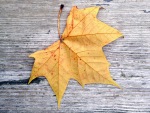
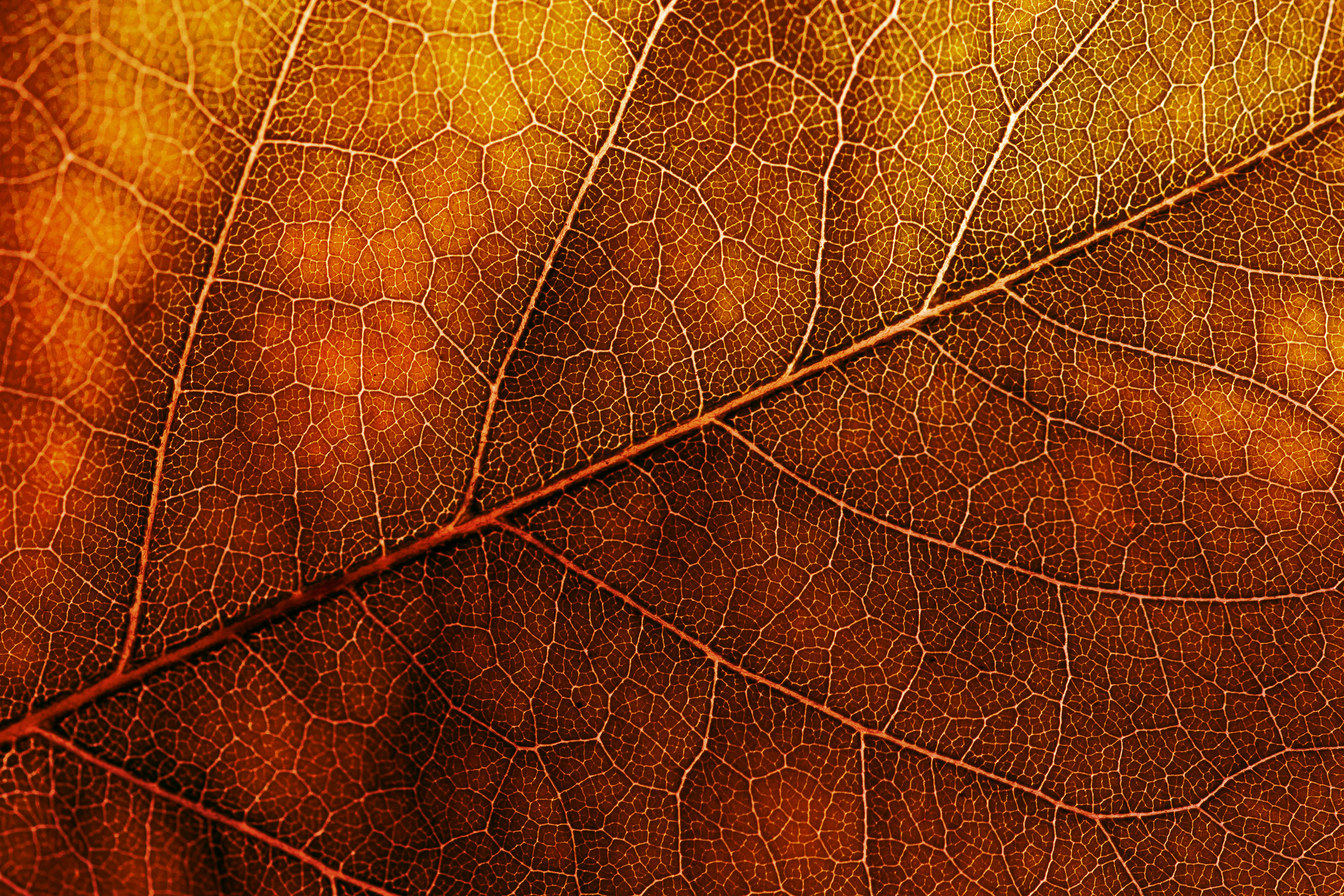
Gold Autumn Leaf

~

autumnal equinox…
the moment when day
matches night

~

leaves_texture4982

~

autumn’s equinox
when time is equal—
if only one day
people
could be like this

~
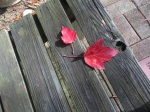
Red Leaves

On Growing Older…

On my pillow haiga 2015

June Haiku 1

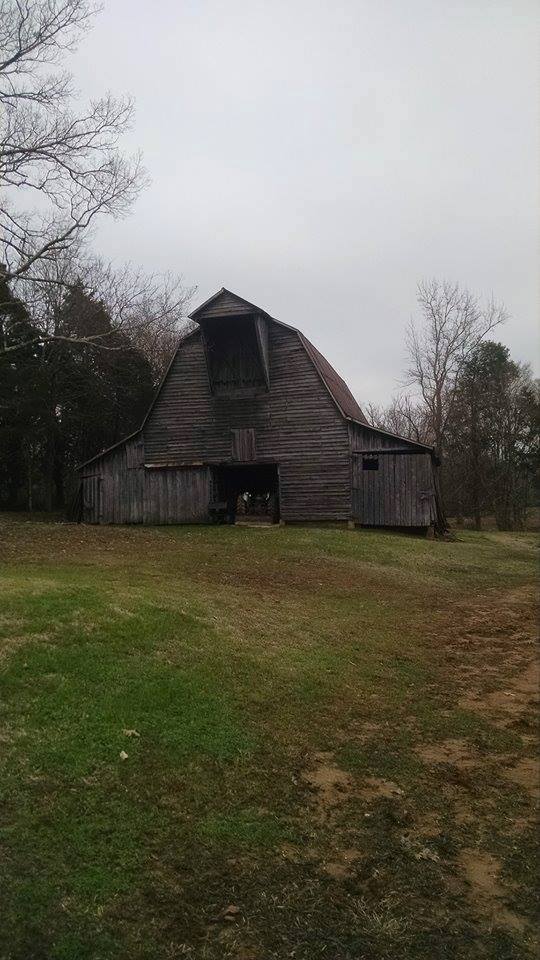
weathered clapboards–

does the old barn ever dream

of being a tree?

Barn in Spring Creek, Tennessee ~ Photograph (c) 2015  by Michael Todd

Barn in Spring Creek, Tennessee ~ Photograph (c) 2015 by Michael Todd

Note:  My thanks to Michael Todd for allowing me to use his beautiful photograph of an old barn in Spring Creek, Tennessee. Pictures like this are always such an inspiration.

Spring Equinox (haiga)

spring equinox kendall haiga

Haiga by Mary Kendall

This was written for a prompt on the spring equinox for a favorite small poem poetry group I belong to called “seize the poem.” I’m enjoying creating this mix of haiku and photography, and I think I finally got the words correctly balanced on the picture, so I’m sharing it here as well. The photo is my own taken in the sculpture garden of the Rodin Museum in Paris this month.

Haiku for today…

IMG_7621

barely spring–

rowers churning water

 silver slips away

610980-bigthumbnail

Sky the color of hyacinths…

waves swell then break

~ ~

I’m still very new as a haiku poet, so it is with caution that I’ve ventured out to try an actual haiga. A haiga combines art and a haiku. Since I lack all painterly skills, I’m combining my haiku with a photo that I love. I’ve done this in a slightly similar way on my blog with tanka and some autumn haiku. However, I consider this to be my very first true haiga.

~~

What is Haiga?  

Haiga is a Japanese concept for simple pictures combined with poetry, usually meaning haiku. In Basho’s time, haiga meant a brushed ink drawing combined with one of his single poems handwritten as part of the picture. In our day and age, haiga can be watercolor paintings, photographs or collages with a poem of any genre that is integrated into the composition. Sometimes the poem is handwritten or it can be computer generated, depending on the artist’s taste.”  (This definition of haiga is by the poet, Jane Reichhold on her website,  Ah Ha! Poetry.)

~~

Note on Photograph:

This beautiful photograph is by an Icelandic photographer known to me only as KariK on Flickr. It was posted and thus copyrighted in (c) 2011. It has been posted thousands of times online and almost never with an attribution to him. By doing a ‘backward’ image search I was able to find him on flickr. His photographs, most of nature, are magnificent.  This is what he wrote for this particular picture (translated from Icelandic):

Reykjanestá:  This location is unique for the fact that there can see the ocean ridge walk on 1 and, Mid-Atlantic Ridge, which separates the prefabricated North America and Europe.

KariK, (c) 2011

One Snow Haiku

Snowfall by Debbie Suggs

Snowfall by Debbie Nemer Suggs


Swiftly falling snow

Our footprints disappear ~

Were we ever there?


snow symbol

I would like to thank my dear friend, Debbie Suggs, for the use of her beautiful snowfall photograph (c) 2015.  Debbie and I wrote and published a book, A Giving Garden, in 2009. Her beautiful photographs have always inspired me.

Ginger Tea

steaming tea pot

1.

curls of steam
a pot of ginger tea
fragrant this night

2.

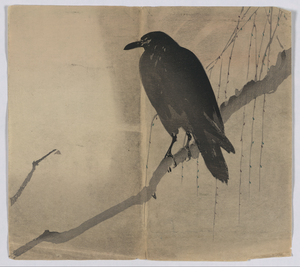
silent crow …
holding tight in
winter wind

Crow on a Willow Branch, Japanese woodprint, Library of Congress woodprint

Crow on a Willow Branch, Japanese woodprint,    Library of Congress

Winter Moon Haiku

full moon clairmont courier

Winter Moon Haiku

These haiku were first published PoetsOnline in response to a prompt for winter haiku. In the summer of 2011, I was contacted by the American composer, Paul Carey, who asked permission to use the haiku for a commissioned composition. These were used as lyrics for “Winter Moon” by Paul Carey, a piece for women’s chorus in 2011. The work was premiered on December 8, 2011 by the Clark College Women’s Choir (directed by April Duvic).

Sadly, I’ve never gotten to hear the musical piece since I’m on the east coast and Clark College is in Vancouver, Washington. It would be my dream to get a download of that performance, but enough time has passed that I believe that won’t happen. Still, it was a true honor to be asked to use my haiku in a composition.

I’ve decided to post these haiku today because yesterday was the first full moon of the new year, 2015. Often called the Wolf Moon or Old Moon, the full moon is always a magnicent display for us to observe. I have always felt I could write more freely and easily during a full moon, though I have no proof of that. It’s just a gut feeling of a single poet.  Because these were published as part of a composition, the haiku won’t appear in any journals, so I’d like to share them with the readers of this blog. Otherwise they lie dormant in my poetry folder along with so many of their friends.

I offer good wishes to each of you for the new year. 

tsuki-moon


night snow

boughs dreaming

of first blossoms

Winter

Fog filled woods~

even the winter moon

has lost its way

WOLF_MOON_CANU-2015JAN05_022145_923.jpg

a winter walk

footprints

tell no tales

Full Moon


the blue moon

silently closes the door

upon the year

End


Four Late October Small Poems

Weaving Light 6 (c) 2012 by Karen McRae

Weaving Light 6 (c) 2012 by Karen McRae

1:

dusk winds weave
seed pods in silken strings
spirits dancing

2:

morning’s breath
slips by so silently
a shiver of frost

3:

perhaps a portent
of what winter will bring
this woven white light

4:

just as a cloud forms
and suddenly dissipates
so a thought begins

Weaving Light 13 (c) 2012 by Karen McRae

Weaving Light 13 (c) 2012 by Karen McRae

These beautiful photographs of Goat’s-beard seed heads are by the very talented Karen McRae. They appear on her blog: The Frayed Edges of Waking August 12, 2012 by Karen McRae) http://drawandshoot.me/2012/08/12/the-frayed-edges-of-waking/

Many thanks, Karen, for allowing me to use your breathtaking photos that inspired these four small poems.      

                                               ~ Mary ~

Weaving Light 11 (c) 2012 by Karen McRae

Weaving Light 11 (c) 2012 by Karen McRae