My thanks to Michael McClintock, editor of the Tanka Café in Ribbons, the Journal of the Tanka Society of America. The prompt was poems of spring and summer. Here is mine:
June has brought with it the publication of some excellent journals. I love being able to read through them and enjoy the poems. Some are haiku, haiga, senryu or haibun, and others are tanka, tanka art or tanka prose. Hours and hours of fine reading that will stretch into the whole month of June.
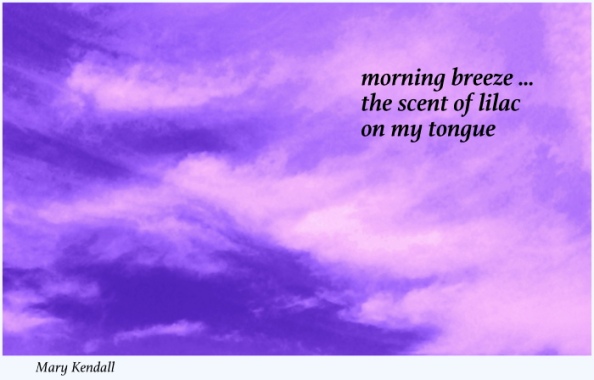
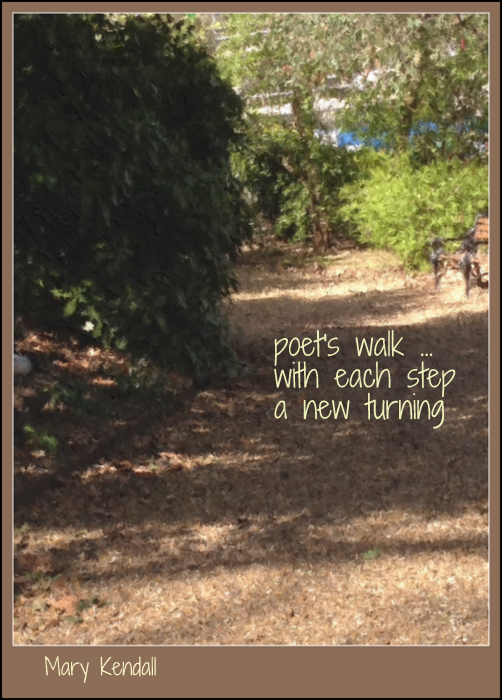
I’ve been fortunate to have a number of small poems published this month. I’ll post these by type and by publication over the next week. Today I will begin with two haiga that were published in the newest issues of cattails, the publication of the United Haiku and Tanka Society.
Both haiga were published in the May 2016 edition of cattails, collected works of the United Haiku and Tanka Society.
If you’d like to hear me read this poem, please click on the link below. Wait a few seconds for it to load. I hope you enjoy both listening and reading this love poem.
Another Love Poem…
~ To my husband and partner of forty years ~
We walked along in the Tuileries alone among the chestnut trees,
morning sky of crisp pale gold so many paths we have strolled,
and still we wander, just us two, my heart never very far from you.
We stop to sit and watch the birds green park chairs, unspoken words,
plain sparrows chirp, so unadorned no beauty lost, no beauty mourned.
Simple thoughts are often most true— no man was ever loved more than you.
Today’s poem is a slight detour down the road that leads to summer’s end. I’ve chosen to present an acrostic poem, a form I always enjoyed using when writing with children during my years of teaching. Acrostic poems are delightful and often funny, but as shown here, they can be serious and even tender.
You can hear me read the poem if you click on the link below and patiently wait a few seconds for the recording to begin.
.
Summer’s End
.
Sunflowers bloom tirelessly all summer long
Unwavering in their deep devotion to the sun
Multiplying day by day, the fields grow yellow
Making everyone stop to look
Elegant with their tall, swaying stalks
Regretting nothing, they give themselves to this season
Surrendering ripe seeds to the redbirds and finches that gather round
.
Photo by Betty Rizotti, (c) 2015
.
Even summer must come to a close
No one is ever spared the final moment
Depleted of seed, sunflowers begin to bow their heads in sleep
Photo by Jan Monson, (c) 2015
Photo by Gary Birchford, (c) 2015
Photo by Gary Brichford, (c) 2015
Photo by Gary Brichford, (c) 2015
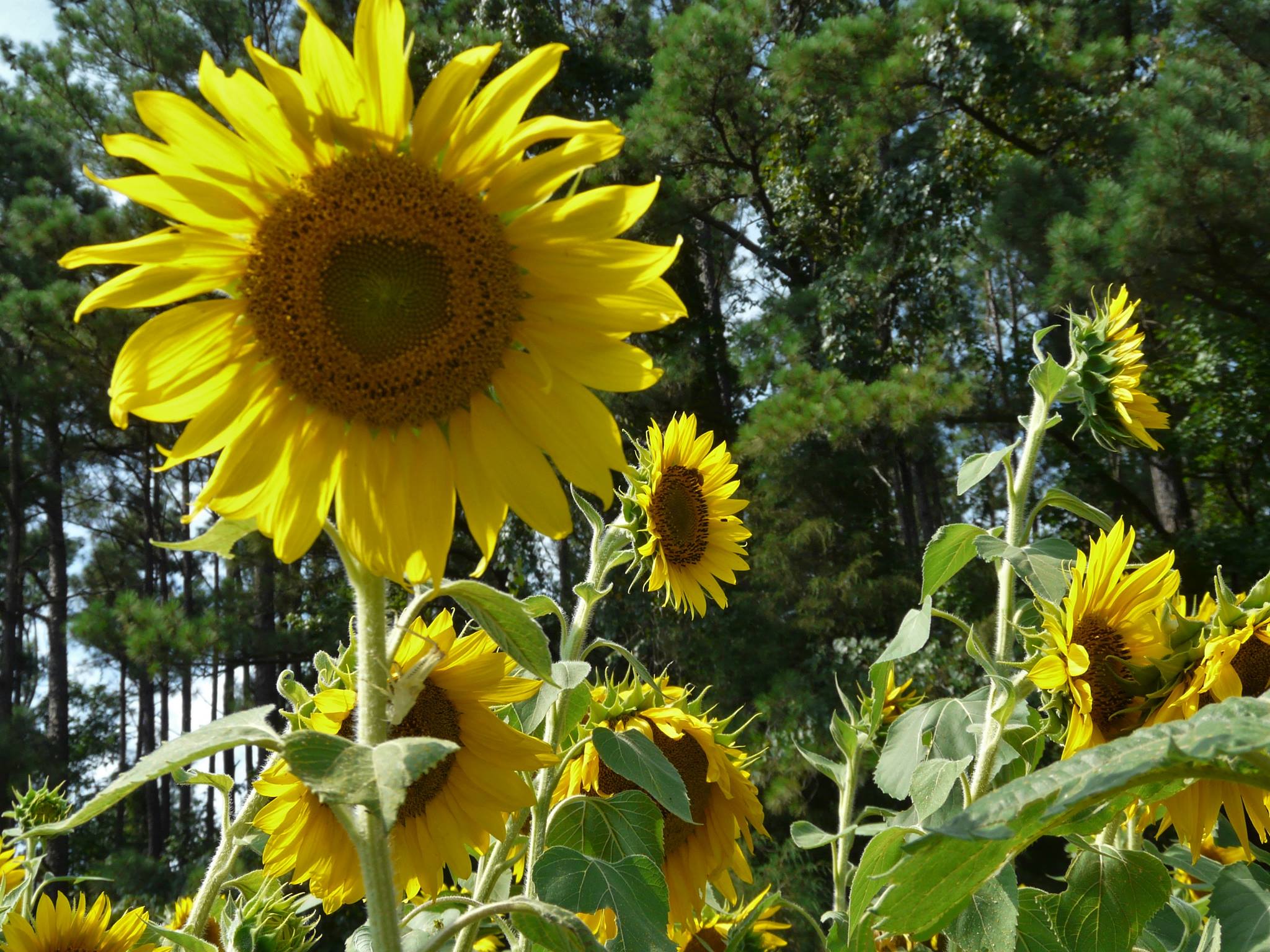
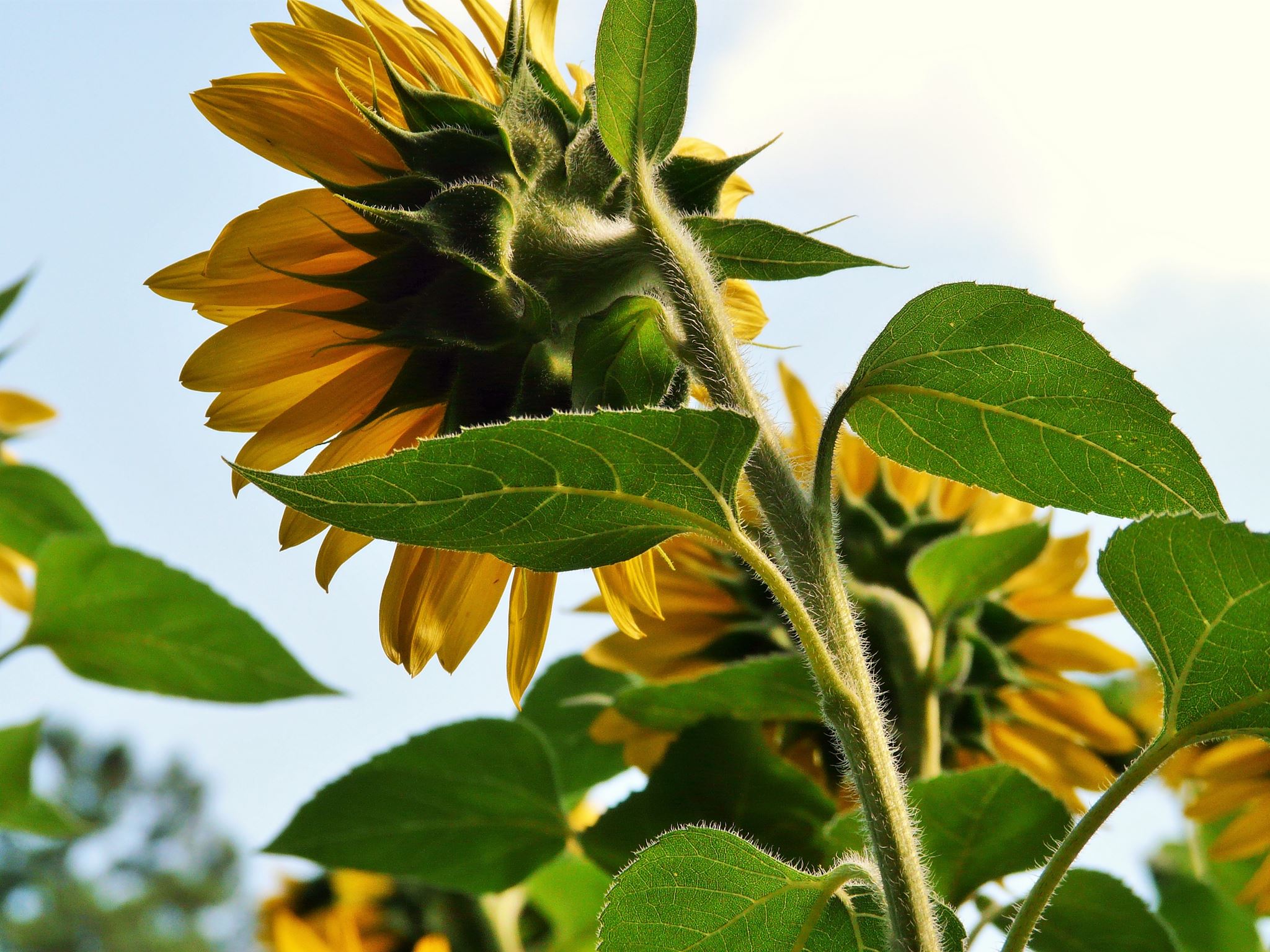
Several photographers are responsible for the beautiful sunflower photographs in this blog. The two with the goldfinches are shared by Betty Rizzoti (middle right photo) and Jan Monson (middle left photo). Many thanks to each of them for these great captures. All the rest of the photographs are by Gary Birchford whose photographs, when posted on FaceBook last month, inspired this poem as a goodbye to summer. Thank you Gary for your ever generous heart in allowing me to use these pictures.
.
Photo by Gary Brichford, (c) 2015
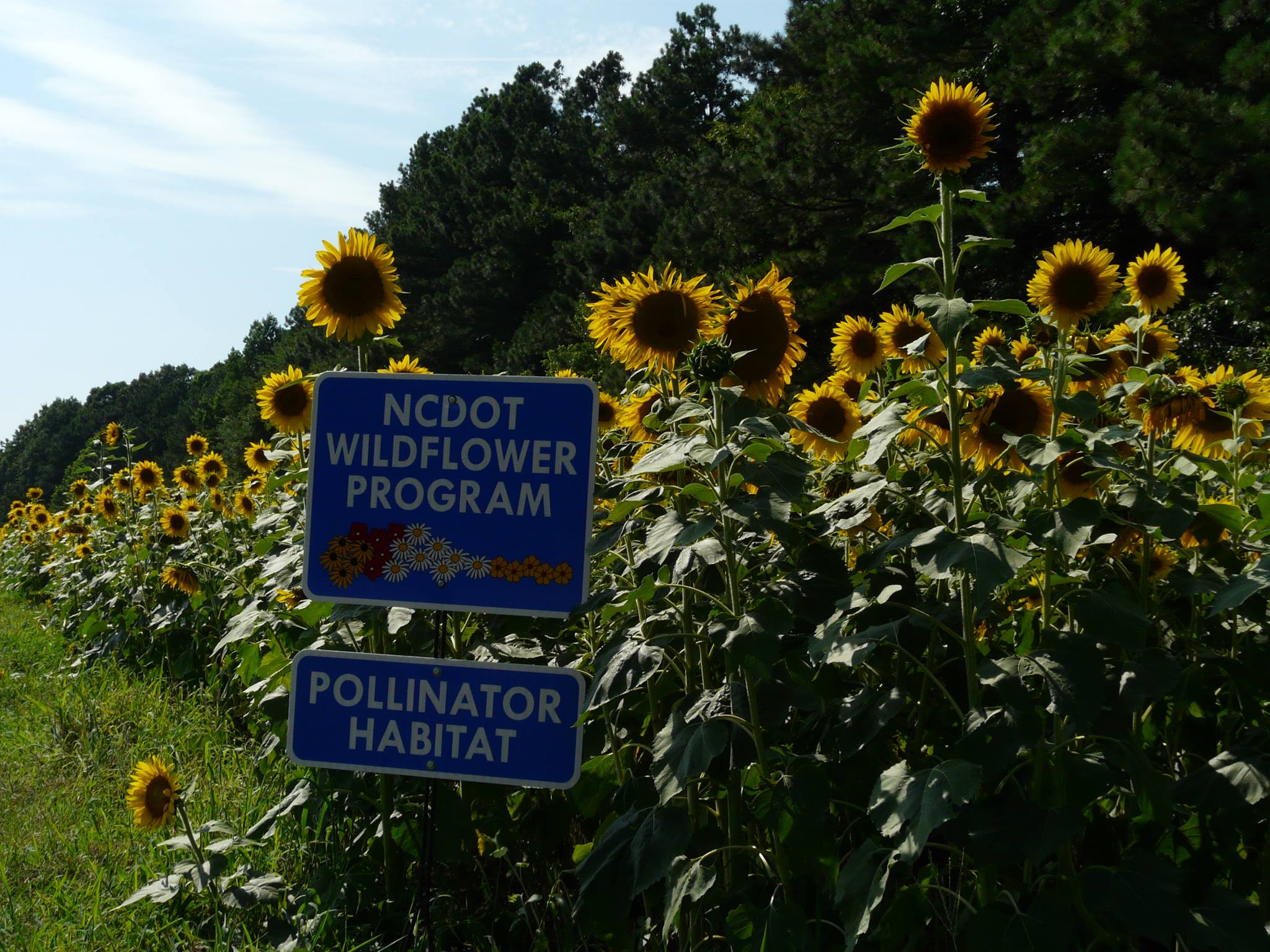
One final note: Gary Brichford took this set of sunflower pictures from an interesting source. They were on the side of a major highway in central North Carolina as part of a government project. Please see the picture below for details. Isn’t it great to know that our Department of Transportation is involved in Pollinator Habitats. What better place could they find. Imagine how many people drive past and smile at the ever beautiful sunflowers.
Here in the southern part of the USA, thunder and lightning are not uncommon in summer. Days can be very hot and humid, and late afternoon lightning storms often break up the quiet of the day. Rain, when it comes, often fails to bring relief but instead adds to the high humidity. Still, there are times when just listening to the thunder and seeing the clouds grow thick and dark overhead becomes a magical experience. My friend, Jeanna Clever List, took this photograph while her family was on vacation on the coast of North Carolina. Its drama and beauty is truly exceptional.
My thanks, Jeanna, for allowing me to use your beautiful photograph to complete my haiga.
The theme of old, worn wood (see June Haiku 1) continues in this poem. Amazing how beautiful things retain their magic despite age.
My thanks to photographer, Mike Keville, for allowing me to use his gorgeous boat photograph for this haiku. The textures and colours of this photo inspire many poems.
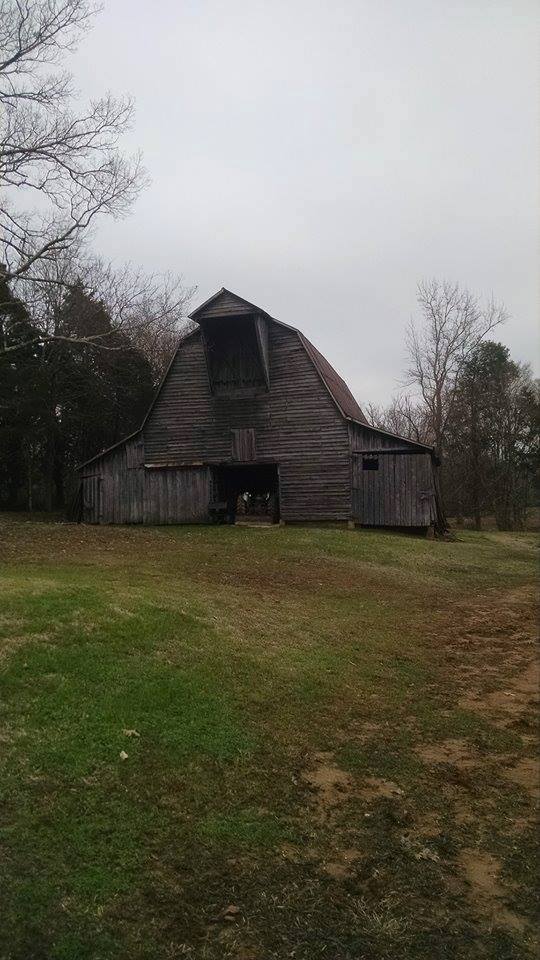
Barn in Spring Creek, Tennessee ~ Photograph (c) 2015 by Michael Todd
Note: My thanks to Michael Todd for allowing me to use his beautiful photograph of an old barn in Spring Creek, Tennessee. Pictures like this are always such an inspiration.
Two poems of mine were just published in the May 2015 issue of ‘cattails,’ the lovely online publication of the United Haiku and Tanka Society. I am truly honored once again by being included in the company of such excellent poets. My thanks to all of the editors, and especially to the main editor, an’ya.
For just one moment
the sky stopped time,
and we gazed upward
to where an angel
lit the clouds
like a row of pure white candles,
and the flames flickered
in many hues
and spoke to us in sweet silence,
reminding us that life is brief,
a momentary blur.
A lesson we forgot.
Note: My thanks go to my friend, Farnaz Mojab Soheili, for allowing me to use her wonderful photograph of this magnificent cloud rainbow that appeared for just a moment. As a teacher who was with a group of fourth grade students on the playground, the cloud phenomenon was pointed out to her by a student. She looked up in time to see it shift into this beautiful formation. A rainbow in the clouds is called iridescence or irisation: “When parts of clouds are thin and have similar size droplets, diffraction can make them shine with colours like a corona. In fact, the colours are essentially corona fragments. The effect is called cloud iridescence or irisation, terms derived from Iris the Greek personification of the rainbow…. Iridescence is seen mostly when part of a cloud is forming because then all the droplets have a similar history and consequently have a similar size.”
This was written for a prompt on the spring equinox for a favorite small poem poetry group I belong to called “seize the poem.” I’m enjoying creating this mix of haiku and photography, and I think I finally got the words correctly balanced on the picture, so I’m sharing it here as well. The photo is my own taken in the sculpture garden of the Rodin Museum in Paris this month.
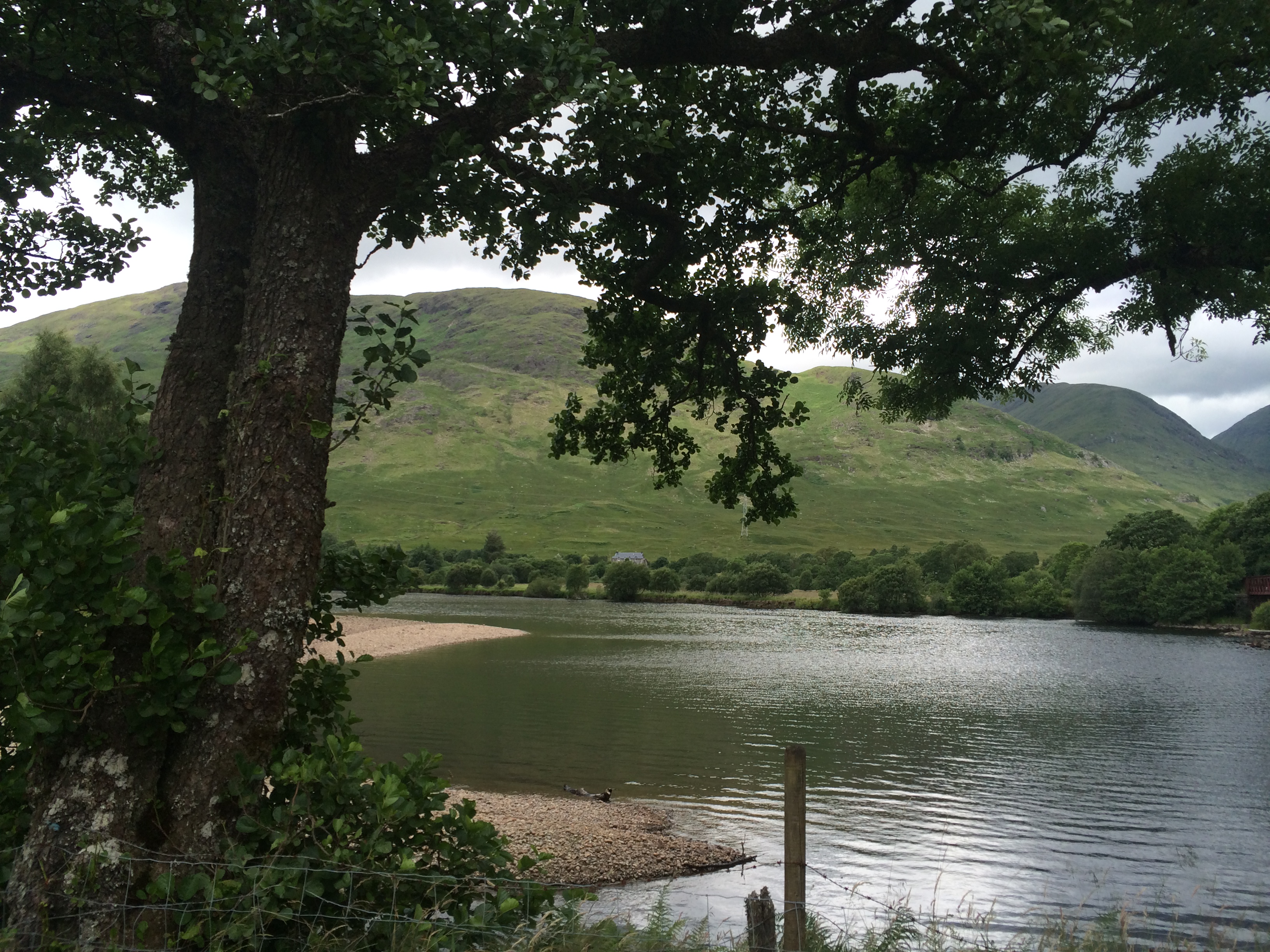
This poem began in a meadow up in the Scottish Highlands while my husband and I were visiting the ruins of a castle. He went inside to explore further, but I chose to stay behind and linger in the beautiful summer fields. As you have probably experienced yourself, this frequently leads the imagination to so many new places. It also presents an opportunity for a simple sensory awareness meditation. Just standing there looking and listening is a spiritual act in itself.
The challenge for me in this poem was to use a repeating word (“listen”) to create both mood and cadence in the lines. The decision to complete the poem with a repeating line (or couplet) was a very different way to close my own lyrical love song to nature.
[Note: the following two paragraphs were added here several months later when the poem was published by Dagda Publishing Company.]
On 3 March 2015, Dagda Publishing Company, a publisher of poetry and literature based in Nottingham, UK, featured this poem in their blog. It was a real honor to have had my poem chosen by this excellent publisher. This is what they had to say about the poem:
Today’s featured poem, and the first one in March, is this one from Mary Kendall. Inspired by a trip to Scotland, this piece has a naturalistic theme to it, and we feel is just perfect for this time of year, as we start to escape the cold and dark of winter and crawl toward summer and longer days. Musing upon the sounds of nature and imagining a song being sung by the choir of trees, flowers and the meadow itself, this piece has a touch of magical realism to it, of there being something fantastical just behind the ordinary and everyday. A poem full of the wonder of nature and the sense of being away from the familiarity of one’s normal life, we hope you enjoy this poem by Mary Kendall.
An audio clip of me reading this poem is included below. Click on the link below to hear it. It will take a few seconds to begin.
Meadow Song
Have you ever been a few thousand miles from somewhere, standing in meadow of sweet grass or barley and thistles, bright pink bells of foxglove swaying in the wind, and then you stop, just standing still and listening; listening to the wind song of the leaves and grasses.
I asked them to tell me the words they sang to those who stopped to listen. They heard me and replied, but I could not understand what it was they said.
I waited and waited until the wind resumed its blowing, the grasses their gentle whispering; the leaves sang loudest of all, and I listened. I listened the while.
I listened until the song ended, and then I went on my way. So far from home. So far from home.