As a follow up to my last blog, I’m reblogging this second lamentation that dates back to November 4, 2014.
Which classic myth would YOU choose to write a poem about? What grabs your mind and heart both?
The Second Lamentation of Demeter
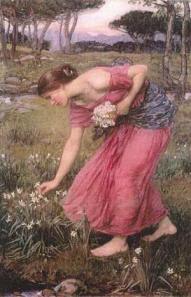
Narcissus, 1912 by John William Waterhouse
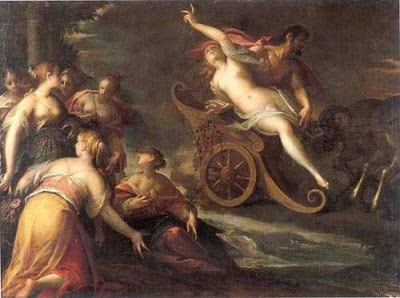
Persephone’s abduction by Hades is swift, violent and over so quickly that no one hears her scream except for Hecate, a goddess who helps Demeter find out where she has gone. Could there be anything worse for a mother than to lose a child? Demeter’s grief is profound. This is the Second Lamentation of Demeter.
The Abduction of Persephone, Hans Von Aachen, 1587
To hear me read this poem, please click on the link below and wait a few seconds for it to begin.
The Second Lamentation of Demeter
The earth groaned, then opened briefly.
That’s all it took.
He appeared out of nowhere
Like a wild flume of fire,
The flickering golden chariot with
Four black stallions at full gallop.
He sprang upon her so quickly
That when the earth closed back
Upon itself like a wound healed over,
All that was left was a circlet of flowers
That she and the daughters of Oceanus
Had been stringing together. Irises, roses,
Violets, hyacinths, and the faded blossoms
Of sweet narcissus plucked by her hand.
The scar in the earth and grasses torn apart
Were all that told the story.
I always knew he watched her…
I sensed when he was around.
Clouds gathered overhead,
Shadows clothing him in darkness,
Hades,
To whom sunlight is a stranger.
My sweet Persephone is gone now,
Gone with him.
O, horror…
My sweet child is his.
Persephone’s abduction is well represented in art. It is my personal opinion that one need look no further than the magnificent sculpture done by Bernini in 1622. The details of the hands and arms as well as the force and resistance between their two bodies is powerful. Persephone’s tear stained cheek tells us more than any words can.
Gian Lorenzo Bernini, The Abduction of Persephone, 1622, Galleria Borghese in Rome
Here it is January 2026. My blog has been quiet this year for a number of reasons too long to list. But the most obvious reason is that of a block or mental ‘resistance’ to writing. Last year in 2024, I turned to sharing a few older poems of mine that I love. It was a good reminder to me of why I loved writing.
Today, WordPress showed me my latest stats. I rarely look at these anymore, but one thing I notice each time I see an update is that some of the poems I wrote relating to classical myths seem to be accessed the most. I wonder if, in this sad and tumultuous world and country (mine being the USA), we turn to mythology to find answers to timeless questions that appear and reappear over a lifetime. Who are we and why are we here? What is it we are looking for? What really matters? I am now 79. Those questions and many more have come up time and time again, and the answers have been quite varied over eight decades. What do you, dear reader, think?Why do we cling to myths and tales from long ago and from cultures we know only though history books, literature or art? I’d love to know what you think.
To honor some of these poems, I’m going to post my two Lamentations of Demeter, one at a time. To save some work, I’ll post the whole original poet from my blog. I hope you find some meaning in each of them or perhaps a way to think of something beyond our wild world of today.
British Museum GR 1885.3-16.1 (Terracotta C 529), AN34724001
Here is the original 2014 posting:
.
I’ve been looking over my writing notebooks written a while back but unread by anyone other than myself or my husband. The myths of Demeter and her daughter, Persephone, fascinate many including me. For a number of reasons these myths seem to appeal especially to women. Many of the great living women poets have written brilliant poems about Persephone (e.g., Louise Glück and Eavan Boland). The story is timeless.
.
In today’s poem I’ve written a Lamentation of Demeter. Demeter, the goddess of the harvest and grains, is often referred to as the mother-goddess since she represents fertility on earth. Her importance is indisputable. When she mourns for her missing daughter, Persephone (who has been abducted by Hades and taken down into the underworld by force) the seasons stop. Things stop growing and the earth begins to die before Persephone’s father, Zeus, intervenes. You know the story, but it is worth re-reading if you haven’t read any mythology for a while.
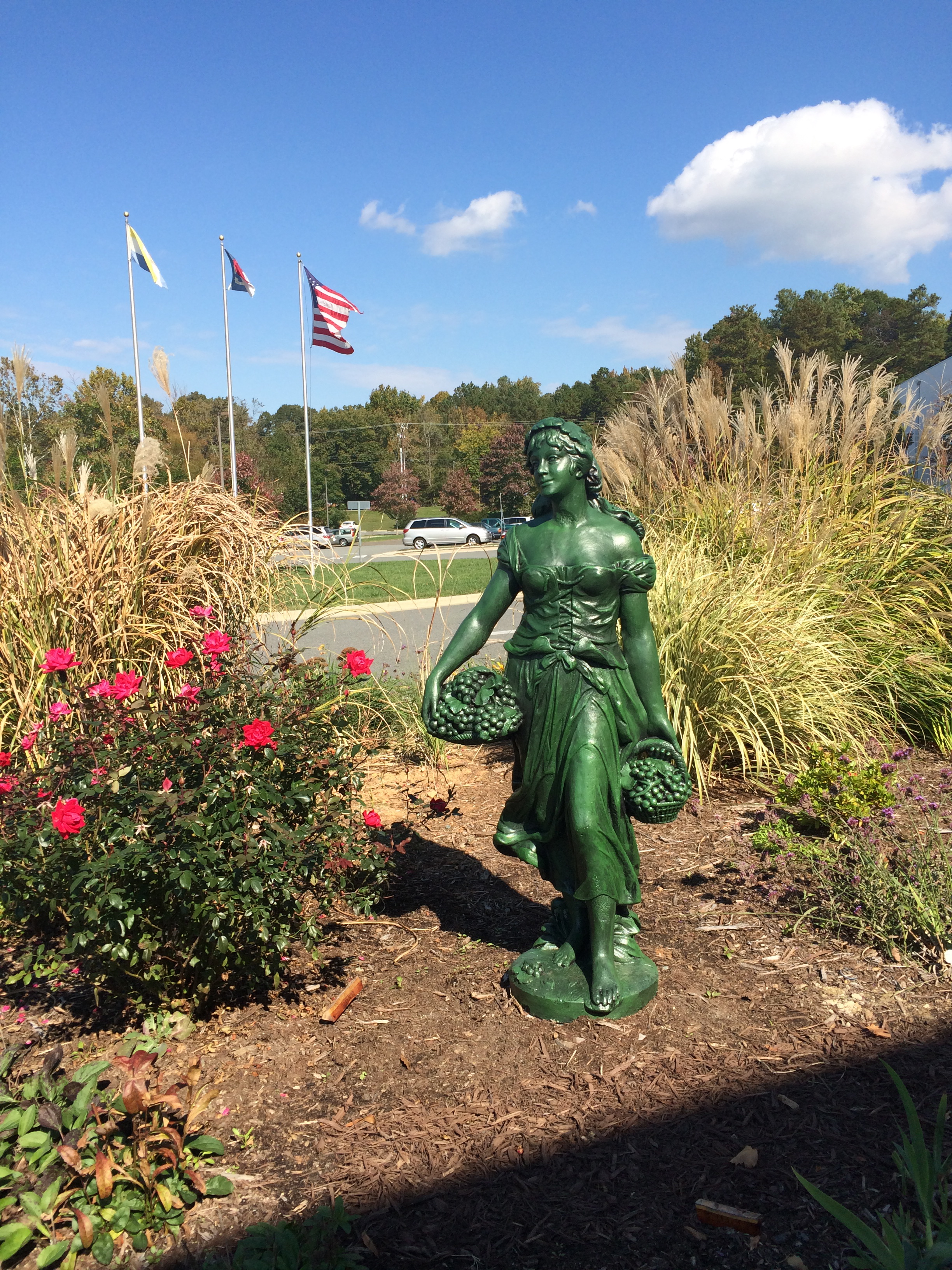
Demeter statue in front of my gym in Hillsborough, North Carolina
.
So what is a lamentation? The Oxford English Dictionary defines it simply: “The passionate expression of grief or sorrow; weeping.” Anyone who has grieved knows instinctively what it is to lament the loss of someone who is dearly loved. The feeling is painful and deep, and I think this resonates within us all. Demeter mourned her daughter’s abduction to a point where the earth nearly perished. This poem begins with her not yet knowing all that has happened. I picture her as a mother desperate to know what has happened to her child.
.
This is one of two lamentations of Demeter I’ve written. The second will follow at some point.
Demeter
.
To listen to an audio recording of me reading this poem, click on the link below and wait a few seconds for it to begin:
.
.
The First Lamentation of Demeter
.
How is it that I don’t know where she has gone?
I warned her.
I told her time and time again not to trust them,
that there were those who so longed for her
they would stop at nothing.
And who was right?
Like all girls her age, she could be headstrong,
believing her own mother too old
to understand those yearnings.
I warned her.
Last night I watched the dog star rise up.
Its magnificent beams were like beacons
that might lead me to my lost child.
Why is it the stars are silent?
O, Sirius, your brilliant rays reach down
to us and yet your silence is puzzling.
Surely you saw where she went, my only child.
Here is the second of three tanka published in GUSTS, no. 34, Contemporary Tanka, Fall/Winter 2021. The pandemic has made all of us look at life and death differently and perhaps more clearly.
one day when I am long gone from the world, you’ll find me here & there among scarlet leaves or blue damselflies
The Ekphrastic Review: writing and art on art and writing, has published my poem, “Sunday Morning.”
Let me give you a brief “back story” on this poem. Many years ago, I stopped writing completely for around twenty-five years. Total silence in my life. I don’t know why it happened, but it did. After what can only be be termed a spiritual experience on a trip to the Fijordland in New Zealand, poetry somehow magically entered my life again. I can’t explain this. It just happened, and I know it happened for a reason. This poem was the first complete poem I wrote when my poetic “voice” returned, and it’s only been read by one other person until today. It’s taken me about fifteen years to gather courage to submit it anywhere. My deepest thanks to editor, Lorette C. Luzajic, for publishing this piece.
Here is the link to the journal: http://www.ekphrastic.net/ekphrastic/april-21st-2016
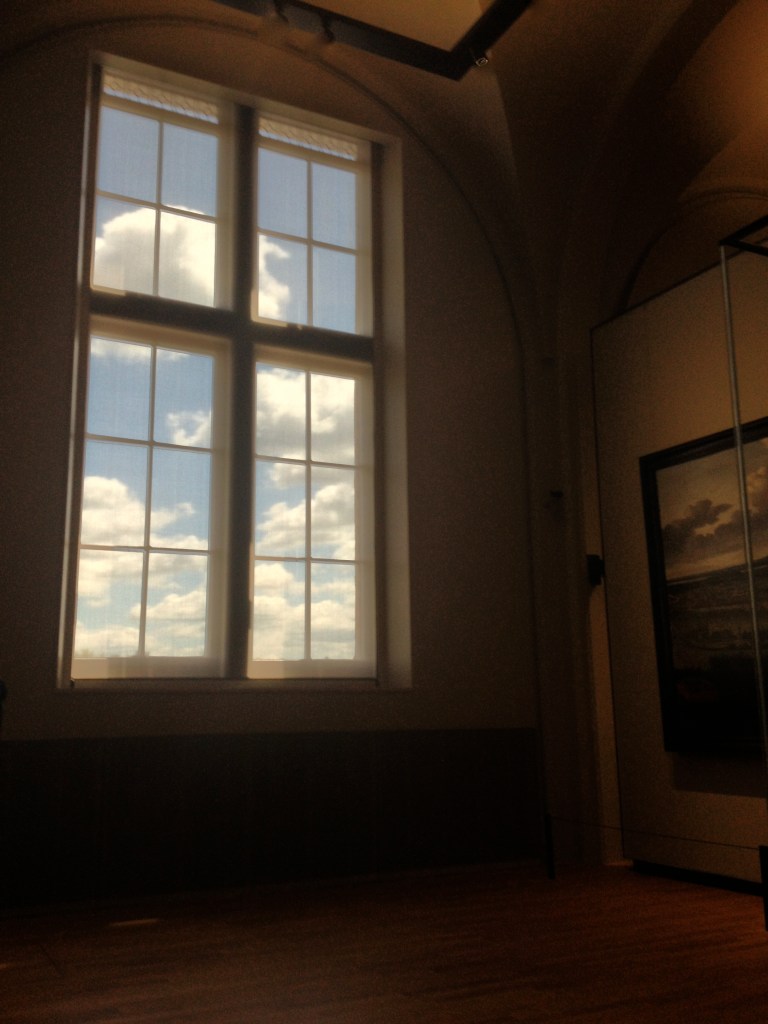
Rijksmuseum, Out the Window (c) 2013 Mary Kendall
Sunday Morning
Hymns unsung, prayers unsaid,
I sat by the window and prayed
for forgiveness one more time;
one more time I begged.
Holding the cup of coffee in my hand,
I hoped the warmth would fill me
where your words had left me cold,
but I knew nothing could do that—
fire can burn for hours and be unfelt.
Hymns unsung, prayers unsaid,
I lay down on the empty bed, pulling
the blanket across my cheek, turning
from the window, from the sky
and the sun, praying for some rest.
Note: The window in the photo is not, of course, the window of the poem. I love taking pictures of windows when I travel, especially indside looking out. This photo was taken in June 2013 when my husband and I were in Amsterdam, visiting the beautiful Rijksmuseum.
My very first tanka sequence was published in RIBBONS: Journal of the American Tanka Society, Winter 2016: Volume 12, Number 1. My thanks to editor, David Rice, for suggesting to me that these three tanka would work best in a sequence.
Today, my favorite haiga was published in a favorite journal, Gnarled Oak. It is a lovely home for this haiga. Here it is along with the link to Gnarled Oak (check out all the great poetry in this journal). The editor, James Brush, releases one poem a day, a custom I love. It’s always a joy to see what each day holds. My thanks goes to James for accepting this piece.
Now that it is early autumn, we tend to stay inside more and even read more (at least that’s my experience). Someone recently asked me if I would do the audio recording for some of my mythology poems on this blog. I had done one already, so it does seem natural to now do the others. I hope you like them. My style of reading isn’t dramatic, and I do try hard to avoid “poet voice,” something I dislike very much. Hopefully my readings are pretty natural, maybe too natural for those who do like more drama. I guess it’s all a matter of taste.
By clicking on each link, you will be directed to the original posting for the poem but with the audio now included. I hope you like them.
My thanks to Silver Birch Press for including my poem in this wonderful series. I have been enjoying reading all the poems posted, each so different from the others.
Transformation and the Ineluctable Signs of Ageing
by Mary Kendall
This is not my first transformation. No, it happened way back when—six decades and then some, and I find myself no longer who I thought I was just ten, twenty or even thirty years ago. Those were other lifetimes, times I lived through, times I felt so alive, enjoyed, loved, and times I remember, but those were lives I knew I had passed through completely.
I have the evidence.
Now, going further back in time—forty or fifty years ago, it all begins to change. It starts to slow down—slow—slow—slow—as if someone has put a finger out and touched the spinning world—and now it slows down enough as if I must to look for a place to rest.
This viewing backwards makes me dizzy—dizzy—dizzy enough to want to keep traveling back to the end, which in fact is the beginning, and…
Grief, by Iosatel, The Obvious and Hidden blog, (c) 2014
1.
only the bereaved know they needn’t speak in whispers,
grief is never completely silenced
2.
rush of water a broken branch drifts by what will be left?
3.
Unending days of darkness that never let you forget.
4.
Saturated, as if the clouds had wrung themselves out all at once, watching what would then ensue
5.
sitting at the window watching the rain despondent days of unexhausted sadness trying to let go
6.
forgetting you was never an option
7.
grief exhausts but holds on, rain continues to fall
8.
thirty-five years and still I mourn you, sometimes waking and imagining you there
9.
darkness deepens into the black of night
lightning signals thunder cracks,
but it is the loss of you who took your life that makes me ask why it had to be
~~~
My Note of Thanks to the photographer, Iosatel, for his beautiful picture, Grief, which was first posted on his blog, The Obvious and the Hidden on 4/11/14. This photograph is copyrighted (c) 2014 by the artist himself.
The Broken Promise: Orpheus and Eurydice
by Mary Kendall
If only he had kept his promise, she’d be there.
All it took was one glance, a quick turn,
a meeting of the eyes and then she vanished.
How long did he stand there staring at where she had been?
When did he realize that she was lost to him forever?
How sad the stars were that night,
tumbling through the black sky
in mournful arcs;
even the moon turned its face away.
As he lead her out toward the ledge,
did she gasp at her unsure footing?
She with her snake-born limp,
trying hard to keep pace through dark tunnels
winding up to the craggy precipice?
Was this what tempted him to look?
His glance came so naturally,
that of the husband who worried
his wife might stumble and fall.
His trust in her never wavered and yet he looked…
How could we pass through autumn
without thinking about life.
Life and death.
Life and birth.
Birth and death.
The book ends of our existence
with pauses of space in between
waiting for us to write the chapters
that will fill the empty volume
that eventually defines a life.
These photos were taken by me at the Duke Hospice at The Meadowlands in Hillsborough, North Carolina. This hospice is set on an old farmstead in rural Orange county. The hospice and grounds are a wonderful gift to all who pass through.
Quotation embroidered and worn by Mary, Queen of Scots
Persephone’s abduction by Hades is swift, violent and over so quickly that no one hears her scream except for Hecate, a goddess who helps Demeter find out where she has gone. Could there be anything worse for a mother than to lose a child? Demeter’s grief is profound. This is the Second Lamentation of Demeter.
The Abduction of Persephone, Hans Von Aachen, 1587
To hear me read this poem, please click on the link below and wait a few seconds for it to begin.
The Second Lamentation of Demeter
The earth groaned, then opened briefly.
That’s all it took.
He appeared out of nowhere
Like a wild flume of fire,
The flickering golden chariot with
Four black stallions at full gallop.
He sprang upon her so quickly
That when the earth closed back
Upon itself like a wound healed over,
All that was left was a circlet of flowers
That she and the daughters of Oceanus
Had been stringing together. Irises, roses,
Violets, hyacinths, and the faded blossoms
Of sweet narcissus plucked by her hand.
The scar in the earth and grasses torn apart
Were all that told the story.
I always knew he watched her…
I sensed when he was around.
Clouds gathered overhead,
Shadows clothing him in darkness,
Hades,
To whom sunlight is a stranger.
My sweet Persephone is gone now,
Gone with him.
O, horror…
My sweet child is his.
Persephone’s abduction is well represented in art. It is my personal opinion that one need look no further than the magnificent sculpture done by Bernini in 1622. The details of the hands and arms as well as the force and resistance between their two bodies is powerful. Persephone’s tear stained cheek tells us more than any words can.
Gian Lorenzo Bernini, The Abduction of Persephone, 1622, Galleria Borghese in Rome
British Museum GR 1885.3-16.1 (Terracotta C 529), AN34724001
I’ve been looking over my writing notebooks written a while back but unread by anyone other than myself or my husband. The myths of Demeter and her daughter, Persephone, fascinate many including me. For a number of reasons these myths seem to appeal especially to women. Many of the great living women poets have written brilliant poems about Persephone (e.g., Louise Glück and Eavan Boland). The story is timeless.
In today’s poem I’ve written a Lamentation of Demeter. Demeter, the goddess of the harvest and grains, is often referred to as the mother-goddess since she represents fertility on earth. Her importance is indisputable. When she mourns for her missing daughter, Persephone (who has been abducted by Hades and taken down into the underworld by force) the seasons stop. Things stop growing and the earth begins to die before Persephone’s father, Zeus, intervenes. You know the story, but it is worth re-reading if you haven’t read any mythology for a while.
Demeter statue in front of my gym in Hillsborough, North Carolina
So what is a lamentation? The Oxford English Dictionary defines it simply: “The passionate expression of grief or sorrow; weeping.” Anyone who has grieved knows instinctively what it is to lament the loss of someone who is dearly loved. The feeling is painful and deep, and I think this resonates within us all. Demeter mourned her daughter’s abduction to a point where the earth nearly perished. This poem begins with her not yet knowing all that has happened. I picture her as a mother desperate to know what has happened to her child.
This is one of two lamentations of Demeter I’ve written. The second will follow at some point.
Demeter
To listen to an audio recording of me reading this poem, click on the link below and wait a few seconds for it to begin:
The First Lamentation of Demeter
How is it that I don’t know where she has gone?
I warned her.
I told her time and time again not to trust them,
that there were those who so longed for her
they would stop at nothing.
And who was right?
Like all girls her age, she could be headstrong,
believing her own mother too old
to understand those yearnings.
I warned her.
Last night I watched the dog star rise up.
Its magnificent beams were like beacons
that might lead me to my lost child.
Why is it the stars are silent?
O, Sirius, your brilliant rays reach down
to us and yet your silence is puzzling.
Surely you saw where she went, my only child.
September was ready to slip into October
and autumn skies were filled with color
Clusters of clouds
suddenly dissolved
and let the sun peer through
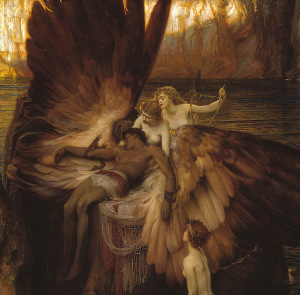
I imagined you as Icarus taking a risk
and trying to fly high above your depression,
gliding for a while like a broad-winged hawk,
the cool air making you unaware
of just how close
to the sun
you flew
NOTE FROM THE AUTHOR: The story of Icarus has always fascinated me. I think as long as people have lived, some have always wished they could fly like the birds. There are so many beautiful paintings and drawings of this classic myth, but in my mind’s eye I see only the simple picture of water with a feather floating on it—a reminder of how easily a dream and a life can come to an end. My Icarus poems were written when…










 A Poet in Time