Some Thoughts on Turning to Myth: Looking back at “The First Lamentation of Demeter ~ (Poetry and Myth)”

A Note to My Readers:

Here it is January 2026. My blog has been quiet this year for a number of reasons too long to list.  But the most obvious reason is that of a block or mental ‘resistance’ to writing. Last year in 2024,  I turned to sharing a few older poems of mine that I love. It was a good reminder to me of why I loved writing.

Today, WordPress showed me my latest stats. I rarely look at these anymore, but one thing I notice each time I see an update is that some of the poems I wrote relating to classical myths seem to be accessed the most. I wonder if, in this sad and tumultuous world and country (mine being the USA), we turn to mythology to find answers to timeless questions that appear and reappear over a lifetime. Who are we and why are we here? What is it we are looking for? What really matters? I am now 79.  Those questions and many more have come up time and time again, and the answers have been quite varied over eight decades. What do you, dear reader, think? Why do we cling to myths and tales from long ago and from cultures we know only though history books, literature or art? I’d love to know what you think.

To honor some of these poems, I’m going to post my two Lamentations of Demeter, one at a time. To save some work, I’ll post the whole original poet from my blog. I hope you find some meaning in each of them or perhaps a way to think of something beyond our wild world of today.


 British Museum GR 1885.3-16.1 (Terracotta C 529), AN34724001

British Museum GR 1885.3-16.1 (Terracotta C 529), AN34724001


Here is the original 2014 posting:

.

I’ve been looking over my writing notebooks written a while back but unread by anyone other than myself or my husband. The myths of Demeter and her daughter, Persephone, fascinate many including me. For a number of reasons these myths seem to appeal especially to women. Many of the great living women poets have written brilliant poems about Persephone (e.g., Louise Glück and Eavan Boland). The story is timeless.

.

In today’s poem I’ve written a Lamentation of Demeter. Demeter, the goddess of the harvest and grains, is often referred to as the mother-goddess since she represents fertility on earth. Her importance is indisputable. When she mourns for her missing daughter, Persephone (who has been abducted by Hades and taken down into the underworld by force) the seasons stop. Things stop growing and the earth begins to die before Persephone’s father, Zeus, intervenes.  You know the story, but it is worth re-reading if you haven’t read any mythology for a while.
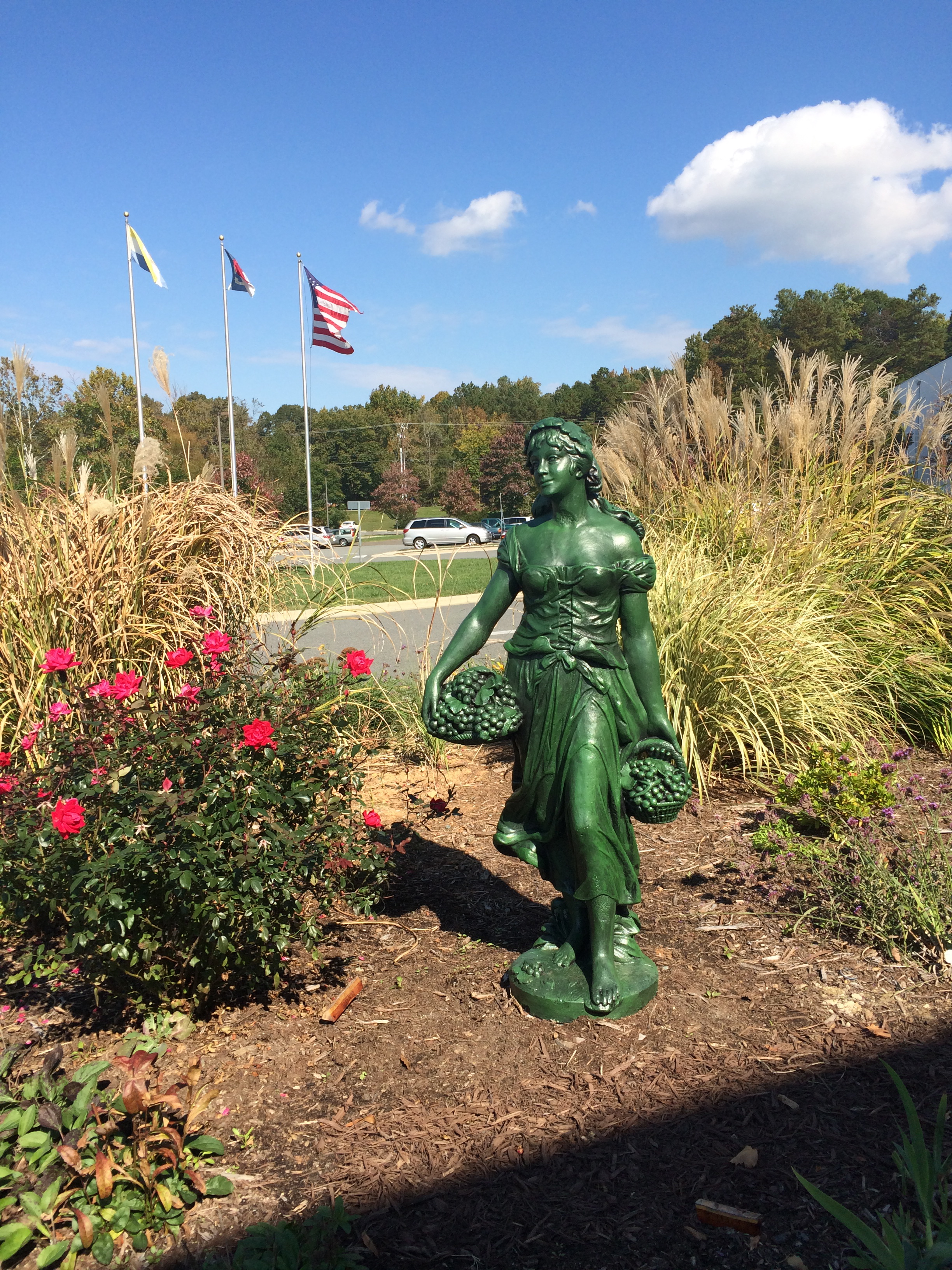
Demeter statue in front of my gym in Hillsborough, North Carolina

Demeter statue in front of my gym in Hillsborough, North Carolina

.

So what is a lamentation? The Oxford English Dictionary defines it simply: “The passionate expression of grief or sorrow; weeping.” Anyone who has grieved knows instinctively what it is to lament the loss of someone who is dearly loved. The feeling is painful and deep, and I think this resonates within us all. Demeter mourned her daughter’s abduction to a point where the earth nearly perished. This poem begins with her not yet knowing all that has happened. I picture her as a mother desperate to know what has happened to her child.

.

This is one of two lamentations of Demeter I’ve written. The second will follow at some point.

Demeter

Demeter

.

To listen to an audio recording of me reading this poem, click on the link below and wait a few seconds for it to begin:

.

.

The First Lamentation of Demeter

.

How is it that I don’t know where she has gone?

        I warned her.

I told her time and time again not to trust them,
that there were those who so longed for her
they would stop at nothing.

        And who was right?

Like all girls her age, she could be headstrong,
believing her own mother too old
to understand those yearnings.

         I warned her.

Last night I watched the dog star rise up.
Its magnificent beams were like beacons
that might lead me to my lost child.

        Why is it the stars are silent?

O, Sirius, your brilliant rays reach down
to us and yet your silence is puzzling.
Surely you saw where she went, my only child.

        Will no one tell me where my Persephone has gone?

.

.

Grief-Statue

Gusts ~ Tanka #1

Gusts Summer 2016


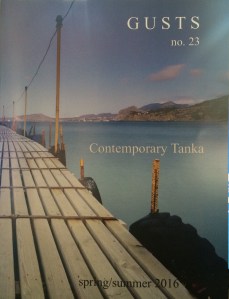
I’ve had the good fortune to have three of my tanka published in the latest issue of GUSTS,
NO. 23, Contemporary Tanka, Spring/Summer 2016 (Tanka Canada). This is the first time my work has appeared in this beautiful poetry journal, and I’m most grateful to the editor, Kozue Uzawa.

I’ve decided to post each tanka separately here on my blog.

Screen Shot 2016-04-15 at 12.01.34 PM


Without Light ~ A Tanka Sequence

My very first tanka sequence was published in RIBBONS: Journal of the American Tanka Society, Winter 2016: Volume 12, Number 1. My thanks to editor, David Rice, for suggesting to me that these three tanka would work best in a sequence.


Screen Shot 2016-03-25 at 9.26.19 PM


leaf-line-divider-small


Is Mythology More to Your Liking?

Now that it is early autumn, we tend to stay inside more and even read more (at least that’s my experience). Someone recently asked me if I would do the audio recording for some of my mythology poems on this blog. I had done one already, so it does seem natural to now do the others. I hope you like them. My style of reading isn’t dramatic, and I do try hard to avoid “poet voice,” something I dislike very much. Hopefully my readings are pretty natural, maybe too natural for those who do like more drama. I guess it’s all a matter of taste.

By clicking on each link, you will be directed to the original posting for the poem but with the audio now included. I hope you like them.

Grief

                     Grief

The First Lamentation of Demeter:

The First Lamentation of Demeter ~ (Poetry and Myth)

The-Abduction-Of-Persephone-By-Hades

The-Abduction-Of-Persephone-By-Hades

Second Lamentation of Demeter:

The Second Lamentation of Demeter ~ (Poetry and Myth)

feather-lake-russia_71645_990x742

Icarus I

https://apoetintime.com/2014/10/10/icarus-i-poem-by-mary-kendall-mythic-poetry-series/

dark-lake

Icarus II

Icarus II (Poetry and Myth)

And, while we are at it, here is one other poem on this blog linked with mythology:

Orpheus and Eurydice by Rodin, Metropolitan Museum of Art

Orpheus and Eurydice by Rodin, Metropolitan Museum of Art

The Broken Promise: Orpheus and Eurydice

The Broken Promise: Orpheus and Eurydice, poem by Mary Kendall (Mythic Poetry Series)

My Attic is Full

AUDIO COMES TO MY BLOG!

It’s time to try something new on my blog now that I’ve reached the one year anniversary. I’m adding an audio version of this poem, “My Attic is Full.”


DSC_0262

This week’s poem was written in 2011 for a friend I worked/taught with, Jean Sotelo Coene. Somehow we got to talking about cleaning attics and about all the treasures hidden up there and how hard it was to part with things. Jean mentioned her grandmother’s handbag and all the stories it held and that was it…a tiny seed of a poem was planted. I don’t know how those things come to be while others never take hold. I wrote the poem and gave it to Jean as a little present. I love to gift poems to just one person. For that reason, no one has read the poem except for each of us.

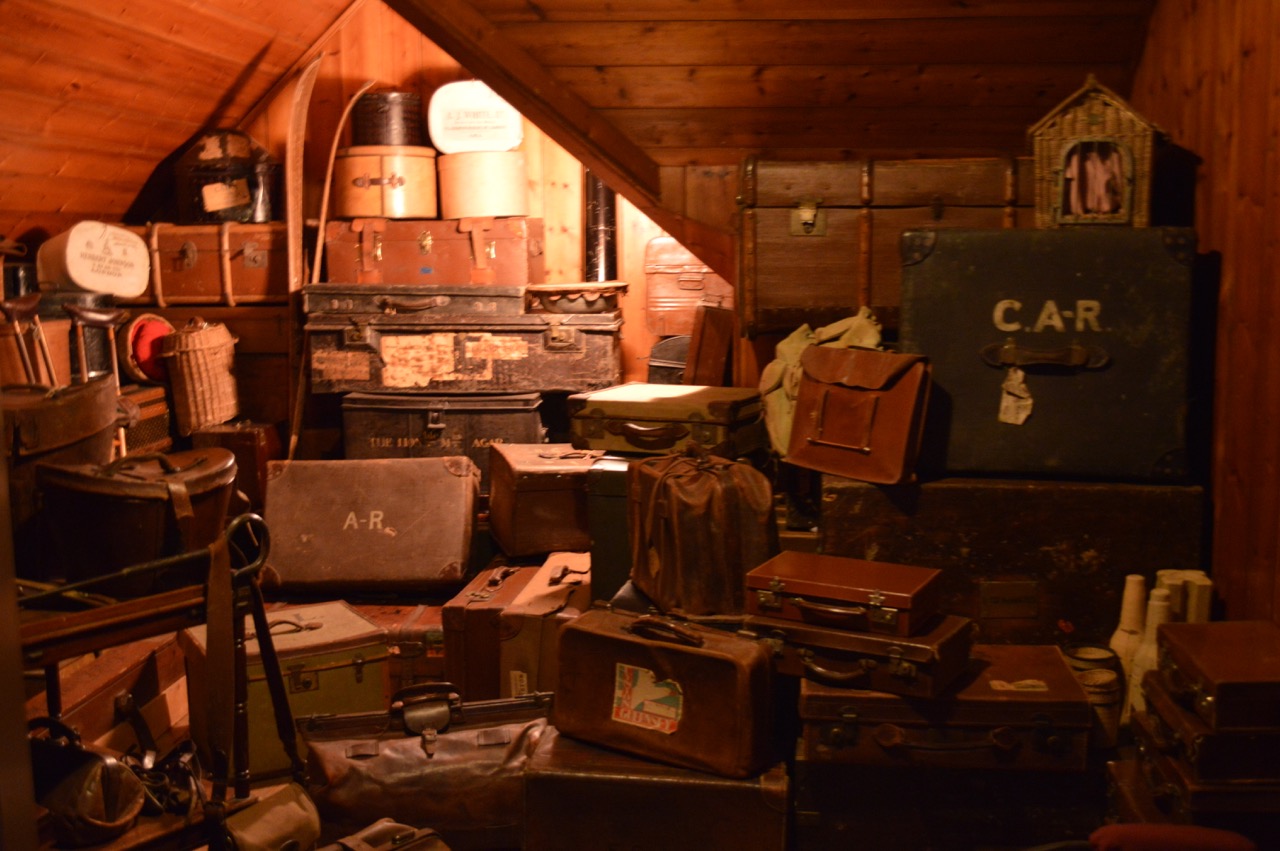
Today I was going through some lovely photos from a trip to Cornwall in 2013. [See Bedford Square +2, my travel blog for the whole story of that visit if interested.] We had visited a small manor house, Lanhydrock. [http://www.nationaltrust.org.uk/lanhydrock/] Part of our wanderings allowed access to the attic. Of course it was beautifully staged as were all the rooms in the house, but seeing these pictures this morning was too hard to resist. I worked on the poem today, changing words here and there, adding in a whole stanza and then deleting it. In the end, I liked the first version best. Only a few words are different from the one I handed to Jean.

This poem is dedicated to the memories of all grandmothers who gave us so many wonderful stories to listen to, to dream about, and to share.

To hear the audio, simply click below. I am not much of a professional reader so please bear with me.


610980-bigthumbnail

My Attic is Full

The attic needs cleaning. It seems so simple,
but it isn’t easy to throw old things away.
There is always the worry we might forget
those we loved, the ones crossed over.

Old boxes hold memories and clothing.
Do you hear the stories held in the silence?
A flowery print dress of soft lawn cotton
holds the story of when it was freshly laundered
and worn in the days of the mid-summer sun.

An old leather purse might tell you where
she went and what she wore.
Inside, a handkerchief delicately edged
in tatted lace is tucked away.

How often she must have clutched it
in her hand to wipe away tears or sneezes,
stifle laughter or mop her brow.
Even now the linen is redolent of old
damask roses from the flower garden.

Beyond the piled boxes of her belongings
are clothes from her husband so long mourned.
She kept them up here all those years,
the only way to keep him near.

Don’t you wonder how often she came up
into this dark attic, pulled the light string,
unfolded a crisp white shirt
and held it to her nose, eyes tightly closed
longing for the scent
that had faded from his pillow?

Lovely tatted edging-22maids-of-honor22-by-mary-konior.jpg

Lovely tatted edging-22maids-of-honor22-by-mary-konior.jpg

Blood Moon (Tanka)

Blood Moon Tanka

A plea for ending hatred:

This week the news was filled with the grand and rare beauty of the appearance of a Blood Moon eclipse and the absolute horror and non-sensical murder of Christian students in Kenya by Islamic fanatics. When, oh, when will the world stop hating?

“Early Thursday five shooters from the Somali-based al-Shabaab terrorist organization swept through a university in the Kenyan town of Garissa, shooting Christian students. They knew who to kill because they ordered students to recite an Islamic prayer. Those who could were spared. Those who could not were shot dead, about 147 so far. Police killed four of the terrorists and captured the fifth.”    (from the Wall Street Journal)

Note: This beautiful photograph of the Blood Moon is not mine. I found it through a google search, but it’s exact origin is unknown. I thank the photographer whoever he or she is for creating such a beautiful capture of this event.

Wild Water ~ Three Tanka

wild water


Wild Water: Three Tanka


1.

throughout the long day

the wild water crashes

again and again—

memories of you silently

slip under water


2.

as evening comes

the tide begins to swell

in the empty sound,

one lone boat

longing to set sail


3.

foghorn rasping

deep and low—

a bleak song

of ships surrendering

to savage waves


Small Poems of Grief

Grief, by iosatel, (c) 2014, The Obvious and Hidden blog: http://theobviousandhidden.com/2014/11/04/grief/

Grief, by Iosatel, The Obvious and Hidden blog, (c) 2014

1.

only the bereaved know
they needn’t speak in whispers,

grief is never
completely silenced


2.

rush of water
a broken branch drifts by
what will be left?


3.

Unending days of darkness
that never let you forget.


4.

Saturated, as if the clouds
had wrung themselves out
all at once, watching what
would then ensue


5.

sitting at the window
watching the rain
despondent days
of unexhausted sadness
trying to let go


6.

forgetting you
was never an option


7.

grief exhausts
but holds on,
rain continues
to fall


8.

thirty-five years and still I mourn you,
sometimes waking and imagining you there


9.

darkness deepens
into the black of night

lightning signals
thunder cracks,

but it is the loss of you
who took your life
that makes me ask
why it had to be

 ~~~

My Note of Thanks to the photographer, Iosatel, for his beautiful picture, Grief, which was first posted on his blog, The Obvious and the Hidden on 4/11/14. This photograph is copyrighted (c) 2014 by the artist himself.

The First Lamentation of Demeter ~ (Poetry and Myth)

 British Museum GR 1885.3-16.1 (Terracotta C 529), AN34724001

British Museum GR 1885.3-16.1 (Terracotta C 529), AN34724001

I’ve been looking over my writing notebooks written a while back but unread by anyone other than myself or my husband. The myths of Demeter and her daughter, Persephone, fascinate many including me. For a number of reasons these myths seem to appeal especially to women. Many of the great living women poets have written brilliant poems about Persephone (e.g., Louise Glück and Eavan Boland). The story is timeless.

In today’s poem I’ve written a Lamentation of Demeter. Demeter, the goddess of the harvest and grains, is often referred to as the mother-goddess since she represents fertility on earth. Her importance is indisputable. When she mourns for her missing daughter, Persephone (who has been abducted by Hades and taken down into the underworld by force) the seasons stop. Things stop growing and the earth begins to die before Persephone’s father, Zeus, intervenes.  You know the story, but it is worth re-reading if you haven’t read any mythology for a while.

Demeter statue in front of my gym in Hillsborough, North Carolina

Demeter statue in front of my gym in Hillsborough, North Carolina

So what is a lamentation? The Oxford English Dictionary defines it simply: “The passionate expression of grief or sorrow; weeping.” Anyone who has grieved knows instinctively what it is to lament the loss of someone who is dearly loved. The feeling is painful and deep, and I think this resonates within us all. Demeter mourned her daughter’s abduction to a point where the earth nearly perished. This poem begins with her not yet knowing all that has happened. I picture her as a mother desperate to know what has happened to her child.

This is one of two lamentations of Demeter I’ve written. The second will follow at some point.

Demeter

Demeter

To listen to an audio recording of me reading this poem, click on the link below and wait a few seconds for it to begin:


The First Lamentation of Demeter

How is it that I don’t know where she has gone?

        I warned her.

I told her time and time again not to trust them,
that there were those who so longed for her
they would stop at nothing.

        And who was right?

Like all girls her age, she could be headstrong,
believing her own mother too old
to understand those yearnings.

         I warned her.

Last night I watched the dog star rise up.
Its magnificent beams were like beacons
that might lead me to my lost child.

        Why is it the stars are silent?

O, Sirius, your brilliant rays reach down
to us and yet your silence is puzzling.
Surely you saw where she went, my only child.

        Will no one tell me where my Persephone has gone?

Grief-Statue

Willow Branches

Boston Public Garden

Boston Public Garden

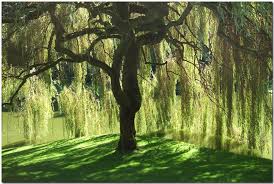
The weeping willow is perhaps one of the loveliest trees of all. It certainly plays an important part of many myths and legends in different cultures, and it has stories linking it with full moons, protection and inspiration. I have always loved willows. One of my fondest memories is of living in Cambridge and walking through the Boston Public Gardens when the willows were out in full. On a hot day, you could sit under one and feel ten degrees cooler. The were also among the earliest trees to leaf in spring.

Old Tombstone with Weeping Willow

Old Tombstone with Weeping Willow

In the old, old cemetaries of Boston and Cambridge, willows adorned gravestones and iron work going back to Colonial times.

Lovely Iron Gate with Willow

Lovely Iron Gate with Willow


In the beautiful North Carolina community in which I live there was once a beautiful lotus pond with a magnificent willow overlooking it. One night the tree came crashing down. Later the pond dried up and the lotuses were no more. This poem began quite some time ago, but it, too, lay dormant until I pulled out a forgotten draft of the first three stanzas. Strange how that can be–sometimes returning to a poem that was left unfinished so long ago is suddenly the very thing you need.

~ ~

Click on the link below if you’d like to listen to me reading this poem. It will take a few seconds before the clip begins so please be patient.


Weeping Willow Tree

Weeping Willow Tree


Willow Branches


They said it was the drought that did it.
Too many summers the pond dried up,
Even the lotus pods soon went dormant.

Rainstorms came that June: day after
Day the rain flooded the nearby creek
And filled the small pond you graced.

It was just too much and all too fast.
In the night you fell, your shallow roots
Rudely ripped out of the raw wet earth.

The old gardener pulls up in his truck,
Walks over with chain saw in hand,
Ready to dismember branches and trunk.

I ask if I might take a few willow wands.
He waits patiently and watches as I
Cut three long sticks of fallen green.

I thank him and walk away. He nods,
and smiles wryly after me, at the whimsy
Of a stranger who was passing by.

The chain saw shrieks as it starts
On its ruthless task as I continue
By on my walk, recalling a story I love.

Carrying sticks of willow for protection,
Orpheus, singer of sweet songs and poems,
Wandered in dark and silent Hades.

We know the ending, how Eurydice
Was soon lost forever. But the willow gifted
Orpheus with music, songs so beautiful

Even the wild and rowdy winds stopped
Blowing to listen to his broken heart. With
Orpheus’ death, the lyre lay silenced.

Over the chain saw’s tuneless humming,
I picture the willow’s nocturnal passing,
And I weep for all who are lost too soon.