And then again, the past comes back

This is a reblog from eleven years ago. It wandered all that way into my thoughts on a quiet Saturday afternoon in mid-August of 2026.

So much has happened in eleven years. We are a changed country, a transformed world. The seas have risen, glaciers melted and weather controls life in a new way. The world seems to be at war with everyone, and our beautiful American democracy is at a dangerous level of risk that increases each and every day. There is quite often a feeling of heaviness and despair when listening to or reading the news. So many of these changes are not for the good of mankind, but that is a topic for many discussions and more poems. And so we wait for that rush of wild wind of change to surprise us and clear the air and world of darkness, unkindness and injustice.
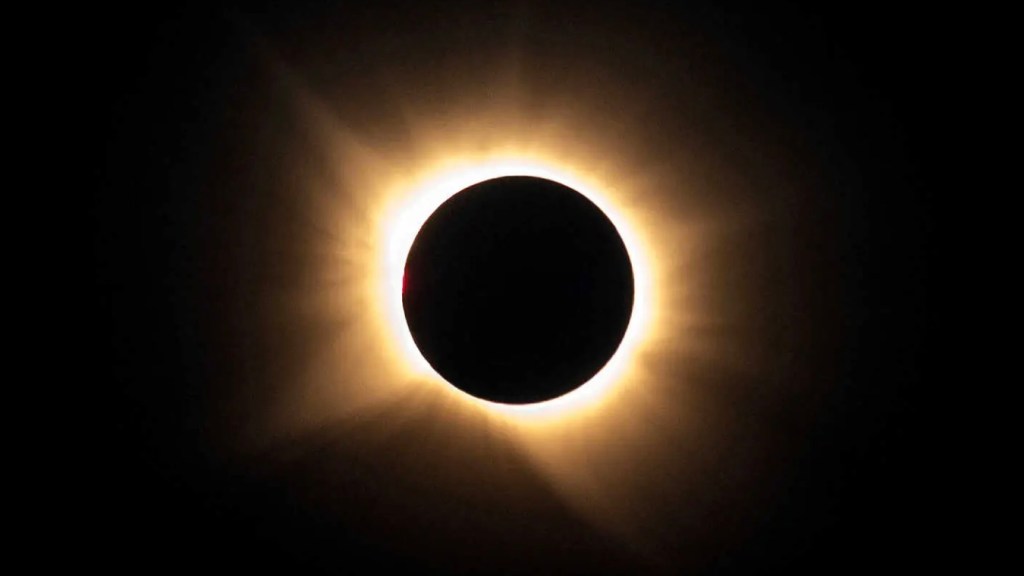
Photo: the solar eclipse, August 2026 (from the internet, no specific photographer given). Thank you, whoever you are.

I’ve chosen this particular blog post from 2015 because it deals with memory and its peculiar traits. I hope some of you will enjoy reading the whole posting and how it came to be.

(Feel free to leave a comment about your own thoughts about memory and time.)

Here you go:

The Mutability of Memory

Posted on  by Mary Kendall

All of us have memories. Good memories. Bad memories. Memories we love to revisit over and over. Memories we push far back, hoping they will disappear. Some memories are vivid, while others are dreamy and vague. A few are very, very real as if they just happened, but others feel as if they stories that happened to someone else rather than us.

Memories can be haunting. Memories can be triggered by all sorts of things—from a taste that evokes brilliant memories from early childhood to a scent of burning leaves that reminds us of an autumn long gone.

It began with a prompt in March 2014 in Poets Online {my thanks to Ken Ronkowitz for this idea) to use a first line from an Emily Dickinson poem as our own poem title and then to write a new poem. This was one of my favorite prompts because it asked me to do something I had never considered. I do read Emily Dickinson’s poetry from time to time. I puzzle over her words and meanings. I spend a fair amount of time thinking about what she meant and how she did it. She never ceases to amaze me or probably any of her readers. To borrow a first line from her seemed a bit like stealing something sacred. And then the fun began–going through all of her first lines (which, of course, have also become the titles of her otherwise untitled poems)–and selecting one to work with. The prompt suggested we not read (or reread if we had read the poem a while back) Emily Dickinson’s version until our own version was complete. Fair enough.

After going through the list of first lines of Dickinson, I had to eliminate all those I knew. That meant excluding some wonderful poems I knew and loved. It also meant I had to find a poem that was unknown to me. Oddly enough the one I ended up with is a well-known poem of hers, but I couldn’t remember reading it (failure of memory on my part perhaps?), so I chose it. I love this line. “The Past is Such a Curious Creature.” Don’t you love the very idea of it, calling the past a curious creature, personification with such crisp alliteration?

Following the instructions, I did some thinking of what the line meant to me, what it brought forward. That’s how poets work. It can be rather vague to those who don’t write, but all poets know that a simple line can bring to life so many things. A poem comes from someplace deep inside, a place we’d love to explore but we only get glimpses of it. It took me a while to write the poem and to rewrite it. I wasn’t sure I wanted to submit it for quite some time. I even tested out a few other lines as prompts, but I returned to this irresistible line that Dickinson wrote. Here is the poem I finished and submitted. When the final poems were published, it was fun to read all of them. The other writers did a wonderful job. Some wrote in a style resembling hers. A few wrote in rhyme. I did none of that. Mine was in free verse, dictated only by the ideas and images that spilled out.

My poem:

THE PAST IS SUCH A CURIOUS CREATURE  (Line taken from Dickinson’s Poem CXXVII)

The past is such a curious creature
capable of creating such marvelous lies
that we begin to believe as we hear them
said again and again, forgetting that
there are those who love to distort
the truth and let it spill out and break
into brittle bits & pieces that are left
on the street to be kicked and crushed
until the shards are too small to see.

The past writes a story of its own choosing.
Its pen might be inked in faulty memory;
its paper might be marked in things that
did happen as well as those that did not.

This story is examined with the lens
of exaggeration and embellishment
until the tale that remains
is now so embedded in our minds
that we can no longer know
what was real and what was not.

And now for the inspiration piece, the poem written by Miss Dickinson:

THE PAST IS SUCH A CURIOUS CREATURE  (Poem CXXVII)
by Emily Dickinson (Complete Poems, 1924).

Part One: Life CXXVIII

The Past is such a curious creature
To look her in the face,
A transport may receipt us
Or a Disgrace.

.
Unarmed if any meet her,
I charge him fly!
Her faded ammunition
Might yet reply!

Although the prompt suggested reading the original poem after our own was nearly complete and then comparing where we were going, I opted to read Emily Dickinson’s only after my poem was more or less complete.

In Emily Dickinson’s poem, her personification of the past as a feminine being is a surprise. Then she tells us that as we remember the past, it might reveal a hidden delight or a remembrance of something disgraceful or shameful. That said, she moves to the second stanza and urges the reader to be aware that if the past memories are ignored, there might be consequences that would take us with surprising force. How true. Memories that are suppressed can and just might tumble out to reveal an unfathomable nightmare. Or more.

My own poem chose a different path. It opted for examining the past by questioning the mutability of memory. Is the past always the past? Is it constant? Or is its story one that changes in the retelling and perspective of the storyteller? My point of view came arose from the self-examination of a few haunting memories from my own early childhood. These particular memories were negative, but they were mine as I perceived them.

In asking one of my sisters about her perception of these same events, her memory was quite different from my own. So, which was true? Either one? Both? True for her, and true for me, even with different observations and conclusions? I spent a long time trying to figure it out but was unable to do so. My past. Her past. Our past. Memory can change and distort with time, age, experiences, contemplation, It does present some good leads for poems, but it does not answer the question as to what that unhappy childhood memory really was all about.

Poetry allows us to raise questions and to examine possibilities. It is not psychotherapy, nor is it scientific. What it does do is give the poet a way to explore personal stories and experiences and to turn them into something that goes far beyond the individual self. It offers each reader a chance to follow along and even to join in, adding their own experiences and memories into the mix.

What do YOU think about the mutability of memory? Can we ever answer all of the questions we have about the past?
.

forgetfulness


forgetfulness—

soft feathers drift out

of a poultry truck


~ ~


Published in Frogpond vol. 43:3 fall 2020


Frogpond is the journal of the Haiku Society of America

finding a way back . . . (four Senryu)


Part 2:
Prune Juice, A Journal of Senryu, Kyoka,
Haibun and Haiga,
Issue 26 – November 2018


Four Senryu:


reproach –
finding a way back
from heated words


~


overanalyzing–
the smell of wood smoke
on the wind


~


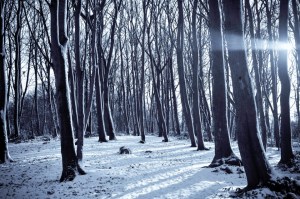
winter walk
learning to negotiate
what can’t be seen


~


the house
where I was born
weeds & more weeds


          Photograph by Marina Shemesh

One frame at a time (tanka sequence)


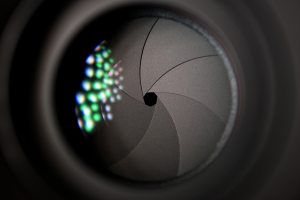
aperture-art-blur-414781 pixabay

Photo: aperture art blur/Pixabay


My thanks to my friend and fellow poet, Iliyana Stoyanova
for writing this tanka sequence with me. 


Blithe Spirit, the Journal of the British Haiku Society, August 2018


ONE FRAME AT A TIME

A Tanka Sequence

by Mary Kendall (USA) and Iliyana Stoyanova (UK)


camera in hand
you tame the world
click by click …
living your life
one frame at a time

(MK)

the old album
asleep in dust
for all these years
the last two pages
stuck together

(IS)

so alike
everyone said
we could be twins
but then one day
a letter arrived

(MK)

through the open windows
spring wind…
by the ballerina box
my old ribbons tangled
like childhood memories 

(IS)

in my hands now
a forty-year-old picture
of an unknown aunt
a tiny birthmark
same as my own

(MK)


Screen Shot 2018-09-28 at 1.39.28 PM

Photo from Freeimages.com


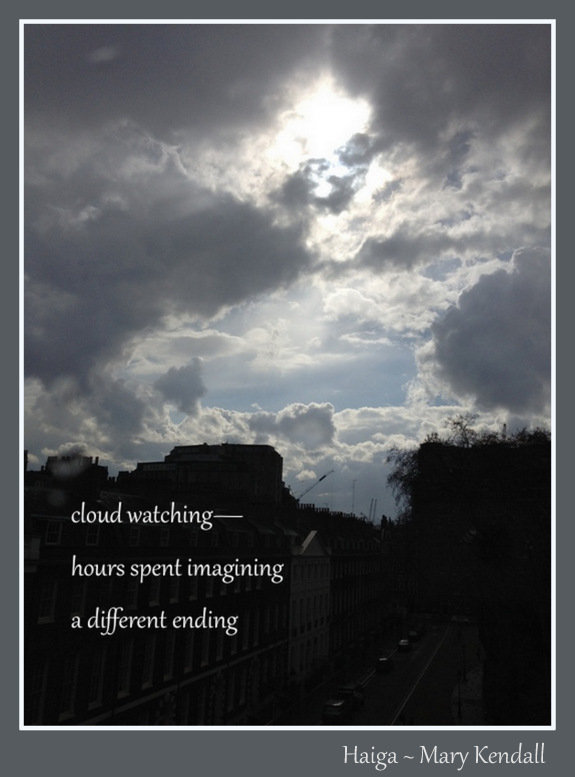
Cloud watching (a haiga)

cloud watching haiga 2


Published in Prune Juice, A Journal of Senryu, Kyoka,
Haibun and Haiga, Issue 22, July 2017

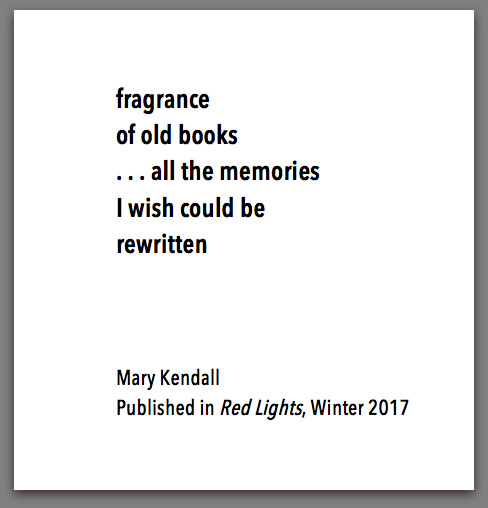
Fragrance of old books… (tanka)

Click on the link below if you care to hear me read this tanka:


fragrance-of-old-books

My thanks to editor, Marilyn Hazelton, for publishing this tanka in Red Lights, one of the best tanka journals around.

Arrowheads rise…

It is always an honor to have a tanka published in , the Journal of the Tanka Society of America. My thanks to editor David Rice for selecting this poem.


arrowheads
rise to the surface
in a newly plowed field …
old memories
can be unexpected, too


Published:

Ribbons (Journal of the Tanka Society of America), Spring/Summer 2016, Volume 12, Number 2 (page 37)


1-arrowhead 1


Brushing Your Hair

1-IMG_1141


Brushing Your Hair

In the last month you ask me a favor.
Will I brush your hair when you have passed?
You seem to want to greet whatever comes
looking your best. I give my promise.

Each day when I come home, I offer
to brush your hair, but you say no,
maintaining the independence
you have always shown.

Later, in hospice, I no longer ask.
I hold your hands, rubbing lotion in,
skin so fragile, like a butterfly wing.
It is time now to make the last ablutions.

I clean your face and brush your hair,
your sleeping eyes flicker
under paper-thin lids, pale blue veins
tracing their course across them.

I imagine your mother tenderly holding you,
stroking your cheek, watching you dream
in her arms—her newborn daughter
with milky breath.

Ninety-one years separate us, your two watchers.
One joyously bringing you into the world;
the other sitting silently in the dim-lit room,
keeping watch over you through the night.          


1-IMG_1133


The poem, “Brushing Your Hair” is from my chapbook, Erasing the Doubt (c) 2015, Finishing Line Press.


Mary, Mary…poem by Mary Kendall (SAME NAME Poetry and Prose Series)

A new poem just up at Silver Birch Press. Click at the bottom to get to the original on the SBP site.

silverbirchpress's avatarSilver Birch Press

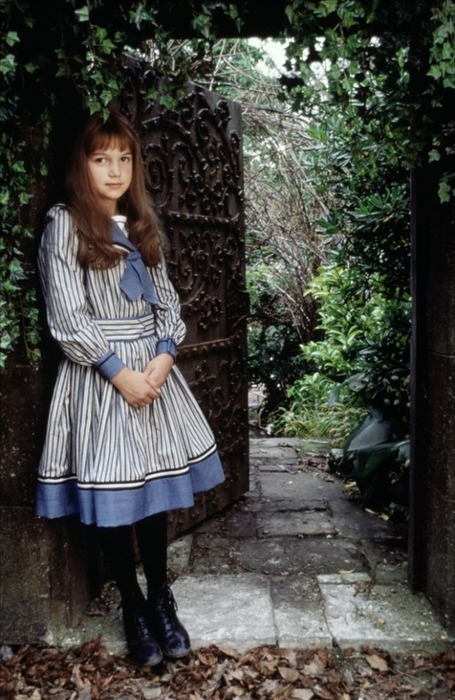
kate maberlyMary, Mary…
by Mary Kendall

Unwanted.
Unloved.
Shunned.
Spoiled.
Rude.
Aggressive.
Obstinate.
Outspoken.
Contrary.
Sour.
Gloomy.
Dismissive.
Shut away.
Alone.
Alone.
Alone.

Your attributes, little Mary.
A long list.
No one liked you.
Except for me.

Not true. There were others.
Your sweet Indian Ayah, who fed you,
washed you, dressed you, taught you,
tolerated your contrary ways, angry words,
miserable frown. She held you close,
rocked you after nightmares and dark dreams,
fanned you in the hot Indian summers.
She sang to you—mellifluous, soothing songs.

Your mother denied your existence, hid you away from view,
just as later, you’d find your cousin Colin, hidden away, too.

Denial.
What damage it did.
What pain it caused.
Like a plant held too long in a small pot,
its roots pot-bound and crippled,
Colin, unwanted and denied like you.

Unwanted.
Unloved.
Denied.

My family separated when I was just five,
I felt…

View original post 514 more words

Charlotte’s Story: Haiku for Wilbur by Mary Kendall (ME, IN FICTION Poetry and Prose Series)

silverbirchpress's avatarSilver Birch Press

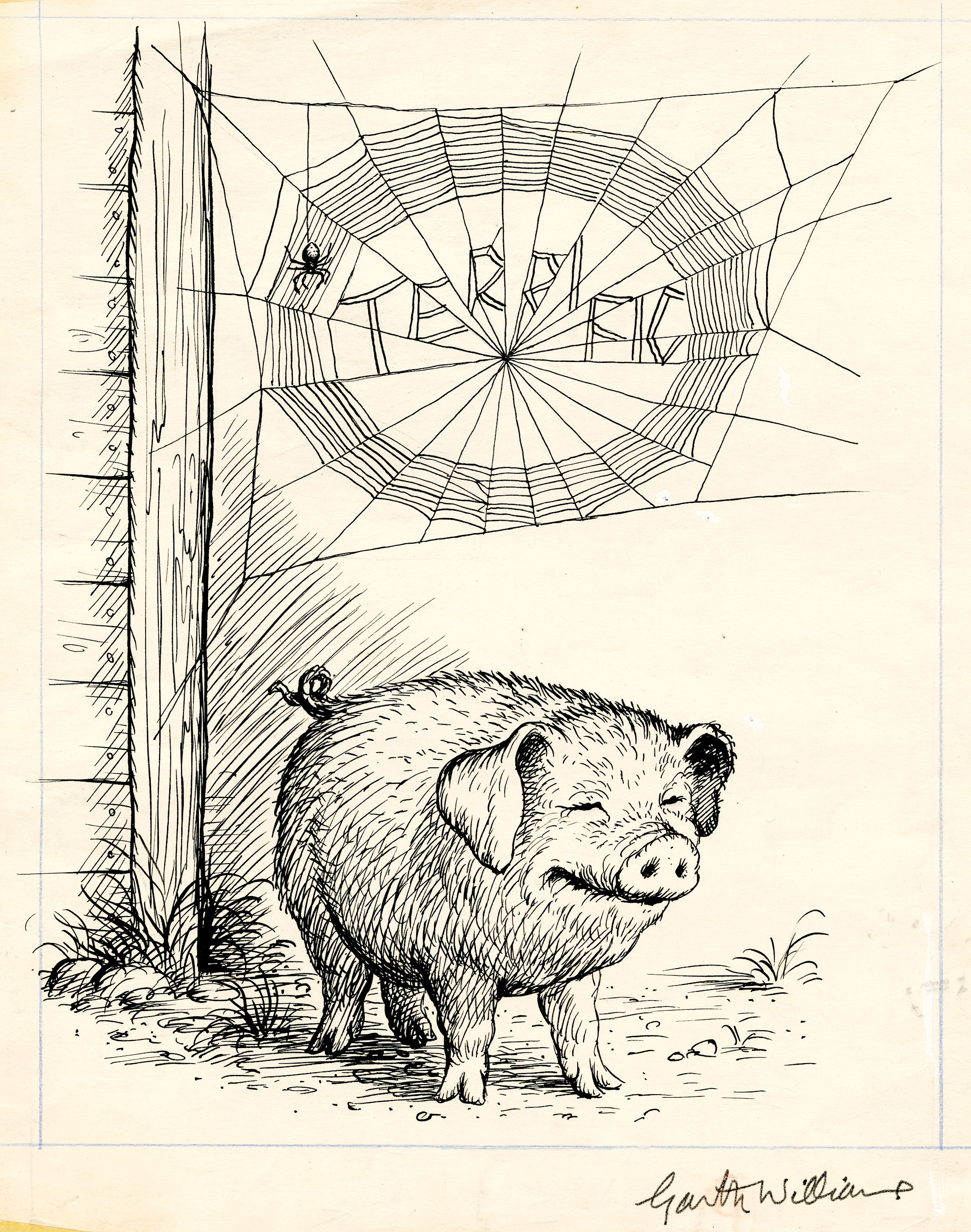
Charlottes-Web-Terrific-Garth-Williams1Charlotte’s Story: Haiku for Wilbur
by Mary Kendall

“My Words”

my words—
who knew what a story
we’d become?

“First Friend”

a friend—
something my kind
never knew

“The Unexpected”

new friend—
silken parachutes in spring wind
bestow surprises

“Silken Words”

silken words…
hearts woven together
in their own story

“Some Pig”

little did they know
how special you were—
some pig!

“Terrific”

a real friend
who accepted me as I am…
terrific!

“Radiant”

just knowing
you have a good friend…
this radiant heart

“I Told You”

out of nowhere
grows the best thing…
kindness of spirit

“Humble”

humble—
your kindness of heart
my friend

“The Fair”

harvest moon—
who knew how high
we’d fly?

“Templeton”

even a rat
can help a friend..
who knew?

“My Time”

time for rest
my voice a whisper
…alone now

“Good-bye”

no need to worry—
our memories will live on
in your heart

“Death”

View original post 261 more words

Kamakura Beach 1333: Artist’s choice in Rattle’s Ekphrastic Challenge

Screen Shot 2015-11-20 at 8.35.28 AM

I am both speechless and honored by the selection of my poem, “Kamakura Beach, 1333” as the artist’s choice of the October ekphrastic challenge by Rattle, one of the finest contemporary poetry journals. The artist/photographer is Ana Prundaru. My thanks go to Ana for selecting my poem for this challenge. I am deeply touched by her very thoughtful and generous comments.


Artist's Comments.jpg

To read the poem or listen to the audio on Rattle, here is the link:

http://www.rattle.com/poetry/kamakura-beach-1333-by-mary-kendall/

Note: there is an audio of me reading the poem on the Rattle page but I’ll include it here as well:

~

Kamakura Beach, 1333                                          


The sea washed scarlet that night.

The tide rushed in—swelling and breaking—washing
all traces out to sea on the waves of Kamakura Beach.

You know nothing of this, you who long for adventure
and pleasure—youth who search desperately for meaning
in lives that are too rich, too busy, and still so poor.

Your small boats arrive in early evening, the carmine sunset
at your back, and you quickly gather driftwood, tinder, and
fallen black pine branches to burn. You light the fire.

A trail of smoke begins funneling up to the starry sky.
The fire burns hot and one by one, you feed it twigs, boughs,
pine cones bursting into streams of sparks and wild flames.

And in your wanton rambling, one girl grows silent—she alone
hears the hallowed chanting, the cries of battle, the shrieks
of arrows piercing skulls, the stench of life exiting too abruptly.

She wanders over shallow rocks, her hand touching stone,
knowing the pain hidden in the silence of eight hundred years.
The rest of you are unaware…you laugh too loudly, move

too fast, not noticing the shifting colors of the setting sun.
Listen and you will hear the shogun cries of warriors and farmers
that once shook the sacred sands of Kamakura Beach.

Can you smell the fierce fires, the burning buildings,
the blazing rafters crashing and lighting the darkening sky?
Can you hear the screams of those buried here long ago?

Time slipped by like swifts at dusk darting in the fading sky.
The fire raged on and on, and lives were ravished in a
single breath. It was our fate to die on Kamakura Beach.

With Samurai mind and clean, sharp blows, the sacred sword
was swift. One by one, we died…each of us choosing honor,
this bleak beach now strewn with bones, bodies and blood.

You who come to visit—feel the cool churning lapis blue water,
and see the late sun boldly brush red on sand, water and waves.
Remember us—we who lie buried on Kamakura Beach.

Let your fires roar, let them spark in comets to the stars.
Under the dark night skies long written in indigo and ink,
we will walk together here on Kamakura Beach.

Morning tide will come—swelling and breaking—washing
your presence out to sea— remembering our final night,
a night of fire and blood, bone and bodies on Kamakura Beach.

The sea washed scarlet that night.


~

Here is the broadside link:

Click to access EAOct2015.pdf

Rattle also posted a download of a broadside that includes poem and picture side by side. It is so beautifully done with the shadows of the boat creating a subtle image under the poem. Very appropriate to this particular poem, I think.


My Mother’s Voice…a poem of loss

Today, my favorite haiga was published in a favorite journal, Gnarled Oak. It is a lovely home for this haiga. Here it is along with the link to Gnarled Oak (check out all the great poetry in this journal). The editor, James Brush, releases one poem a day, a custom I love. It’s always a joy to see what each day holds. My thanks goes to James for accepting this piece.

My Mother’s Voice


My Mother's Voice haiga


.

beautiful border for blog


This haiga was originally posted on this blog on June 14, 2015.

Salted Feathers

bird-feather-13486506267nW

To listen to an audio of me reading this poem, just click on the link below. Give it a few seconds, and it will start.

salt shaker

Salted Feathers

I was four when you told me the story
that if someone wanted to capture a bird
they must sprinkle its tail with salt.

We went outside, salt shaker in hand,
not sure what we really planned to do.
In the end, it was a tiny sparrow foraging

for fallen seeds or tiny insects on the other
side of the chain link fence at the back
of the yard. You told me to go ahead and

sprinkle it. My hand would not fit through
the opening link square with the shaker.
Blindly I tossed a spray of salt that landed

more on you and me than any place else.
The little bird was spared, and he continued
rummaging around in the grasses, indifferent

to the plans made by two small girls who
had no real idea what it was to take away
the gift of flight. No salted feathers for him.

All I remember now is that I felt something
happen inside when the little bird looked
at me and, in the way of all birds, off it flew.

1-chain link 1 (1)

The Mutability of Memory

All of us have memories. Good memories. Bad memories. Memories we love to revisit over and over. Memories we push far back, hoping they will disappear. Some memories are vivid, while others are dreamy and vague. A few are very, very real as if they just happened, but others feel as if they stories that happened to someone else rather than us.

Memories can be haunting. Memories can be triggered by all sorts of things—from a taste that evokes brilliant memories from early childhood to a scent of burning leaves that reminds us of an autumn long gone.

It began with a prompt in March 2014 in Poets Online to use a first line from an Emily Dickinson poem as our own poem title and then to write a new poem. This was one of my favorite prompts because it asked me to do something I had never considered. I do read Emily Dickinson’s poetry from time to time. I puzzle over her words and meanings. I spend a fair amount of time thinking about what she meant and how she did it. She never ceases to amaze me or probably any of her readers. To borrow a first line from her seemed a bit like stealing something sacred. And then the fun began–going through all of her first lines (which, of course, have also become the titles of her otherwise untitled poems)–and selecting one to work with. The prompt suggested we not read (or reread if we had read the poem a while back) Emily Dickinson’s version until our own version was complete. Fair enough.

After going through the list of first lines of Dickinson, I had to eliminate all those I knew. That meant excluding some wonderful poems I knew and loved. It also meant I had to find a poem that was unknown to me. Oddly enough the one I ended up with is a well-known poem of hers, but I couldn’t remember reading it (failure of memory on my part perhaps?), so I chose it. I love this line. “The Past is Such a Curious Creature.” Don’t you love the very idea of it, calling the past a curious creature, personification with such crisp alliteration?

Following the instructions, I did some thinking of what the line meant to me, what it brought forward. That’s how poets work. It can be rather vague to those who don’t write, but all poets know that a simple line can bring to life so many things. A poem comes from someplace deep inside, a place we’d love to explore but we only get glimpses of it. It took me a while to write the poem and to rewrite it. I wasn’t sure I wanted to submit it for quite some time. I even tested out a few other lines as prompts, but I returned to this irresistible line that Dickinson wrote. Here is the poem I finished and submitted. When the final poems were published, it was fun to read all of them. The other writers did a wonderful job. Some wrote in a style resembling hers. A few wrote in rhyme. I did none of that. Mine was in free verse, dictated only by the ideas and images that spilled out.

My poem:

THE PAST IS SUCH A CURIOUS CREATURE  (Line taken from Dickinson’s Poem CXXVII)

The past is such a curious creature
capable of creating such marvelous lies
that we begin to believe as we hear them
said again and again, forgetting that
there are those who love to distort
the truth and let it spill out and break
into brittle bits & pieces that are left
on the street to be kicked and crushed
until the shards are too small to see.

The past writes a story of its own choosing.
Its pen might be inked in faulty memory;
its paper might be marked in things that
did happen as well as those that did not.

This story is examined with the lens
of exaggeration and embellishment
until the tale that remains
is now so embedded in our minds
that we can no longer know
what was real and what was not.

And now for the inspiration piece, the poem written by Miss Dickinson:

THE PAST IS SUCH A CURIOUS CREATURE  (Poem CXXVII)
by Emily Dickinson (Complete Poems, 1924).

Part One: Life CXXVIII

The Past is such a curious creature
To look her in the face,
A transport may receipt us
Or a Disgrace.

.
Unarmed if any meet her,
I charge him fly!
Her faded ammunition
Might yet reply!

Although the prompt suggested reading the original poem after our own was nearly complete and then comparing where we were going, I opted to read Emily Dickinson’s only after my poem was more or less complete.

In Emily Dickinson’s poem, her personification of the past as a feminine being is a surprise. Then she tells us that as we remember the past, it might reveal a hidden delight or a remembrance of something disgraceful or shameful. That said, she moves to the second stanza and urges the reader to be aware that if the past memories are ignored, there might be consequences that would take us with surprising force. How true. Memories that are suppressed can and just might tumble out to reveal an unfathomable nightmare. Or more.

My own poem chose a different path. It opted for examining the past by questioning the mutability of memory. Is the past always the past? Is it constant? Or is its story one that changes in the retelling and perspective of the storyteller? My point of view came arose from the self-examination of a few haunting memories from my own early childhood. These particular memories were negative, but they were mine as I perceived them.

In asking one of my sisters about her perception of these same events, her memory was quite different from my own. So, which was true? Either one? Both? True for her, and true for me, even with different observations and conclusions? I spent a long time trying to figure it out but was unable to do so. My past. Her past. Our past. Memory can change and distort with time, age, experiences, contemplation, It does present some good leads for poems, but it does not answer the question as to what that unhappy childhood memory really was all about.

Poetry allows us to raise questions and to examine possibilities. It is not psychotherapy, nor is it scientific. What it does do is give the poet a way to explore personal stories and experiences and to turn them into something that goes far beyond the individual self. It offers each reader a chance to follow along and even to join in, adding their own experiences and memories into the mix.

What do YOU think about the mutability of memory? Can we ever answer all of the questions we have about the past?
.
.
(Note: part of this posting appeared on my other blog, Bedford Square +2)

Almost Surrendered: On Being and Nothingness ~ An Ekphrastic Poem


So, what IS ekphrastic writing or art?

As many of you know, I love art. I love going to art museums, galleries and art shows. Art history has always been one of my passions, so it’s natural enough that ekphrastic art and writing has captured my interest. A very simple definition of ekphrastic poetry is writing a poem in response to a work of art. It can be descriptive or it can be a response of any sort to the piece. There are no restrictions, no limits, and that by itself is something that has great appeal. The same goes in reverse–an artist might create a piece in response to a written work. My own blog has poems written about ancient Greek mythology, and in each posting I’ve included beautiful works of art that are ekphrastic responses to the myths.

This particular poem was a response to a show of the artwork of Ronna S. Harris that was held at the Turchin Art Center at Appalachian State University in Boone, North Carolina. My husband and I fell in love with her work and this particular painting has haunted me for nine years. This poem is my response to it. My thanks to the artist for her permission to use this painting here and in the journal it was recently published in. I hope some of you will wander over to her own website to look at the gallery of paintings she has there. I still dream of owning one of her works of art.  Her website:  http://www.ronnaharris.com


Note:  My thanks to editor Lorette C. Luzajic for publishing this poem on September 13, 2015 in Ekphrastic: writing and art on art and writing:

http://www.ekphrastic.net/ekphrastic/almost-surrendered-on-being-and-nothingness-by-mary-kendall


small Almost Surrendered

Painting:  Almost Surrendered, by Rhonna S. Harris, 1992.
Picture used with permission of the artist.


Click the link below if you’d like to hear me read this poem. It takes a few seconds to load.


Almost Surrendered: On Being and Nothingness                                                  


The gallery was empty, the artist unknown to us.
Strangers to her work, we walked in quietly,
speaking in whispers about the way she painted
a rich purple aubergine or the clear, shimmering water
in blown-glass bottles. Illusion so real it was perfect.
Her paintings seemed direct but insinuated that
something might be hidden just beyond our view.

From fruits and windows, vegetables and doorways,
suddenly there was a room full of large paintings of figures,
mostly nudes with evocative names like “Pieta” or
“Architecture of the Perfect Man.”

We stopped in front of one called “The Marriage.
It showed two figures lost in thought, in separate worlds.
It reminded me of what marriage is like for some after
so many years together. Still, silence doesn’t always speak
of distance but of an understanding of hearts.

And there, on the left wall, was “Almost Surrendered.”
A pale naked woman with arms by her side, palms stretched up
in prayer or supplication. She was translucent, existing half here,
half there. Behind her was a closed window. She wore a gold chain.

Was she a memory, a body giving way to death or being reborn?
Or was this ghostly surrender all illusion, a message
to women who have given too much of themselves?
A woman who had lost herself in trying to be everything.

Could she be a dream?

You moved on to the next picture and then the next,
but I stood there staring at this vanishing woman and
wondered who it was who really had surrendered.

Was she any woman?

Could she be me?

You reappeared, and together we moved on.
This time round, I found myself thinking about windows
in pictures, of what lay beyond the glass the artist
drew, surrendering myself to what she didn’t show,
what she concealed in her mind like a stage curtain pulled back
just enough to hint that maybe others stood on the other
side, looking back at us from a completely different angle.

Would they study us closely, marveling at our verisimilitude?
the lovely glazes of color so skillfully applied, built up so
carefully to a level of opacity that suggested real inner depth?

Would they compare us to the other figures in the gallery
and wonder why we were not painted as a man and a woman
fading from view, surrendering to a love spoken in silence?


(c) The Guardian

(c) The Guardian

Transformation and the Ineluctable Signs of Ageing, prose poem by Mary Kendall (My Meta-Morphosis Series)

My thanks to Silver Birch Press for including my poem in this wonderful series. I have been enjoying reading all the poems posted, each so different from the others.

silverbirchpress's avatarSilver Birch Press

Takahashi_Biho-No_Series-Dragonfly_and_lotus-00034829-030804-F06
Transformation and the Ineluctable Signs of Ageing
by Mary Kendall

This is not my first transformation. No, it happened way back when—six decades and then some, and I find myself no longer who I thought I was just ten, twenty or even thirty years ago. Those were other lifetimes, times I lived through, times I felt so alive, enjoyed, loved, and times I remember, but those were lives I knew I had passed through completely.

I have the evidence.

Now, going further back in time—forty or fifty years ago, it all begins to change. It starts to slow down—slow—slow—slow—as if someone has put a finger out and touched the spinning world—and now it slows down enough as if I must to look for a place to rest.

This viewing backwards makes me dizzy—dizzy—dizzy enough to want to keep traveling back to the end, which in fact is the beginning, and…

View original post 500 more words

My Attic is Full

AUDIO COMES TO MY BLOG!

It’s time to try something new on my blog now that I’ve reached the one year anniversary. I’m adding an audio version of this poem, “My Attic is Full.”


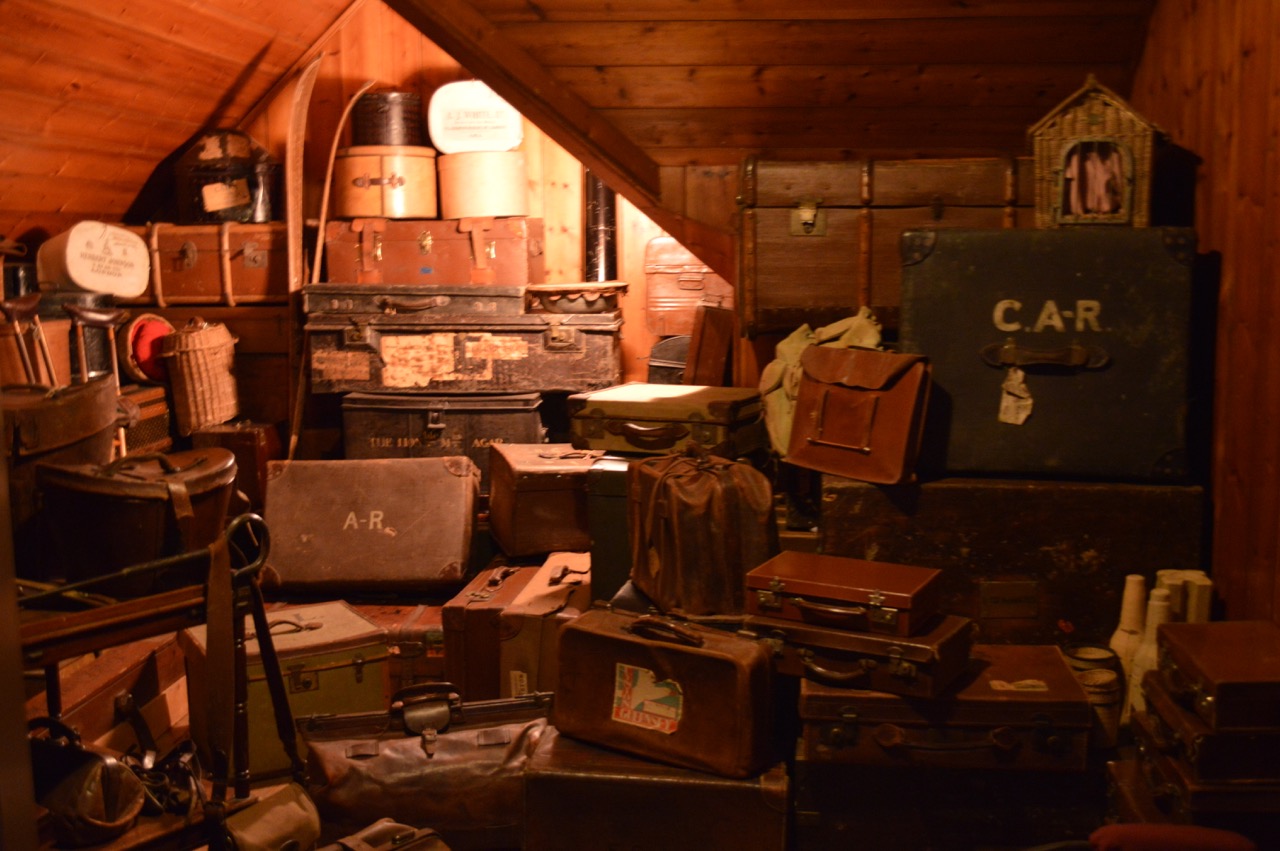
DSC_0262

This week’s poem was written in 2011 for a friend I worked/taught with, Jean Sotelo Coene. Somehow we got to talking about cleaning attics and about all the treasures hidden up there and how hard it was to part with things. Jean mentioned her grandmother’s handbag and all the stories it held and that was it…a tiny seed of a poem was planted. I don’t know how those things come to be while others never take hold. I wrote the poem and gave it to Jean as a little present. I love to gift poems to just one person. For that reason, no one has read the poem except for each of us.

Today I was going through some lovely photos from a trip to Cornwall in 2013. [See Bedford Square +2, my travel blog for the whole story of that visit if interested.] We had visited a small manor house, Lanhydrock. [http://www.nationaltrust.org.uk/lanhydrock/] Part of our wanderings allowed access to the attic. Of course it was beautifully staged as were all the rooms in the house, but seeing these pictures this morning was too hard to resist. I worked on the poem today, changing words here and there, adding in a whole stanza and then deleting it. In the end, I liked the first version best. Only a few words are different from the one I handed to Jean.

This poem is dedicated to the memories of all grandmothers who gave us so many wonderful stories to listen to, to dream about, and to share.

To hear the audio, simply click below. I am not much of a professional reader so please bear with me.


610980-bigthumbnail

My Attic is Full

The attic needs cleaning. It seems so simple,
but it isn’t easy to throw old things away.
There is always the worry we might forget
those we loved, the ones crossed over.

Old boxes hold memories and clothing.
Do you hear the stories held in the silence?
A flowery print dress of soft lawn cotton
holds the story of when it was freshly laundered
and worn in the days of the mid-summer sun.

An old leather purse might tell you where
she went and what she wore.
Inside, a handkerchief delicately edged
in tatted lace is tucked away.

How often she must have clutched it
in her hand to wipe away tears or sneezes,
stifle laughter or mop her brow.
Even now the linen is redolent of old
damask roses from the flower garden.

Beyond the piled boxes of her belongings
are clothes from her husband so long mourned.
She kept them up here all those years,
the only way to keep him near.

Don’t you wonder how often she came up
into this dark attic, pulled the light string,
unfolded a crisp white shirt
and held it to her nose, eyes tightly closed
longing for the scent
that had faded from his pillow?

Lovely tatted edging-22maids-of-honor22-by-mary-konior.jpg

Lovely tatted edging-22maids-of-honor22-by-mary-konior.jpg

Burnt Toast

Marcel Proust had his fragrant shell-shaped madeleine and linden flower tea. I have my burnt toast.

How often have you found that a simple smell can carry you back in time or far away? It happens to all of us, the sense of smell being strongly linked to evoking memories. Scientists can now prove this through brain scans, but artists and psychiatrists have long noted how taste and smell work with long-past memories far more than other senses. Proust says it so eloquently:

“When from a long distant past nothing subsists, after the people are dead, after the things are broken and scattered, taste and smell alone, more fragile but enduring, more unsubstantial, more persistent, more faithful, remain poised a long time, like souls, remembering, waiting, hoping, amid the ruins of all the rest; and bear unflinchingly, in the tiny and almost impalpable drop of their essence, the vast structure of recollection.”

For Proust, it wasn’t simply the beautiful shape of the madeleine, but the smell and taste of the madeline dipped in the linden flower tea that brought back a flood of memories.

lovely madeleines and tea

The other morning as I waited for two eggs to boil, I made some toast. It was lovely whole grain bread bought in a farmer’s market here in London. I cut the slice a bit unevenly, and I think it was this that caused the bread to stay down too long in the toaster. I smelled it before I noticed the smoke. The bread was burnt. Feeling annoyed that I hadn’t caught this in time, I grabbed a knife and began to scrape the charred layer from the toast. You can guess where I am going with this, can’t you? In a split second or two a long forgotten memory came flooding back from my early childhood. The poem, “Burnt Toast” was written later in the week. Interestingly, as I wrote each draft, I imagined the smell of the burnt toast over and over.

burning toast

Burnt Toast

I burnt the toast.
The butter knife
rasped across
the too dark toast.
Sooty crumbs
flurried down
into the sink,
and the smell
of blackened bread
brought back memories
of momma doing this,
scraping the bad away.

Hazel eyes twinkling,
she’d tell us the burnt part
would whiten our smiles,
and we’d always laugh
at this silly joke,
never quite sure
if it might not be true.

But one lost slice
was one less meal,
and she was unwavering.
We would never
know the hunger
that hovered close by.

Even to this day,
I have a strange fondness
for slightly charred bits of food,
my mother always standing there,
at the edges of my memory.

burnt_toast430x300