Click on the link below if you care to hear me read this tanka:
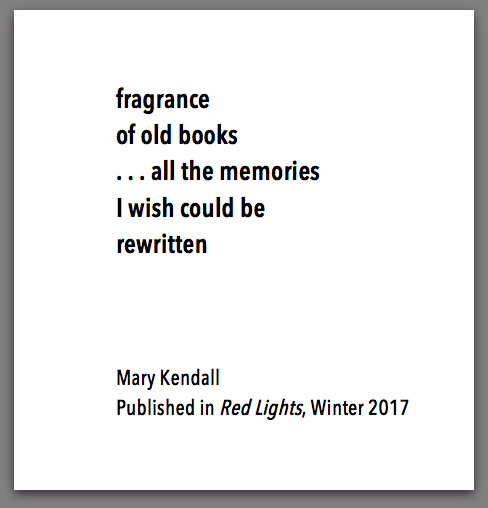
My thanks to editor, Marilyn Hazelton, for publishing this tanka in Red Lights, one of the best tanka journals around.

Click on the link below if you care to hear me read this tanka:
My thanks to editor, Marilyn Hazelton, for publishing this tanka in Red Lights, one of the best tanka journals around.
Where do poems come from? Anyone who writes poetry asks that question and has that question asked of them by others who wonder how a poem comes to be. There are many articles and books on the subject, but still there is no single answer. Every poet writes differently and often in a lifetime writing patterns and habits might change, too.
To show you how oddly this can happen, I’ve decided to post a poem that appeared in my chapbook, Erasing the Doubt (published 2015 by Finishing Line Press). “Walking Away” is a poem that has its own style, its own cadence and its own meaning. If I were to read this somewhere, I think I’d say it feels very much like an old fashioned poem, as if it echoes a voice from long ago. How did that happen? There is an unusual story behind this poem and how it came to be. It came to me as a whole poem when I was up late writing and suddenly became very, very tired. It appeared almost dreamlike to me. I typed it up quickly, read it once and went to bed. When I read it the next day, it didn’t feel or sound like me, but obviously I had written it. Strange indeed. This experience happened only once in my life.Was another poet speaking through me? Or was this merely a side freed from regular consciousness because of fatigue?
I’d love to hear your comments on this poem and what it means to you when you read it. Feel free to leave a message
I’ve recorded this poem if you care to listen as well as read. Just click on this link:
When you go, where do you wander?
When you leave me, do you look back?
I sit here, book in hand, not reading.
The wind blows fiercely through now.
They asked how long you had been silent,
And I answered with a lie, which
Was not the truth but might have been.
The wind blows silently through now.
Did you hear me whispering to you?
Did you hear what I had to say? Or did
I turn away and only mouth the words?
The wind blows piercingly through now.
Where do you go when you wander?
Tell me what you see. When you look
At me, I feel you walking away.
Lamenting the darkness, the wind blows softly now.
“Walking Away” was published in Erasing the Doubt by Mary Kendall (c) 2015, Finishing Line Press.
In the past five months I have been studying my much beloved tanka, haiku and small poems in order to become a better writer. Writers–and poets–need to keep growing as they go. As part of my interest in these lovely small poem forms, I have joined a number of exception online groups of poets who post their own writing. On several of the sites, “prompts” are given and sometimes a picture is given. People respond as they wish or not. Often comments are given. I can’t tell you what a thrill it is to get a “like” or even a comment by one of these poets who are so gifted and accomplished tanka and/or haiku poets, but even without the ‘likes,’ it feels wonderful to be a little more confident about sharing poems publicly. This morning, I’m posting several tanka I wrote this week to specific prompts.
~
1 [prompt: celebration of color]
Photograph (c) Kristin Sanderson
scribbles
of scarlet red
in the shrubs—
two cardinals
take flight
~
Photography (c) by Cab Treadway
cloud masquerade
tonight—
the moon is hidden
from your
wanton gaze
~
3 [prompt: how you share your journey]
old cobblestones
so hard to cross—
without speaking
I take your arm
and we walk on
~
4 [prompt: flutes..music…]
sweet song
hidden in the plum tree–
a nightengale
gives itself
away

~

“In my End is my Beginning”
The End of Autumn
How could we pass through autumn
without thinking about life.
Life and death.
Life and birth.
Birth and death.
The book ends of our existence
with pauses of space in between
waiting for us to write the chapters
that will fill the empty volume
that eventually defines a life.

These photos were taken by me at the Duke Hospice at The Meadowlands in Hillsborough, North Carolina. This hospice is set on an old farmstead in rural Orange county. The hospice and grounds are a wonderful gift to all who pass through.

Quotation embroidered and worn by Mary, Queen of Scots

Due North © 2014 by Iosatel
There are nights in the winter
once the leaves have fallen away,
when sometimes I wake in the dark,
hearing the distant, plaintive sound
of a single train a few miles away
as it crosses over a country road
or maybe it’s to warn off deer
that pause too long on the track.
The train travels due north,
and in the blackness of the night
the train’s dark sounding
brings back fragmented images
of my childhood life up north.
North, where winter’s silver skies
are layered in clouds most
of the year, and where snow
begins to fall early and deep.
North, where my family lived
in the rust belt of Lake Erie,
where strong winds raced across
the lake with bone-chilling cold.
The lake effect meant snowstorms
that went on for hours, even days
on end. Times when all of us gathered
together happily, knowing school
would be cancelled the next day.
Night was peaceful back then.
In the morning, we’d make our
way through the thigh high snow
and help shovel the walk, leaving
tall tunnels of snow on either side.
Our boots would crunch on frozen
snow, fingers painfully cold, but
that never stopped us from a snowball
fight or playing king of the mountain,
or sledding, tumbling, rolling in snow,
or making lovely snow angels
all over the yard. Those were the
carefree days of childhood, when
we didn’t worry about time or the
future or much of anything.
And for a while the thick snow
continued to fall, covering the tracks
of cars, birds and anything else
that dared to wander outside
on those interminable winter days.
Now, no longer in the north,
I lie in bed remembering such
simple times, times of being together
as we coasted down the snow hills,
all six of us tucked in tightly together
until halfway down when the toboggan
shifted and just after the pull to the left,
we capsized, all of us scattered down the hill,
laughter ringing out so loud as we fell,
each of us ready to give it a go again.

Tobagganing in the Snow
My thanks to the photographer, Iosatel, for use of the photograph, Due North, which appeared on his blog, The Obvious and the Hidden, 03/11/2014

While visiting my brother and his wife this summer in East Aurora, New York, we experienced a truly wonderful and unexpected visit from three pileated woodpeckers at the suet feeder Jim had filled. His wife, Paulett, said the woodpeckers were frequent visitors to their lovely back garden. This was a first for me. Although I’ve been an on again, off again birdwatcher for most of my adult life, I’ve only seen one pileated woodpecker in person before. Seeing three at the same time was simply brilliant. Watching their acrobatics as they fed on the suet, flew back and forth to peck at a tree, and generally manoeuvered their rather large bodies in amazinglying agile ways was pure delight. After a feeding frenzy, they flew away and it felt amazingly still and empty where they had been. Much like a visit with beloved family and friends, the ‘after’ part comes all too soon and leaves a void in our hearts. This poem is dedicated to Jim and Paulett, two of the kindest and most caring people I know. Thank you for sharing your home, your family and your amazing woodpeckers with us.

Dining with the Woodpeckers
In the late August garden
The quiet afternoon now
Comes to a languorous close.
Out of nowhere, a flash of red,
Bright scarlet crests crowning
Zebra-patterned feathers.
Three Pileated woodpeckers
Begin to feast at the suet feeder,
Fluttering, flying tree to tree,
Tree to feeder, alternately
Pecking at thick maple bark,
Then shifting to soft silky suet.
The youngest, now the size of its parents,
Joins in to grab his share, and father
And mother dutifully give way.
For a few Cirque des Oiseaux moments
All three woodpeckers hang right side up
And upside down, their brilliant red heads
Flash like stop lights in the early evening sun.
We sit around the table eating an early supper
And sipping local wine. Conversation drifts
As we watch in these avian acrobatics.
Just as quickly as they arrived, so soon are
They are gone. More wine is poured,
Seconds of hot buttered corn and fresh
Heirloom garden tomatoes are passed
From one to the other. Like the birds,
We share this meal together, enjoying
The richness of what the day has given.
A light wind blows the leaves outside,
A beautiful evening for us to be together
Knowing that summer will end all too soon.

Picture by Beth Brandkamp
Yes, this is the second time you’ve seen this picture in my blog. It was posted with a poem, Daybreak, in late August and now it reappears to accompany a second poem it also inspired, Daybreak II. A single picture on paper, on the screen or in the memory has a powerful, persuasive control of our imagination. This beautiful photo by my friend and photographer, Yolanda Litton, has done just that.

Early Morning at Bagnegrole (Photograph by Yolanda Litton)
I’ve included an audio clip of me reading the poem. Click on the link below and wait a few seconds.
Daybreak (2)
Waking up in at daybreak in the south of France
Is as if I were stepping into someone else’s life.
So far from my own home, this wistful morning fog
Rises slowly to reveal a house of soft honeyed stone.
The slope of a sharply pitched roof holds a tall chimney
Where the swifts are now resting after a long evening hunt.
Somewhere a rooster crows with the energy that only
The young can bring to a new day. Out of nowhere,
A soft gray cat tip-toes by, looks up at me and blinks
Its eyes in that inscrutable feline way and disappears.
I stand here leaning on the windowsill, wondering
What my life would be like had I been born here.
The smell of freshly brewed coffee wafts up from
The kitchen below. One lone church bell rings
Calling its faithful to prayer. But nature’s beauty
Is my religion, my serenity, my salvation, my Eden.
An Autumn Long Gone ~ a Reverie (prose poem)
An audio of me reading this prose poem can be heard by clicking the link below. It will take a few seconds for the sound to begin.
It was the year we lived in London, some 25 years ago, when autumn began like any other autumn. The fall, the changing, the color shifting, the soft breezes, the sporadic thick fog and the leaves dancing, even floating upward at times. What I hadn’t anticipated, being so far north for the first time, was how short the days grew. How dark it became earlier and earlier all during that autumn. The days were ‘closing in.’ That’s what they called it, and I loved that phrase. It brought a certain comfort of pulling heavy curtains closed and shutting out the darkness. It was a time for wearing coats and warm sweaters, and I dressed my son in practical English clothing and soft grey mittens while he ran ahead enjoying what was left of the day. He was only three, but he knew the delight in using what was left of the day’s sunlight. I learned to enjoy the simple pleasures around me that came with this quiet season. Victoria plums were my new delight. They appeared at the Greengrocer’s shop just as autumn set in, later replaced by apples—Bramley and Cox’s Orange Pippins, names that twirled on the tongue and tasted as good. Burning leaves were an unexpected, half-loved sensory pleasure. The smoke was pungent, but it brought back memories of childhood. I loved even the rasp of raking, bamboo or metal combs gathering leaves in sacred piles waiting their turn to be sacrificed in an autumnal pyre. In the English light, I found the colors were softer, quieter than the brilliance of New England woodlands. Each morning I left my son at school and then walked through Hampstead Heath. I found my own favorite route through woods and meadows up to the large ponds. Purchasing a single cup of tea that warmed my hands, I made my way to that empty bench that faced the pond. I thought about all the people it had held before. And every day without fail a lone Scottish piper played his bagpipes as if on cue. Each day I sat and listened. A world so far from my own. From where he stood near the peak of Parliament Hill, the mournful songs became a wordless chanting, charging the air with a lamentation to this closing season, every day briefer, softer than the day before.

Lost in Reverie (c) 2014 by Iosatel, The Obvious and Hidden blog on WordPress (with his permission)
Anniversary Poem
~ a poem for RDK on our 36th anniversary 
Even now I can picture
walking into the old chapel
that September afternoon,
with everyone neatly gathered
and quietly waiting.
Already the sun had turned
its warm autumnal face;
its oblique angle hinting
that change would come.
An infinite circle of gold,
rings delicately engraved
from you to me,
from me to you.
September 3, 1978.
Vows were shared.
Rings exchanged.
Some expected sonnets,
but sonnets were never read.
Our vows were simple,
our love was there.
All we needed was a promise
to love, honor and be there
for one another.
Always.
And we have.
I have included an audio clip of me reading the poem, Daybreak. To hear it, simply click on the link below and wait a few seconds for it to begin.
Early Morning at Bagnegrole (Photograph by Yolanda Litton)
Daybreak
The garden at daybreak.
Before the sun dares
to unveil the dawn.
Clouds and birds.
Dew glimmering
on grass.
Stillness.
Blurred trail of bats
filing into the attic
for rest.
Clouds bloom.
Birds now singing.
Morning shadows lead the way.

My thanks to friend and photographer, Yolanda Litton, for her beautiful photograph from the south of France. Seeing it inspired this poem after bringing back memories of my own travel to Provence.

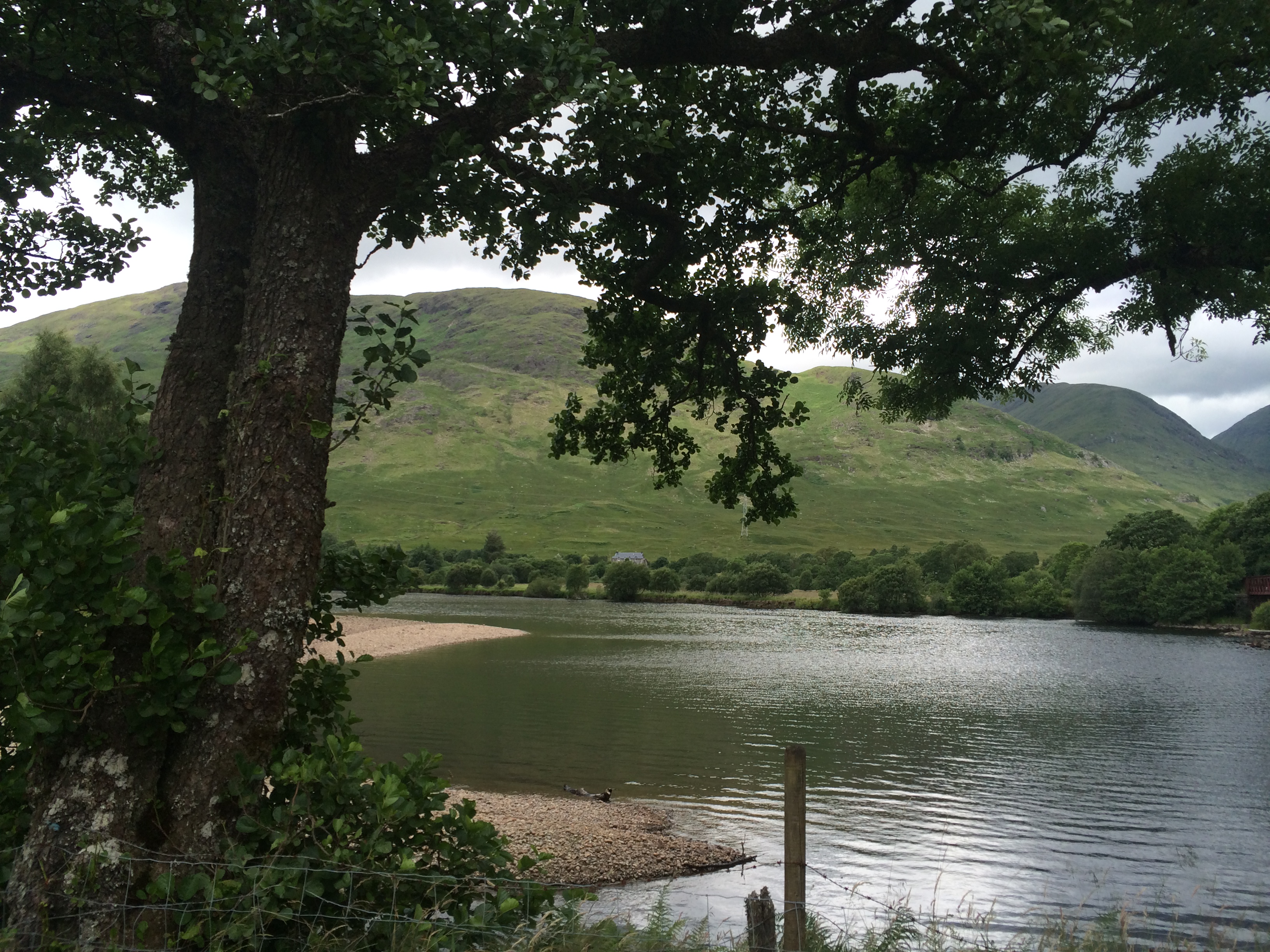
This poem began in a meadow up in the Scottish Highlands while my husband and I were visiting the ruins of a castle. He went inside to explore further, but I chose to stay behind and linger in the beautiful summer fields. As you have probably experienced yourself, this frequently leads the imagination to so many new places. It also presents an opportunity for a simple sensory awareness meditation. Just standing there looking and listening is a spiritual act in itself.
The challenge for me in this poem was to use a repeating word (“listen”) to create both mood and cadence in the lines. The decision to complete the poem with a repeating line (or couplet) was a very different way to close my own lyrical love song to nature.
[Note: the following two paragraphs were added here several months later when the poem was published by Dagda Publishing Company.]
On 3 March 2015, Dagda Publishing Company, a publisher of poetry and literature based in Nottingham, UK, featured this poem in their blog. It was a real honor to have had my poem chosen by this excellent publisher. This is what they had to say about the poem:
Today’s featured poem, and the first one in March, is this one from Mary Kendall. Inspired by a trip to Scotland, this piece has a naturalistic theme to it, and we feel is just perfect for this time of year, as we start to escape the cold and dark of winter and crawl toward summer and longer days. Musing upon the sounds of nature and imagining a song being sung by the choir of trees, flowers and the meadow itself, this piece has a touch of magical realism to it, of there being something fantastical just behind the ordinary and everyday. A poem full of the wonder of nature and the sense of being away from the familiarity of one’s normal life, we hope you enjoy this poem by Mary Kendall.

An audio clip of me reading this poem is included below. Click on the link below to hear it. It will take a few seconds to begin.
Meadow Song
Have you ever been a few thousand miles from somewhere,
standing in meadow of sweet grass or barley and thistles,
bright pink bells of foxglove swaying in the wind,
and then you stop, just standing still and listening;
listening to the wind song of the leaves and grasses.
I asked them to tell me the words they sang to those
who stopped to listen. They heard me and replied,
but I could not understand what it was they said.
I waited and waited until the wind resumed its blowing,
the grasses their gentle whispering;
the leaves sang loudest of all, and I listened.
I listened the while.
I listened until the song ended,
and then I went on my way.
So far from home.
So far from home.

Back to Edinburgh
We walk through the hidden streets of this city,
The second day of spring and the wind gusts hard.
People stop and wince, cupping their ears for warmth.
The news said blustery winds up to 25 mph,
And it feels as if we might tumble down the street.
Looking for simple woolen hats to pull down
Over our frigid heads, we stop at a Royal Mile shop.
I select gray, and you opt for black. I am grateful
That your good felt hat is safe back at the hotel.
The street is so rich in history that it feels as if
It could reach out and grab us by the arms,
Pulling us down a small wynd or narrow close
That has a story to share,
And in the late afternoon gloaming,
We might be wind swept and turned around
Into some other time.
It could happen you know.


 A Poet in Time