This is the first of two tanka published in:
Gusts No. 36 Contemporary Tanka
fall/winter 2022
so many bodies in Bucha,
even more mass graves
are dug and quickly filled
. . . no mourners, no prayers
at the gravesite today


This is the first of two tanka published in:
so many bodies in Bucha,
even more mass graves
are dug and quickly filled
. . . no mourners, no prayers
at the gravesite today
.
.
Kokako #36, Spring 2022
.
It’s always a joy to have the New Zealand poetry journal, Kokako, publish some of my poetry. For their spring issue, they chose a one-line haiku and two tanka. I hope you enjoy them.
.
.
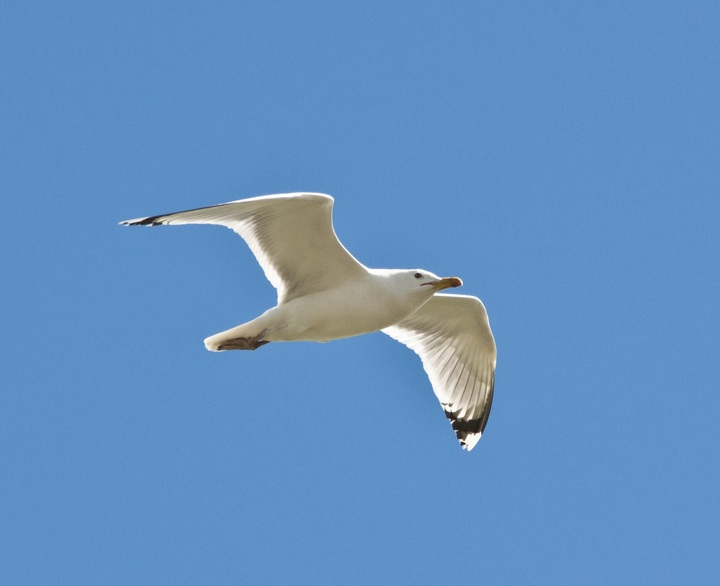
seabirds drift on thermals—night becomes day
.
.
~~~
cassia, lady slippers,
dutchman’s breeches, rue –
my garden becomes
the one circle of friends
I find it hard to leave
.
~~~
.
dark morning
filled with wild winds
that blow the birds awake
& by the crows’ swift,
and sharp reply
bleakness –
the lingering taste
of a bad dream
Blithe Spirit, 31.1 2021
Moonbathing, Issue 23, Fall/Winter 2020
hot roasted nuts
heaped into a paper cone –
all that burning anger
you hold onto
so tightly
Photograph by Monika Topolko
As an aside, I am realizing my age is showing. Do young people today even know about folks roasting chestnuts (or other nuts) and buying a brown paper cone full of piping hot nuts to eat on the street? I first came across this in Istanbul when I was young. The scent, heat, taste on a chilly autumn afternoon was one of those moments that has stayed with me all my life. Europeans had this custom, but does anyone still do this? The fragrance was so tempting.
Moonbathing 22, Spring 2020
a faint train whistle
passing by at 3 a.m.
. . . the only normal thing
in these pandemic nights
that makes any sense
This tanka was published in Hedgerow, a journal of small poems ~ #130, Winter 2020
we turn away
from all we just can’t face—
the glistening red
of a vulture’s head
emerges from a carcass
Poet’s note:
Out of decay comes art and beauty. Look what artist Georgia O’Keefe created from a skull found where she lived in New Mexico. All is part of nature and is nature.
Deer’s Skull with Pedernal by Georgia O’Keefe (c) 1936
Where I live in central North Carolina, we have plenty of black vultures and turkey vultures. They circle and gather in the sky when there is carrion to be had. I chose this topic for the tanka because it’s a scene I’ve seen more than once. Yes, it’s not a pretty sight. Vultures, especially when eating a dead animal or gathering in a group in a tree or abandoned house do give you shivers. Something in us seems to respond with at least a momentary revulsion. However, I’m a bird lover and I try to see how a specific species fits into the scheme of things. Vultures and crows do eat carrion, the flesh of dead animals, often of roadkill along our roads and streets. They perform a good service by eating their meal and cleaning the mess up. Imagine all those dead animals left to rot. So these birds help us as they go about their business (albeit unpleasant business to us). They are birds we should appreciate for their useful role in nature. They also offer us a wonderful metaphor.
My thanks to editor, Caroline Skanne for being the one editor who chose to publish this poem.
This tanka is dedicated it to all who have dealt with the trauma
of childhood sexual abuse.
he believed
himself omnipotent…
the innocence
of so many children
dissolved in a moment
Photograph by Circe Denyer
Eucalypt: A Tanka Journal,
Issue 25, 2018
It’s a great honor to have had this tanka published in Eucalypt. My thanks to editor, Julie Anne Thorndyke for selecting this particular poem.
.
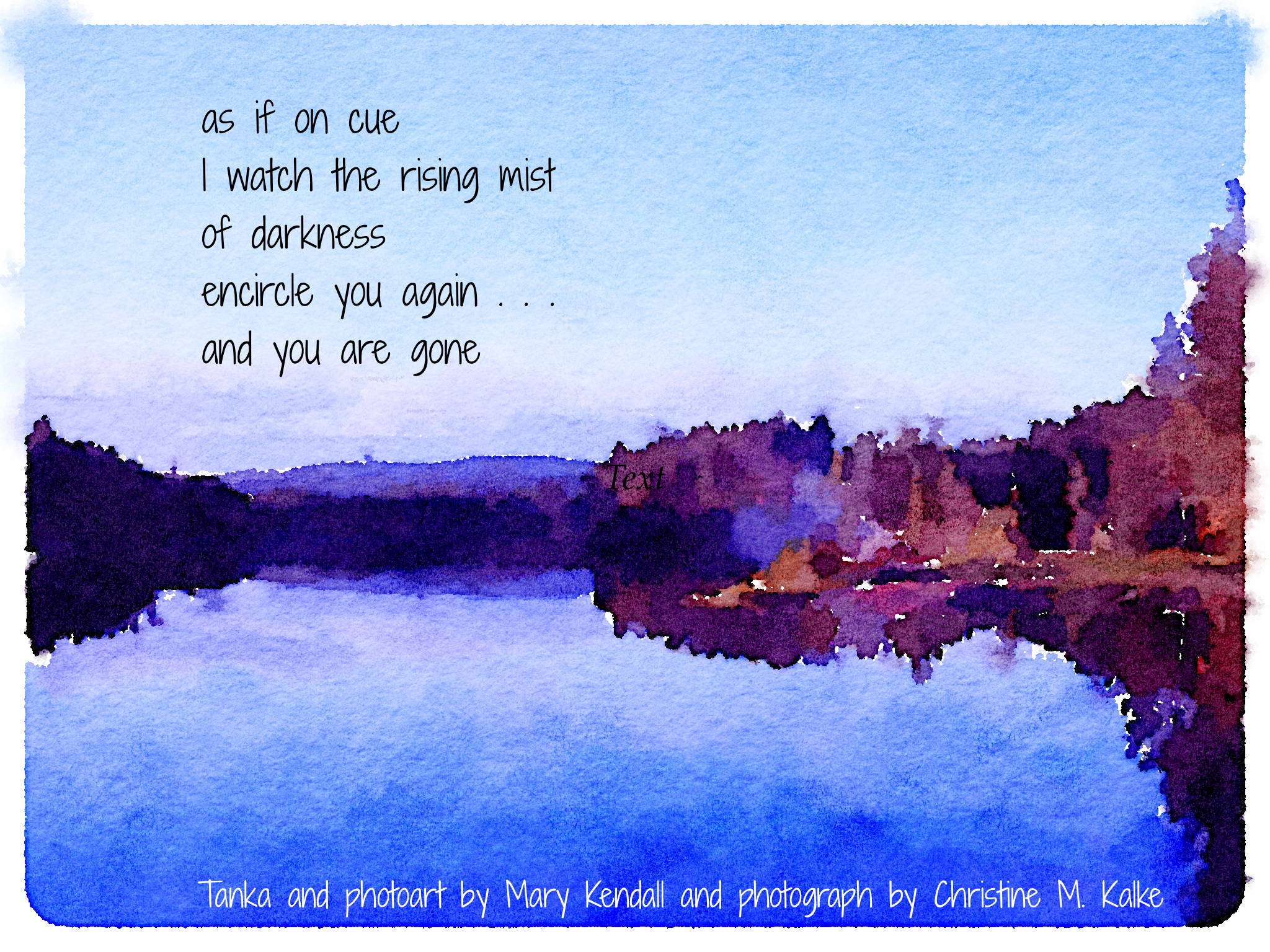
Published: Failed Haiku, a Journal of English Senryu, Volume 3, Issue 31,
July 2018
Guest editors: Lori A. Minor and Chase Gagnon
Primary editor: Michael Rehling
Note: I’d like to thank my dear friend, Christine M. Kalke for her permission to use her beautiful photograph that was taken in Scandinavia during one of her visits. The digital art work was done by me.
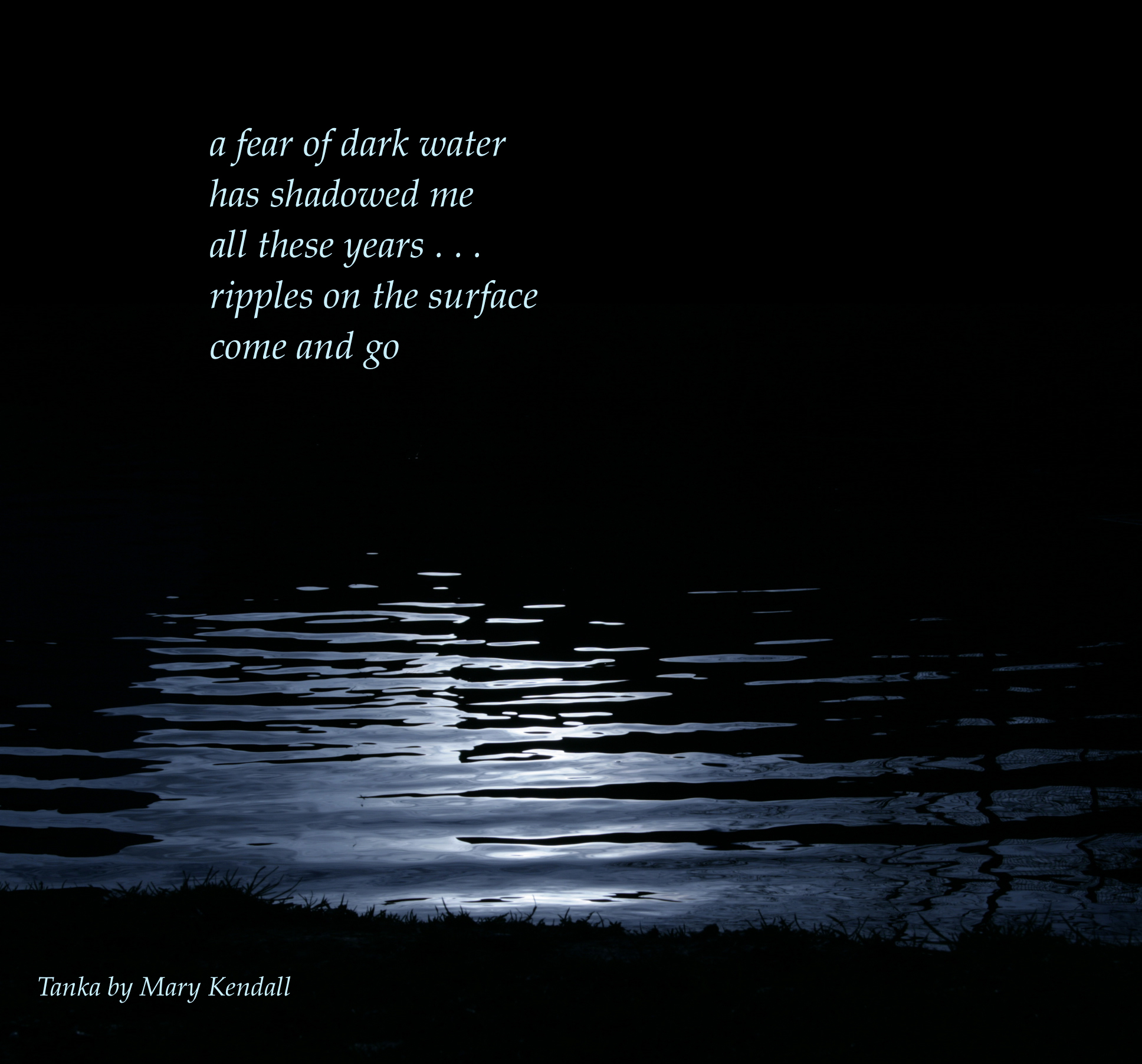
GUSTS, NO. 24, Contemporary Tanka, Fall/Winter 2017 (Tanka Canada) This is the third of three tanka published in this issue of Gusts.
Note: I have added the picture of dark water here on my blog. The original tanka does not appear with the picture in Gusts. The original water picture is called, “Dark Water”and is by (c) LeandrasStock.
Where do poems come from? Anyone who writes poetry asks that question and has that question asked of them by others who wonder how a poem comes to be. There are many articles and books on the subject, but still there is no single answer. Every poet writes differently and often in a lifetime writing patterns and habits might change, too.
To show you how oddly this can happen, I’ve decided to post a poem that appeared in my chapbook, Erasing the Doubt (published 2015 by Finishing Line Press). “Walking Away” is a poem that has its own style, its own cadence and its own meaning. If I were to read this somewhere, I think I’d say it feels very much like an old fashioned poem, as if it echoes a voice from long ago. How did that happen? There is an unusual story behind this poem and how it came to be. It came to me as a whole poem when I was up late writing and suddenly became very, very tired. It appeared almost dreamlike to me. I typed it up quickly, read it once and went to bed. When I read it the next day, it didn’t feel or sound like me, but obviously I had written it. Strange indeed. This experience happened only once in my life.Was another poet speaking through me? Or was this merely a side freed from regular consciousness because of fatigue?
I’d love to hear your comments on this poem and what it means to you when you read it. Feel free to leave a message
I’ve recorded this poem if you care to listen as well as read. Just click on this link:
When you go, where do you wander?
When you leave me, do you look back?
I sit here, book in hand, not reading.
The wind blows fiercely through now.
They asked how long you had been silent,
And I answered with a lie, which
Was not the truth but might have been.
The wind blows silently through now.
Did you hear me whispering to you?
Did you hear what I had to say? Or did
I turn away and only mouth the words?
The wind blows piercingly through now.
Where do you go when you wander?
Tell me what you see. When you look
At me, I feel you walking away.
Lamenting the darkness, the wind blows softly now.

“Walking Away” was published in Erasing the Doubt by Mary Kendall (c) 2015, Finishing Line Press.
The Ekphrastic Review: writing and art on art and writing, has published my poem, “Sunday Morning.”
Let me give you a brief “back story” on this poem. Many years ago, I stopped writing completely for around twenty-five years. Total silence in my life. I don’t know why it happened, but it did. After what can only be be termed a spiritual experience on a trip to the Fijordland in New Zealand, poetry somehow magically entered my life again. I can’t explain this. It just happened, and I know it happened for a reason. This poem was the first complete poem I wrote when my poetic “voice” returned, and it’s only been read by one other person until today. It’s taken me about fifteen years to gather courage to submit it anywhere. My deepest thanks to editor, Lorette C. Luzajic, for publishing this piece.
Here is the link to the journal: http://www.ekphrastic.net/ekphrastic/april-21st-2016
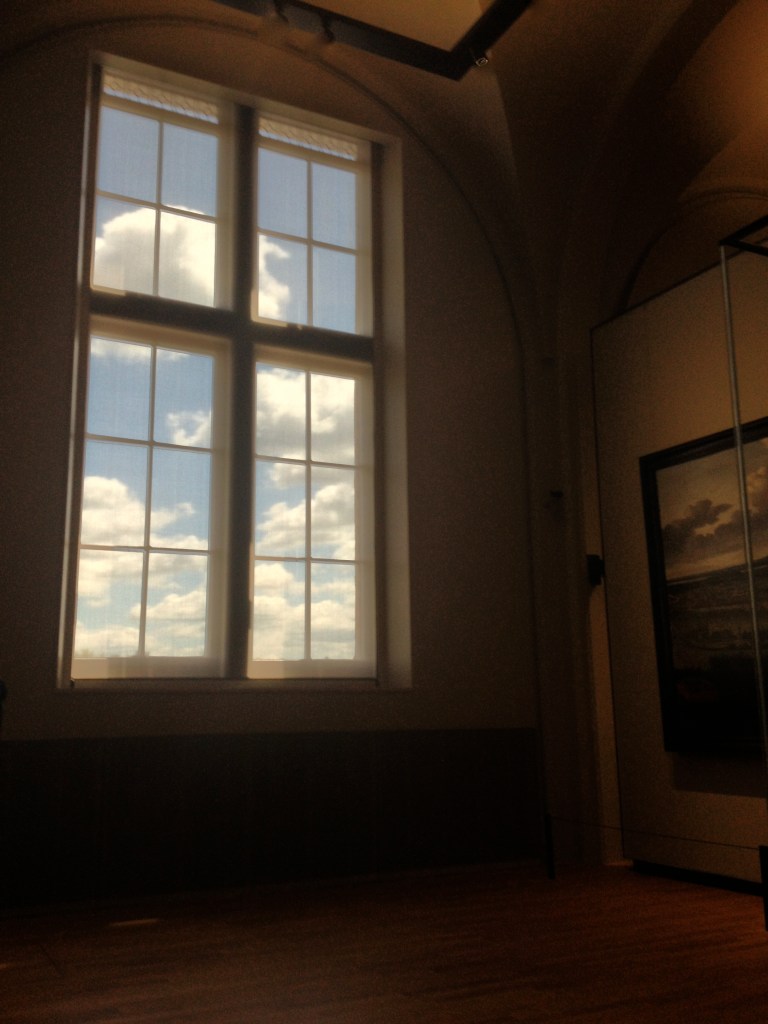
Rijksmuseum, Out the Window (c) 2013 Mary Kendall
Sunday Morning
Hymns unsung, prayers unsaid,
I sat by the window and prayed
for forgiveness one more time;
one more time I begged.
Holding the cup of coffee in my hand,
I hoped the warmth would fill me
where your words had left me cold,
but I knew nothing could do that—
fire can burn for hours and be unfelt.
Hymns unsung, prayers unsaid,
I lay down on the empty bed, pulling
the blanket across my cheek, turning
from the window, from the sky
and the sun, praying for some rest.
Note: The window in the photo is not, of course, the window of the poem. I love taking pictures of windows when I travel, especially indside looking out. This photo was taken in June 2013 when my husband and I were in Amsterdam, visiting the beautiful Rijksmuseum.
Brushing Your Hair
In the last month you ask me a favor.
Will I brush your hair when you have passed?
You seem to want to greet whatever comes
looking your best. I give my promise.
Each day when I come home, I offer
to brush your hair, but you say no,
maintaining the independence
you have always shown.
Later, in hospice, I no longer ask.
I hold your hands, rubbing lotion in,
skin so fragile, like a butterfly wing.
It is time now to make the last ablutions.
I clean your face and brush your hair,
your sleeping eyes flicker
under paper-thin lids, pale blue veins
tracing their course across them.
I imagine your mother tenderly holding you,
stroking your cheek, watching you dream
in her arms—her newborn daughter
with milky breath.
Ninety-one years separate us, your two watchers.
One joyously bringing you into the world;
the other sitting silently in the dim-lit room,
keeping watch over you through the night.
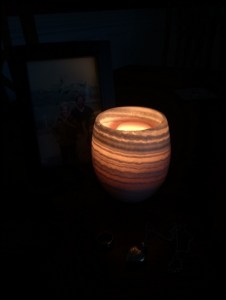
The poem, “Brushing Your Hair” is from my chapbook, Erasing the Doubt (c) 2015, Finishing Line Press.
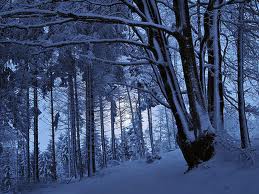
Full Moon of the Winter Solstice (c) 2010 Martin Liebermann
As I post this, it is the morning of the winter solstice of 2015. Where I live in Chapel Hill, North Carolina, the winter solstice officially happens tonight at 11:49 pm, EST. Wherever YOU are, it will happen at a different hour or perhaps the same. Readers of this blog come from all over the world–one of the joys in blogging is seeing the list of countries of readers–and I love imagining the moon going through its magical phases for each of you. Tonight, the solstice. Later this week, a full moon. What more could we want?
These are some of my earliest haiku:
WINTER MOON HAIKU
First published on Poets Online (c) Mary Kendall
Later used as lyrics in “Winter Moon” by Paul Carey, a piece for women’s chorus in (c) 2011.
night snow
boughs dreaming
of first blossoms
Fog filled woods~
even the winter moon
has lost its way
a winter walk
footprints
tell no tales
the blue moon
silently closes the door
upon the year

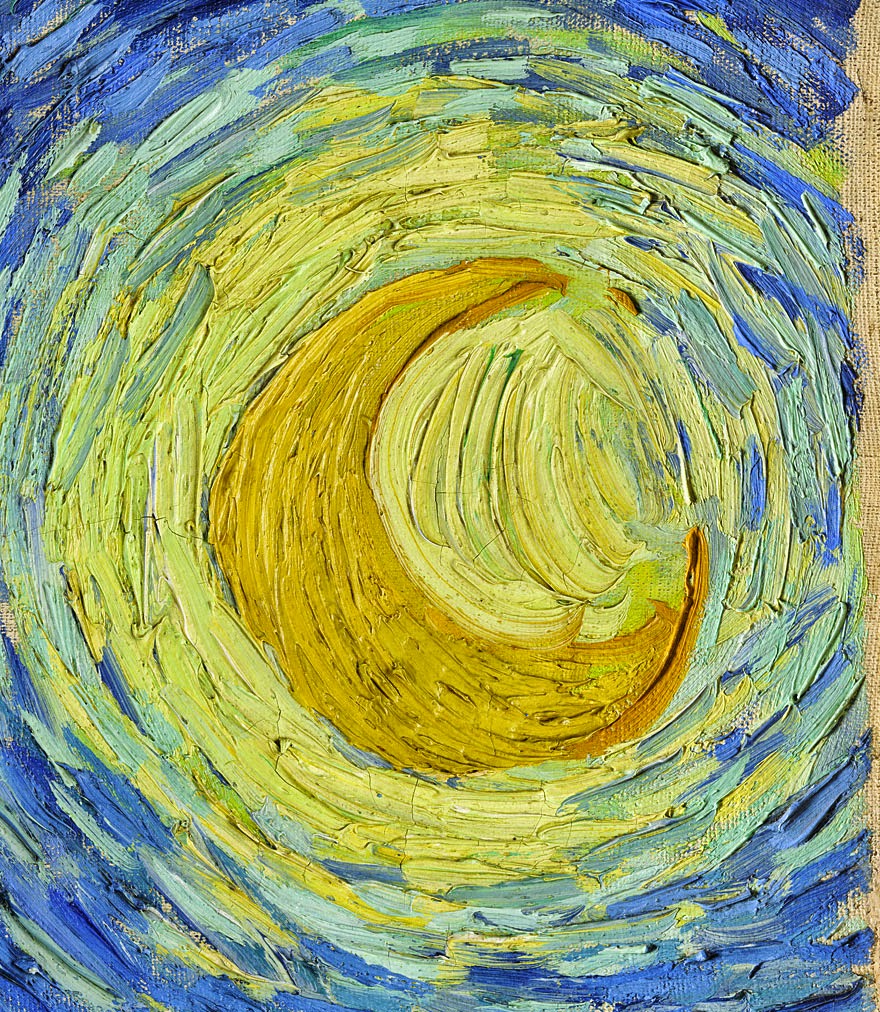
The Starry Night by Vincent Van Gogh, 1889, Museum of Modern Art, NYC
The Starry Night
It is silent tonight.
In the ever flowing
river of the night,
a boat of darkness
sails by
as wave upon wave
of stars flow,
then crest,
then
fall,
and silently subside,
consumed by another wave
until nothing is left,
just flickering light
of celestial glowworms
that hang
in the cave of night—
languid star strands
from the heavens.
The moon
could tell stories
if it chose.
It is silent tonight.