freedom is never cheap

Poem for my Father, a  Soldier

                                                            (for Jan Ciosmak, d. 1955)

Only 20 when you left home,
Fleeing the war in Europe.
Leaving behind all you knew,
Leaving behind your parents,
And your eight sisters.
You, the only son.

Coming to a country, but not
Knowing the language or customs.
Not having any waiting friends.
That took courage.

When you told your family
That you were leaving, knowing
They’d never see you again
Or you them,
What went through your mind?

Did your mother weep uncontrollably?
Did your father pat you on the back?
Did your family urge you to flee?
Did they fear invaders and death?
No stories came down to us,
And so no stories now remain.

Time passes.

All I remember is being told
How you fled the big war in Europe,
Only to be conscripted here
To fight in your new country,
The US Army calmly taking you,
You who were already uprooted
And leading you back
Over the ocean, back over the sea.
I’m sure the irony was not lost on you.

This time you wore Army khaki.
Did you wear it proudly?
A brand new uniform all crisply pressed,
Thick leather boots ready for
The fields and the trenches.
A soldier now, they said.

They prepared you well, it seems.
You survived the trenches, and 
You survived Meuse-Argonne.

Did you understand the French?
Was English now your tongue? Did
Your ears yearn to hear the consonant
Rich language of your first home?

Time passes.

What was it like standing hidden
In earthen trenches, the acrid air,
The bullets spent, shell casings underfoot?
How many other boys suddenly
Grew into men in those French fields?

I picture you there, not knowing,
Wondering how your family was.
And you, all alone.

Could you understand enough
To hear someone’s dying words
Or maybe to learn the story about
A young family waiting back home?
Did you share your own promises
And hopes or were you silent?

Time passes.

And then it stopped.
On the eleventh hour of the eleventh day
Of the eleventh month,
all fighting stopped.
Sudden and eerie silence.
What was it like to realize
You were now safe, and
Had your life ahead of you?

A life. Your life.
You had it free and clear.
You were one of the lucky ones.
Why you but not them?
Did you grieve during the dark
Nights of all the loss you’d seen?
Or did you push it all deep inside
Letting it exist in its own private place?

The price of freedom is so dear.
The loss of soldiers, so much life
And stolen youth. The veterans
Who made it back in pieces,
Who were never the same,
Could never be the same.
No one left unmarked.

Yes, the price of freedom is so very dear.
A price paid over and over in so many wars.

Time passes.

Long after you died, and I was finally grown,
I found your Army papers that said only
That you were honorably discharged
And had fought in those famous battles
In such faraway, strange places.

The places you lost your youth
And became a seasoned veteran,
A man of courage, a solider who was
One of the lucky ones. I hope you wore
Your uniform proudly, knowing that you
Were one of so many brave men.
French, English, Polish, American,
The list goes on for the victors.
But I mourn all who were lost.
On all sides.
So many mothers wept, and it continues
Even today. The loss is great,
But freedom is never cheap.

We who sit and write these poems,
Read those books, watch those movies
About wars, any wars, all wars,
Must always remember those who
Fought, those who served.

Those who died.
Those who survived.
They all served.
They all sacrificed.

Let those scarlet poppies bear witness
To the blood shed by all who have gone to war.

Let the trenches remain closed,
Let the flowers grow so that farmer’s
Fields remain at peace,
Remain at peace forever.

Time passes.
War passes.
Courage remains.


Note: I’m now 78, but my much older father fought in WWI in France, shortly after emigrating to the United States of America. I barely knew him. I never knew his story. But he had his story just as we all do. Why he left Poland and his family while so young is not recorded. No one is left to answer those questions. The one certainty is that he did his civic duty when called. He fought in one of the bloodiest battles in France. It’s nearly impossible to imagine all he saw, did, witnessed. 


Below are a few photos I found alongside some excellent articles in the New York Times on the Battle of the Meuse-Argonne.


Sea birds ride the thermals

.

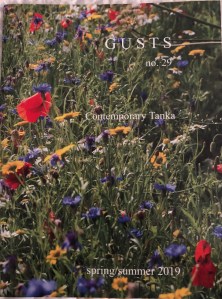
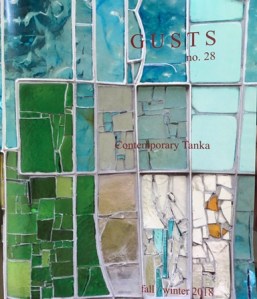
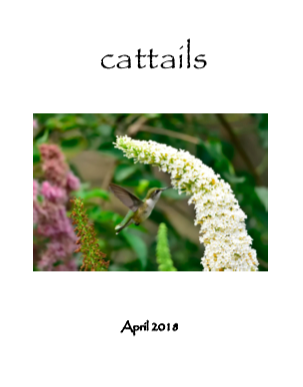
A tanka published in
Gusts No. 40, Contemporary Tanka, Canada,
fall/winter 2024  

sea birds
ride the thermals
beyond steep chalk cliffs—
I wonder what they hear
in the swirling wind

Shape-shifting in my dream

shape-shifting
in my dream, I leap
and run with graceful gazelles
able now to outpace
all that awaits

.

.

A tanka published in
Gusts No. 40, Contemporary Tanka, Canada,
Fall/winter 2024  

Image by xi Serge from Pixabay

Poor brown moth … (three tanka)


Three tanka published last February in the lovely journal, GUSTS:

Gusts No. 38  Contemporary Tanka, Canada,
Fall/Winter 2024  


Compliments of “Draw Botanical”


a day lily blooms
for a single day
this brevity
a wonder to some,
unsettling to others


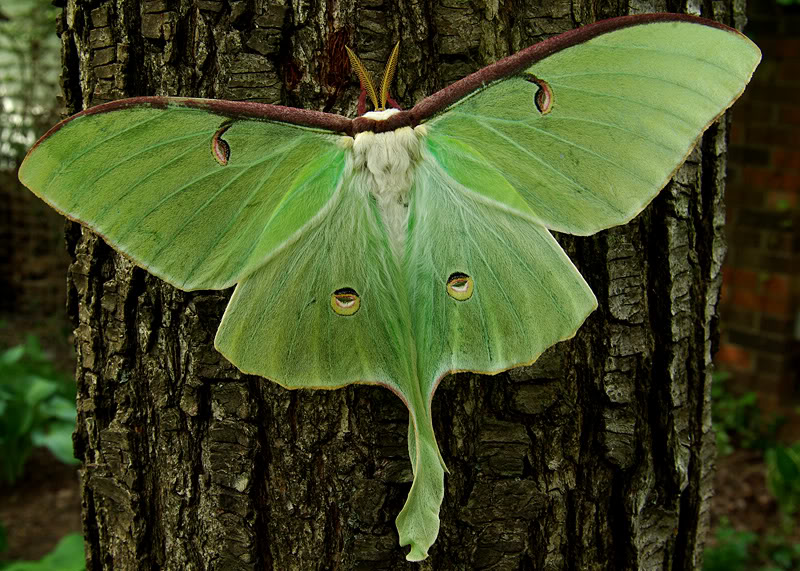
poor brown moth
trapped in a web
      the more you flutter
the tighter those
fine strands pull


the art aisle holds
such soft sable brushes
wedge, round, pointed, flat
patiently waiting
to adorn my words


Ah, sweet memory . . . (tanka)


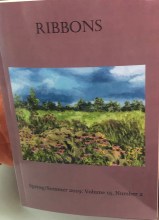
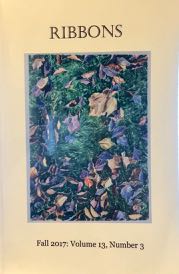
 Ribbons 31 Fall 2023
(Journal of the Tanka Society of America)


Italian gelato names
slip off our tongues
so happily—
sweet memory
of that day in Florence


Hai fame?


The Last Camellia (my book!)

~

It’s official now. My newest book has just been published, and I am absolutely thrilled with how beautiful it is. Holding it in my hands for the first time filled me with such emotion. Writing and even publishing individual poems is always exciting, but seeing and reading a collection of your own work is very powerful. The Last Camellia is a collection of tanka, haiku, senryu, haiga and tanka art.

.

FRONT COVER2 copy

Cover image by Eva Bronzini

.

The book has been published by Velvet Dusk Publishing and edited by Christine L. Villa (Chrissi) who is  a splendid tanka and haiku poet. Along with Chrissi, the book was initially shaped into manuscript form by another excellent poet friend, Susan Burch.  For a long time, I wanted to put together a book of both tanka and haiku but was unable to figure out how to juxtapose those two forms in a collection. Susan took up the challenge and skillfully and sensitively placed tanka and haiku, senryu, haiga and tanka art into what became the first draft of The Last Camellia. Chrissi and I then worked in editing and polishing the book. This process took a fairly long time despite the poems being so small. Placement of poems is actually a challenging process. We made a few changes of haiga and tanka art because they had to be reproduced in black and white rather than color (color would price the book too high–we both wanted to keep the book affordable).

~

Screenshot 2023-11-21 at 9.11.08 PM

.

Back cover book blurbs:

.

     At times we all “stand too close” to ourselves. Beginning with “a childhood spent / in secondhand clothes,” Mary Kendall’s The Last Camellia documents her navigation through grief and the quest to rediscover herself. In doing so, images from the natural world float in and out of her poems like “the soft rustle / of quivering aspen leaves.”

     The poet links and shifts three Japanese forms—tanka, haiku, haiga, and tanka art—in a garden of exquisite images. Shadows and silence remain after “a feeling of you / standing behind me.” A red-bellied woodpecker “flaunts his drumming skills.” A newborn faun wobbles “in old-growth grass.”

     One cannot fail to notice the sensitive way Mary explores emotions—doubt, loss, sorrow, and the joy of finding oneself. In one revelation, she shows us how “it took sixty years / to find the voice I lost.” Her signature tanka, “the last Camellia,” concludes: “it has taken a lifetime / for me to notice / the beauty in myself.” Each poem is a flower, budding slowly and opening to reveal its fragrance. This is not a book to be skimmed through. It is one to sit with, savour, and quietly celebrate its images of human love and frailty. From this subtle collection, we discover the universal beauty that blossoms in our own souls.

 —Hazel Hall, author of Moonlight over the Siding

     The Last Camellia is a beautiful compilation of Japanese short-form poetry. Mary Kendall deftly employs poetics and Japanese aesthetics in her work, creating an evocative and engaging collection. Her haiku juxtapose the natural seasons with seasons of her life, true to the heritage of this poetic form. Her tanka, these “short songs,” link and shift from vivid nature imagery to a thoughtful reflection of her inner landscape.

     The poet details memories of travels, of grief and loss, and the beauty of imperfection. The subtle sequencing of her work adds depth to the themes she presents, such as in this exemplar: “miscarriage . . . / the very word/betrays / the promise /of hope” to “this haiku abandoned nest / four blue eggs / but no answers.”

     The Last Camellia is worth several readings to relish the insights therein.

   —Carol Judkins, author of  at the water’s edge

~

D4163506-7291-43D5-8BAF-AB964B359D5A

Mary Kendall
Copyright 2023