On Rewriting a Poem


{Sometimes old poems ask to be reworked. This is a small example of just that.}


On Growing Old Together, A Love Poem


Will you scatter me over water
or throw me to the winds,
letting me float away?


Will your ashes mingle                                                                                       
with mine one day
when you too are gone . . .

              Ashes to ashes . . .


Will you take my hand again
and hold me close against the wind?
Will your eyes always smile with mine?

              Dust to dust . . .


Will our hearts travel as one
no matter where that might be?
Will our love be forever?

              Two stars together.


November 2025


This is a love poem written for my husband. We met in 1974, fifty-one years ago. This poem originally appeared on this blog in 2015, but I was never really happy with the ending. It never felt “right” to me. Those of you who are writers will know the feeling. You will know that some poems are meant to pop up again for you to rework it until it really is complete, and this is what I have done.


Growing older together has been a gift to both of us. We have shared so much and grown so much. Love is the one constant in the equation we call life. This poem is dedicated to my beloved husband and to all who have loved and been loved.


I’ve recorded myself reading the poem should you care to listen. Just click on the button below and give it a half a minute to begin. 


Ritchie and Mary, 1976

Voices in the Wind

This is an old poem that was originally posted in the early days of this blog, back in 2015. My writing lately has come to a standstill, but rereading things written a while ago is often a way to trigger a creative response. (Let’s hope it works.)

The poem was written when we were living in London for a spring term with university students who were studying abroad. Wonderful memories of that group who are now fully grown and probably leading interesting lives.

We live in Chapel Hill, North Carolina in a beautiful rural development that is filled with gardens and trees. Our single acre plot is divided into flowers, vegetables, invading weeds and cultivated trees. The back half of our acre is woodland and beyond that runs a small railroad track that is used for a daily single train that carries coal to the university nearby. Sounds are important. In winter we can hear a distant passenger train at night. In summer it’s blocked by all the greenery. Chapel Hill is truly verdant as is the nearby town of Hillsborough. Our trees are a mixture of hardwoods (oak, hickory, beech and evergreens (mostly loblolly pines but a few small cedars and hollies). Our beautiful Camellias bring winter color and our small (hand-dug) pond delights us with frogs serenading one another. Southern summers are never quiet. Katydids and Cicadas sing during the hottest part of the year, and all sorts of songbirds visit as we work in the garden or sit on the screened porch.

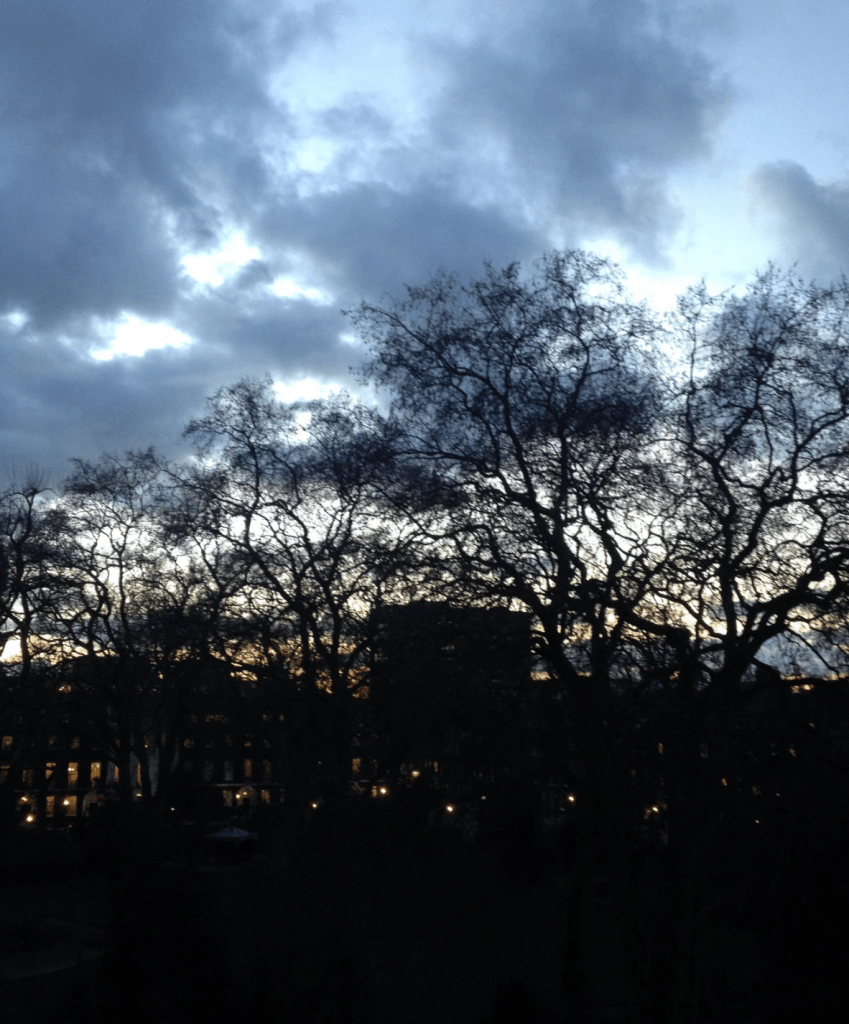
One of my favorite parts of living here is listening to the trees blow. Whether a storm is coming or not, the very tall trees have a life of their own as they blow and move. It is quite often a very sacred sound.

The trees today brought to mind this ten year old poem for me to reread (and now, to repost).

Questions was originally published on this blog on June 19, 2015.
Ten years ago and still the same questions arise.

I hope you enjoyed reading this “oldie” today.

Sea birds ride the thermals

.

A tanka published in
Gusts No. 40, Contemporary Tanka, Canada,
fall/winter 2024  

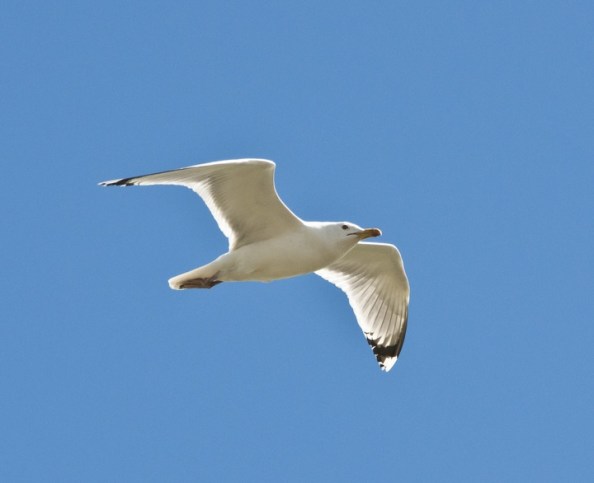
sea birds
ride the thermals
beyond steep chalk cliffs—
I wonder what they hear
in the swirling wind

Shape-shifting in my dream

shape-shifting
in my dream, I leap
and run with graceful gazelles
able now to outpace
all that awaits

.

.

A tanka published in
Gusts No. 40, Contemporary Tanka, Canada,
Fall/winter 2024  

Image by xi Serge from Pixabay

Ah, sweet memory . . . (tanka)


 Ribbons 31 Fall 2023
(Journal of the Tanka Society of America)


Italian gelato names
slip off our tongues
so happily—
sweet memory
of that day in Florence


Hai fame?


Springtime in Verse with Mary Kendall

Springtime in Verse is a series of blog posts inviting you to learn and gather around poetry with the Ackland. Today’s featured poet is Mary Kendall.

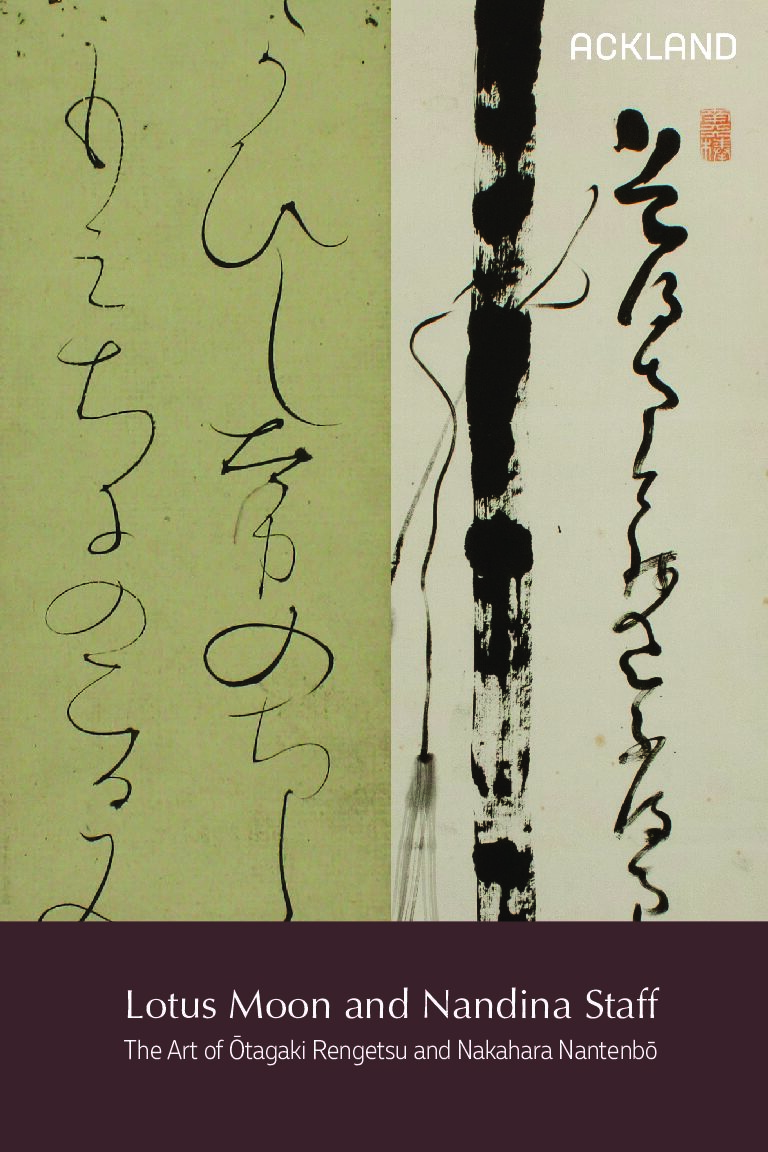
Mary has shared a selection of her tanka poems in celebration of the Museum’s current exhibition, Lotus Moon and Nandina Staff: The Art of Ōtagaki Rengetsu and Nakahara Nantenbō. Follow our blog throughout the month of April to enjoy more original works by celebrated North Carolina poets. We are so pleased to present to you this exhibition and the original works written by poets from the local community.

plum blossoms—
watching you
struggle for so long
I remember how brief
a season is

all those words
I wish I could forget . . .
the smoothness
of dark pebbles
clutched in my hand

from slabs
of common clay
delicate cups
that hold the scent
of jasmine tea

whistling wings
of Tundra swans
over the marshes
. . . what is this power
you hold over me

past the edge
of darkness, an owl swoops
and grabs a vole
. . . reckoning comes
at lightning speed

the pale twilight
of a hospital room
fading, fading
as you said
your last goodbyes

a soft rain falls
as you work in the garden …
what I’d give to read
the chapters of your life
you never share

stopping to study
fritillaries, tulips
and jonquils –
the sudden way
you take my hand

Mary Kendall  lives in Chapel Hill, North Carolina. She is a retired reading teacher and the author of two books, A Giving Garden, a children’s poetry/photography book (co-authored with Debbie Suggs) and Erasing the Doubt, a chapbook of free verse (Finishing Line Press, 2015).

In 2023, her third book, The Last Camellia, will be published. It is a collection of both tanka and haiku as well as some haiga.

Mary has a poetry blog called  A Poet in Time.

Having written poetry for many years, Mary fell in love with Japanese short form poetry about twelve years ago. Tanka is her great love, a form that feels most natural to her as a lyric and meditative poet, but she loves the challenge and discipline of writing haiku and senryu as well. She creates haiga and tankaand has published a good number of each. Her poetry has been published in many print and online journals such as The Heron’s Nest, Acorn, Modern Haiku, Presence, Blithe Spirit, Eucalypt, Kokako, Wild Plum Journal, A Hundred Gourds, Ribbons, Gusts, Skylark, Failed Haiku, hedgerow, Prune Juice, Under the Basho,and Rattle. Some of her poems have received various honors in poetry contests and one was nominated for the Pushcart Prize.

ABOUT THE EXHIBITION
Lotus Moon and Nandina Staff presents and contrasts the work of two major Japanese artists of the nineteenth and early twentieth centuries, taking its title from translations of their names. Ōtagaki Rengetsu (1791-1875) was a Buddhist nun who became very well known as an important poet focusing on the traditional wakaverse form, rendering her poems in elegant but strong calligraphy on paper and on ceramics that she often formed herself; Nakahara Nantenbō (1839-1925) was an influential and strict Zen Master famous for his energetically and expressively brushed calligraphy and paintings.