
The North Carolina Haiku Society hosts an all-day meeting on the last Saturday of each April. This year marked the 40th year of these days called “Haiku Holiday.” Each of the past 40 years has been hosted by one wonderful poet and woman, Jean Earnhardt
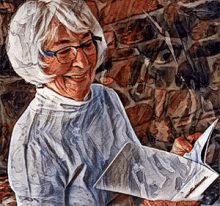
on Bolin Brook Farm, an old farmstead that has been in her family for 12 generations. Can you imagine opening up your home and garden annually to a large group of poets? Jean does so graciously and with a welcoming, inclusive attitude. Thank you, Jean!
“In honor of the 40th anniversary of Haiku Holiday, we read 40 haiku by current and past members of the North Carolina Haiku Society. Crystal Simone-Smith selected the poems and published them as a broadside.” (Dave Russo, the NCHS website Editor)
The Broadside is so beautiful, and it’s an honor to be part of this. My two haiku are listed below. My thanks to Crystal for selecting this to be included.
Haiku Holiday, NCHS, 2019
40 Years, 40 Haiku: A Broadside
dandelion—
more and more invisible
as I grow old
our country’s story
ever evolving
. . . fallen blossoms
Both haiku by Mary Kendall (c) 2019


 A Poet in Time