The First Lamentation of Demeter ~ (Poetry and Myth)

 British Museum GR 1885.3-16.1 (Terracotta C 529), AN34724001

British Museum GR 1885.3-16.1 (Terracotta C 529), AN34724001

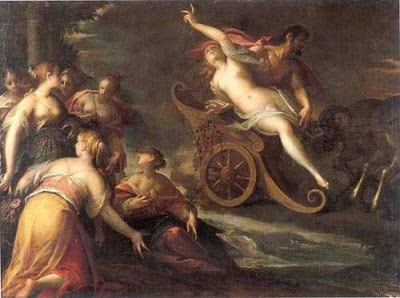
I’ve been looking over my writing notebooks written a while back but unread by anyone other than myself or my husband. The myths of Demeter and her daughter, Persephone, fascinate many including me. For a number of reasons these myths seem to appeal especially to women. Many of the great living women poets have written brilliant poems about Persephone (e.g., Louise Glück and Eavan Boland). The story is timeless.

In today’s poem I’ve written a Lamentation of Demeter. Demeter, the goddess of the harvest and grains, is often referred to as the mother-goddess since she represents fertility on earth. Her importance is indisputable. When she mourns for her missing daughter, Persephone (who has been abducted by Hades and taken down into the underworld by force) the seasons stop. Things stop growing and the earth begins to die before Persephone’s father, Zeus, intervenes.  You know the story, but it is worth re-reading if you haven’t read any mythology for a while.

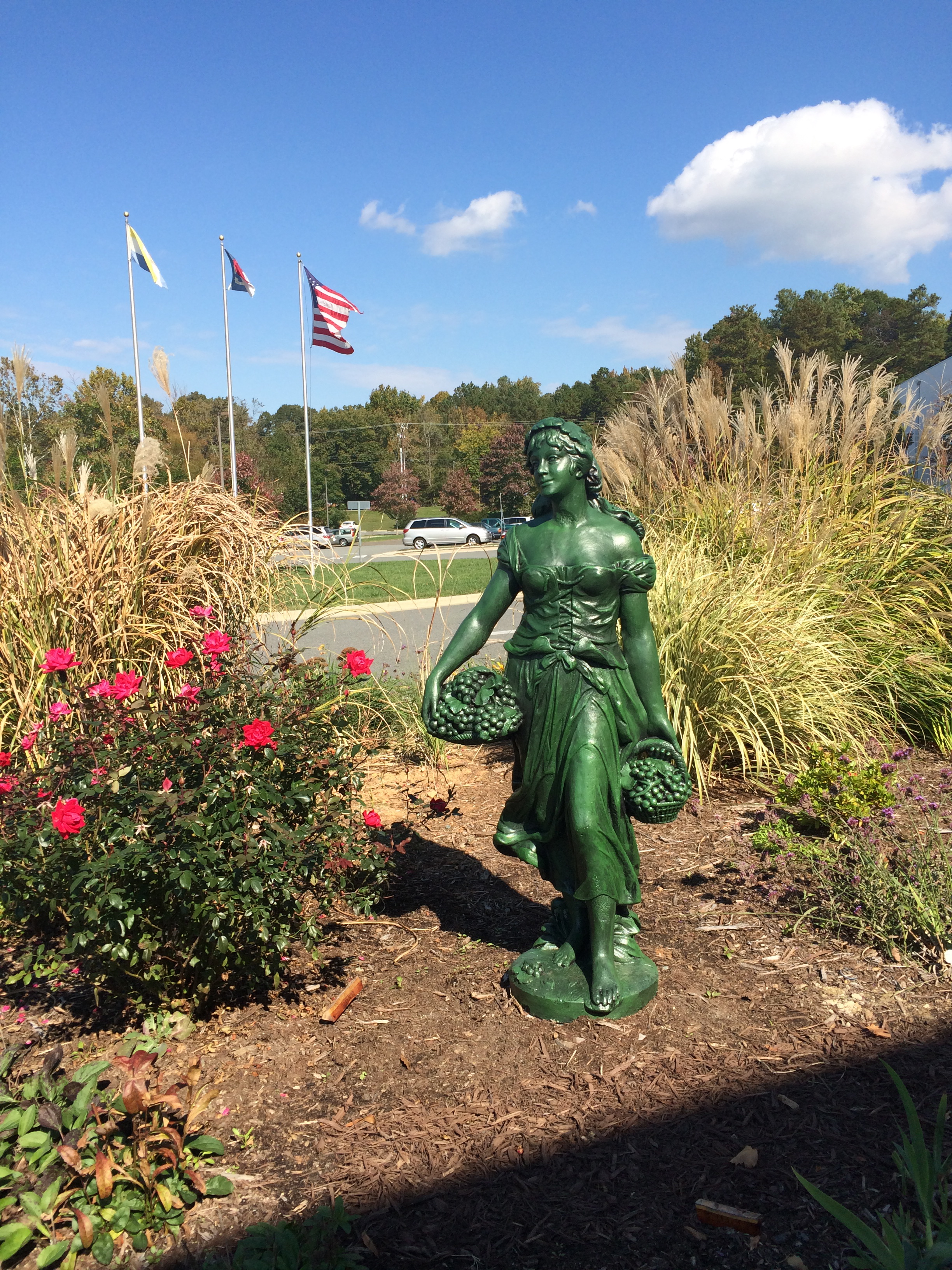
Demeter statue in front of my gym in Hillsborough, North Carolina

Demeter statue in front of my gym in Hillsborough, North Carolina

So what is a lamentation? The Oxford English Dictionary defines it simply: “The passionate expression of grief or sorrow; weeping.” Anyone who has grieved knows instinctively what it is to lament the loss of someone who is dearly loved. The feeling is painful and deep, and I think this resonates within us all. Demeter mourned her daughter’s abduction to a point where the earth nearly perished. This poem begins with her not yet knowing all that has happened. I picture her as a mother desperate to know what has happened to her child.

This is one of two lamentations of Demeter I’ve written. The second will follow at some point.

Demeter

Demeter

To listen to an audio recording of me reading this poem, click on the link below and wait a few seconds for it to begin:


The First Lamentation of Demeter

How is it that I don’t know where she has gone?

        I warned her.

I told her time and time again not to trust them,
that there were those who so longed for her
they would stop at nothing.

        And who was right?

Like all girls her age, she could be headstrong,
believing her own mother too old
to understand those yearnings.

         I warned her.

Last night I watched the dog star rise up.
Its magnificent beams were like beacons
that might lead me to my lost child.

        Why is it the stars are silent?

O, Sirius, your brilliant rays reach down
to us and yet your silence is puzzling.
Surely you saw where she went, my only child.

        Will no one tell me where my Persephone has gone?

Grief-Statue

Four Late October Small Poems

Weaving Light 6 (c) 2012 by Karen McRae

Weaving Light 6 (c) 2012 by Karen McRae

1:

dusk winds weave
seed pods in silken strings
spirits dancing

2:

morning’s breath
slips by so silently
a shiver of frost

3:

perhaps a portent
of what winter will bring
this woven white light

4:

just as a cloud forms
and suddenly dissipates
so a thought begins

Weaving Light 13 (c) 2012 by Karen McRae

Weaving Light 13 (c) 2012 by Karen McRae

These beautiful photographs of Goat’s-beard seed heads are by the very talented Karen McRae. They appear on her blog: The Frayed Edges of Waking August 12, 2012 by Karen McRae) http://drawandshoot.me/2012/08/12/the-frayed-edges-of-waking/

Many thanks, Karen, for allowing me to use your breathtaking photos that inspired these four small poems.      

                                               ~ Mary ~

Weaving Light 11 (c) 2012 by Karen McRae

Weaving Light 11 (c) 2012 by Karen McRae

When a Heart Breaks

I’m not sure where this poem came from. It just happened. I was thinking about the sad loss of butterflies this summer and what that might mean to our environment, our gardens, our enjoyment of nature. Somehow, from that line of thought to the poem…well, how does one explain where things are born? I hope you enjoy this poem.

An audio of me reading this poem is available at the link below. Give it a few seconds to begin.


unraveled heart

When a Heart Breaks


Did you ever consider a heart is like a chrysalis?
Perfectly wrapped round and round, silken strands
layered one upon the other, locked together
in a solid embrace of fragile fibers.

This is what the heart is.

When a heart breaks, no one picks through
the fibers trying to separate the strands.
Yet it can be undone so easily.

Words can unravel it so quickly that it spins
like a frenzied top, leaving behind a trail
of weakened strings, no longer useful to anyone.

Icarus II (Poetry and Myth)

feather-lake-russia_71645_990x742

Swan Feather, Moscow by Veronika K. Ko (c) 2013

If you care to listen to me read the poem, just click on the link below and wait a few seconds for it to begin:


Icarus II

The hardest part was letting you go,
knowing  that once you sailed so high
it would be impossible not to try again.

With each pass you made, you soared
higher, more effortlessly; sweet-scented
beeswax noticeable as the air grew warmer.

Arms outstretched as if embracing the sun,
you changed course and flew even closer
before you shifted abruptly, a quick turning

of wings, now fighting the unexpected wind
with young muscles tensed and determined
to hold the course.

The descent was swift.
A feather fell
and then another.

Icarus I, poem by Mary Kendall (Mythic Poetry Series)


Click on the link below if you’d like to hear me reading this poem. Give it a few seconds to begin.

silverbirchpress's avatarSilver Birch Press

640px-Herbert_Draper_-_The_Lament_for_Icarus_-_Google_Art_Project
ICARUS I
by Mary Kendall

September was ready to slip into October
and autumn skies were filled with color

Clusters of clouds
suddenly dissolved
and let the sun peer through

I imagined you as Icarus taking a risk
and trying to fly high above your depression,

gliding for a while like a broad-winged hawk,
the cool air making you unaware

of just how close
to the sun
you flew

NOTE FROM THE AUTHOR: The story of Icarus has always fascinated me. I think as long as people have lived, some have always wished they could fly like the birds. There are so many beautiful paintings and drawings of this classic myth, but in my mind’s eye I see only the simple picture of water with a feather floating on it—a reminder of how easily a dream and a life can come to an end. My Icarus poems were written when…

View original post 187 more words

Daybreak (2)


Yes, this is the second time you’ve seen this picture in my blog. It was posted with a poem, Daybreak, in late August and now it reappears to accompany a second poem it also inspired, Daybreak II. A single picture on paper, on the screen or in the memory has a powerful, persuasive control of our imagination. This beautiful photo by my friend and photographer, Yolanda Litton, has done just that.


Early Morning at Bagnegrole (Photograph by Yolanda Litton)

Early Morning at Bagnegrole (Photograph by Yolanda Litton)

I’ve included an audio clip of me reading the poem. Click on the link below and wait a few seconds.


Daybreak  (2)


Waking up in at daybreak in the south of France
Is as if I were stepping into someone else’s life.

So far from my own home, this wistful morning fog
Rises slowly to reveal a house of soft honeyed stone.

The slope of a sharply pitched roof holds a tall chimney
Where the swifts are now resting after a long evening hunt.

Somewhere a rooster crows with the energy that only
The young can bring to a new day. Out of nowhere,

A soft gray cat tip-toes by, looks up at me and blinks
Its eyes in that inscrutable feline way and disappears.

I stand here leaning on the windowsill, wondering
What my life would be like had I been born here.

The smell of freshly brewed coffee wafts up from
The kitchen below. One lone church bell rings

Calling its faithful to prayer. But nature’s beauty
Is my religion, my serenity, my salvation, my Eden.