How could we pass through autumn
without thinking about life.
Life and death.
Life and birth.
Birth and death.
The book ends of our existence
with pauses of space in between
waiting for us to write the chapters
that will fill the empty volume
that eventually defines a life.
These photos were taken by me at the Duke Hospice at The Meadowlands in Hillsborough, North Carolina. This hospice is set on an old farmstead in rural Orange county. The hospice and grounds are a wonderful gift to all who pass through.
Quotation embroidered and worn by Mary, Queen of Scots
British Museum GR 1885.3-16.1 (Terracotta C 529), AN34724001
I’ve been looking over my writing notebooks written a while back but unread by anyone other than myself or my husband. The myths of Demeter and her daughter, Persephone, fascinate many including me. For a number of reasons these myths seem to appeal especially to women. Many of the great living women poets have written brilliant poems about Persephone (e.g., Louise Glück and Eavan Boland). The story is timeless.
In today’s poem I’ve written a Lamentation of Demeter. Demeter, the goddess of the harvest and grains, is often referred to as the mother-goddess since she represents fertility on earth. Her importance is indisputable. When she mourns for her missing daughter, Persephone (who has been abducted by Hades and taken down into the underworld by force) the seasons stop. Things stop growing and the earth begins to die before Persephone’s father, Zeus, intervenes. You know the story, but it is worth re-reading if you haven’t read any mythology for a while.
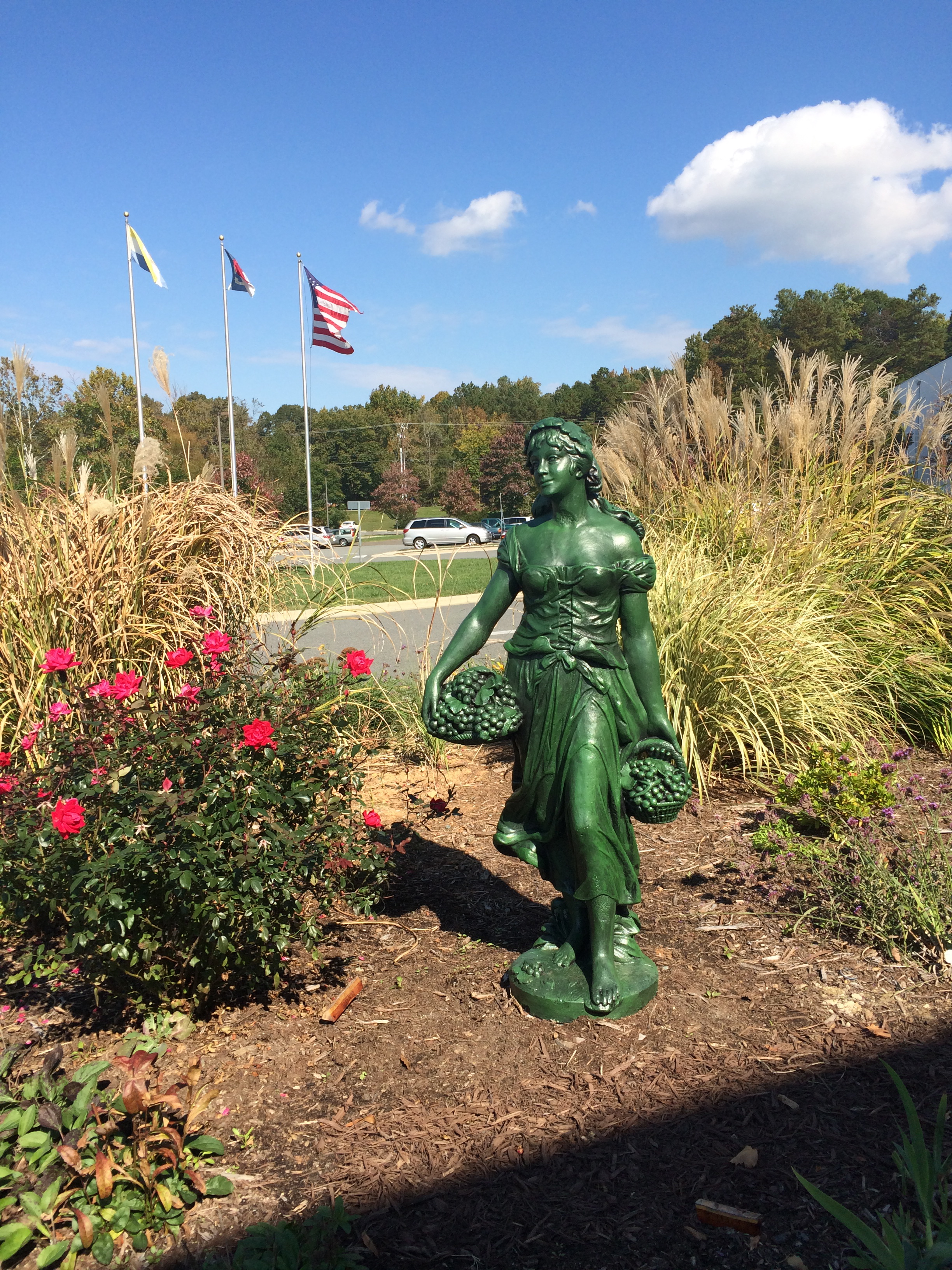
Demeter statue in front of my gym in Hillsborough, North Carolina
So what is a lamentation? The Oxford English Dictionary defines it simply: “The passionate expression of grief or sorrow; weeping.” Anyone who has grieved knows instinctively what it is to lament the loss of someone who is dearly loved. The feeling is painful and deep, and I think this resonates within us all. Demeter mourned her daughter’s abduction to a point where the earth nearly perished. This poem begins with her not yet knowing all that has happened. I picture her as a mother desperate to know what has happened to her child.
This is one of two lamentations of Demeter I’ve written. The second will follow at some point.
Demeter
To listen to an audio recording of me reading this poem, click on the link below and wait a few seconds for it to begin:
The First Lamentation of Demeter
How is it that I don’t know where she has gone?
I warned her.
I told her time and time again not to trust them,
that there were those who so longed for her
they would stop at nothing.
And who was right?
Like all girls her age, she could be headstrong,
believing her own mother too old
to understand those yearnings.
I warned her.
Last night I watched the dog star rise up.
Its magnificent beams were like beacons
that might lead me to my lost child.
Why is it the stars are silent?
O, Sirius, your brilliant rays reach down
to us and yet your silence is puzzling.
Surely you saw where she went, my only child.
September was ready to slip into October
and autumn skies were filled with color
Clusters of clouds
suddenly dissolved
and let the sun peer through
I imagined you as Icarus taking a risk
and trying to fly high above your depression,
gliding for a while like a broad-winged hawk,
the cool air making you unaware
of just how close
to the sun
you flew
NOTE FROM THE AUTHOR: The story of Icarus has always fascinated me. I think as long as people have lived, some have always wished they could fly like the birds. There are so many beautiful paintings and drawings of this classic myth, but in my mind’s eye I see only the simple picture of water with a feather floating on it—a reminder of how easily a dream and a life can come to an end. My Icarus poems were written when…

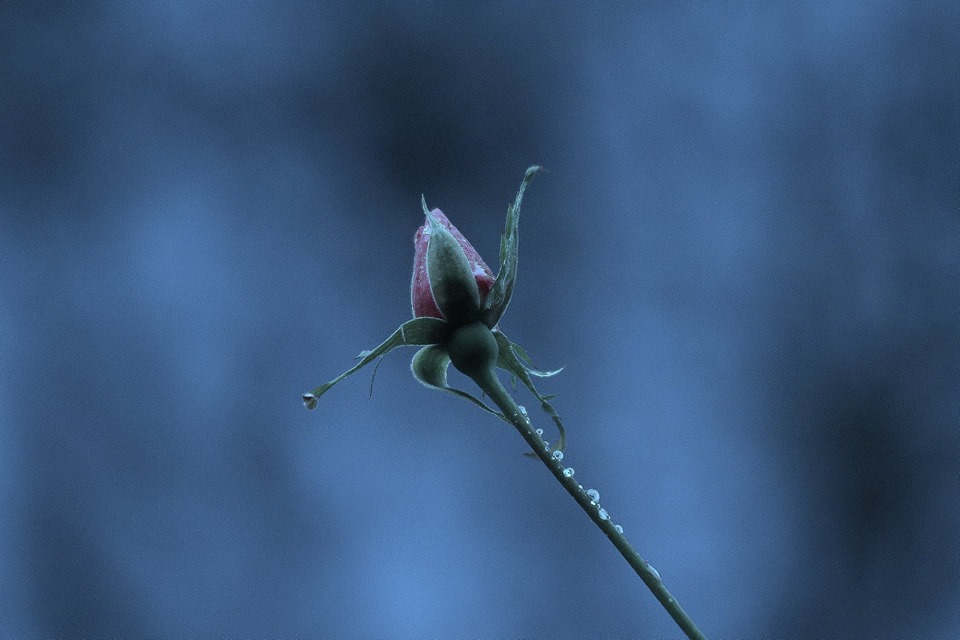
 Many thanks to photographer Harald Illsinger for allowing me to use his beautiful photograph, ‘Frosty Morning,’ (c) 2014)




 A Poet in Time