


If you would like to hear me read this poem, please click on the audio link below. It will take a few seconds to load.
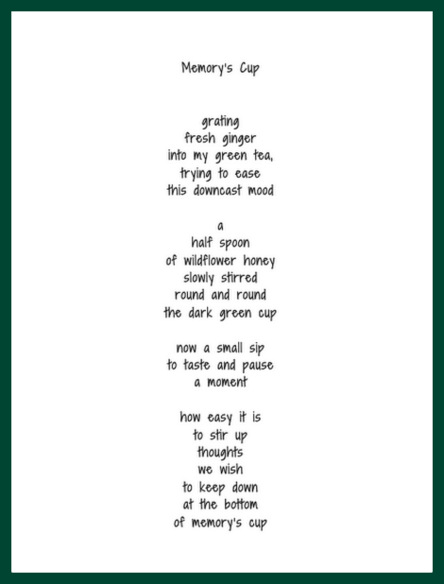
How lovely to find out that Miriam Sagan has posted my Four Winter Haiku on Miriam’s Well.

night snow
boughs dreaming
of first blossoms
fog filled woods~
even the winter moon
has lost its way
a winter walk
footprints
tell no tales
the blue moon
silently closes the door
upon the year
***
First published Poets Online
© 2009 Mary Kendall
Later used as lyrics in “Winter Moon” by Paul Carey, a piece for women’s chorus in 2011.
(Posted on her blog, A Poet in Time, 2015, http://www.apoetintime.com)
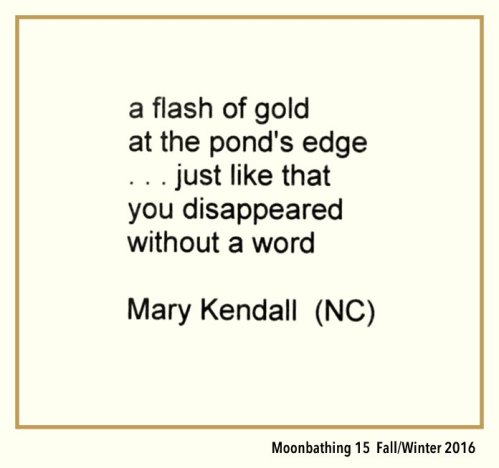
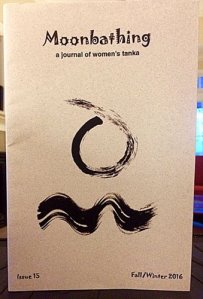
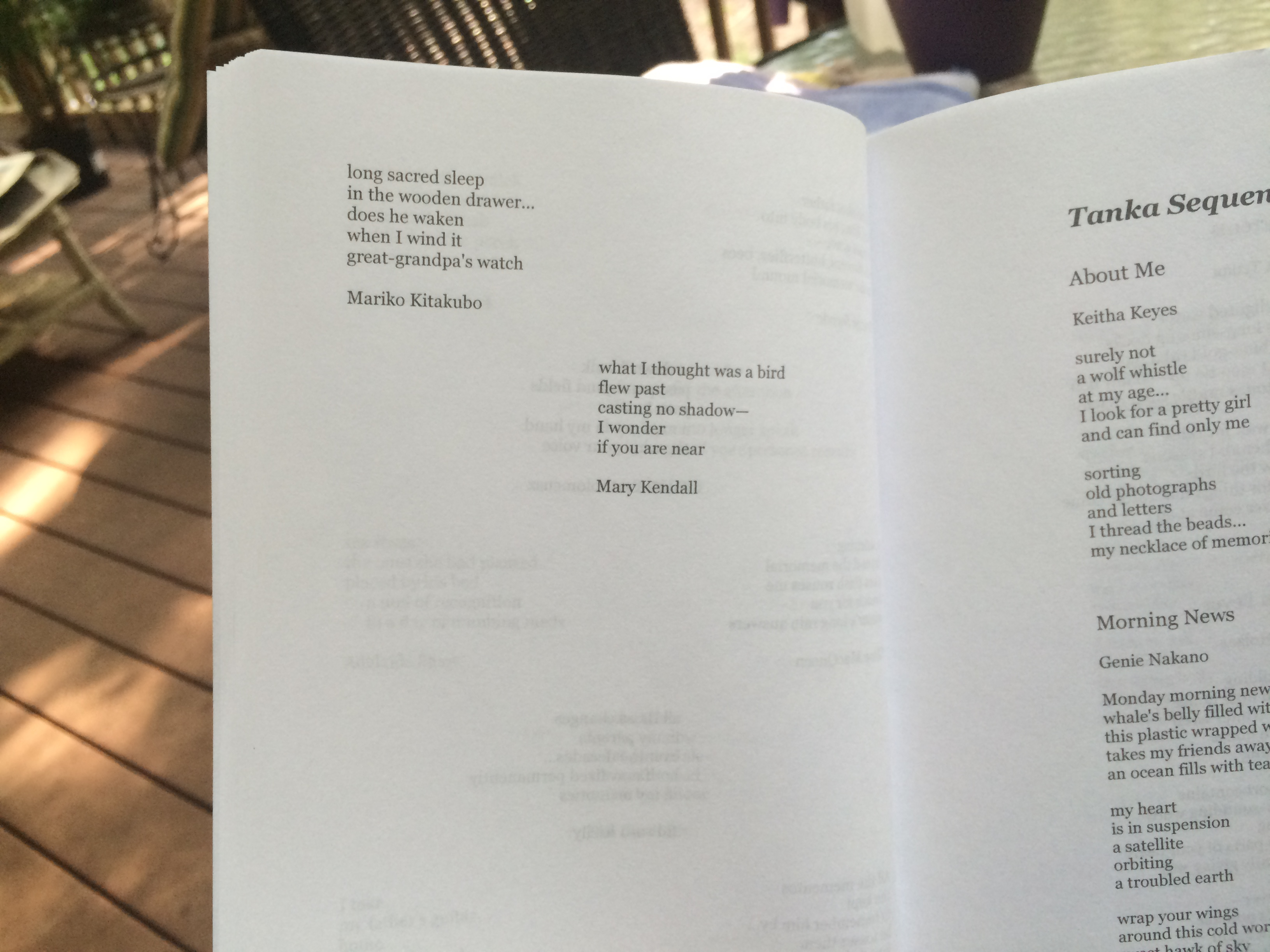
It is always an honor to have a poem appear in Moonbathing, A Journal of Women’s Tanka.
Issue 15
Fall/Winter 2016
Edited by Pamela A. Babusci

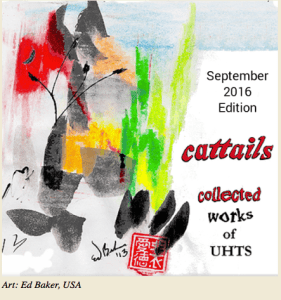
Published in CATTAILS, September 2016
The fall issue of cattails is out at last. Due to a big switch around of editors, the September issue was delayed and is now published in December. What a big issue it is, full of so many poems to read. Many of my favorite poets are in this issue and there are some who are new to me still to be discovered.
.
.
I have two haiku included in this issue:
.
.
first blossoms –
I tell myself this year
will be different.
.
daybreak …
the birds wake us
song by song.
.
and a few senryu:
.
.
long yawns …
breathing in
his boredom.
.
zafu zabuton zazen zzzzz
.
.
plus one tanka:
.
.
long ago I heard
the sound of wuthering wind
blowing through the night –
a bleakness so forlorn,
a loneliness bereft of words.
.
My thanks to all the editors of cattails for their hard work. I cannot begin to imagine the number of hours it takes to put together something this substantial.

Castlerigg Stone Circle, near Keswick, Cumbria, UK
This tanka sequence was recently published in Ribbons (Journal of the Tanka Society of America), Fall/Winter 2016, Volume 12, Number 3:
Into the Wind
the sparrow hawk
swoops down in silence …
shiver of surprise
seeing death come
so quickly
from a distance
the boulders look small
. . . there were times
when you seemed
almost harmless
mountain colors
shift as rapidly
as the wild weather
deep shadows
of unexpected fear
on a barren plain
the stones are silent
… why did I surrender
when faced
with rage?
a lone pillar
stands so tall
. . . facing into the wind
I finally learn
about resistance
out of nowhere
two young kestrels
soar above . . .
my voice
can now be heard
Mary Kendall, (c) 2016
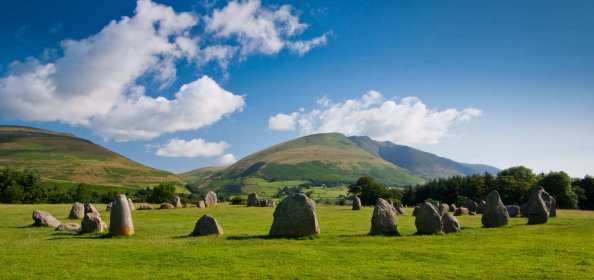
Castlerigg Stone Circle, near Keswick in Cumbria, UK
Published in Gnarled Oak, Issue 10: Dark Water, November 2016:

My deepest thanks goes to Mike Keville, poet, photographer and friend, who so willingly allowed me to use this photograph for this piece. His pictures are often so revealing, allowing viewers to see something we might otherwise miss.
Copyright (c) Mary Kendall and Mike Keville
My thanks also go to James Brush, editor of this lovely journal. I hope you will take some time and visit Gnarled Oak: http://gnarledoak.org/issue-10/a-new-silk-scarf/
A lovely surprise today when I found out that eight haiku I wrote were published in the online journal, Under the Bashō 2016, in the Modern Haiku category. I was also fortunate enough to have two one-line haiku also published in the One Line category, plus one in the Poets’ Personal Best category.
My thanks to editors Kala Ramesh, Johannes S.H. Berg and editor-in-chief, Don Baird.
The links to the journal:
Modern Haiku category: http://underthebasho.com/2016-issue/modern-haiku/1798-kendall,-mary.html
One Line haiku category: http://underthebasho.com/2016-issue/one-line-haiku/1759-kendall,-mary.html
Poets’ Personal Best category: http://underthebasho.com/2016-issue/one-line-haiku/1759-kendall,-mary.html
The poems:
Modern Haiku category:
hospice –
rubbing lotion
into her still hands
bitten nails . . .
holding the pain
in her hands
worry beads –
one by one I parse
your silence
nightshade –
the smoothness
of an aubergine
lonely night –
even the moon
looks around
darkening forest –
a wood thrush
begins to sing
chance of a lifetime –
my finger in front
of the lens
unable to swallow
childhood memories
rise up
One Line haiku category:
lone tricycle blue in the whirlwind of leaves
burnt butter that morning in Provence
Poets’ Personal Best:
hospice . . .
a glimpse of moonlight
on the bed
The Heron’s Nest – June, 2016 (originally published)

~ ~
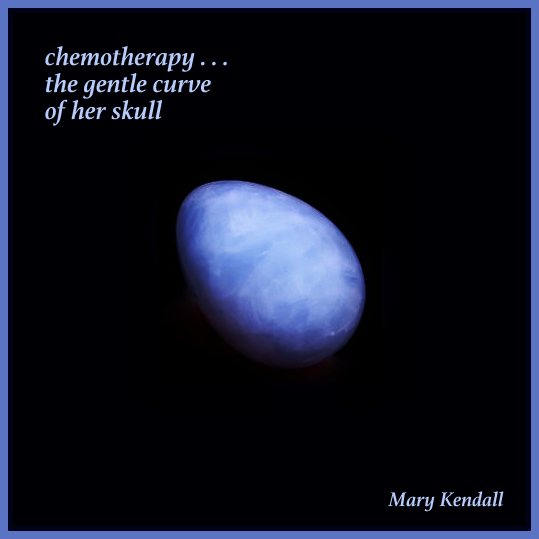
A wonderful surprise email told me that a haiga of mine had been selected as an “Honorable Mention, Mixed Media** Category” in the Jane Reichhold Haiga Contest sponsored by two wonderful senryu journals:
Failed Haiku, A Journal of English Senryu Volume 1, Issue 11, edited by Michael Rehling
Prune Juice – A Journal of Senryu, Kyoka, Haibun and Haiga, Issue 20, November 2016, edited by Steve Hodge
The Judges of the contest were: Kris Kondo, Ron C. Moss, Michele Root-Bernstein
Michele wrote the commentary on my haiga:
“With the sparest of words and imagery, this haiga lays bare the essence of life in the face of death. If the poem skirts the uncertain boundary between haiku and senryu, just as certainly the picture skirts the shadowlands of mortality, its single image illuminating the darkness with a pulsating light. So well integrated are text and image that the associative leap between the two has the power of metaphor: the shaved skull is the incubating egg, never mind the incongruity. Avoiding the maudlin and the sentimental, this haiga speaks simply, honestly, of the beauty to be found in the ordinary, ordinarily hidden from view.”
This competition was in honor of the late Jane Reichhold who was such a brilliant poet, teacher, editor and mentor to so many who write haiku, senryu, tanka and other small form poems. I never had the honor of meeting her, but her main book on haiku has been a bible for me and so many others.
**Mixed Media, which can be any combination of traditional and photographic, or computer generated images and text.
Published in Brass Bell, November 2016:
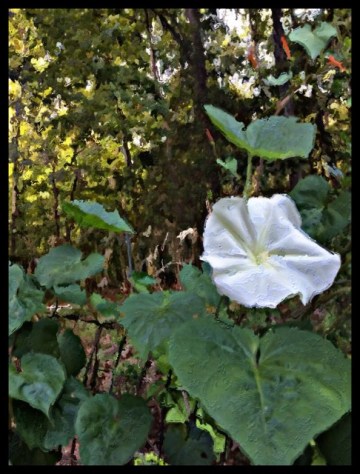
Photo art by Mary Kendall
.
.
moon flowers –
my son shows me
how they unfurl
Who are we really? We can present ourself to the world in many ways, and we do. It’s been quite a while since I posted a longer poem on my blog, so today I offer you a poem called “Mask Maker.” It was written to an ekphrastic prompt on Rattle a few months back, but it was not selected. The two winning poems were brilliant and should have been chosen.
.
What’s great about writing to a good prompt is how an image can pull all sorts of ideas from us. The prompt was a picture of several sets of hands modeling in clay. I toyed with the idea for quite some time and discarded two other poems until I settled on the one that grew into this poem.
Mask Maker
Do you like this mask, the one I made
so carefully, molding it to the contours
of my face so it looks just like me?
I wear it day after day, occasionally
slipping it off and refashioning it a bit.
It changes as I change.
I was four when I made the first mask—
out of mud from the bare earth in the yard.
It blocked my fear, and hid my thoughts.
I was invisible to the world, hidden behind
this new cover. No one noticed when I wore it,
so I kept it on, and it protected me.
Once it nearly shattered during that long fall
down the stairs that he never spoke about.
Dazed, I woke up and checked the mask.
It was the one thing that hadn’t been hurt.
After that I knew I needed it to keep me safe,
to keep me quiet, to keep me out of the way.
When I closed my eyes, I could imagine it was
no longer a mask but just me, unseen by him.
It made me look like a normal girl, a good girl.
After many years and many masks, I became
quite good at molding a mask so flawlessly thin,
so delicate, transparent as a butterfly wing.
It was easy to slip on, and no one could tell
what was real and what was not, even up close.
It worked, and that’s all I ever wanted.
There is a small secret I learned from making
masks and wearing them day and night:
You must believe it’s you and not a mask.
It is you, but a different you, a you that won’t
cry out or tell secrets or even cringe too much
when unexpected blows come (and they do).
Close your eyes now. Imagine yourself this
way—in control and protected from the world,
safe from everything you fear, hidden far away
behind this lovely mask where you can watch
what’s going on, where you can be vigilant,
and where you are the real you only you can see.

~
This is my third tanka in the fall/winter 2016 issue of GUSTS, the journal of Tanka Canada and edited by Kozue Ozawa.

Tanka by Mary Kendall
Published in GUSTS, NO. 24, Contemporary Tanka, Fall/Winter 2016 (Tanka Canada)
It’s an honor to have three tanka in the fall/winter 2016 issue of GUSTS, the journal of Tanka Canada and edited by Kozue Ozawa. Here is the first one:
smiles from strangers
amidst the ragged flow
of city streets —
stitching small holes
in the human heart
Tanka by Mary Kendall
Published in GUSTS, NO. 24, Contemporary Tanka, Fall/Winter 2016 (Tanka Canada)
Another haiku published in Wild Plum, a haiku journal, 2:2 Fall & Winter 2016:


A new haiku published in Wild Plum, a haiku journal, 2:2 Fall & Winter 2016:


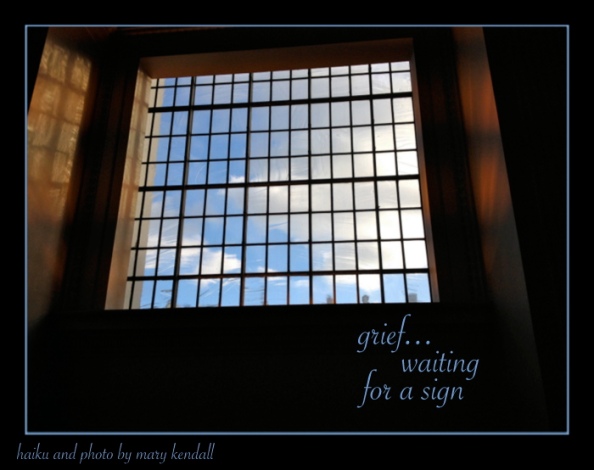
 This haiga was published in Wild Plum, a haiku journal, 2:2 Fall & Winter 2016.
My warmest thanks to the editors, Gabriel Sawicki and Maria Tomczak.
It is always an honor to have a tanka published in , the Journal of the Tanka Society of America. My thanks to editor David Rice for selecting this poem.
arrowheads
rise to the surface
in a newly plowed field …
old memories
can be unexpected, too
Published:
Ribbons (Journal of the Tanka Society of America), Spring/Summer 2016, Volume 12, Number 2 (page 37)

My thanks to Michael McClintock, editor of the Tanka Café in Ribbons, the Journal of the Tanka Society of America. The prompt was poems of spring and summer. Here is mine:

And now my last tanka to appear in Frameless Sky 4 (Summer 2016), edited by Christine L. Villa. The beautiful photograph paired with this poem is by Irena Iris Szewczyk
To hear me read this tanka, simply click on the link below:

Notes:
My warmest thanks to Chrissi, for publishing this and my other pieces in Frameless Sky 4
and to Irena, for creating such a lovely picture and allowing my tanka to join it.
This tanka was also published in Frameless Sky 4 (Summer 2016).
To hear me read this tanka, just click on the link below:

One more tanka appearing in Frameless Sky 4 (Summer 2016), edited by Christine L. Villa.
To hear me read the poem, just click on the link below:

Another pairing of a tanka of mine with a stunning photography by Irena Iris Szewczyk that was published in Frameless Sky 4 (Summer 2016). I am amazed at how perfectly they matched…a big thank you to Christine L. Villa, editor of Frameless Sky for her excellent work and to Irena Iris Szewczyk for her beautiful photograph.
This link below is of me reading this tanka:


My thanks to Christine L. Villa for selecting this haiku for publication.

In Frameless Sky 4, editor Christine L. Villa paired my haiku/senryu with a another lovely photograph of Irena Iris Szewczyk. My thanks go to Irena Iris Szewczyk and to Christine L. Villa, editor of Frameless Sky.
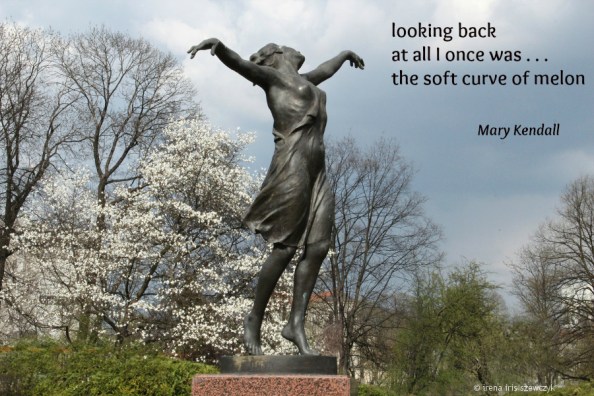
Words by Mary Kendall
Photograph by Irena Iris Szewczyk
Frameless Sky 4, Summer 2016
In Frameless Sky 4, my tanka was set to this beautiful photograph of Irena Iris Szewczyk. My warmest thanks to Irena Iris Szewczyk and to Christine L. Villa, editor of Frameless Sky. I will be posting others from this fine video publication in the next week.
A link to me reading this tanka is given below:

A Few Extra Notes:
Irena Iris Szewczyk is both a distinguished photographer and haiku poet. Irina blogs at Iris Haiku where she posts her photographs and her haiku: http://iris-haiku.blogspot.com
Her artwork for Frameless Sky 4 can be seen here: http://framelesssky.weebly.com/artwork.html
Christine L. Villa is editor of Frameless Sky. She is a distinguished poet herself. Her blog is called Blossom Rain and is located here: http://blossomrain.blogspot.com
Frameless Sky can be found here: http://framelesssky.weebly.com
To listen to me read this tanka, click on the link below:



My second tanka published this week in A Hundred Gourds:

A Hundred Gourds 5:3 June 2016
One of the finest journals around for Japanese short form poetry has been A Hundred Gourds. The editors announced several months ago that the June issue would be the last issue. This is a great loss, but there is an amazing amount of work editors do to make a journal of this caliber work so well. The tanka editor, Susan Constable, is one of the finest poets around, and her skill and advice as an editor is special. I know I have learned a great deal from her through our correspondence this past year. My thanks go to all the excellent editors of this journal. I am fortunate to have two tanka selected for this final issue of A Hundred Gourds. I will be posting them separately, one today and one tomorrow.

A Hundred Gourds 5:3 June 2016

June has brought with it the publication of some excellent journals. I love being able to read through them and enjoy the poems. Some are haiku, haiga, senryu or haibun, and others are tanka, tanka art or tanka prose. Hours and hours of fine reading that will stretch into the whole month of June.
I’ve been fortunate to have a number of small poems published this month. I’ll post these by type and by publication over the next week. Today I will begin with two haiga that were published in the newest issues of cattails, the publication of the United Haiku and Tanka Society.
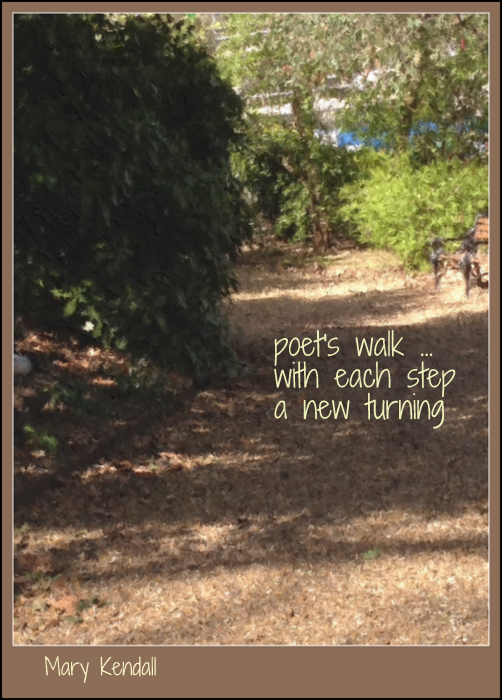
Both haiga were published in the May 2016 edition of cattails, collected works of the United Haiku and Tanka Society.
I love Georgia O’Keefe’s quirky paintings and perspective. She did a lot of work using skulls, which seems quite natural. New Mexico must yield all sorts of bones in the mountains and deserts. Just as she studied and painted flowers, so she did the same with animal bones and skulls. She was very prolific in her work, painting a skull or pelvis in many views, often accompanied by a flower or other desert item. Many didn’t like her bone paintings, but that didn’t deter her in the slightest. Even her husband, photographer Alfred Stieglitz, was initially critical of them. He later relented, as did most critics. To find beauty in death and decomposition and to create art that is somehow mesmerizing and thoughtful is quite an accomplishment.
This poem is from my chapbook (Erasing the Doubt (c) 2015, Finishing Line Press). It is hidden amongst just a few of these wonderful paintings.

Georgia O’Keefe and cow skull

Bob’s Steer Head by Georgia O’Keefe (c) 1936

Cow’s Skull with Calico Roses by Georgia O’Keefe (c) 1931
On Viewing a Skull Painting by Georgia O’Keeffe
- The Artist’s View of the Skull as Form
The sinuous curve
hollowed circle
smooth chalky bone
worn smooth, it goes
beyond the form
behind the slow dip
of the arching eye
twisting and curving
back on itself
2. The Skull’s Perspective
At first it all felt wrong,
reversed, bent forward
in a geometric embrace
of mass and space,
the brush stroke
through the hollow eye
that will never see,
beyond to the delicate shell
of the brain
that will never again think,
moving slowly
into that shadow of light
the sky insinuates itself in color
and it is there
that you alone can wander,
deep inside the form that is me

Georgia O’Keeffe, Ram’s Skull with Hollyhock, (c) 1935

Deer’s Skull with Pedernal by Georgia O’Keefe (c) 1936
Depression is not very pretty. Nor is it very kind. It has many faces, and it comes and goes as it pleases. It can affect almost anyone. If you are someone who has struggled with depression, you know it never goes away completely but hides, waiting for the right moment to reappear. It isn’t something to be lightly dismissed in yourself or in others who suffer from it. Who hasn’t seen the devastating effect it can have on a vulnerable person? I’ve struggled with it, and I’ve certainly known many others who were also affected by it.
.
Watching someone you love battle depression is never easy. It isn’t easily “fixed,” even in this age of modern medicine. Therapy and medicines are there, and for some people they help so much, but for others, less so. Compassion, patience, unconditional love and presence are the lifelines we can offer…to someone else and to ourselves.
.
To listen to me read this poem, please click on the link below. It will take a minute to begin.
.
.
Compassion
Taking on your pain was something
I tried to do, like slipping on your
jacket, pushing an arm in and then
another, pulling it tight around myself,
hoping that by feeling what you do,
it would diminish your pain.
No matter how hard I tried, it wasn’t a fit.
Your depression fell around me in loose
folds, the sadness sagging around my heart.
Besides, it would leave you cold, open
to the fickle winds that blew your way.
Compassion was first published in Erasing the Doubt by Mary Kendall
(Finishing Line Press © 2015)
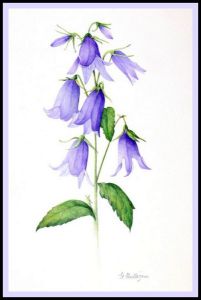
Campanula sp, Blue Bellflower. – Watercolour by Greta Mulligan (Australia)


The Ekphrastic Review: writing and art on art and writing, has published my poem, “Sunday Morning.”
Let me give you a brief “back story” on this poem. Many years ago, I stopped writing completely for around twenty-five years. Total silence in my life. I don’t know why it happened, but it did. After what can only be be termed a spiritual experience on a trip to the Fijordland in New Zealand, poetry somehow magically entered my life again. I can’t explain this. It just happened, and I know it happened for a reason. This poem was the first complete poem I wrote when my poetic “voice” returned, and it’s only been read by one other person until today. It’s taken me about fifteen years to gather courage to submit it anywhere. My deepest thanks to editor, Lorette C. Luzajic, for publishing this piece.
Here is the link to the journal: http://www.ekphrastic.net/ekphrastic/april-21st-2016
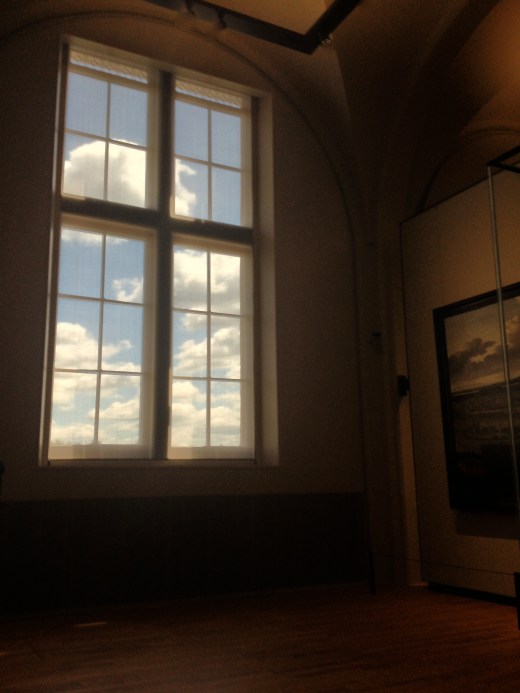
Rijksmuseum, Out the Window (c) 2013 Mary Kendall
Sunday Morning
Hymns unsung, prayers unsaid,
I sat by the window and prayed
for forgiveness one more time;
one more time I begged.
Holding the cup of coffee in my hand,
I hoped the warmth would fill me
where your words had left me cold,
but I knew nothing could do that—
fire can burn for hours and be unfelt.
Hymns unsung, prayers unsaid,
I lay down on the empty bed, pulling
the blanket across my cheek, turning
from the window, from the sky
and the sun, praying for some rest.
Note: The window in the photo is not, of course, the window of the poem. I love taking pictures of windows when I travel, especially indside looking out. This photo was taken in June 2013 when my husband and I were in Amsterdam, visiting the beautiful Rijksmuseum.


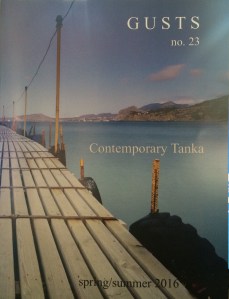
I’ve had the good fortune to have three of my tanka published in the latest issue of GUSTS,
NO. 23, Contemporary Tanka, Spring/Summer 2016 (Tanka Canada). This is the first time my work has appeared in this beautiful poetry journal, and I’m most grateful to the editor, Kozue Uzawa.
I’ve decided to post each tanka separately here on my blog.
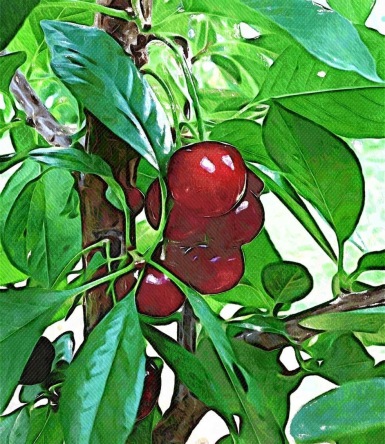
Artwork by Alexis Rotella (c) 2016
In the Tanka Café, RIBBONS: Journal of the American Tanka Society, Winter 2016: Volume 12, Number 1:
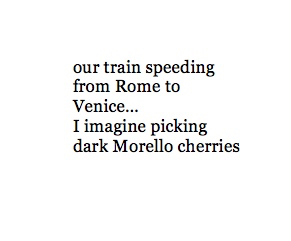

Note: I would like to thank poet/artist Alexis Rotella for her beautiful rendition of these Morello cherries. I’m honored that she would create and share this lovely piece of art with me.
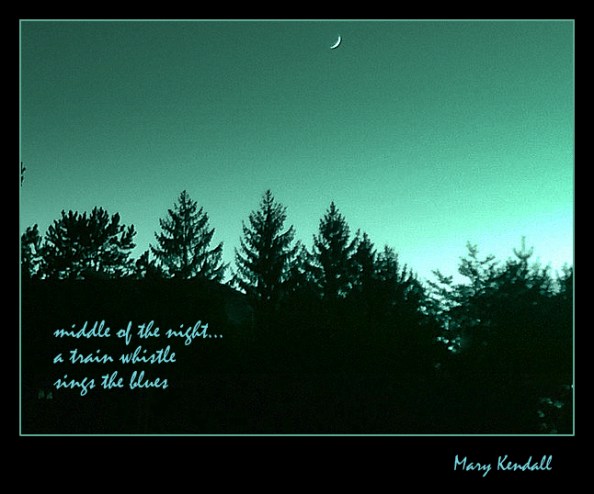
My Train Whistle haiga was published in the April 2016 issue of Failed Haiku: A Journal of English Senryu, edited by Michael Rehling.
~ ~ ~
Please view the whole issue of this wonderful journal: http://www.haikuhut.com/FailedHaikuIssue4.pdf
Some of you already know that one of my newest favorite online journals to read is Failed Haiku: A Journal of English Senryu. Edited by Michael Rehling, this journal has taken off in the really large number of readers and downloads. The latest issue is 100 pages of some of the finest haiku/senryu poets writing today. Please be sure to visit and download the journal, which comes in pdf form. You will really delight in these poems and as with all senryu, emotions run from laughter to being touched deeply and seriously.
Click to access FailedHaikuIssue4.pdf
I was fortunate to have one haiga (which I will post separately) and two senryu published in the April 2016 issue. I am thrilled! These are my offerings:
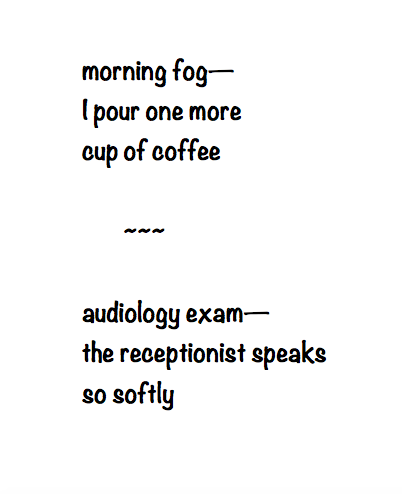
My very first tanka sequence was published in RIBBONS: Journal of the American Tanka Society, Winter 2016: Volume 12, Number 1. My thanks to editor, David Rice, for suggesting to me that these three tanka would work best in a sequence.

These three senryu were just published in the March issue of faileD haikU, a Journal of English Senryu, Volume 1, Issue 3, edited by Michael Rehling.

I hope you are enjoying senryu as much as I am. The world of haiku and senryu is so rich and open.


I had two senryu published in the March, 2016, issue 18 of Prune Juice, Journal of Senryu, Kyoka, Haibun & Haiga, edited by Steve Hodge. It’s a real honor to be published in this excellent journal.

The first is dedicated to my friend, Gale, who underwent brain surgery last fall. She handled it with such grace and her usual humor. She has recovered and is doing really well. This poem is for her:
scalp stapled shut–
your laughter as you
try on bright new hats

Senryu have a human element to them. They are often thought of as being humorous, but that is not always the case. They can be very serious as in the next poem. This poem is a one line senryu. It is dedicated to someone dear to me who is undergoing cancer treatment.
your tumor growing we worry about the snow
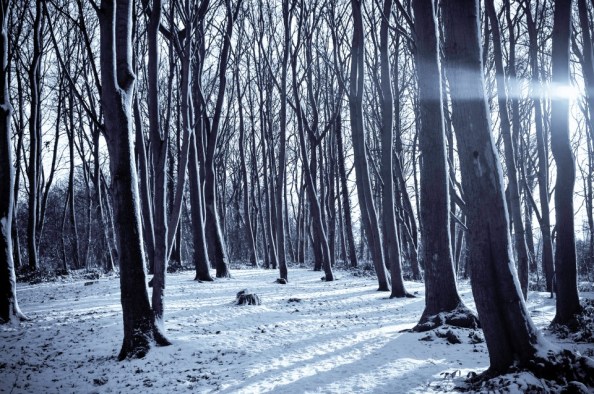
I hope you will explore all the writers in this issue of Prune Juice: https://prunejuice.files.wordpress.com/2016/03/pj-issue-18-march-1603.pdf
This is #3 of the three photo haiga published in the March issue of faileD haikU, a Journal of English Senryu, Volume 1, Issue 3, edited by Michael Rehling. A bit of nursery rhyme whimsy in this one.
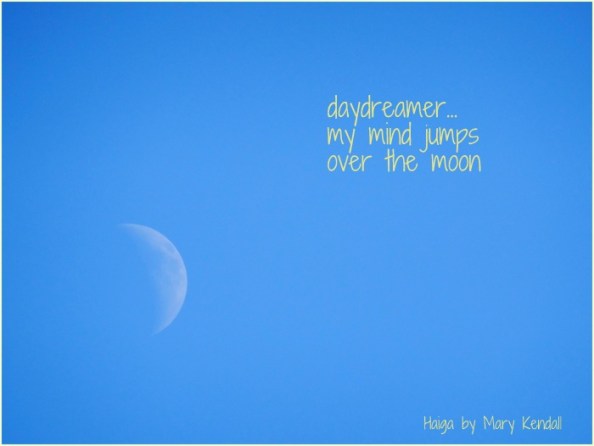

Note: this beautiful photo is in the public domain free use category. The senryu is by Mary Kendall.
As mentioned in the last posting, I had three photo haiga published in the March issue of faileD haikU, a Journal of English Senryu, Volume 1, Issue 3, edited by Michael Rehling. This is #2.
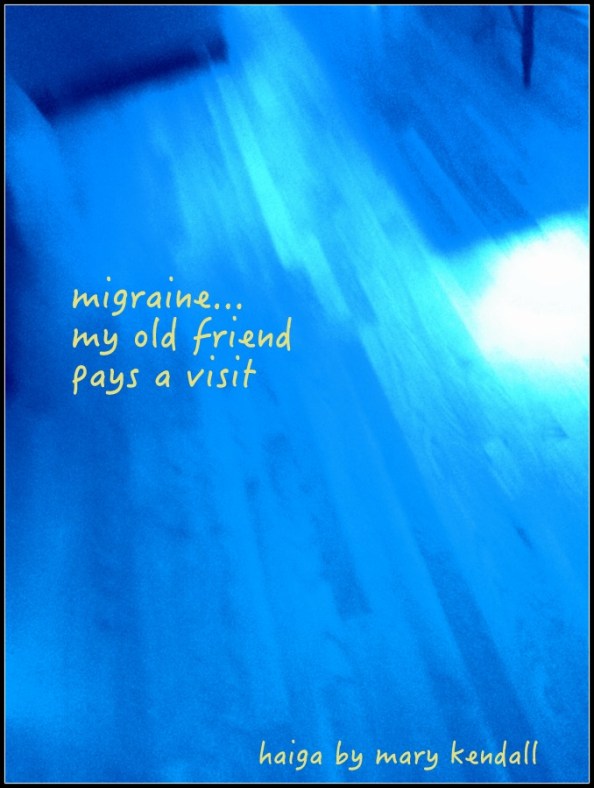

Note: Both the photo and senryu are by Mary Kendall.
I had three photo haiga published in the March issue of faileD haikU, a Journal of English Senryu, Volume 1, Issue 3, edited by Michael Rehling. The journal is only the third issue, but it’s become enormously popular…with good reason.
For this first one, I’d like to thank my dear friend and photographer, Yolanda Litton, for the collaborative use of her wonderful picture with my senryu.
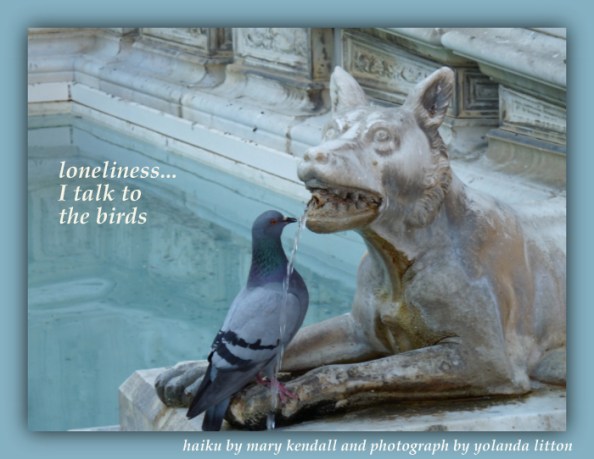
I will post the other two haiga separately.
Two tanka and one haiku were published
in A Hundred Gourds 5:2 March 2016

~~~
A Hundred Gourds 5:2 March 2016
http://www.ahundredgourds.com
This haiku has just appeared in The Heron’s Nest, a distinguished journal of haiku. For me, as a first time poet in this journal, it is a truly great honor for which I’m thankful.
My poem is on page 11 of The Heron’s Nest: http://www.theheronsnest.com/March2016/haiku-p11.html
winter night—
the curl of woodsmoke
takes flight

I hope some of you will click the link to The Heron’s Nest to read the full issue of wonderful haiku from around the world.

Note: photo is in the public domain (found linked with many sources online)
What a joy it is to open a journal–online or in print–and find your own work included among poems by poets you admire greatly. March 1st has been a special day since several wonderful publications all appeared on the same day. I’ll post separately for each journal, since I am hoping that you will go directly to the journal and read the work of the other poets that are included.
The first one is a very lovely journal, Wild Plum – a haiku journal, edited by Gabriel Sawicki who lives in Poland. This is volume 2, issue 1. https://wildplumhaiku.wordpress.com
A feature I love is that the new isssue downloads as a pdf file to enjoy now as well as later: https://wildplumhaiku.files.wordpress.com/2016/02/wild-plum-spring-summer-2016.pdf
I have two pieces included in this issue:
The first is a haiku on page 45:

and the second piece is a Haiga (page 11) using a photo I took from our flat in London looking out at the twilight sky of Bedford Square Gardens:

I hope readers will come to realize that meditation is very natural and we often do it without trying, especially at times such as studying a beautiful sky and clouds. Those moments are very centering, and you find yourself breathing more slowly and feeling more relaxed. I hope my Haiga conveys that to you.

Photograph (c) 2010 by Patti Chronert
Another Love Poem…
If you’d like to hear me read this poem, please click on the link below. Wait a few seconds for it to load. I hope you enjoy both listening and reading this love poem.
Another Love Poem…
~ To my husband and partner of forty years ~
We walked along in the Tuileries
alone among the chestnut trees,
morning sky of crisp pale gold
so many paths we have strolled,
and still we wander, just us two,
my heart never very far from you.
We stop to sit and watch the birds
green park chairs, unspoken words,
plain sparrows chirp, so unadorned
no beauty lost, no beauty mourned.
Simple thoughts are often most true—
no man was ever loved more than you.
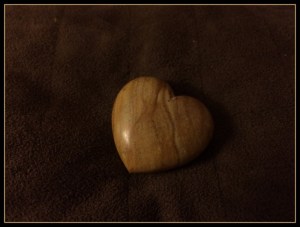
Heart Stone by Mary Kendall

A story in the NY Times story last Sunday said, “France is spending nearly 1 millions euros a day on the heightened security, part of a renewed surge in European military spending as governments declare terrorism a permanent risk.”.
.
One million euros a day to combat terrorism. What a high price for liberty! The words, “Liberté, Fraternité, Egalité” are known to most of us. The French fought long and hard for democracy, and still, the battle continues. Part of democracy is tolerating dissension, but dissension can come at great risk and price. The French (and other democratic countries) are committed to fighting terrorism at great financial cost. Sadly, this means also at a cost of human lives. Still, there is no other choice…freedom must be protected by all who believe in democratic rule.
The following tanka was written as a reflection on the real cost of defeating oppression. It is a brief poem by choice.
a wash of red
under café tables
in silence
we learn the meaning
of sanglant

For your reference:
Article:
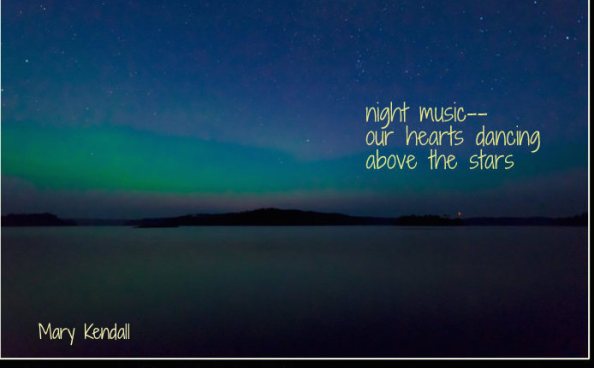
This photo haiga was created by me as a response to a prompt: ZENITH. This is one day in NaHaiWriMo (National Haiku Writing Month) on Facebook during the month of February.

Brushing Your Hair
In the last month you ask me a favor.
Will I brush your hair when you have passed?
You seem to want to greet whatever comes
looking your best. I give my promise.
Each day when I come home, I offer
to brush your hair, but you say no,
maintaining the independence
you have always shown.
Later, in hospice, I no longer ask.
I hold your hands, rubbing lotion in,
skin so fragile, like a butterfly wing.
It is time now to make the last ablutions.
I clean your face and brush your hair,
your sleeping eyes flicker
under paper-thin lids, pale blue veins
tracing their course across them.
I imagine your mother tenderly holding you,
stroking your cheek, watching you dream
in her arms—her newborn daughter
with milky breath.
Ninety-one years separate us, your two watchers.
One joyously bringing you into the world;
the other sitting silently in the dim-lit room,
keeping watch over you through the night.

The poem, “Brushing Your Hair” is from my chapbook, Erasing the Doubt (c) 2015, Finishing Line Press.
A new poem just up at Silver Birch Press. Click at the bottom to get to the original on the SBP site.
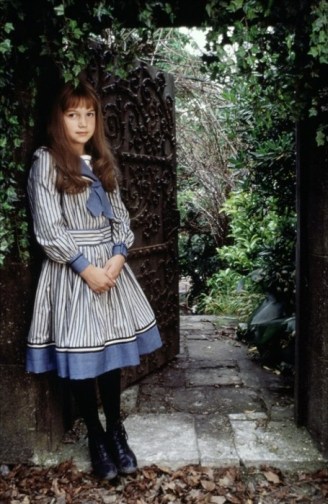 Mary, Mary…
by Mary Kendall
Unwanted.
Unloved.
Shunned.
Spoiled.
Rude.
Aggressive.
Obstinate.
Outspoken.
Contrary.
Sour.
Gloomy.
Dismissive.
Shut away.
Alone.
Alone.
Alone.
Your attributes, little Mary.
A long list.
No one liked you.
Except for me.
Not true. There were others.
Your sweet Indian Ayah, who fed you,
washed you, dressed you, taught you,
tolerated your contrary ways, angry words,
miserable frown. She held you close,
rocked you after nightmares and dark dreams,
fanned you in the hot Indian summers.
She sang to you—mellifluous, soothing songs.
Your mother denied your existence, hid you away from view,
just as later, you’d find your cousin Colin, hidden away, too.
Denial.
What damage it did.
What pain it caused.
Like a plant held too long in a small pot,
its roots pot-bound and crippled,
Colin, unwanted and denied like you.
Unwanted.
Unloved.
Denied.
My family separated when I was just five,
I felt…
View original post 514 more words
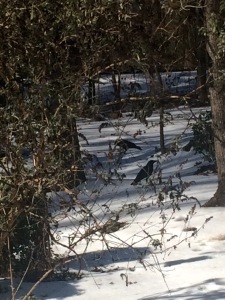
I had three haiku published in issue #61 of hedgerow, a journal of small poems last week.
old nest box…
a flurry of blue birds
before the snow
(hedgerow #61)
roasted chestnuts–
how could I forget
your laughter?
(hedgerow #61)
.
my dog leaps
into still night water
to fetch the moon
(hedgerow #61)

This tanka art piece is the second in my Dream Time series of poems. To read the first poem in the series (on this blog), follow this link:
As you’ll notice the two poems are quite different in style and content, but I’ve grouped them together in Dream Time since both were written while poised on that slender edge of dreaming into another time and place.
A Special Word of Thanks:
A big thank you to my dear husband, Ritchie D. Kendall, who took this photograph on a hill in Greenwich in 2013 when we were living in London.
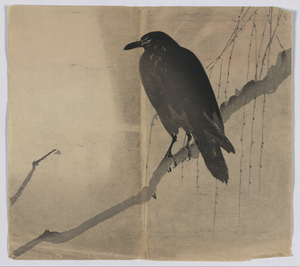
Crow on a Willow Branch, Japanese woodprint, Library of Congress woodprint
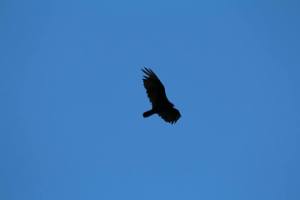
In my last posting here, I put up a new haiga that was just published in cattails, January 2016, the journal of the United Haiku and Tanka Society, but I was really very fortunate this time round in having three other poems published in the same issue: a haiku, a senryu, and a tanka.
cattails, January 2016, haiku, p. 8:
winter—
each day closing in
on itself
cattails, January 2016, tanka, p. 4:
chased away
by a gang of crows
the red-tailed hawk—
being different
is never easy
cattails, January 2016, senryu, p. 9:
black Friday—
the vultures circle
round and round
Published in cattails, January 2016:
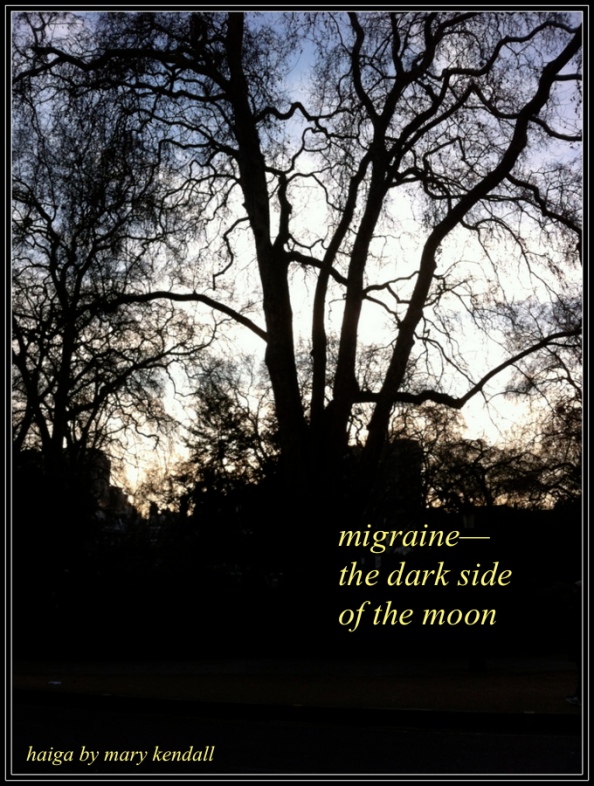
haiku and photography by Mary Kendall (c) 2016
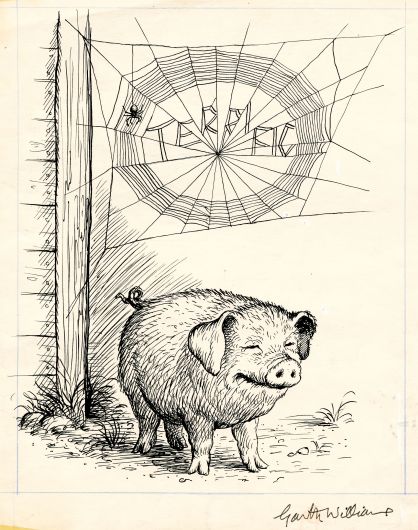 Charlotte’s Story: Haiku for Wilbur
by Mary Kendall
“My Words”
my words—
who knew what a story
we’d become?
“First Friend”
a friend—
something my kind
never knew
“The Unexpected”
new friend—
silken parachutes in spring wind
bestow surprises
“Silken Words”
silken words…
hearts woven together
in their own story
“Some Pig”
little did they know
how special you were—
some pig!
“Terrific”
a real friend
who accepted me as I am…
terrific!
“Radiant”
just knowing
you have a good friend…
this radiant heart
“I Told You”
out of nowhere
grows the best thing…
kindness of spirit
“Humble”
humble—
your kindness of heart
my friend
“The Fair”
harvest moon—
who knew how high
we’d fly?
“Templeton”
even a rat
can help a friend..
who knew?
“My Time”
time for rest
my voice a whisper
…alone now
“Good-bye”
no need to worry—
our memories will live on
in your heart
“Death”
View original post 261 more words
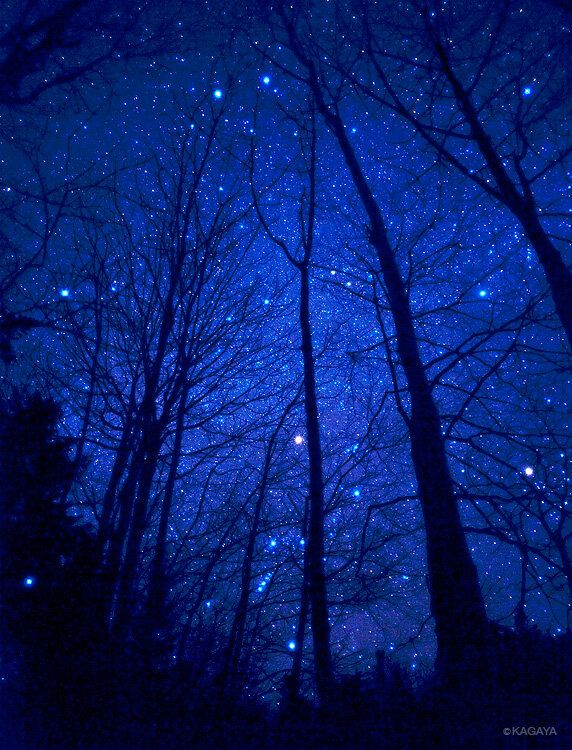
Starry Sky (c) Kayaga
how could the moon
show its face
without light
…how could the stars
sing us songs?


New Note as of March 11, 2016: This poem has just been published on a favorite online journal called Ekphrastic: Writing and Art on Art and Writing. A link to the journal: http://www.ekphrastic.net/ekphrastic/beauty-in-broken-pieces-by-mary-kendall
~ ~ ~
Readers of this blog don’t always notice its subtitle: One Poet’s Practice. I like to practice. I like to experiment. All poets do. Without stretching the mind, you fall into the pattern of repetition. Each poem starts sounding like the last or the next.
I have been writing a lot in short form poetry–haiku, haiga, tanka, and other small poems. Today, in an effort to go in a completely different direction, I offer you a very long, rambling poem–quite unlike me, I know. It is called “Beauty in Broken Pieces,” inspired by a lovely photograph taken in Dublin, Ireland by India Leigh Lassiter, herself a talented writer as well as photographer. Thank you, India, for allowing me to use your picture as a starting point for this poem.
To hear me read this poem, please click on the link below (give it a minute to load):

Blue Spiral, Dublin, Ireland (c) 2015 photograph by India Leigh Lassiter
Beauty in Broken Pieces…
Perhaps it was once a deep blue vase,
holding seven pale pink peonies
freshly cut one May morning…
the silence shattered
suddenly when
she lost her balance,
grabbed
the oval table
and together
crashed down,
one in splintered pieces,
the other dazed
watching the water
slowly spread
under the petals.
Or perhaps…
it was packed away in a doctor’s study,
an old cabinet filled with bottles…
cobalt blue bottles with faded labels,
the dark blue hinting of hidden secrets,
dangers that lay in long-dried residue
of those bottles that were shattered
and thrown upon a fire
that raged for hours,
flaring up in vivid hues
of acid green
and mustard yellow,
tipped with amber,
azure and moon,
the air once heavy
with poison
and dreams.
Or…maybe
there was no story.
Do you believe the whole really is bigger
than the sum of its parts?
And please, don’t let’s forget
there is always
perspective.
Large things are large,
but small things
are also large
if seen
close
up.
It is lovely, this small mosaic
made of glass in shades of blue,
blue so dark,
it might still hold the sound
of the ocean from the sand
that washed up and back
over and over
dancing on the ocean floor
before it became
the glass
we see…
for what is glass
but sand
and fire,
beach
and
star?
even
a simple
spiral
mosaic
in shades
of blue, pearl and silver
might hold the deep bass song
of the darkling ocean,
the glimmering
whispers
of clouds
above,
patterns spiraling through nature
like our thoughts about beauty,
reality or memory’s truth
Fibonacci gave it his name,
the Greeks gave it meaning
with their golden ratio…
it exists everywhere
… a simple nautilus shell,
the sunflower’s seed head
that turns to the sun,
and following its cue, the pinecone,
the hurricane, even the galaxy, the cosmos
and here with this Irish glass spiral
we come full circle of woman
with camera, snapping
a photo, capturing
the balance of
silvery bits
and pearl
to blue
done
just
so
.

goniatite-fossil
Full Moon of the Winter Solstice (c) 2010 Martin Liebermann
As I post this, it is the morning of the winter solstice of 2015. Where I live in Chapel Hill, North Carolina, the winter solstice officially happens tonight at 11:49 pm, EST. Wherever YOU are, it will happen at a different hour or perhaps the same. Readers of this blog come from all over the world–one of the joys in blogging is seeing the list of countries of readers–and I love imagining the moon going through its magical phases for each of you. Tonight, the solstice. Later this week, a full moon. What more could we want?
These are some of my earliest haiku:
WINTER MOON HAIKU
First published on Poets Online (c) Mary Kendall
Later used as lyrics in “Winter Moon” by Paul Carey, a piece for women’s chorus in (c) 2011.
night snow
boughs dreaming
of first blossoms
Fog filled woods~
even the winter moon
has lost its way
a winter walk
footprints
tell no tales
the blue moon
silently closes the door
upon the year

American Beech Trees, (c) Photograph by Jim Clark
It was a very exciting moment last week for me to open up the latest issue of Moonbathing, a journal of women’s tanka, and see one of my own tanka included. To be in the company of so many very talented tanka poets is a highlight of my year.
Published by poet and editor, Pamela A. Babusci, Moonbathing is a journal that showcases the many sides of tanka. The poems cover a wide variety of experiences, emotions and subjects…and all written by talented women poets.
Here is my tanka:
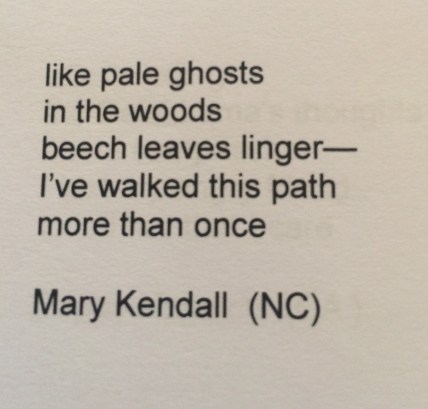

Moonbathing is edited and published by Pamela A. Babusci
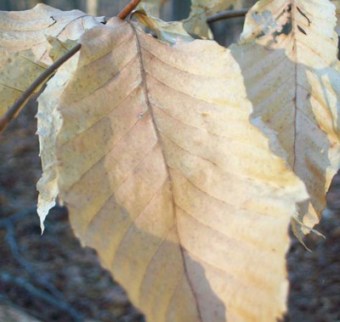
American Beech Leaves, (c) Photo by Walter Reeves
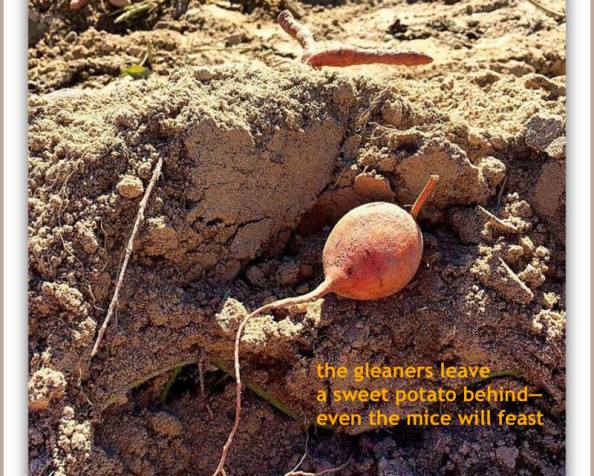
This beautiful photo was taken by a friend, Patti Hardee Donnelly. Patti is a Middle School Language Arts Teacher at the same school I retired from. Each grade level does regular community service, and the activities are varied. Last month, Patti took her Middle School Advisory to spend an afternoon of gleaning sweet potato fields. As they were working through the fields, Patti took this photograph. She very kindly let me ‘borrow’ it for this haiga.
The concept of gleaning is an ancient one. So long as people have planted fields of crops, others have followed in their wake to glean whatever food might be left behind. It doesn’t matter if the vegetables are picture perfect, so much as they provide food for those who are without. Taking a group of middle class students who are in no danger of starving is a very purposeful way of both doing community service and providing a life lesson to the students. The gleaned sweet potatoes do end up on dinner tables of people who are happy to have healthy, fresh produce. The students who do the gleaning, perhaps for the first and last time of their lives, surely learn a lot about the facts of poverty and hunger. They learn a lesson in simple compassion. How often do most of us come face to face with the pain of hunger? The answer for the majority of Americans is ‘rarely.’
Here in the United States, we have just celebrated Thanksgiving, a time in which we feast and share our meal with those we love. Soon our thoughts will move on to Christmas, Hannukah, Kwanza, winter solstice, New Year’s and a whole period of seasonal gift giving, sharing food and good spirit. Let’s stop for just a minute and think about all we are fortunate to have–we who go to bed in a comfortable place after having had adequate meals. For December, I’m going to spend some time thinking about the concept of gleaning, both the physical and metaphorical. Having borrowed Patti’s beautiful photo and ‘gleaned’ it for my haiga, I hope I can find other ways to give back to the world.
Thank you, Patti Hardee Donnelly, for allowing me to use this picture, but thank you also for teaching your students about the importance of compassion and service to others. I will always celebrate and salute teachers like you who make a real difference in so many lives.

Jean-François Millet (1814-1875)
Gleaners, also called, The Gleaners
1857
Oil on canvas
H. 83.5; W. 110 cm
© RMN-Grand Palais (Musée d’Orsay) / Jean Schormans
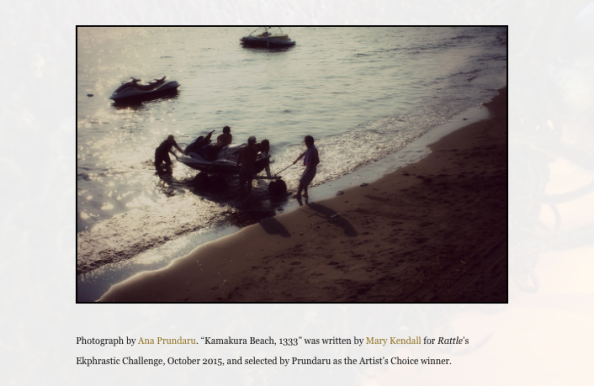
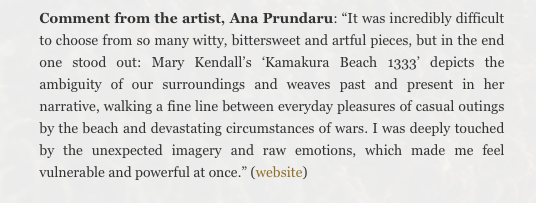
I am both speechless and honored by the selection of my poem, “Kamakura Beach, 1333” as the artist’s choice of the October ekphrastic challenge by Rattle, one of the finest contemporary poetry journals. The artist/photographer is Ana Prundaru. My thanks go to Ana for selecting my poem for this challenge. I am deeply touched by her very thoughtful and generous comments.
To read the poem or listen to the audio on Rattle, here is the link:
http://www.rattle.com/poetry/kamakura-beach-1333-by-mary-kendall/
Note: there is an audio of me reading the poem on the Rattle page but I’ll include it here as well:
~
Kamakura Beach, 1333
The sea washed scarlet that night.
The tide rushed in—swelling and breaking—washing
all traces out to sea on the waves of Kamakura Beach.
You know nothing of this, you who long for adventure
and pleasure—youth who search desperately for meaning
in lives that are too rich, too busy, and still so poor.
Your small boats arrive in early evening, the carmine sunset
at your back, and you quickly gather driftwood, tinder, and
fallen black pine branches to burn. You light the fire.
A trail of smoke begins funneling up to the starry sky.
The fire burns hot and one by one, you feed it twigs, boughs,
pine cones bursting into streams of sparks and wild flames.
And in your wanton rambling, one girl grows silent—she alone
hears the hallowed chanting, the cries of battle, the shrieks
of arrows piercing skulls, the stench of life exiting too abruptly.
She wanders over shallow rocks, her hand touching stone,
knowing the pain hidden in the silence of eight hundred years.
The rest of you are unaware…you laugh too loudly, move
too fast, not noticing the shifting colors of the setting sun.
Listen and you will hear the shogun cries of warriors and farmers
that once shook the sacred sands of Kamakura Beach.
Can you smell the fierce fires, the burning buildings,
the blazing rafters crashing and lighting the darkening sky?
Can you hear the screams of those buried here long ago?
Time slipped by like swifts at dusk darting in the fading sky.
The fire raged on and on, and lives were ravished in a
single breath. It was our fate to die on Kamakura Beach.
With Samurai mind and clean, sharp blows, the sacred sword
was swift. One by one, we died…each of us choosing honor,
this bleak beach now strewn with bones, bodies and blood.
You who come to visit—feel the cool churning lapis blue water,
and see the late sun boldly brush red on sand, water and waves.
Remember us—we who lie buried on Kamakura Beach.
Let your fires roar, let them spark in comets to the stars.
Under the dark night skies long written in indigo and ink,
we will walk together here on Kamakura Beach.
Morning tide will come—swelling and breaking—washing
your presence out to sea— remembering our final night,
a night of fire and blood, bone and bodies on Kamakura Beach.
The sea washed scarlet that night.
~
Here is the broadside link:
Rattle also posted a download of a broadside that includes poem and picture side by side. It is so beautifully done with the shadows of the boat creating a subtle image under the poem. Very appropriate to this particular poem, I think.
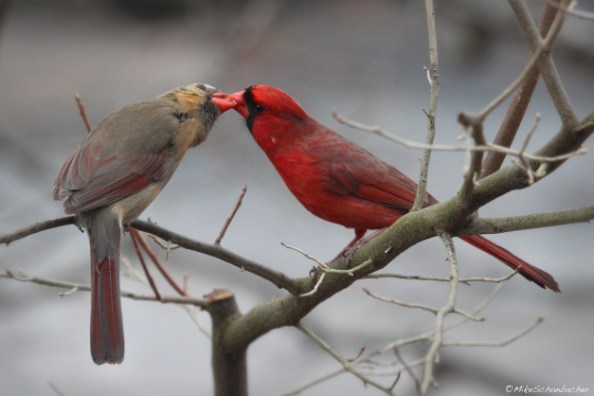
From the window
I watch the cardinal
shuck a sunflower seed,
and, beak to beak,
like a passionate kiss,
he passes it to her,
his paler partner.
I imagine then
that I see the gleam
in his lusty eye.

Note on Photograph: I can find no other attribution for this photograph other than it was taken in Woods Hole, Massachusetts in 2014. It has appeared in a number of online birding sites. My thanks to the anonymous (but talented) photographer for capturing this tender moment.
Today, on Ekphrastic: writing and art on art and writing, as part of their 20 poem challenge, I have three haiku to go with a gorgeous picture of swallows.
To read the poems and see the art in the original publication, please click on this link:
http://www.ekphrastic.net/ekphrastic/swallows-by-mary-kendall
The artwork is “Swallows” by Benjamin Chee Chee

(1)
frail beauty—
scissoring the sky
on indigo wings
(2)
hope . . . soaring on wingless winds
(3)
taking leave—
gathering courage
as you fly
My thanks to editor, Lorette C. Luzajic, for including these haiku.
Today, my favorite haiga was published in a favorite journal, Gnarled Oak. It is a lovely home for this haiga. Here it is along with the link to Gnarled Oak (check out all the great poetry in this journal). The editor, James Brush, releases one poem a day, a custom I love. It’s always a joy to see what each day holds. My thanks goes to James for accepting this piece.

.

This haiga was originally posted on this blog on June 14, 2015.
In my last posting, I mentioned that this was a week of poems being published. Last time it was two tanka in Ribbons, this time it is two other tanka…and one haiga in a very beautiful and favorite journal of mine: hedgerow: a journal of small poems. Editor Caroline Skanne produces this publication weekly (it goes out on Friday afternoon, a highlight of the week for so many of us). This issue is #55. I’ll provide a link to the journal at the end of this posting so you can go and read all the other wonderful poems and visit mine. I’m so proud to be included with so many excellent poets.
My two tanka here are love poems. My husband and I were married in 1978, but we’ve been together for forty years. Where does the time go?
After Forty Years
you take my hand
when we walk together…
the last leaves
nearly
gone
.
a single glance
from your grey eyes
shifts
my world—
the earthquake of you
.
The haiga published in hedgerow #55 originally appeared in this blog. I am thrilled to have it officially published in an edited journal of this caliber. Here it is.

I hope you all enjoy these poems. If you have a favorite, let me know.
When you have time, please visit the journal these were published in:
hedgerow #55, posted on November 13, 2015: https://hedgerowpoems.wordpress.com/2015/11/13/55/

This has been a lovely month for me in the poetry world with a bunch of things published. I’ll do this in several postings so viewing is easier. Early this week I had two tanka published in the Fall 2015 issue of Ribbons, the official publication of the Tanka Society of America. It is such an honor to have work appear in this journal. Two wonderful editors offer a wonderful chance for me to learn and grow as a tanka poet.
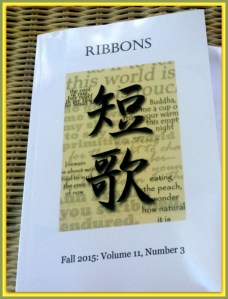
p. 30 (regular part of Ribbons):
sometimes
it begins with a slight fissure
hidden inside…
still I wonder
why it had to end

p. 21 (in the Tanka Cafe)
fresh water
cleansing, nourishing–
letting the earth
grow green
once more


To listen to an audio of me reading this poem, just click on the link below. Give it a few seconds, and it will start.

Salted Feathers
I was four when you told me the story
that if someone wanted to capture a bird
they must sprinkle its tail with salt.
We went outside, salt shaker in hand,
not sure what we really planned to do.
In the end, it was a tiny sparrow foraging
for fallen seeds or tiny insects on the other
side of the chain link fence at the back
of the yard. You told me to go ahead and
sprinkle it. My hand would not fit through
the opening link square with the shaker.
Blindly I tossed a spray of salt that landed
more on you and me than any place else.
The little bird was spared, and he continued
rummaging around in the grasses, indifferent
to the plans made by two small girls who
had no real idea what it was to take away
the gift of flight. No salted feathers for him.
All I remember now is that I felt something
happen inside when the little bird looked
at me and, in the way of all birds, off it flew.


Today I feel a deep pride and happiness that a poem that has taken 15 years to complete has been published in one of my favorite poetry journals–The Whirlwind Review. This journal has a focus poetry following a spiritual path, and the current issue has a theme of journeying. That made it a perfect place to submit this poem, Drifting Along. My deepest thanks goes to editor, Jill Jepson, herself a writer I greatly admire.
New Zealand is a land far away from my own, but it is a spiritual homeland of sorts. After visiting there in July 2000, a twenty-five year silence in my writing of poetry ended after a spiritual experience I had on South Island. The beauty of the country and the kindness and friendliness of the people made this a trip I will never forget.
.
The link to the poem: http://www.writingthewhirlwind.net/Kendall.html
Audio: If you care to listen to me read this poem (and I hope you will–this is one of my most favorite poems), click on the link below. Give it a few seconds to load.
.
. Visiting Waitomo Caves, New Zealand
There are moments when I wonder if one day
I will drift too far, too deep into my mind,
a world where fragmented thoughts,
memories and feelings might be lost forever.
The last trip.
A one-way ticket.
Traveling halfway around the world, we are
in New Zealand, the land of Aotearoa,
‘the land of the long white cloud.’ Driving
south, we arrive in the Maori heartland.
From Rotorua with its dizzying sulfuric scent,
we hike past brilliant springs, steaming lakes
and hot, bubbling mud pools where it seems
as if the underworld might hover just below
the surface of this ancient thermal valley.
One morning we go to see Pōhutu Geyser.
After a while, I wander from the path only to be
unexpectedly splashed by a small spurt of water
that was invisible until I came too close.
The Maori guide tells me that I’ve been blessed
by the spirits. Brushing off the still warm spray
of water, I hope she is right. I want to believe.
Driving through this world of rolling green
volcanic hills, we finally reach the Waitomo Caves.
As we wait for our boat, I feel a pulse in the land—
I know we are standing on sacred ground.
With our inner clocks all timed out, we begin
the dark journey into the heart of the cavern
Skimming silently through the still waters,
the young boatman leads us far into the blackness
of a cave that tunnels in so far, we lose all light
and sense of where we are. Our eyes now adjust
to this obsidian underworld, and it seems that
we have begun to cross into unending nighttime.
Everyone in the boat is silent. To be this close
to the infinite expanse of darkness,
to transcend time and self—this is a place
for stillness…and so it is.
With only the lapping of water against the boards,
the boat slips along. Although we came here
knowing what was hidden in this hollow, no one
is prepared for the full beauty of what is there.
I look up and see endless strings of glowworms—
glowworms hanging so high up, they become
numberless strands of summer stars—pale green fires
in these underground heavens whose ghostly translucence
leaves me feeling as if I am asleep somewhere,
not wanting to wake up from this ethereal place
in which I float between two worlds.
The boat glides quietly in the gentle sway of water,
and it is then that I begin to fear we have drifted too far.
I can remember no way back.
No signposts.
No markers.
No trail of crumbs.
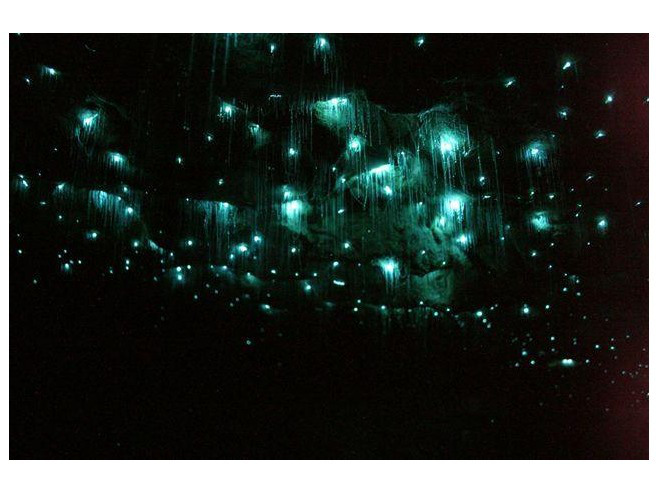


My thanks to the New Zealand Tourist Bureau for the magnificent pictures shown above.
All of us have memories. Good memories. Bad memories. Memories we love to revisit over and over. Memories we push far back, hoping they will disappear. Some memories are vivid, while others are dreamy and vague. A few are very, very real as if they just happened, but others feel as if they stories that happened to someone else rather than us.
Memories can be haunting. Memories can be triggered by all sorts of things—from a taste that evokes brilliant memories from early childhood to a scent of burning leaves that reminds us of an autumn long gone.
It began with a prompt in March 2014 in Poets Online to use a first line from an Emily Dickinson poem as our own poem title and then to write a new poem. This was one of my favorite prompts because it asked me to do something I had never considered. I do read Emily Dickinson’s poetry from time to time. I puzzle over her words and meanings. I spend a fair amount of time thinking about what she meant and how she did it. She never ceases to amaze me or probably any of her readers. To borrow a first line from her seemed a bit like stealing something sacred. And then the fun began–going through all of her first lines (which, of course, have also become the titles of her otherwise untitled poems)–and selecting one to work with. The prompt suggested we not read (or reread if we had read the poem a while back) Emily Dickinson’s version until our own version was complete. Fair enough.
After going through the list of first lines of Dickinson, I had to eliminate all those I knew. That meant excluding some wonderful poems I knew and loved. It also meant I had to find a poem that was unknown to me. Oddly enough the one I ended up with is a well-known poem of hers, but I couldn’t remember reading it (failure of memory on my part perhaps?), so I chose it. I love this line. “The Past is Such a Curious Creature.” Don’t you love the very idea of it, calling the past a curious creature, personification with such crisp alliteration?
Following the instructions, I did some thinking of what the line meant to me, what it brought forward. That’s how poets work. It can be rather vague to those who don’t write, but all poets know that a simple line can bring to life so many things. A poem comes from someplace deep inside, a place we’d love to explore but we only get glimpses of it. It took me a while to write the poem and to rewrite it. I wasn’t sure I wanted to submit it for quite some time. I even tested out a few other lines as prompts, but I returned to this irresistible line that Dickinson wrote. Here is the poem I finished and submitted. When the final poems were published, it was fun to read all of them. The other writers did a wonderful job. Some wrote in a style resembling hers. A few wrote in rhyme. I did none of that. Mine was in free verse, dictated only by the ideas and images that spilled out.
My poem:
THE PAST IS SUCH A CURIOUS CREATURE (Line taken from Dickinson’s Poem CXXVII)
The past is such a curious creature
capable of creating such marvelous lies
that we begin to believe as we hear them
said again and again, forgetting that
there are those who love to distort
the truth and let it spill out and break
into brittle bits & pieces that are left
on the street to be kicked and crushed
until the shards are too small to see.
The past writes a story of its own choosing.
Its pen might be inked in faulty memory;
its paper might be marked in things that
did happen as well as those that did not.
This story is examined with the lens
of exaggeration and embellishment
until the tale that remains
is now so embedded in our minds
that we can no longer know
what was real and what was not.
And now for the inspiration piece, the poem written by Miss Dickinson:
THE PAST IS SUCH A CURIOUS CREATURE (Poem CXXVII)
by Emily Dickinson (Complete Poems, 1924).
Part One: Life CXXVIII
The Past is such a curious creature
To look her in the face,
A transport may receipt us
Or a Disgrace.
.
Unarmed if any meet her,
I charge him fly!
Her faded ammunition
Might yet reply!
Although the prompt suggested reading the original poem after our own was nearly complete and then comparing where we were going, I opted to read Emily Dickinson’s only after my poem was more or less complete.
In Emily Dickinson’s poem, her personification of the past as a feminine being is a surprise. Then she tells us that as we remember the past, it might reveal a hidden delight or a remembrance of something disgraceful or shameful. That said, she moves to the second stanza and urges the reader to be aware that if the past memories are ignored, there might be consequences that would take us with surprising force. How true. Memories that are suppressed can and just might tumble out to reveal an unfathomable nightmare. Or more.
My own poem chose a different path. It opted for examining the past by questioning the mutability of memory. Is the past always the past? Is it constant? Or is its story one that changes in the retelling and perspective of the storyteller? My point of view came arose from the self-examination of a few haunting memories from my own early childhood. These particular memories were negative, but they were mine as I perceived them.
In asking one of my sisters about her perception of these same events, her memory was quite different from my own. So, which was true? Either one? Both? True for her, and true for me, even with different observations and conclusions? I spent a long time trying to figure it out but was unable to do so. My past. Her past. Our past. Memory can change and distort with time, age, experiences, contemplation, It does present some good leads for poems, but it does not answer the question as to what that unhappy childhood memory really was all about.
Poetry allows us to raise questions and to examine possibilities. It is not psychotherapy, nor is it scientific. What it does do is give the poet a way to explore personal stories and experiences and to turn them into something that goes far beyond the individual self. It offers each reader a chance to follow along and even to join in, adding their own experiences and memories into the mix.
What do YOU think about the mutability of memory? Can we ever answer all of the questions we have about the past?
.
.
(Note: part of this posting appeared on my other blog, Bedford Square +2)
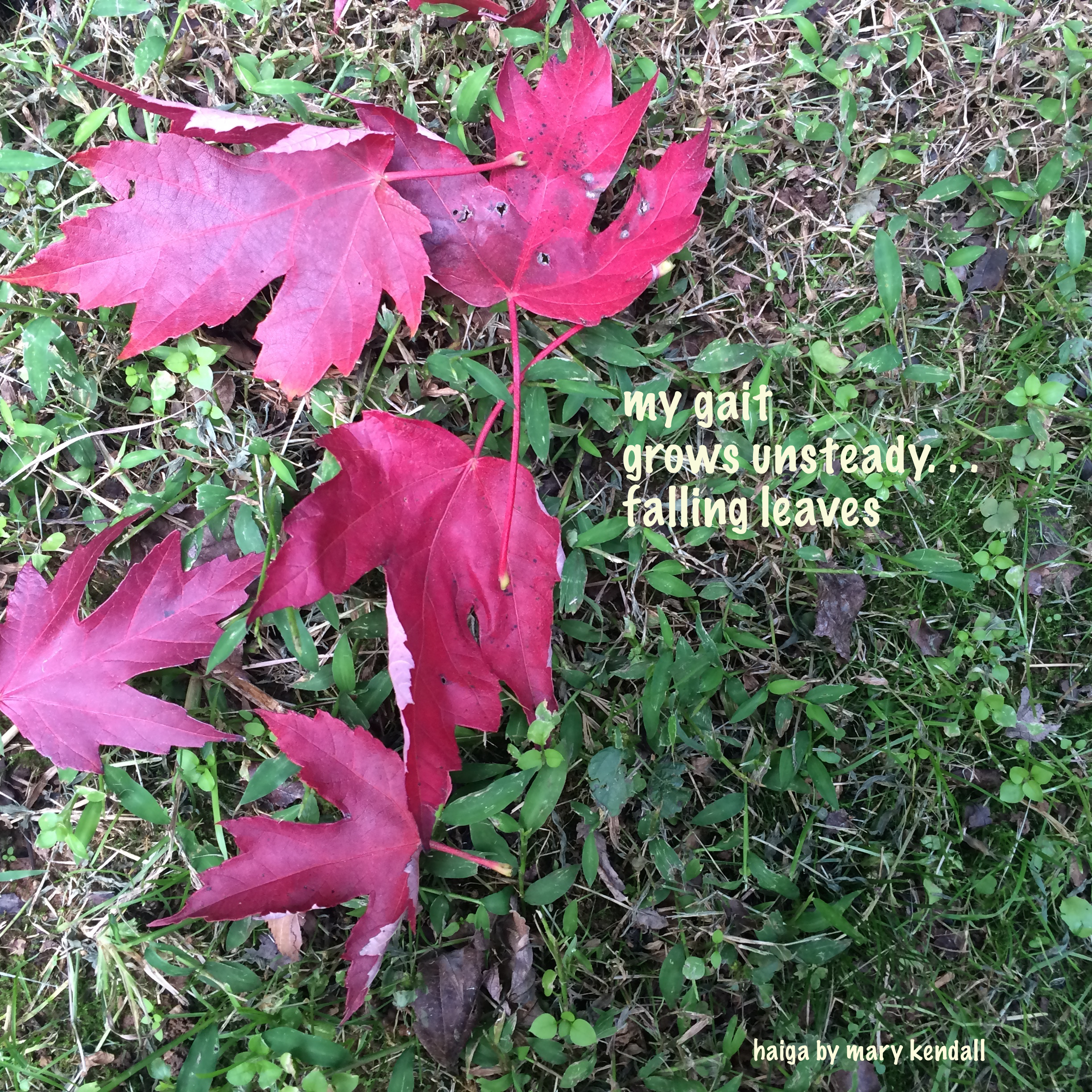
a poem for an autumn morning ~
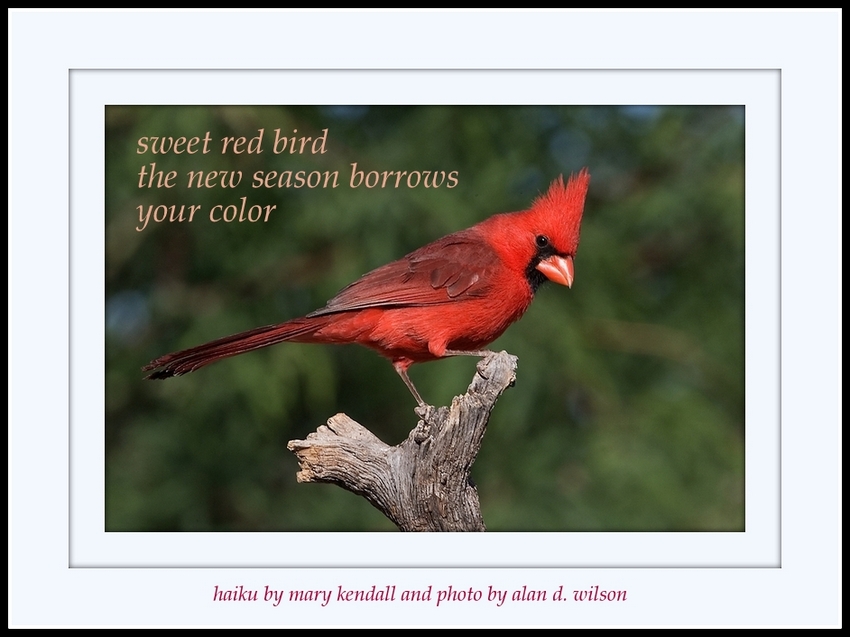

This morning I woke up knowing a change was in the air. With intermitent gusts of wind, my garden feels different. From my porch where I sit writing this, I hear cardinals talking to one another in soft chirpy sounds, not full song. A nuthatch scampers up and down the tree trunks hoping to find a tasty insect for its mid-morning snack. What is clearer though is the background sound–the small insects that hum and buzz in notes I can’t clearly discern. All I hear is a constant high pitched sound–but it is a soft sound, not the commanding songs the cicadas sing. A chickadee now scolds someone, probably my dog who is suddenly interested in wandering in our back woods.
The breeze comes and goes. Wind chimes sing their beautiful songs. Leaves shudder and flow in the wind, then settle down to stillness. A large robin sits in the birdbath drinking in the water, probably for the last time before it makes its long migration down to southern Florida. Now a flock of crows jeers at something, most likely the red-tailed hawk that lives nearby. And since I’ve sat here long enough, a single butterfly sips from the last flowers of the purple buddleiah bush. It is a yellow swallowtail and probably the very last one I will see this year. There have been no others all week. A female cardinal visits the other bird bath. Luckily these beautiful red birds don’t migrate from here. They will stay all winter long, and I will put birdseed out for them each day.
Autumn has always been my favorite season since I was a little girl. I grew up in the northern climate of Buffalo, New York where the lake winds brought the strong Canadian coolness and fall was often upon us in early September. Not so here down south. Here, North Carolina weather can change in an hour. We can have this first taste of fall and tomorrow might bring back the heat of summer.
Life in the United States changes with this season since children return to school, vacations are pretty much over, and everyone settles in. I find myself cooking soups once again. Last night I made Italian Wedding Soup, a perfectly delicious way to welcome the change in seasons.
Fall or autumn? I grew up calling it ‘fall’ and with the obvious falling of leaves, that word makes good sense, but the poetic side of me loves the word ‘autumn.’ I love saying the word, hearing it, feeling it on the tongue. Autumn is delicious! And ‘autumnal’ is divine. Who can resist the beauty of this season? Not me.
Here are three other poems–two tanka and one haiku– to welcome this special season and day of the autumnal equinox.

daylight
and nighttime
in a slow dance—
tomorrow one
will lead
~

~
autumnal equinox…
the moment when day
matches night
~
~
autumn’s equinox
when time is equal—
if only one day
people
could be like this
~

So, what IS ekphrastic writing or art?
As many of you know, I love art. I love going to art museums, galleries and art shows. Art history has always been one of my passions, so it’s natural enough that ekphrastic art and writing has captured my interest. A very simple definition of ekphrastic poetry is writing a poem in response to a work of art. It can be descriptive or it can be a response of any sort to the piece. There are no restrictions, no limits, and that by itself is something that has great appeal. The same goes in reverse–an artist might create a piece in response to a written work. My own blog has poems written about ancient Greek mythology, and in each posting I’ve included beautiful works of art that are ekphrastic responses to the myths.
This particular poem was a response to a show of the artwork of Ronna S. Harris that was held at the Turchin Art Center at Appalachian State University in Boone, North Carolina. My husband and I fell in love with her work and this particular painting has haunted me for nine years. This poem is my response to it. My thanks to the artist for her permission to use this painting here and in the journal it was recently published in. I hope some of you will wander over to her own website to look at the gallery of paintings she has there. I still dream of owning one of her works of art. Her website: http://www.ronnaharris.com
Note: My thanks to editor Lorette C. Luzajic for publishing this poem on September 13, 2015 in Ekphrastic: writing and art on art and writing:
http://www.ekphrastic.net/ekphrastic/almost-surrendered-on-being-and-nothingness-by-mary-kendall

Painting: Almost Surrendered, by Rhonna S. Harris, 1992.
Picture used with permission of the artist.
Click the link below if you’d like to hear me read this poem. It takes a few seconds to load.
Almost Surrendered: On Being and Nothingness
The gallery was empty, the artist unknown to us.
Strangers to her work, we walked in quietly,
speaking in whispers about the way she painted
a rich purple aubergine or the clear, shimmering water
in blown-glass bottles. Illusion so real it was perfect.
Her paintings seemed direct but insinuated that
something might be hidden just beyond our view.
From fruits and windows, vegetables and doorways,
suddenly there was a room full of large paintings of figures,
mostly nudes with evocative names like “Pieta” or
“Architecture of the Perfect Man.”
We stopped in front of one called “The Marriage.”
It showed two figures lost in thought, in separate worlds.
It reminded me of what marriage is like for some after
so many years together. Still, silence doesn’t always speak
of distance but of an understanding of hearts.
And there, on the left wall, was “Almost Surrendered.”
A pale naked woman with arms by her side, palms stretched up
in prayer or supplication. She was translucent, existing half here,
half there. Behind her was a closed window. She wore a gold chain.
Was she a memory, a body giving way to death or being reborn?
Or was this ghostly surrender all illusion, a message
to women who have given too much of themselves?
A woman who had lost herself in trying to be everything.
Could she be a dream?
You moved on to the next picture and then the next,
but I stood there staring at this vanishing woman and
wondered who it was who really had surrendered.
Was she any woman?
Could she be me?
You reappeared, and together we moved on.
This time round, I found myself thinking about windows
in pictures, of what lay beyond the glass the artist
drew, surrendering myself to what she didn’t show,
what she concealed in her mind like a stage curtain pulled back
just enough to hint that maybe others stood on the other
side, looking back at us from a completely different angle.
Would they study us closely, marveling at our verisimilitude?
the lovely glazes of color so skillfully applied, built up so
carefully to a level of opacity that suggested real inner depth?
Would they compare us to the other figures in the gallery
and wonder why we were not painted as a man and a woman
fading from view, surrendering to a love spoken in silence?

(c) The Guardian
Now that it is early autumn, we tend to stay inside more and even read more (at least that’s my experience). Someone recently asked me if I would do the audio recording for some of my mythology poems on this blog. I had done one already, so it does seem natural to now do the others. I hope you like them. My style of reading isn’t dramatic, and I do try hard to avoid “poet voice,” something I dislike very much. Hopefully my readings are pretty natural, maybe too natural for those who do like more drama. I guess it’s all a matter of taste.
By clicking on each link, you will be directed to the original posting for the poem but with the audio now included. I hope you like them.

Grief
The First Lamentation of Demeter:

The-Abduction-Of-Persephone-By-Hades
Second Lamentation of Demeter:

Icarus I
https://apoetintime.com/2014/10/10/icarus-i-poem-by-mary-kendall-mythic-poetry-series/

Icarus II
And, while we are at it, here is one other poem on this blog linked with mythology:

Orpheus and Eurydice by Rodin, Metropolitan Museum of Art
The Broken Promise: Orpheus and Eurydice
The Broken Promise: Orpheus and Eurydice, poem by Mary Kendall (Mythic Poetry Series)
This haiga was just published in a new haiku anthology, “Behind the Tree Line”, the first anthology of Wild Plum journal. To be included is an honor. My thanks to the editor, Gabriel Sawicki, who has published this anthology and who also publishes Wild Plum Journal. This was my first attempt at using art software to alter a photo into something new. (Yes, I need a lot of practice!!)
.

Photo by Gary Brichford, (c) 2015
Today’s poem is a slight detour down the road that leads to summer’s end. I’ve chosen to present an acrostic poem, a form I always enjoyed using when writing with children during my years of teaching. Acrostic poems are delightful and often funny, but as shown here, they can be serious and even tender.
You can hear me read the poem if you click on the link below and patiently wait a few seconds for the recording to begin.
.
Summer’s End
.
Sunflowers bloom tirelessly all summer long
Unwavering in their deep devotion to the sun
Multiplying day by day, the fields grow yellow
Making everyone stop to look
Elegant with their tall, swaying stalks
Regretting nothing, they give themselves to this season
Surrendering ripe seeds to the redbirds and finches that gather round
.

Photo by Betty Rizotti, (c) 2015
.
Even summer must come to a close
No one is ever spared the final moment
Depleted of seed, sunflowers begin to bow their heads in sleep

Photo by Jan Monson, (c) 2015

Photo by Gary Birchford, (c) 2015
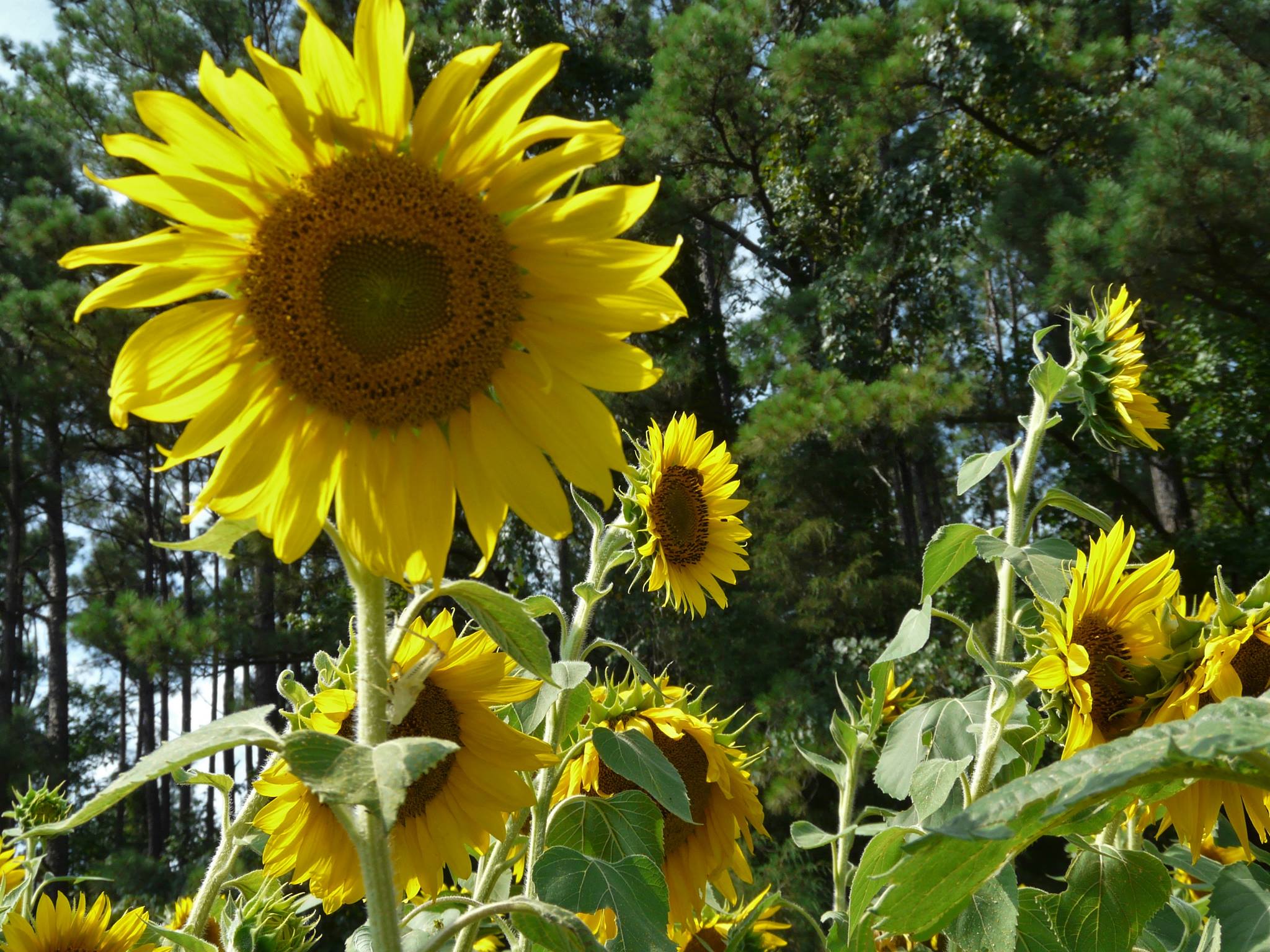
Photo by Gary Brichford, (c) 2015
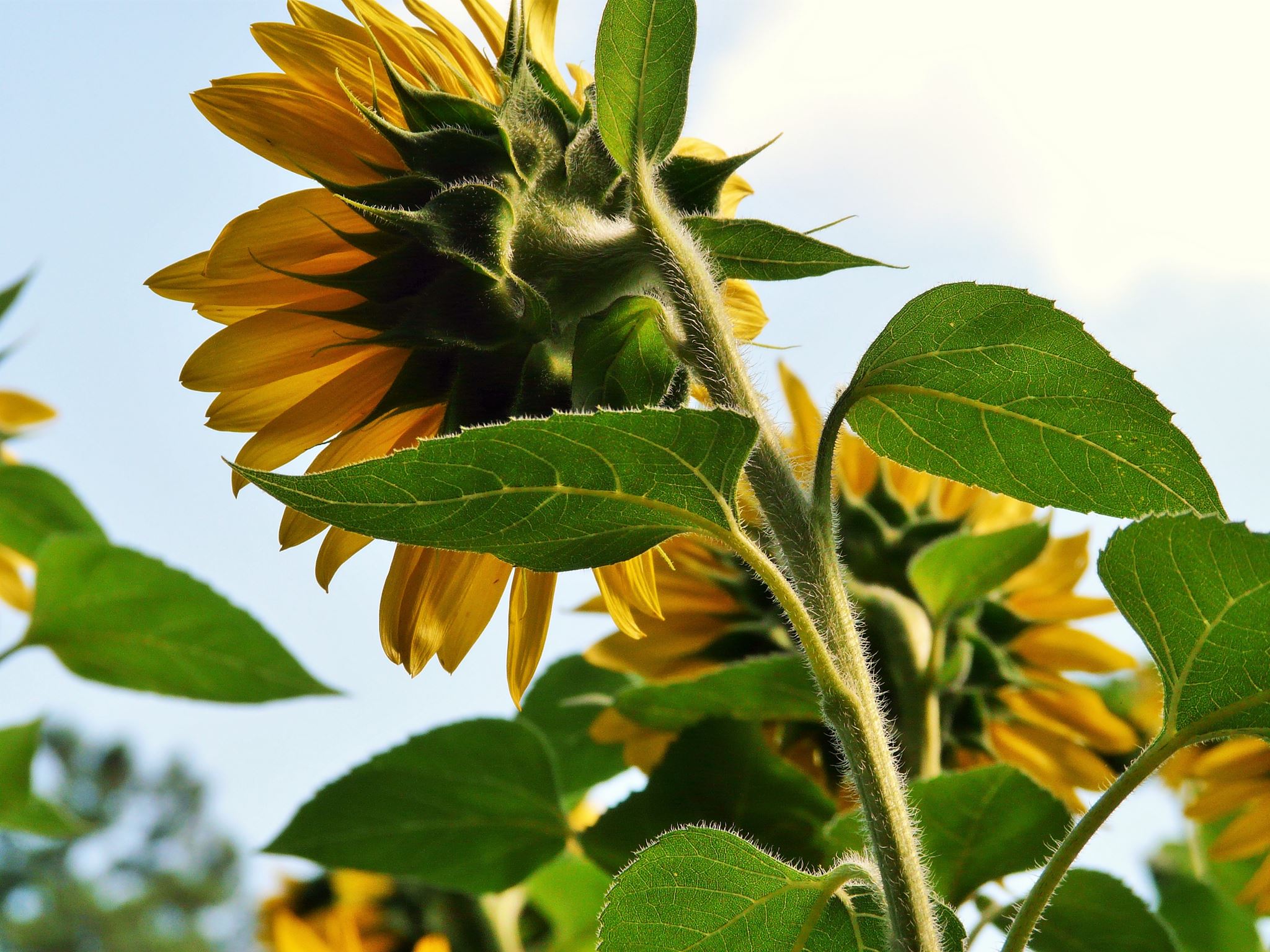
Photo by Gary Brichford, (c) 2015
Several photographers are responsible for the beautiful sunflower photographs in this blog. The two with the goldfinches are shared by Betty Rizzoti (middle right photo) and Jan Monson (middle left photo). Many thanks to each of them for these great captures. All the rest of the photographs are by Gary Birchford whose photographs, when posted on FaceBook last month, inspired this poem as a goodbye to summer. Thank you Gary for your ever generous heart in allowing me to use these pictures.
.

Photo by Gary Brichford, (c) 2015
One final note: Gary Brichford took this set of sunflower pictures from an interesting source. They were on the side of a major highway in central North Carolina as part of a government project. Please see the picture below for details. Isn’t it great to know that our Department of Transportation is involved in Pollinator Habitats. What better place could they find. Imagine how many people drive past and smile at the ever beautiful sunflowers.
.
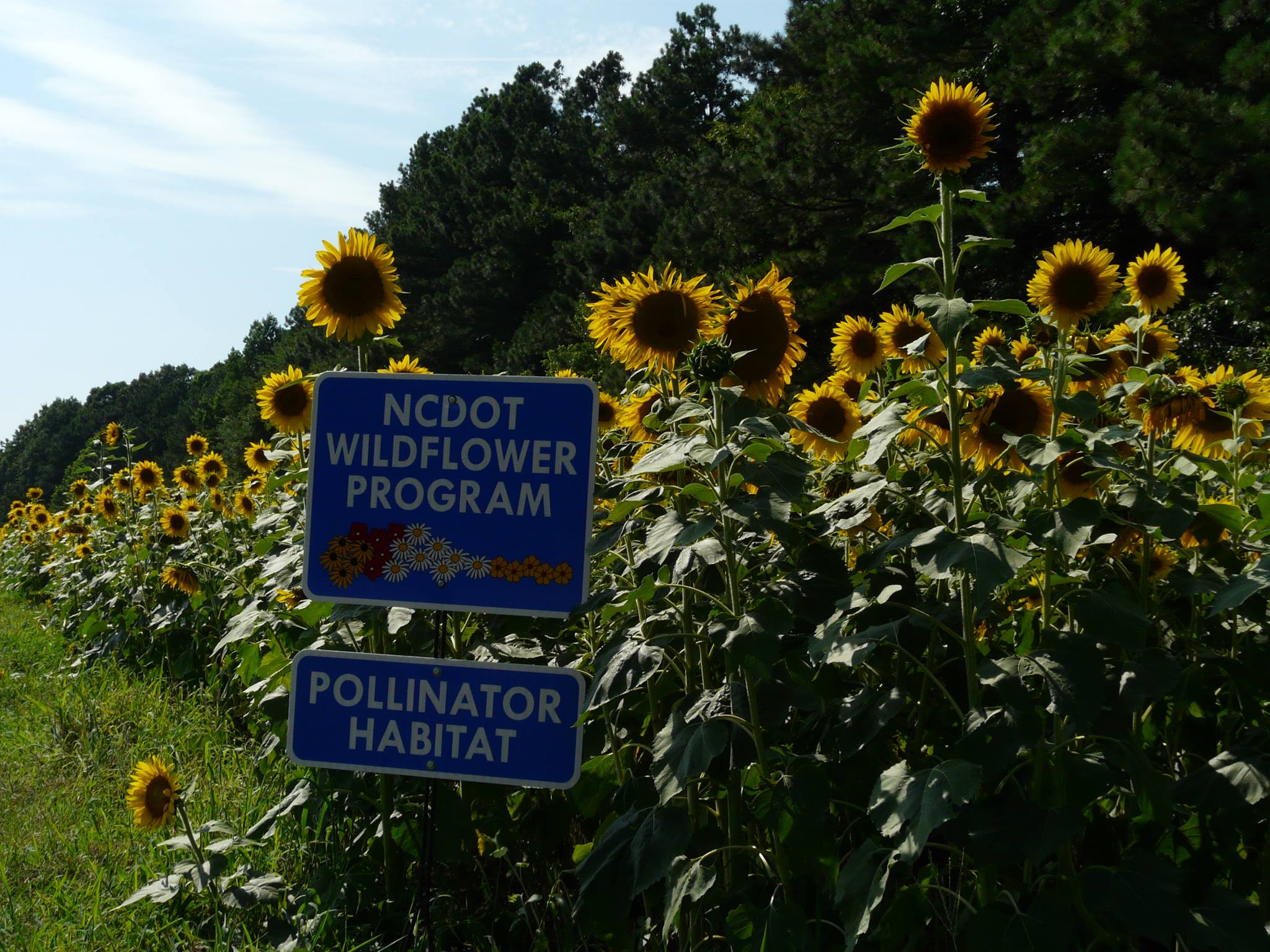
Photo by Gary Brichford, (c) 2015
.

Fence ~ Photograph by Randy Baker (c) 2015
Randy Baker is a friend who loves the southern countryside and captures it beautifully in his photographs. Like many, he considers his pictures to be “just photos” and not art. He is modest about his talents for capturing beauty in a split-second shot. To me, this is art at its best.
I’ve held on to this picture all summer. It’s such a simple picture, and yet it is a perfect picture. Its subject is straight-forward–it’s a photo of a fence in the countryside. Yes, there are lots of fences. But look closely at this picture. The most noticeable feature is the upright stake, but it’s not just a pre-milled wooden stake. It’s a section of a tree still covered in bark. It also has a section that once was part of a limb and now appears to be almost a mouth sharing its thoughts with us on this cloudy summer day. The texture, the color of the bark, and then the color and texture around it in the grass and the wild flowers to the right and the cut and fallen grasses in front–all of these make it a photo you want to study for a long. I have certainly done just that.
This picture also made me want to re-read Robert Frost’s wonderful poem, The Mending Wall. I spent a whole morning reading and rereading that magificent poem and then reading some critical interpretations of it. I left refreshed and in still very much in awe of Frost’s brilliance. No wonder everyone remembers that poem or at least the famous lines it has given us. So this picture also gave me this–a little detour into rereading one of the great American poems that I hadn’t picked up in decades.
But Randy’s picture is not of a wall in need of repair or mending. It is a wall made of air, wire and wood. An entirely different type of barrier from a stone wall. The purpose is the same–it demarcates land ownership, and it keeps something out–or in. That is what got this poetic mind going.
What does a fence really do?
Here are my responses to the question of what a fence is or might be. I’ve looked at this picture so many times, and this single picture has inspired quite a few poems. These are very brief poems–sketches in verse, plus there is one poem about fences as a metaphor for our own need to be guarded at times.
.
the only real fence is in my head
.
.
on the fence—
am I in
or am I out?
.
.
Clichés abound
when it comes
to fences.
.
And here is a poem for all of us who guard our hearts so closely:
.
My Fence
What do they —or you—
know about my fence,
and how carefully
I chose to build it?
Can you guess
how long
it took to build it?
A lifetime of habit,
carefully constructed
and often hidden habits,
a life spent half in fear
of being judged
unkindly, unfairly,
with malice
in another heart.

Note: I would like to thank Randy Baker for allowing me to use this beautiful photograph that he took in the beautiful mountains of Virginia. It is a picture I would like to have framed and hanging near my writing desk. Randy, your pictures are always inspiring and bring a clarity to both the mind and heart. Thank you so much.
.
My thanks to Silver Birch Press for including my poem in this wonderful series. I have been enjoying reading all the poems posted, each so different from the others.

Transformation and the Ineluctable Signs of Ageing
by Mary Kendall
This is not my first transformation. No, it happened way back when—six decades and then some, and I find myself no longer who I thought I was just ten, twenty or even thirty years ago. Those were other lifetimes, times I lived through, times I felt so alive, enjoyed, loved, and times I remember, but those were lives I knew I had passed through completely.
I have the evidence.
Now, going further back in time—forty or fifty years ago, it all begins to change. It starts to slow down—slow—slow—slow—as if someone has put a finger out and touched the spinning world—and now it slows down enough as if I must to look for a place to rest.
This viewing backwards makes me dizzy—dizzy—dizzy enough to want to keep traveling back to the end, which in fact is the beginning, and…
View original post 500 more words

Who Am I?
I am just a wisp,
a vision caught
at the edge of your eye.
I am just a thought,
a touch on the arm
you almost don’t feel.
I am just a memory
pulled back down to earth.
I am just an image
of what could be
but is not.
.
To hear me reading this poem, simply click on the link below. Wait a few seconds for it to begin.

This poem originally appeared in The Aroostook Review, May 2006
.
Note: the rainbow picture is my own, but the beautiful purple flower is by Yolanda Litton, one of my favorite photographers.

“Multi-photo composite showing Perseid meteors shooting from their radiant point in the constellation Perseus. This year’s Perseid shower will peak on August 12-13 (Wednesday night-Thursday morning) with a meteor a minute visible from a dark sky.” Credit: NASA
Excellent information source : http://www.universetoday.com/121599/kick-back-look-up-were-in-for-a-great-perseid-meteor-shower/
“Every August, the night sky is peppered with little bits of comet debris in what we call the annual Perseid meteor shower. In 2015, the Perseids will peak on Aug. 12 and 13, with up to 100 meteors per hour possible for observers with clear, dark skies, according to NASA. The Perseids are bits of the comet Swift-Tuttle and often create the most amazing meteor shower of the year.” (www.space.com)
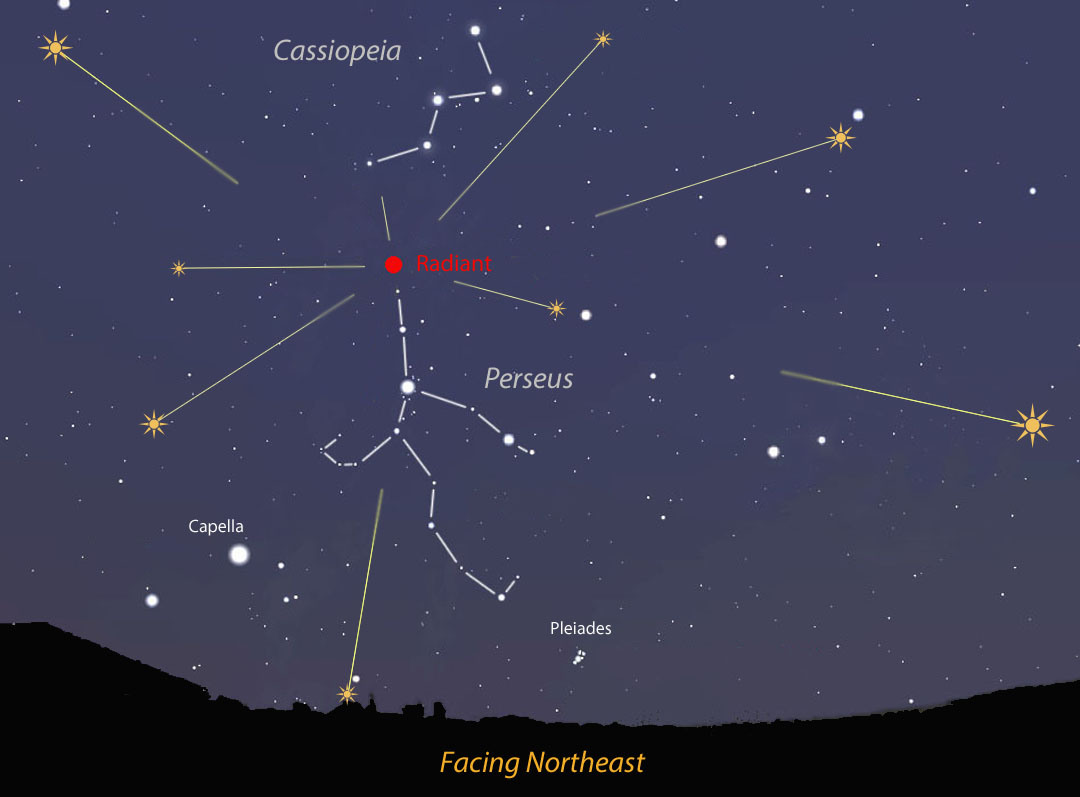
Now that you know all about the great Perseid Meteor Shower of 2015, get your blankets ready, and go out before dawn on August 13.
My poem in honor of this spectacular celestial show is a sonnet called, “The Meteor Shower.” Written a few years back, it has never been published. I thought it would be nice to post it this week and share it with a few readers other than myself.
The sonnet form I chose was the Spenserian sonnet form, invented by poet Edmund Spenser:
a b a b bc b c c d c d e e
I’ve provided an audio clip below to listen to with the poem or while you look at the beautiful pictures above or the lovely one following the poem. (Note: audio takes a few seconds to begin after you press the play button.)
The Meteor Shower
But who can hold the stars? Let us look then,
Let us hear what songs the skies are singing
As we lie here on the dewy grass when
The Perseids start their wild summer dancing,
And we are so enraptured, not thinking
Of anything but this heavenly sight,
Unable to look away from shooting
Stars that sprint and leap, now left, then right.
Beneath this show, on such a timeless night
As life stands still, we glance at every star
In wonder that pieces of debris might
Create syncopated movement from afar.
Such beauty holds us quiet, but these thoughts
Betray the silence hidden in our hearts.

AUDIO COMES TO MY BLOG!
It’s time to try something new on my blog now that I’ve reached the one year anniversary. I’m adding an audio version of this poem, “My Attic is Full.”
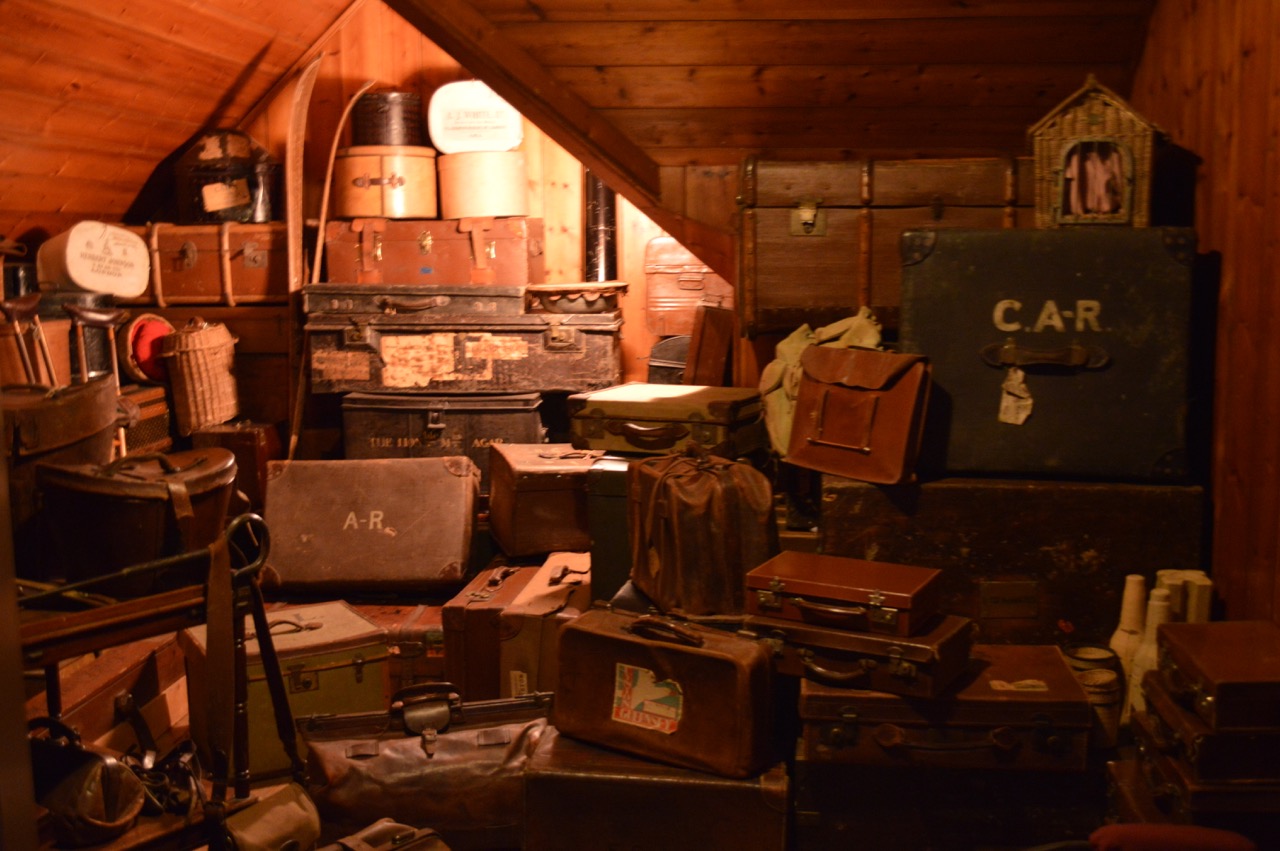
This week’s poem was written in 2011 for a friend I worked/taught with, Jean Sotelo Coene. Somehow we got to talking about cleaning attics and about all the treasures hidden up there and how hard it was to part with things. Jean mentioned her grandmother’s handbag and all the stories it held and that was it…a tiny seed of a poem was planted. I don’t know how those things come to be while others never take hold. I wrote the poem and gave it to Jean as a little present. I love to gift poems to just one person. For that reason, no one has read the poem except for each of us.
Today I was going through some lovely photos from a trip to Cornwall in 2013. [See Bedford Square +2, my travel blog for the whole story of that visit if interested.] We had visited a small manor house, Lanhydrock. [http://www.nationaltrust.org.uk/lanhydrock/] Part of our wanderings allowed access to the attic. Of course it was beautifully staged as were all the rooms in the house, but seeing these pictures this morning was too hard to resist. I worked on the poem today, changing words here and there, adding in a whole stanza and then deleting it. In the end, I liked the first version best. Only a few words are different from the one I handed to Jean.
This poem is dedicated to the memories of all grandmothers who gave us so many wonderful stories to listen to, to dream about, and to share.
To hear the audio, simply click below. I am not much of a professional reader so please bear with me.
My Attic is Full
The attic needs cleaning. It seems so simple,
but it isn’t easy to throw old things away.
There is always the worry we might forget
those we loved, the ones crossed over.
Old boxes hold memories and clothing.
Do you hear the stories held in the silence?
A flowery print dress of soft lawn cotton
holds the story of when it was freshly laundered
and worn in the days of the mid-summer sun.
An old leather purse might tell you where
she went and what she wore.
Inside, a handkerchief delicately edged
in tatted lace is tucked away.
How often she must have clutched it
in her hand to wipe away tears or sneezes,
stifle laughter or mop her brow.
Even now the linen is redolent of old
damask roses from the flower garden.
Beyond the piled boxes of her belongings
are clothes from her husband so long mourned.
She kept them up here all those years,
the only way to keep him near.
Don’t you wonder how often she came up
into this dark attic, pulled the light string,
unfolded a crisp white shirt
and held it to her nose, eyes tightly closed
longing for the scent
that had faded from his pillow?

Lovely tatted edging-22maids-of-honor22-by-mary-konior.jpg

Clock Room in the Musée d’Orsay, Paris, France
This week marks the one year anniversary of this blog, A Poet in Time. I began it at the end of July 2014 after much thought. My goal at the time was very simple. I wanted a way to discipline my writer’s mind into producing a passable poem each week. They could be brand new, reworked lines shaped into a new incarnation, or experiments in new forms for me. Yes, I hoped someone would read them, otherwise, why use a blog? I’ve never had expectations that many people would read my writing. I’ve been too reluctant to submit many of my poems for submission. I’m too thin-skinned to deal with the rejections that come with the publishing game, so I’ve just gone about with writing on my own terms and in my own way. A blog seemed like fun. I like writing in general. A blog could showcase a poem, but it could also help me move in the direction of a community of poets who, like me, liked reading poetry.
Now that I’ve made it through a year of blogging, I guess I need to decide if it was worth it. Did it meet my goals? Did I discipline myself enough to post a poem a week? Did I meet other writers? Find other interesting blogs?

I discovered right away that the world of blogging is immense. On Word Press alone, there are hundreds of thousands of blogs. Poets all over the place! I’ve spent a lot of time reading many of the blogs. Some held little interest for me. A few really intrigued me and I readily subscribed to those. I learned the proper blog etiquette: it’s always polite to acknowledge when someone comments on a posting. If someone follows you, you should at least go and visit their blog, read through a good number of their postings and perhaps leave a comment or two. Following another blogger is harmless enough. It doesn’t obligate you to anything. I quickly learned that some people “follow” you simple to get you to follow them back. I guess I was too old not to realize that the world of young bloggers is a competitive one where numbers count. I read a few postings on why this was important, and then I went back to my quiet ways of reading blogs I felt had excellent writing and ideas.

Early Morning at Bagnegrole, France (Photo by Yolanda Litton)
I also discovered the world of art here in WordPress. The number of artists and photographers is also very large. Excellence is there, and I fell in love with a number of photography sites. I found early on that a beautiful photograph was not just great art in itself, but some seemed to inspire poems. It happened quite spontaneously and it began with a professional photographer on WP who always kindly gives me permission to use his breathtaking black and white photographs to a wildlife photographer on FaceBook who is equally generous at letting me use his work. Then, it moved to people I know. I’d see friends’ photographs on FaceBook and very quickly I could see who posted pictures I found irresistible. That was an unexpected bonus. Some were people I knew well. Others were people I worked with but never got to know. It made me realize how complex people are. Everyone has gifts that are there, but often they aren’t visible. I began to really enjoy FaceBook simply because it now gave me much more insight into people I’m acquainted with.
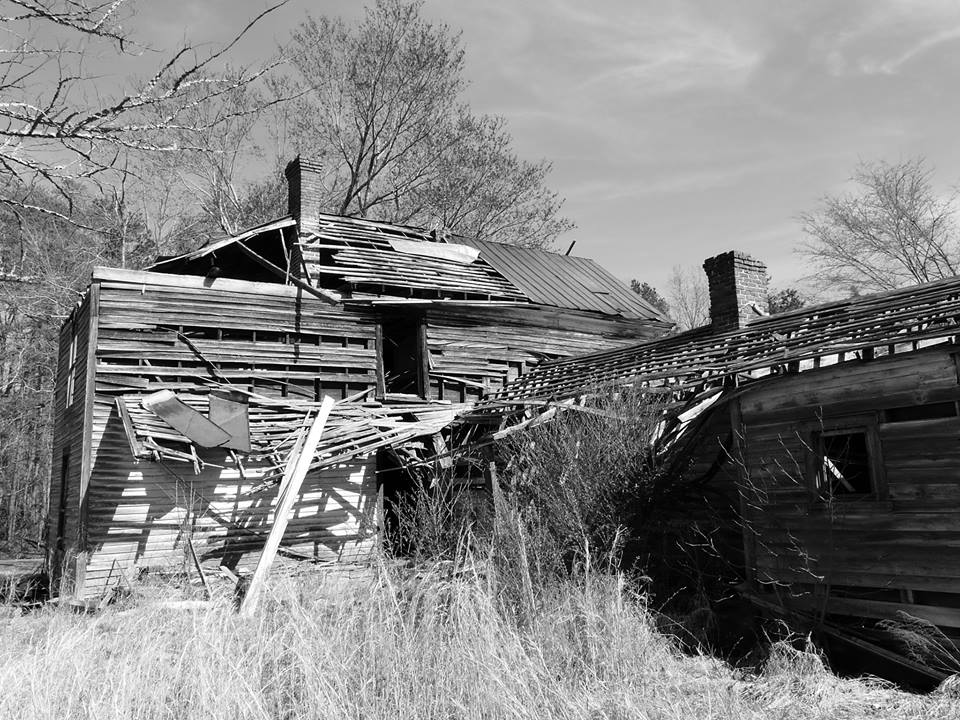
Old home in Efland, North Carolina, Photograph by Gary Brichford (c) 2015
I also discovered that FaceBook has its own private poetry world. There are hundreds of poetry related sites, most of which never interested me. I’d subscribe for a while and then get overwhelmed by the sheer volume of work that just didn’t do much for me. Everyone is different of course. My work isn’t flavor of the month for many people. (Even that metaphor would turn off many poets who only live on the ‘edge.’) But gradually I found there were private FaceBook writing sites that were full of excellent poets all of whom have the same purpose of learning to write better. Prompts are frequently presented and people respond in posts. You can ask for advice or guidance and you get it. I fell in love with three such sites all focused on small poems and English versions of Japanese forms of poetry such as haiku and tanka. I then found a number of the poets had their own blogs, which I follow whenever I can. I did learn that most poets who have made their names in the published poetry world use blogging more as a vehicle for presenting what has already been published. No one seems to use it as I do, but that’s ok.
Now, as the one year anniversary is here, I’ve been trying to rethink my goals and how I’d like to continue on from here–or whether or not I even wanted to blog. I looked at all my postings. I certainly did meet my quota of a poem a week. Sometimes more than a week would pass and then I’d post several poems. That was fine in my book.
I took a lot of the narrative around a poem out as I went on. I felt I didn’t need to tell my readers what a specific form was unless it really was something my closer friends (who aren’t writers) might like to know. The poems generally speak for themselves, as they should do.
I’ve toyed with putting some separate pages on the blog, separating poems by genre where it applies. Right now I lack the technical know how about the best way to do this. Obviously, I have some homework to do.
I’ve also toyed with the idea of a separate page on which to post poems by other people that I’m reading and whose work I absolutely love. I’m not sure about this–it might wander too far away from my simple blog.
As for followers, I have gotten exactly 7,600 views as of today. I know those aren’t all ME, so I guess people are reading. I don’t have a huge following, but I never expected to have that. I quickly learned that the majority of visitors never leave comments or even hit a ‘like’ button. Perhaps they visited and didn’t find anything they liked. Perhaps they just never bother with ‘likes.’ No matter. I’m just glad people do wander around and read things here and there. Perhaps my only regret is that new visitors tend to only read the latest postings. They rarely wander back a year. I loved my first poem I posted about a trip to Edinburgh and the Scottlish Highlands I’d just returned from. But those early poems only have three or four likes at most.
Occasionally someone will repost a poem and then I’ll get a slew of visitors on a period of a few days. That’s always a surprise that makes me smile. A few become followers.
Of the people who leave comments, it tends for the most part to be the same people, but those are all people i love. I love their blogs. I love their thinking. I appreciate the time they take to make a comment. Who doesn’t love knowing your words speak to someone on some level? I do love it…a lot!
I will, for now, continue as I began. The need for a poem a week is no longer needed. I write a lot now. I choose only to post what I feel is my best.

In the past year, I published a chapbook with Finishing Line Press. It is called ERASING THE DOUBT, and the whole experience has been very satisfying and exciting for me. Working with professional editors, seeing the typed poems be turned into a very pretty book–and then there is the cover, the beautiful picture by Christine Ellger, a photographer from Dresden who let me use her picture just like that! Amazing how kind people can be. It was such joy to send her a copy of the completed and published book.

So, where do I go from here? i’ve come up with a few goals to carry me through the next year.
Perhaps separate poems by genre (if I can figure out the way to do this).
Get a few more followers who genuinely like poetry.
Be a good fellow blogger and visit other blogs consistently and leave them some feedback.
Hope that my friends and family will venture over to my blog now and then.
Sharing posts–add some postings that aren’t poems. These will be my ideas about writing or something I’m reading, etc.
Continue to use photography and art in my blog. I would be thrilled to have someone submit a picture to me to use as an inspiration. Will that day ever come?
Continue to be inspired by just about everything in life.
If you’ve read this far, you are probably either a close friend, my husband or me. Thanks for taking time to read this posting today. I hope you’ll come back again soon to browse around.
Mary

Dove photo by Merlune
One of my earliest postings on this blog was of a haiku on a pearl. Having begun creating haiga, a combination of a haiku and a piece of art or a photograph. I reworked this poem, and this is the result. It is now finally finished. I only wish I could give full attribution to the original photographer, but I could find none after searching for quite a long time. I did alter the color to suit this poem. My thanks to all fine arts photographers who always inspire.
.

.

I’ve had the good fortune of having two tanka published in RIBBONS, the journal of the Tanka Society of America: Ribbons–Spring/Summer–2015, Volume 11, Number 2.
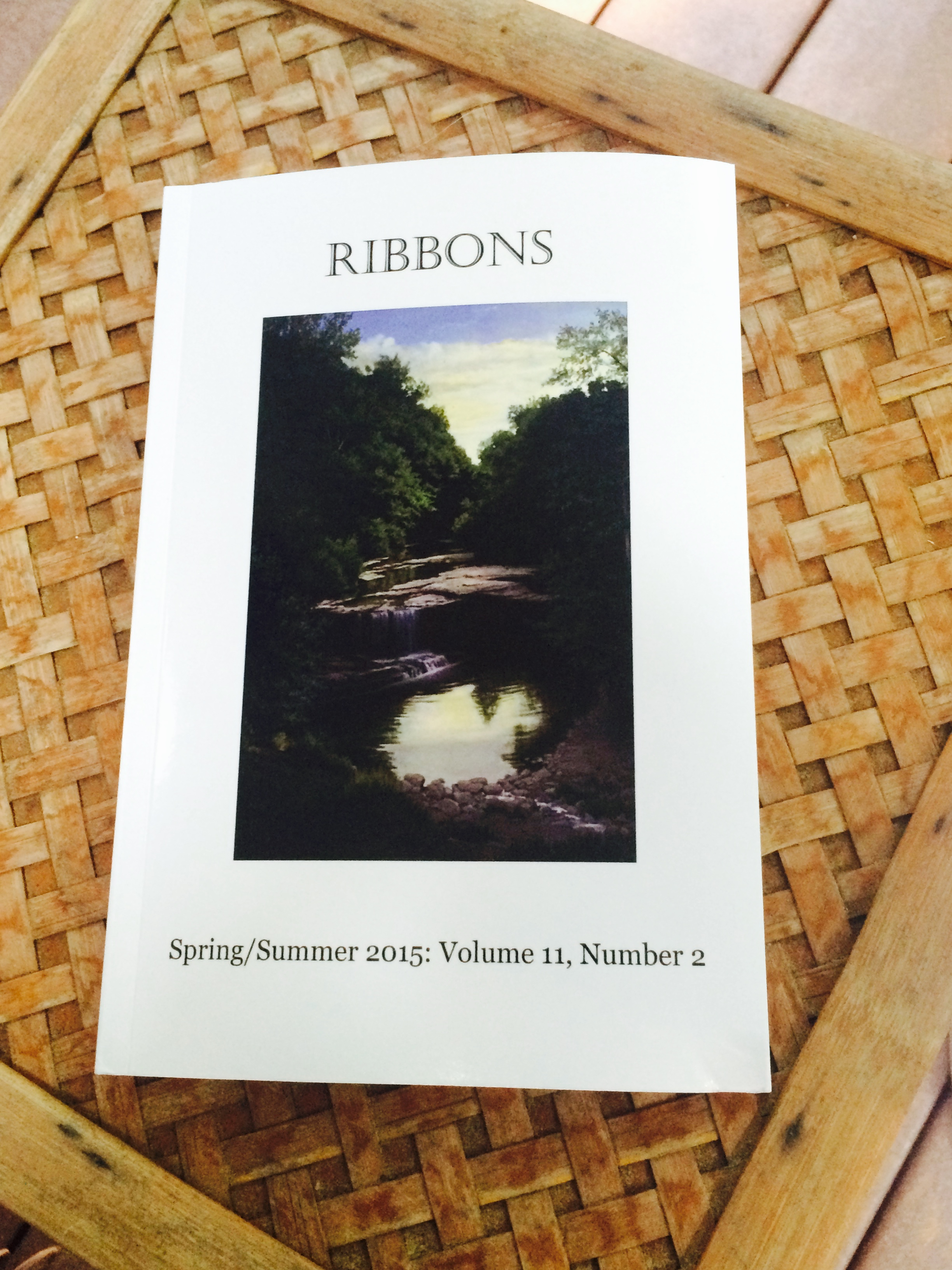
lost in the pages
of a book my mother loved–
a sly narrator
speaks volumes of truth
while skirting the end
Tanka Cafe, Ribbons–Spring/Summer, Volume 11, Number 2, 2015
what I thought was a bird
flew past
casting no shadow–
I wonder
if you are near
Ribbons–Spring/Summer, Volume 11, Number 2, 2015
It is always a thrill for any poet to open up a journal and find her/his own poem nestled in among those of gifted writers. The truly excellent online journals of poetry in both tanka and haiku are really schools of learning for me. I go there to read, to fall in love with poems, and to learn from the very best writers. There is no better way to learn. Read, read, write. So, on the rare occasion, one of my poems makes it into those pages (paper or virtual), my heart is filled with joy.

in the rushes—
standing so silent
a lone blue heron

The photograph of this Great Blue Heron is anonymous, sadly. I could not trace this internet picture to a specific site or photographer. Whoever you may be, I thank you for creating a beautiful picture of this gorgeous creature.
weathered wood—
memories of youth
drifting away

Old Boat ~ Photograph by Mike Keville, (c) 2015
The theme of old, worn wood (see June Haiku 1) continues in this poem. Amazing how beautiful things retain their magic despite age.
My thanks to photographer, Mike Keville, for allowing me to use his gorgeous boat photograph for this haiku. The textures and colours of this photo inspire many poems.
weathered clapboards–
does the old barn ever dream
of being a tree?
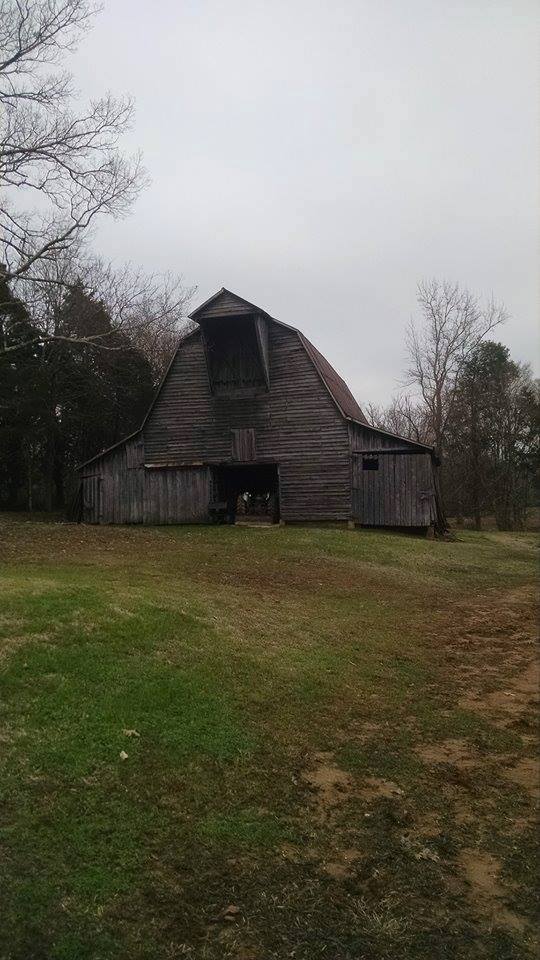
Barn in Spring Creek, Tennessee ~ Photograph (c) 2015 by Michael Todd
Note: My thanks to Michael Todd for allowing me to use his beautiful photograph of an old barn in Spring Creek, Tennessee. Pictures like this are always such an inspiration.

Questions
“Where did the time go?” we asked.
The north wind answered, “It rushed by while you were busy doing other things.”
“And how did we not notice it was passing?” we puzzled.
The south wind replied, “Perhaps the sun blinded you so you could no longer see.”
“Did any of us notice the days grew long and the nights shorter?” we wondered.
The east wind smirked, “You focused so much on clouds that you missed the stars.”
“Why must it come to an end so soon?” we questioned.
The west wind whispered, “You’ve done what you must. Now it’s time to go.”
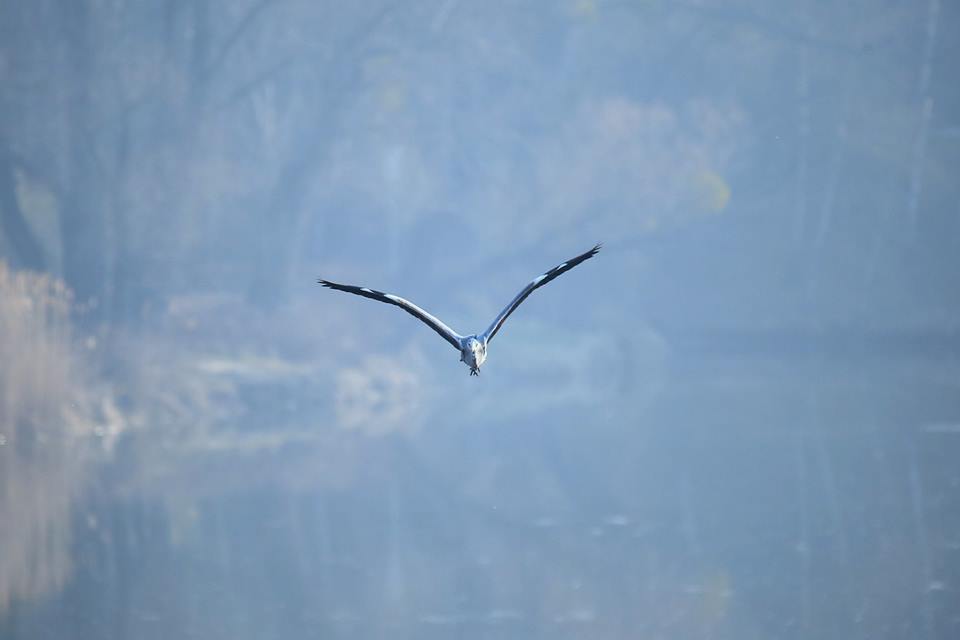
Photograph (c) 2015 by Harald Illsinger
With kind thanks to photographer Harald Illsinger for allowing me to use this beautiful photograph of the gull in the morning sky. The top photograph was taken by me in London, 2015.

The Starry Night by Vincent Van Gogh, 1889, Museum of Modern Art, NYC
The Starry Night
It is silent tonight.
In the ever flowing
river of the night,
a boat of darkness
sails by
as wave upon wave
of stars flow,
then crest,
then
fall,
and silently subside,
consumed by another wave
until nothing is left,
just flickering light
of celestial glowworms
that hang
in the cave of night—
languid star strands
from the heavens.
The moon
could tell stories
if it chose.
It is silent tonight.
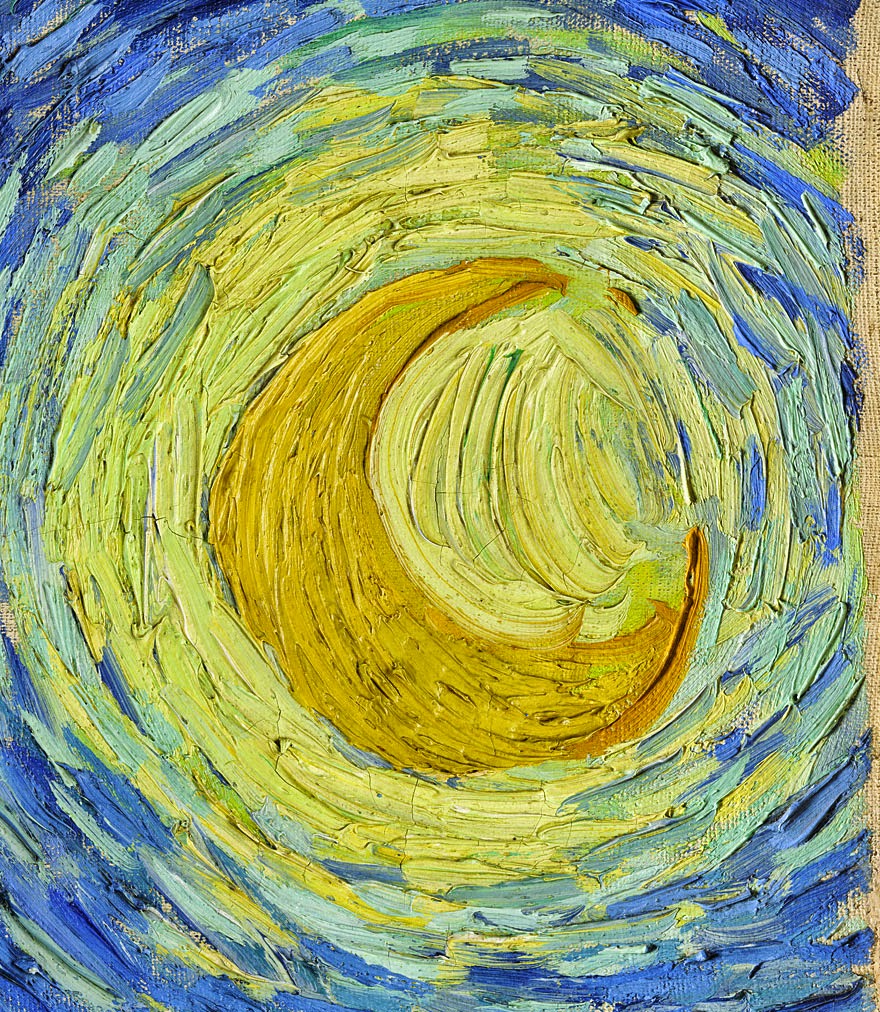
In the past five months I have been studying my much beloved tanka, haiku and small poems in order to become a better writer. Writers–and poets–need to keep growing as they go. As part of my interest in these lovely small poem forms, I have joined a number of exception online groups of poets who post their own writing. On several of the sites, “prompts” are given and sometimes a picture is given. People respond as they wish or not. Often comments are given. I can’t tell you what a thrill it is to get a “like” or even a comment by one of these poets who are so gifted and accomplished tanka and/or haiku poets, but even without the ‘likes,’ it feels wonderful to be a little more confident about sharing poems publicly. This morning, I’m posting several tanka I wrote this week to specific prompts.
~
1 [prompt: celebration of color]
Photograph (c) Kristin Sanderson
scribbles
of scarlet red
in the shrubs—
two cardinals
take flight
~
Photography (c) by Cab Treadway
cloud masquerade
tonight—
the moon is hidden
from your
wanton gaze
~
3 [prompt: how you share your journey]
old cobblestones
so hard to cross—
without speaking
I take your arm
and we walk on
~
4 [prompt: flutes..music…]
sweet song
hidden in the plum tree–
a nightengale
gives itself
away

~