Four Autumn Haiku


Today is the first day of autumn, and for my writing practice in the next few weeks I’ll begin a series of autumn or fall poems. This is my favorite season, my soul season. I’ve done a few different types of haiku ranging from traditional 17 syllables to a poem in a single line. Do you have a favorite?

1.

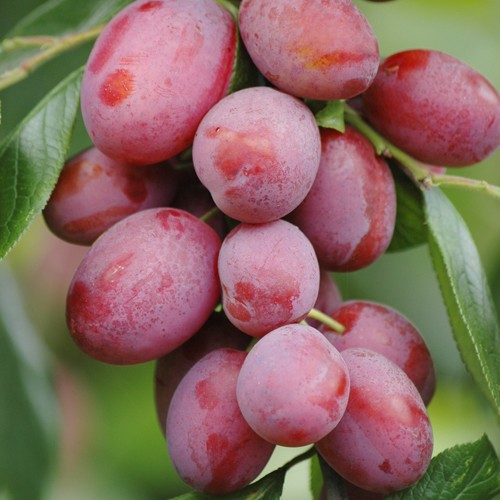
biting into a Victoria plum, such guilty pleasure
253871

2.

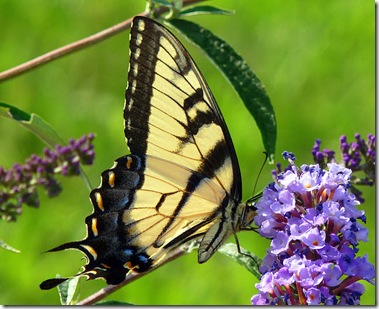
spent blossoms–
the last swallowtail
sips alone
best swallowtail pic

3.

soup 1

the season’s first soup
almost ritually cooked
stirs our senses

4.

sweet windfall apples…
bruised memories
autumn of long ago

fallen apples

Modern English language haiku are not always seventeen syllables. A haiku can be many things, but always it is a brief poem with a strong image that evokes a season and a moment of time captured simply in lyrical language. Scroll to the bottom of today’s blog to find a list of essential qualities of haiku.

The following list from the wonderful journal, Heron’s Nest, lists important qualities that make a haiku.

 Here are some qualities we find essential to haiku:

  • Present moment magnified (immediacy of emotion)
  • Interpenetrating the source of inspiration (no space between observer and observed)
  • Simple, uncomplicated images
  • Common language
  • Finding the extraordinary in “ordinary” things
  • Implication through objective presentation, not explanation: appeal to intuition, not intellect
  • Human presence is fine if presented as an archetypical, harmonious part of nature (human nature should blend in with the rest of nature rather than dominate the forefront)
  • Humor is fine, if in keeping with “karumi” (lightness) – nothing overly clever, cynical, comic, or raucous
  • Musical sensitivity to language (effective use of rhythm and lyricism)
  • Feeling of a particular place within the cycle of seasons

The First Coyote

The First Coyote

Shadowed by trees, it was alert,
Watching those on the porch.
Tall, thin, a knife sharp gaze,
This coyote knew its way around.

The startled man cradled the cat
And called the nervous dogs back
Inside the house, far away from
This lurker in the evening woods.

Was it waiting for a squirrel or
Rabbit? You couldn’t tell this far
Away, yet clearly it was patient
And after tonight’s dinner.

How else could it survive
If not for foraging here and
There, waiting for a quick
Capture, meat for a day or two.

This was the first coyote seen
In the neighborhood, and now
I open the window late at night
To listen to it sing to the moon.


Anniversary Poem

Anniversary Poem

~ a poem for RDK on our 36th anniversary   Wedding_rings

Even now I can picture
walking into the old chapel
that September afternoon,
with everyone neatly gathered
and quietly waiting.

Already the sun had turned
its warm autumnal face;
its oblique angle hinting
that change would come.

An infinite circle of gold,
rings delicately engraved
from you to me,
from me to you.
September 3, 1978.

Vows were shared.
Rings exchanged.

Some expected sonnets,
but sonnets were never read.
Our vows were simple,
our love was there.

All we needed was a promise
to love, honor and be there
for one another.

Always.
And we have.


Daybreak (1)

I have included an audio clip of me reading the poem, Daybreak. To hear it, simply click on the link below and wait a few seconds for it to begin.


Early Morning at Bagnegrole (Photograph by Yolanda Litton)

Early Morning at Bagnegrole (Photograph by Yolanda Litton)

Daybreak

The garden at daybreak.
Before the sun dares
to unveil the dawn.

Clouds and birds.
Dew glimmering
on grass.

Stillness.

Blurred trail of bats
filing into the attic
for rest.

Clouds bloom.
Birds now singing.
Morning shadows lead the way.


cropped-img_44401.jpg


My thanks to friend and photographer, Yolanda Litton, for her beautiful photograph from the south of France. Seeing it inspired this poem after bringing back memories of my own travel to Provence.

Willow Branches

Boston Public Garden

Boston Public Garden

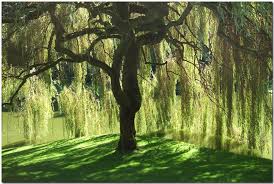
The weeping willow is perhaps one of the loveliest trees of all. It certainly plays an important part of many myths and legends in different cultures, and it has stories linking it with full moons, protection and inspiration. I have always loved willows. One of my fondest memories is of living in Cambridge and walking through the Boston Public Gardens when the willows were out in full. On a hot day, you could sit under one and feel ten degrees cooler. The were also among the earliest trees to leaf in spring.

Old Tombstone with Weeping Willow

Old Tombstone with Weeping Willow

In the old, old cemetaries of Boston and Cambridge, willows adorned gravestones and iron work going back to Colonial times.

Lovely Iron Gate with Willow

Lovely Iron Gate with Willow


In the beautiful North Carolina community in which I live there was once a beautiful lotus pond with a magnificent willow overlooking it. One night the tree came crashing down. Later the pond dried up and the lotuses were no more. This poem began quite some time ago, but it, too, lay dormant until I pulled out a forgotten draft of the first three stanzas. Strange how that can be–sometimes returning to a poem that was left unfinished so long ago is suddenly the very thing you need.

~ ~

Click on the link below if you’d like to listen to me reading this poem. It will take a few seconds before the clip begins so please be patient.


Weeping Willow Tree

Weeping Willow Tree


Willow Branches


They said it was the drought that did it.
Too many summers the pond dried up,
Even the lotus pods soon went dormant.

Rainstorms came that June: day after
Day the rain flooded the nearby creek
And filled the small pond you graced.

It was just too much and all too fast.
In the night you fell, your shallow roots
Rudely ripped out of the raw wet earth.

The old gardener pulls up in his truck,
Walks over with chain saw in hand,
Ready to dismember branches and trunk.

I ask if I might take a few willow wands.
He waits patiently and watches as I
Cut three long sticks of fallen green.

I thank him and walk away. He nods,
and smiles wryly after me, at the whimsy
Of a stranger who was passing by.

The chain saw shrieks as it starts
On its ruthless task as I continue
By on my walk, recalling a story I love.

Carrying sticks of willow for protection,
Orpheus, singer of sweet songs and poems,
Wandered in dark and silent Hades.

We know the ending, how Eurydice
Was soon lost forever. But the willow gifted
Orpheus with music, songs so beautiful

Even the wild and rowdy winds stopped
Blowing to listen to his broken heart. With
Orpheus’ death, the lyre lay silenced.

Over the chain saw’s tuneless humming,
I picture the willow’s nocturnal passing,
And I weep for all who are lost too soon.


Meadow Song


IMG_6383


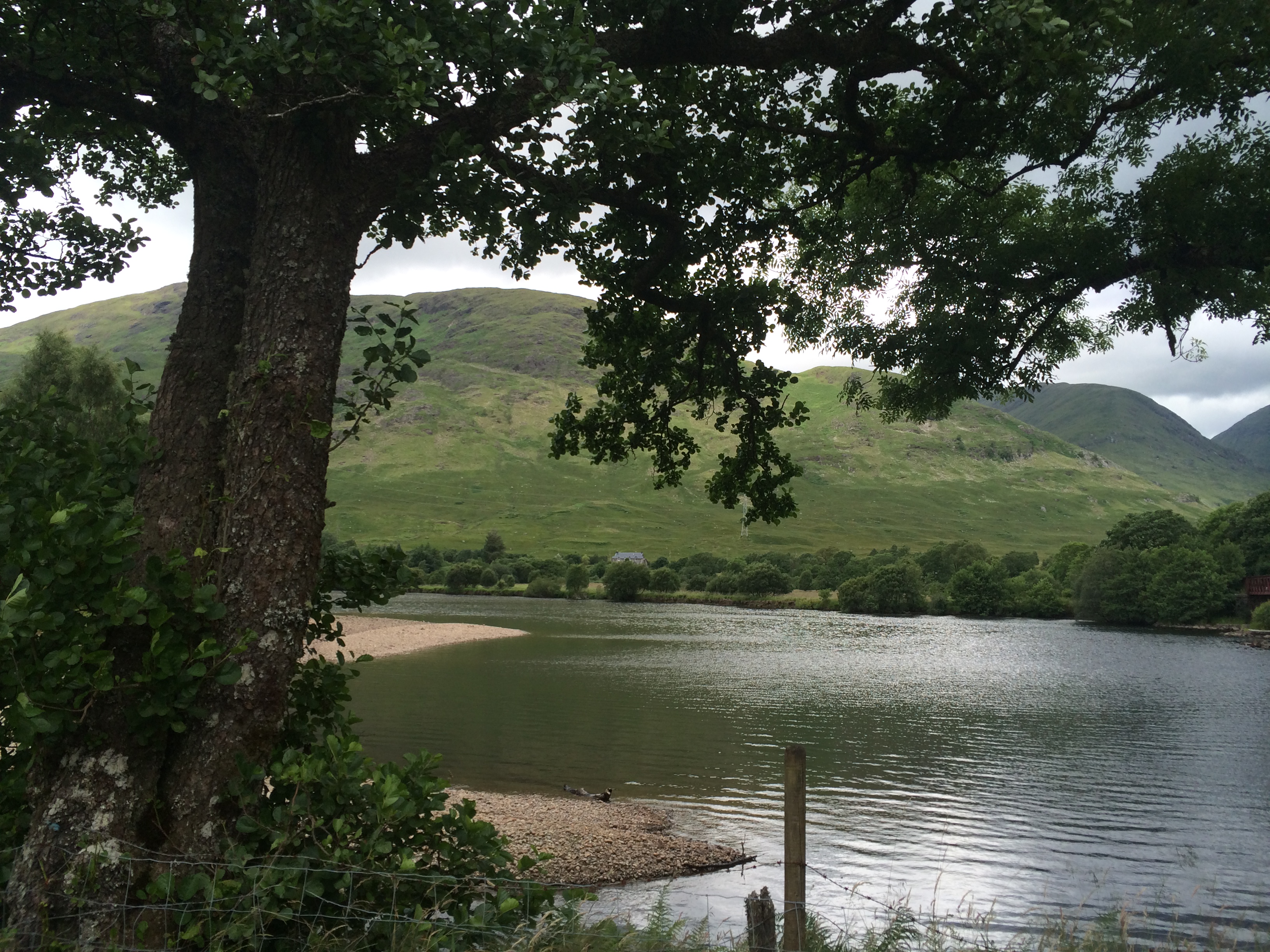
This poem began in a meadow up in the Scottish Highlands while my husband and I were visiting the ruins of a castle. He went inside to explore further, but I chose to stay behind and linger in the beautiful summer fields. As you have probably experienced yourself, this frequently leads the imagination to so many new places. It also presents an opportunity for a simple sensory awareness meditation. Just standing there looking and listening is a spiritual act in itself.

The challenge for me in this poem was to use a repeating word (“listen”) to create both mood and cadence in the lines. The decision to complete the poem with a repeating line (or couplet) was a very different way to close my own lyrical love song to nature.

[Note: the following two paragraphs were added here several months later when the poem was published by Dagda Publishing Company.]

On 3 March 2015, Dagda Publishing Company, a publisher of poetry and literature based in Nottingham, UK, featured this poem in their blog. It was a real honor to have had my poem chosen by this excellent publisher. This is what they had to say about the poem:

Today’s featured poem, and the first one in March, is this one from Mary Kendall. Inspired by a trip to Scotland, this piece has a naturalistic theme to it, and we feel is just perfect for this time of year, as we start to escape the cold and dark of winter and crawl toward summer and longer days. Musing upon the sounds of nature and imagining a song being sung by the choir of trees, flowers and the meadow itself, this piece has a touch of magical realism to it, of there being something fantastical just behind the ordinary and everyday. A poem full of the wonder of nature and the sense of being away from the familiarity of one’s normal life, we hope you enjoy this poem by Mary Kendall.

IMG_6385

An audio clip of me reading this poem is included below. Click on the link below to hear it. It will take a few seconds to begin.

Meadow Song

Have you ever been a few thousand miles from somewhere,
standing in meadow of sweet grass or barley and thistles,
bright pink bells of foxglove swaying in the wind,
and then you stop, just standing still and listening;
listening to the wind song of the leaves and grasses.

I asked them to tell me the words they sang to those
who stopped to listen. They heard me and replied,
but I could not understand what it was they said.

I waited and waited until the wind resumed its blowing,
the grasses their gentle whispering;
the leaves sang loudest of all, and I listened.
I listened the while.

I listened until the song ended,
and then I went on my way.
So far from home.
So far from home.

IMG_6392