Half-light (a tanka sequence)

Milkweed by James DeMers (pixabay.com)

These tanka were written during the quarantine of Covid-19. My thanks to editor/poet, Marilyn Hazelton, for persuading me to combine some tanka into a tanka sequence.  A really good editor is priceless. It’s always an honor to have poems included in Redlights. Click on the link below if you care to hear me read it.


Half-light


August morning
just before the katydids
begin to sing . . .
the lake finally calm
with no ripples


milkweed seeds
scatter straight from
the cottony pod ~
such freedom to go
anywhere, everywhere


a spoon slowly stirs
cream into coffee
those quiet moments
when we lose
all sense of now


arm in arm
we walk together –
forty years & more miles
than either of us
can count


half-light—
walking in fog
where nothing is seen
but somehow we trust
it’s still all there


Red Lights, Summer Issue 2020


Chokecherry


the slow hiss
and sudden pop
of a pinecone in fire—
admitting the mistake
is a first step


*


had you lived
we’d almost be twins,
two sisters
so close in time
we nearly touched


*


this urge
to turn and walk away
     chokecherry


Mary Kendall (c) 2020

Kokako 32, 2020, a journal of the New Zealand Poetry Society
My thanks to the editors of Kokako for publishing all three poems.


We turn away…(tanka)


This tanka was published in Hedgerow, a journal of small poems ~ #130, Winter 2020


we turn away

from all we just can’t face—

the glistening red

of a vulture’s head

emerges from a carcass


Poet’s note:

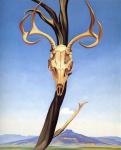
Out of decay comes art and beauty. Look what artist Georgia O’Keefe created from a skull found where she lived in New Mexico. All is part of nature and is nature.


Deer’s Skull with Pedernal by Georgia O’Keefe (c) 1936


Where I live in central North Carolina, we have plenty of black vultures and turkey vultures. They circle and gather in the sky when there is carrion to be had. I chose this topic for the tanka because it’s a scene I’ve seen more than once. Yes, it’s not a pretty sight. Vultures, especially when eating a dead animal or gathering in a group in a tree or abandoned house do give you shivers. Something in us seems to respond with at least a momentary revulsion. However, I’m a bird lover and I try to see how a specific species fits into the scheme of things. Vultures and crows do eat carrion, the flesh of dead animals, often of roadkill along our roads and streets. They perform a good service by eating their meal and cleaning the mess up. Imagine all those dead animals left to rot. So these birds help us as they go about their business (albeit unpleasant business to us). They are birds we should appreciate for their useful role in nature. They also offer us a wonderful metaphor.

My thanks to editor, Caroline Skanne for being the one editor who chose to publish this poem. 

Imagine my surprise … (tanka/kyoka)


Prune Juice, Journal of Senryu, Kyoka, Haibun & Haiga
Issue #30, March 2020


both parents

dead at sixty one –

imagine my surprise

the day I turned

sixty-two


Peripheral vision … (two tanka)

Redlights, Volume 16, No. 1, January 2020


a gradual loss
of peripheral vision
leaves it all unclear 
     why is it that the brain 
still searches for the edge
 

~

underlined passages
in a library book –
I idle away an hour
puzzling why a reader
chose those words

You turn a deaf ear . . . (3 Tanka)


Published in Gusts 31 (Spring/Summer 2020), Tanka Canada


Three tanka written and read by Mary Kendall (click on link):


how do I tell you

about the darkness                             

that embraces me,

    uninvited

    unwanted  


          ~


a loose shutter

flaps in the storm ~

times when it’s so easy

to lose names, numbers

and where to go


           ~


the morning spent

ripping out

wild honeysuckle vines . . .

no matter how hard I try

you turn a deaf ear