When a Heart Breaks

I’m not sure where this poem came from. It just happened. I was thinking about the sad loss of butterflies this summer and what that might mean to our environment, our gardens, our enjoyment of nature. Somehow, from that line of thought to the poem…well, how does one explain where things are born? I hope you enjoy this poem.

An audio of me reading this poem is available at the link below. Give it a few seconds to begin.


unraveled heart

When a Heart Breaks


Did you ever consider a heart is like a chrysalis?
Perfectly wrapped round and round, silken strands
layered one upon the other, locked together
in a solid embrace of fragile fibers.

This is what the heart is.

When a heart breaks, no one picks through
the fibers trying to separate the strands.
Yet it can be undone so easily.

Words can unravel it so quickly that it spins
like a frenzied top, leaving behind a trail
of weakened strings, no longer useful to anyone.

Icarus II (Poetry and Myth)

feather-lake-russia_71645_990x742

Swan Feather, Moscow by Veronika K. Ko (c) 2013

If you care to listen to me read the poem, just click on the link below and wait a few seconds for it to begin:


Icarus II

The hardest part was letting you go,
knowing  that once you sailed so high
it would be impossible not to try again.

With each pass you made, you soared
higher, more effortlessly; sweet-scented
beeswax noticeable as the air grew warmer.

Arms outstretched as if embracing the sun,
you changed course and flew even closer
before you shifted abruptly, a quick turning

of wings, now fighting the unexpected wind
with young muscles tensed and determined
to hold the course.

The descent was swift.
A feather fell
and then another.

Icarus I, poem by Mary Kendall (Mythic Poetry Series)


Click on the link below if you’d like to hear me reading this poem. Give it a few seconds to begin.

silverbirchpress's avatarSilver Birch Press

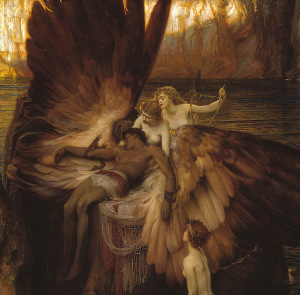
640px-Herbert_Draper_-_The_Lament_for_Icarus_-_Google_Art_Project
ICARUS I
by Mary Kendall

September was ready to slip into October
and autumn skies were filled with color

Clusters of clouds
suddenly dissolved
and let the sun peer through

I imagined you as Icarus taking a risk
and trying to fly high above your depression,

gliding for a while like a broad-winged hawk,
the cool air making you unaware

of just how close
to the sun
you flew

NOTE FROM THE AUTHOR: The story of Icarus has always fascinated me. I think as long as people have lived, some have always wished they could fly like the birds. There are so many beautiful paintings and drawings of this classic myth, but in my mind’s eye I see only the simple picture of water with a feather floating on it—a reminder of how easily a dream and a life can come to an end. My Icarus poems were written when…

View original post 187 more words

Daybreak (2)


Yes, this is the second time you’ve seen this picture in my blog. It was posted with a poem, Daybreak, in late August and now it reappears to accompany a second poem it also inspired, Daybreak II. A single picture on paper, on the screen or in the memory has a powerful, persuasive control of our imagination. This beautiful photo by my friend and photographer, Yolanda Litton, has done just that.


Early Morning at Bagnegrole (Photograph by Yolanda Litton)

Early Morning at Bagnegrole (Photograph by Yolanda Litton)

I’ve included an audio clip of me reading the poem. Click on the link below and wait a few seconds.


Daybreak  (2)


Waking up in at daybreak in the south of France
Is as if I were stepping into someone else’s life.

So far from my own home, this wistful morning fog
Rises slowly to reveal a house of soft honeyed stone.

The slope of a sharply pitched roof holds a tall chimney
Where the swifts are now resting after a long evening hunt.

Somewhere a rooster crows with the energy that only
The young can bring to a new day. Out of nowhere,

A soft gray cat tip-toes by, looks up at me and blinks
Its eyes in that inscrutable feline way and disappears.

I stand here leaning on the windowsill, wondering
What my life would be like had I been born here.

The smell of freshly brewed coffee wafts up from
The kitchen below. One lone church bell rings

Calling its faithful to prayer. But nature’s beauty
Is my religion, my serenity, my salvation, my Eden.


An Autumn Long Gone ~ a Reverie

An Autumn Long Gone ~ a Reverie  (prose poem)


An audio of me reading this prose poem can be heard by clicking the link below. It will take a few seconds for the sound to begin.


It was the year we lived in London, some 25 years ago, when autumn began like any other autumn. The fall, the changing, the color shifting, the soft breezes, the sporadic thick fog and the leaves dancing, even floating upward at times. What I hadn’t anticipated, being so far north for the first time, was how short the days grew. How dark it became earlier and earlier all during that autumn. The days were ‘closing in.’ That’s what they called it, and I loved that phrase. It brought a certain comfort of pulling heavy curtains closed and shutting out the darkness. It was a time for wearing coats and warm sweaters, and I dressed my son in practical English clothing and soft grey mittens while he ran ahead enjoying what was left of the day. He was only three, but he knew the delight in using what was left of the day’s sunlight. I learned to enjoy the simple pleasures around me that came with this quiet season. Victoria plums were my new delight. They appeared at the Greengrocer’s shop just as autumn set in, later replaced by apples—Bramley and Cox’s Orange Pippins, names that twirled on the tongue and tasted as good. Burning leaves were an unexpected, half-loved sensory pleasure. The smoke was pungent, but it brought back memories of childhood. I loved even the rasp of raking, bamboo or metal combs gathering leaves in sacred piles waiting their turn to be sacrificed in an autumnal pyre. In the English light, I found the colors were softer, quieter than the brilliance of New England woodlands. Each morning I left my son at school and then walked through Hampstead Heath. I found my own favorite route through woods and meadows up to the large ponds. Purchasing a single cup of tea that warmed my hands, I made my way to that empty bench that faced the pond. I thought about all the people it had held before. And every day without fail a lone Scottish piper played his bagpipes as if on cue. Each day I sat and listened. A world so far from my own. From where he stood near the peak of Parliament Hill, the mournful songs became a wordless chanting, charging the air with a lamentation to this closing season, every day briefer, softer than the day before.

Lost in Reverie (c) 2014 by Isotel, The Obvious and Hidden blog on WordPress (with her permission)

Lost in Reverie (c) 2014 by Iosatel, The Obvious and Hidden blog on WordPress (with his permission)

Four Autumn Haiku


Today is the first day of autumn, and for my writing practice in the next few weeks I’ll begin a series of autumn or fall poems. This is my favorite season, my soul season. I’ve done a few different types of haiku ranging from traditional 17 syllables to a poem in a single line. Do you have a favorite?

1.

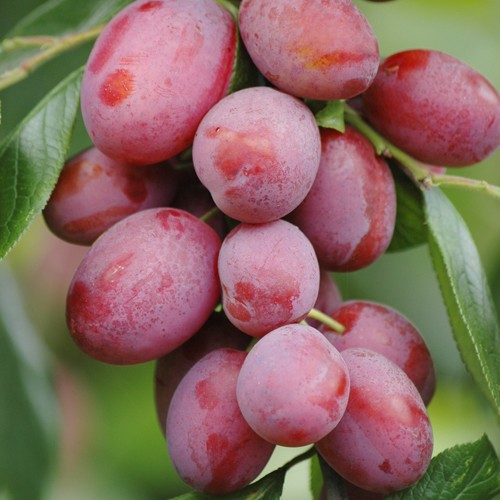
biting into a Victoria plum, such guilty pleasure

253871

2.

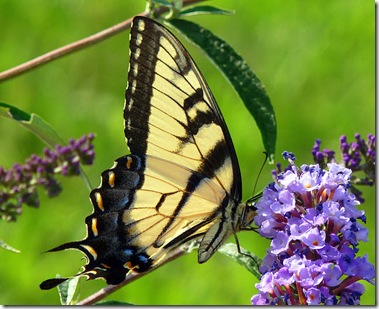
spent blossoms–
the last swallowtail
sips alone

best swallowtail pic

3.

soup 1

the season’s first soup
almost ritually cooked
stirs our senses

4.

sweet windfall apples…
bruised memories
autumn of long ago

fallen apples

Modern English language haiku are not always seventeen syllables. A haiku can be many things, but always it is a brief poem with a strong image that evokes a season and a moment of time captured simply in lyrical language. Scroll to the bottom of today’s blog to find a list of essential qualities of haiku.

The following list from the wonderful journal, Heron’s Nest, lists important qualities that make a haiku.

 Here are some qualities we find essential to haiku:

  • Present moment magnified (immediacy of emotion)
  • Interpenetrating the source of inspiration (no space between observer and observed)
  • Simple, uncomplicated images
  • Common language
  • Finding the extraordinary in “ordinary” things
  • Implication through objective presentation, not explanation: appeal to intuition, not intellect
  • Human presence is fine if presented as an archetypical, harmonious part of nature (human nature should blend in with the rest of nature rather than dominate the forefront)
  • Humor is fine, if in keeping with “karumi” (lightness) – nothing overly clever, cynical, comic, or raucous
  • Musical sensitivity to language (effective use of rhythm and lyricism)
  • Feeling of a particular place within the cycle of seasons