Some Small Poems for the Autumnal Equinox

autumn haiga 2015

This morning I woke up knowing a change was in the air. With intermitent gusts of wind, my garden feels different. From my porch where I sit writing this, I hear cardinals talking to one another in soft chirpy sounds, not full song. A nuthatch scampers up and down the tree trunks hoping to find a tasty insect for its mid-morning snack. What is clearer though is the background sound–the small insects that hum and buzz in notes I can’t clearly discern. All I hear is a constant high pitched sound–but it is a soft sound, not the commanding songs the cicadas sing. A chickadee now scolds someone, probably my dog who is suddenly interested in wandering in our back woods.

The breeze comes and goes. Wind chimes sing their beautiful songs. Leaves shudder and flow in the wind, then settle down to stillness. A large robin sits in the birdbath drinking in the water, probably for the last time before it makes its long migration down to southern Florida. Now a flock of crows jeers at something, most likely the red-tailed hawk that lives nearby. And since I’ve sat here long enough, a single butterfly sips from the last flowers of the purple buddleiah bush. It is a yellow swallowtail and probably the very last one I will see this year. There have been no others all week. A female cardinal visits the other bird bath. Luckily these beautiful red birds don’t migrate from here. They will stay all winter long, and I will put birdseed out for them each day. 

Autumn has always been my favorite season since I was a little girl. I grew up in the northern climate of Buffalo, New York where the lake winds brought the strong Canadian coolness and fall was often upon us in early September. Not so here down south. Here, North Carolina weather can change in an hour. We can have this first taste of fall and tomorrow might bring back the heat of summer.

Life in the United States changes with this season since children return to school, vacations are pretty much over, and everyone settles in. I find myself cooking soups once again. Last night I made Italian Wedding Soup, a perfectly delicious way to welcome the change in seasons. 

Fall or autumn? I grew up calling it ‘fall’ and with the obvious falling of leaves, that word makes good sense, but the poetic side of me loves the word ‘autumn.’ I love saying the word, hearing it, feeling it on the tongue. Autumn is delicious! And ‘autumnal’ is divine. Who can resist the beauty of this season? Not me.

Here are three other poems–two tanka and one haiku– to welcome this special season and day of the autumnal equinox.

Autumn-leaf-on-a-rock-960x640

daylight
and nighttime
in a slow dance—
tomorrow one
will lead

~

Gold Autumn Leaf

~

autumnal equinox…
the moment when day
matches night

~
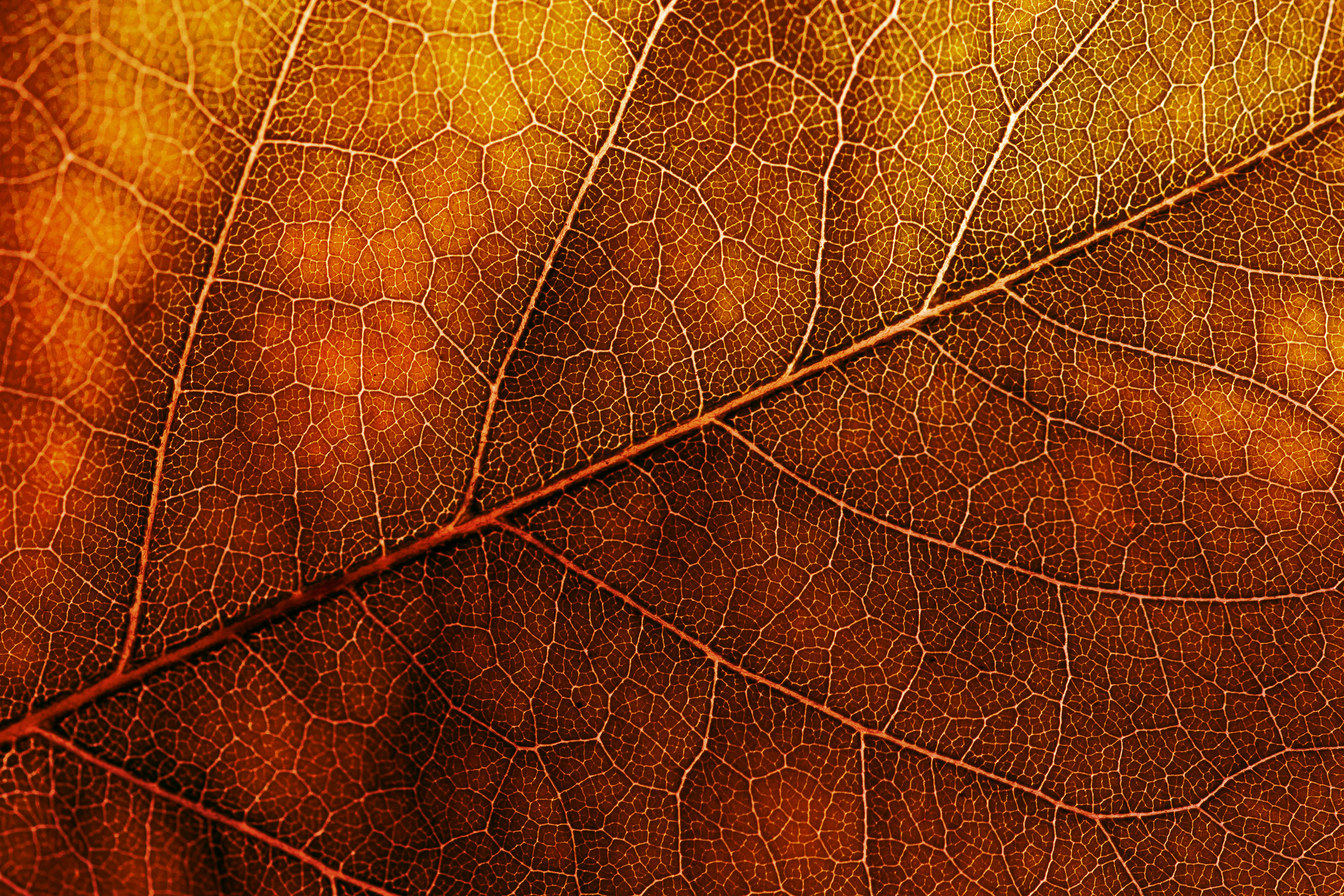
leaves_texture4982

~

autumn’s equinox
when time is equal—
if only one day
people
could be like this

~

Red Leaves

Almost Surrendered: On Being and Nothingness ~ An Ekphrastic Poem


So, what IS ekphrastic writing or art?

As many of you know, I love art. I love going to art museums, galleries and art shows. Art history has always been one of my passions, so it’s natural enough that ekphrastic art and writing has captured my interest. A very simple definition of ekphrastic poetry is writing a poem in response to a work of art. It can be descriptive or it can be a response of any sort to the piece. There are no restrictions, no limits, and that by itself is something that has great appeal. The same goes in reverse–an artist might create a piece in response to a written work. My own blog has poems written about ancient Greek mythology, and in each posting I’ve included beautiful works of art that are ekphrastic responses to the myths.

This particular poem was a response to a show of the artwork of Ronna S. Harris that was held at the Turchin Art Center at Appalachian State University in Boone, North Carolina. My husband and I fell in love with her work and this particular painting has haunted me for nine years. This poem is my response to it. My thanks to the artist for her permission to use this painting here and in the journal it was recently published in. I hope some of you will wander over to her own website to look at the gallery of paintings she has there. I still dream of owning one of her works of art.  Her website:  http://www.ronnaharris.com


Note:  My thanks to editor Lorette C. Luzajic for publishing this poem on September 13, 2015 in Ekphrastic: writing and art on art and writing:

http://www.ekphrastic.net/ekphrastic/almost-surrendered-on-being-and-nothingness-by-mary-kendall


small Almost Surrendered

Painting:  Almost Surrendered, by Rhonna S. Harris, 1992.
Picture used with permission of the artist.


Click the link below if you’d like to hear me read this poem. It takes a few seconds to load.


Almost Surrendered: On Being and Nothingness                                                  


The gallery was empty, the artist unknown to us.
Strangers to her work, we walked in quietly,
speaking in whispers about the way she painted
a rich purple aubergine or the clear, shimmering water
in blown-glass bottles. Illusion so real it was perfect.
Her paintings seemed direct but insinuated that
something might be hidden just beyond our view.

From fruits and windows, vegetables and doorways,
suddenly there was a room full of large paintings of figures,
mostly nudes with evocative names like “Pieta” or
“Architecture of the Perfect Man.”

We stopped in front of one called “The Marriage.
It showed two figures lost in thought, in separate worlds.
It reminded me of what marriage is like for some after
so many years together. Still, silence doesn’t always speak
of distance but of an understanding of hearts.

And there, on the left wall, was “Almost Surrendered.”
A pale naked woman with arms by her side, palms stretched up
in prayer or supplication. She was translucent, existing half here,
half there. Behind her was a closed window. She wore a gold chain.

Was she a memory, a body giving way to death or being reborn?
Or was this ghostly surrender all illusion, a message
to women who have given too much of themselves?
A woman who had lost herself in trying to be everything.

Could she be a dream?

You moved on to the next picture and then the next,
but I stood there staring at this vanishing woman and
wondered who it was who really had surrendered.

Was she any woman?

Could she be me?

You reappeared, and together we moved on.
This time round, I found myself thinking about windows
in pictures, of what lay beyond the glass the artist
drew, surrendering myself to what she didn’t show,
what she concealed in her mind like a stage curtain pulled back
just enough to hint that maybe others stood on the other
side, looking back at us from a completely different angle.

Would they study us closely, marveling at our verisimilitude?
the lovely glazes of color so skillfully applied, built up so
carefully to a level of opacity that suggested real inner depth?

Would they compare us to the other figures in the gallery
and wonder why we were not painted as a man and a woman
fading from view, surrendering to a love spoken in silence?


(c) The Guardian

(c) The Guardian

Is Mythology More to Your Liking?

Now that it is early autumn, we tend to stay inside more and even read more (at least that’s my experience). Someone recently asked me if I would do the audio recording for some of my mythology poems on this blog. I had done one already, so it does seem natural to now do the others. I hope you like them. My style of reading isn’t dramatic, and I do try hard to avoid “poet voice,” something I dislike very much. Hopefully my readings are pretty natural, maybe too natural for those who do like more drama. I guess it’s all a matter of taste.

By clicking on each link, you will be directed to the original posting for the poem but with the audio now included. I hope you like them.

Grief

                     Grief

The First Lamentation of Demeter:

The First Lamentation of Demeter ~ (Poetry and Myth)

The-Abduction-Of-Persephone-By-Hades

The-Abduction-Of-Persephone-By-Hades

Second Lamentation of Demeter:

The Second Lamentation of Demeter ~ (Poetry and Myth)

feather-lake-russia_71645_990x742

Icarus I

https://apoetintime.com/2014/10/10/icarus-i-poem-by-mary-kendall-mythic-poetry-series/

dark-lake

Icarus II

Icarus II (Poetry and Myth)

And, while we are at it, here is one other poem on this blog linked with mythology:

Orpheus and Eurydice by Rodin, Metropolitan Museum of Art

Orpheus and Eurydice by Rodin, Metropolitan Museum of Art

The Broken Promise: Orpheus and Eurydice

The Broken Promise: Orpheus and Eurydice, poem by Mary Kendall (Mythic Poetry Series)

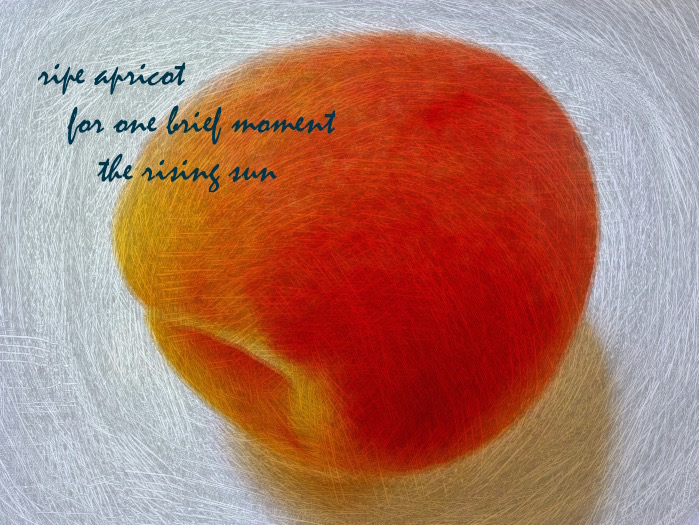
Ripe Apricot (a haiga)

This haiga was just published in a new haiku anthology, “Behind the Tree Line”, the first anthology of Wild Plum journal.  To be included is an honor. My thanks to the editor, Gabriel Sawicki, who has published this anthology and who also publishes Wild Plum Journal. This was my first attempt at using art software to alter a photo into something new. (Yes, I need a lot of practice!!)


apricot haiga brush


.

Summer’s End

Photo by Gary Brichford, (c) 2015

                                                Photo by Gary Brichford, (c) 2015

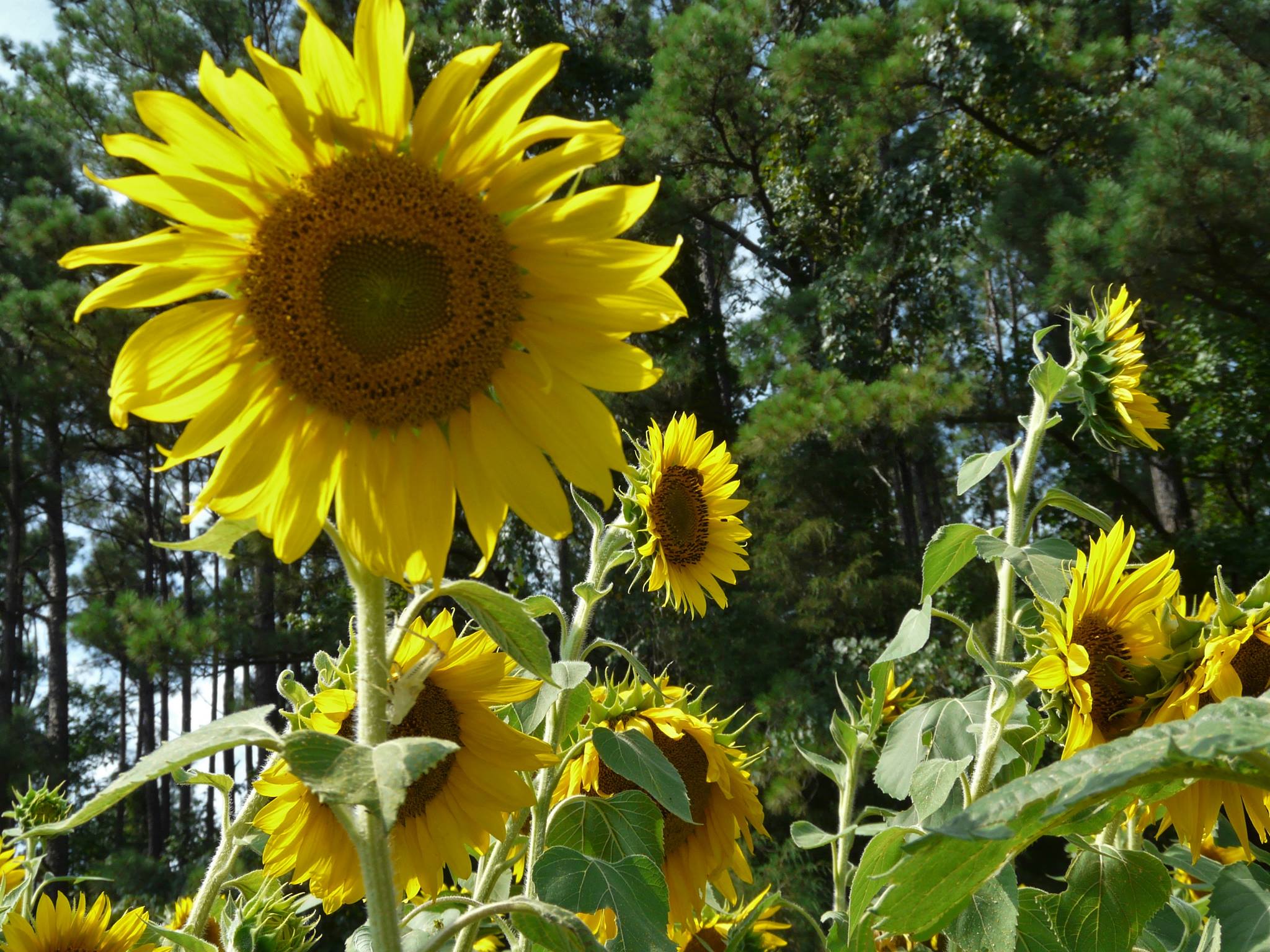
Today’s poem is a slight detour down the road that leads to summer’s end. I’ve chosen to present an acrostic poem, a form I always enjoyed using when writing with children during my years of teaching. Acrostic poems are delightful and often funny, but as shown here, they can be serious and even tender.

You can hear me read the poem if you click on the link below and patiently wait a few seconds for the recording to begin.

.

Summer’s End

.

Sunflowers bloom tirelessly all summer long

Unwavering in their deep devotion to the sun

Multiplying day by day, the fields grow yellow

Making everyone stop to look

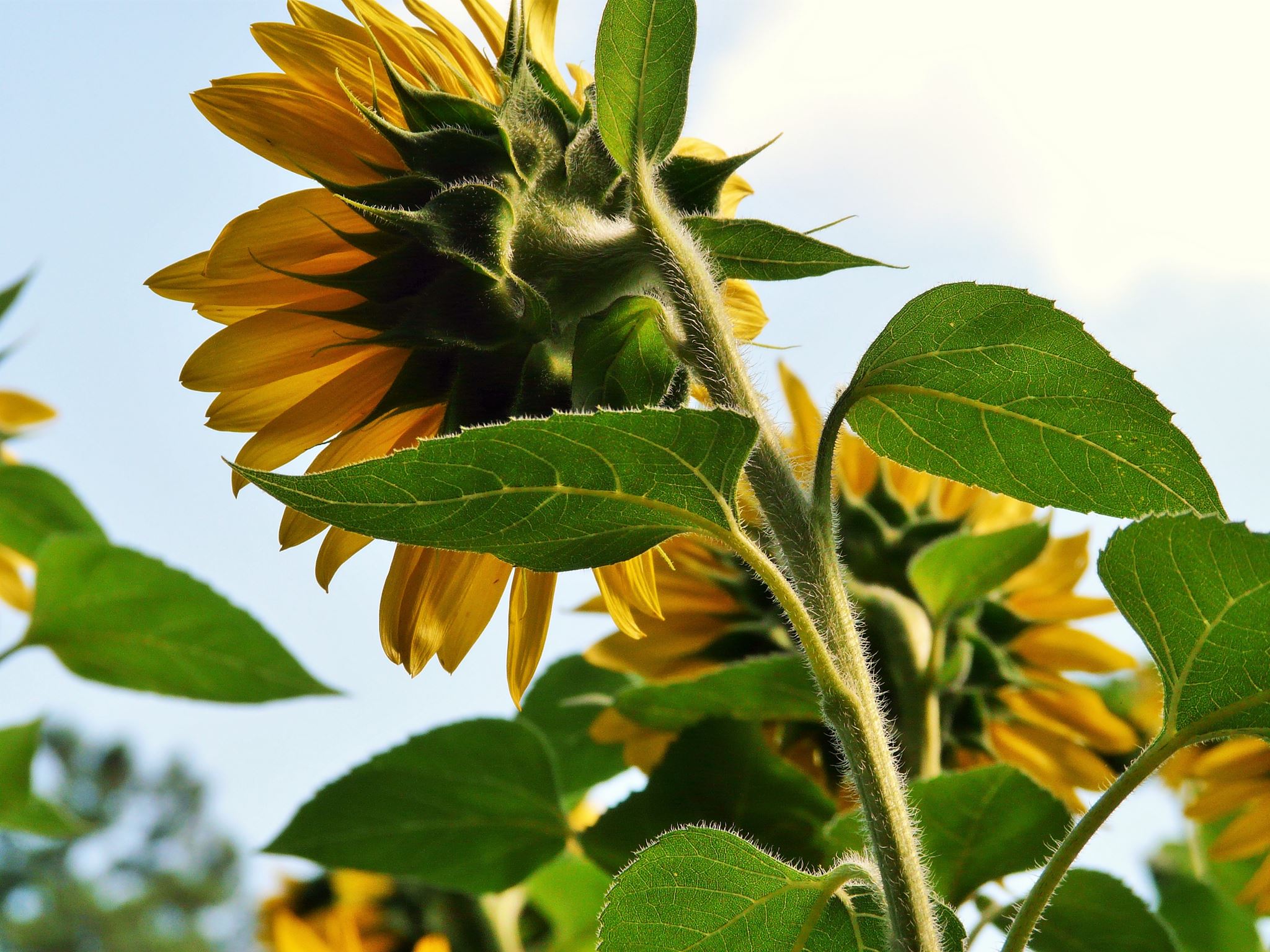
Elegant with their tall, swaying stalks

Regretting nothing, they give themselves to this season

Surrendering ripe seeds to the redbirds and finches that gather round

.

Photo by Betty Risotto, (c) 2015

Photo by Betty Rizotti, (c) 2015

.

Even summer must come to a close

No one is ever spared the final moment

Depleted of seed, sunflowers begin to bow their heads in sleep

Photo by Jan Monson, (c) 2015

     Photo by Jan Monson, (c) 2015

Photo by Gary Birchford

Photo by Gary Birchford, (c) 2015

Photo by Gary Brichford, (c) 2015

Photo by Gary Brichford, (c) 2015

Photo by Gary Brichford, (c) 2015

Photo by Gary Brichford, (c) 2015

Several photographers are responsible for the beautiful sunflower photographs in this blog. The two with the goldfinches are shared by Betty Rizzoti (middle right photo) and Jan Monson (middle left photo). Many thanks to each of them for these great captures. All the rest of the photographs are by Gary Birchford whose photographs, when posted on FaceBook last month, inspired this poem as a goodbye to summer. Thank you Gary for your ever generous heart in allowing me to use these pictures.
.

Photo by Gary Brichford, (c) 2015

Photo by Gary Brichford, (c) 2015

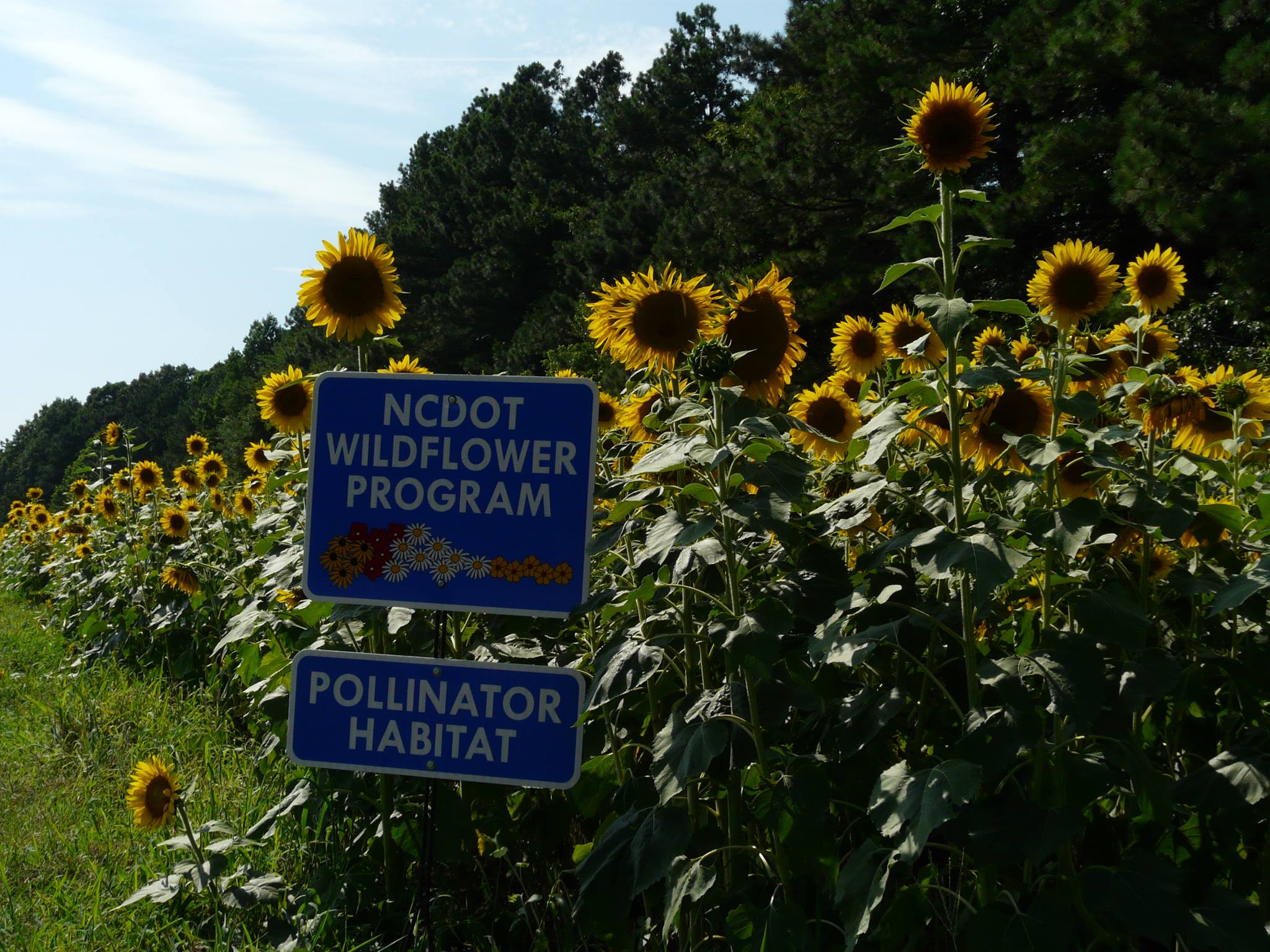
One final note: Gary Brichford took this set of sunflower pictures from an interesting source. They were on the side of a major highway in central North Carolina as part of a government project. Please see the picture below for details. Isn’t it great to know that our Department of Transportation is involved in Pollinator Habitats. What better place could they find. Imagine how many people drive past and smile at the ever beautiful sunflowers.

.

Photo by Gary Brichford, (c) 2015

                             Photo by Gary Brichford, (c) 2015

.

On the fence

Fence ~ Photograph by Randy Baker (c) 2015

Fence ~ Photograph by Randy Baker (c) 2015

Randy Baker is a friend who loves the southern countryside and captures it beautifully in his photographs. Like many, he considers his pictures to be “just photos” and not art. He is modest about his talents for capturing beauty in a split-second shot. To me, this is art at its best.

I’ve held on to this picture all summer. It’s such a simple picture, and yet it is a perfect picture. Its subject is straight-forward–it’s a photo of a fence in the countryside. Yes, there are lots of fences. But look closely at this picture. The most noticeable feature is the upright stake, but it’s not just a pre-milled wooden stake. It’s a section of a tree still covered in bark. It also has a section that once was part of a limb and now appears to be almost a mouth sharing its thoughts with us on this cloudy summer day. The texture, the color of the bark, and then the color and texture around it in the grass and the wild flowers to the right and the cut and fallen grasses in front–all of these make it a photo you want to study for a long. I have certainly done just that.

This picture also made me want to re-read Robert Frost’s wonderful poem, The Mending Wall. I spent a whole morning reading and rereading that magificent poem and then reading some critical interpretations of it. I left refreshed and in still very much in awe of Frost’s brilliance. No wonder everyone remembers that poem or at least the famous lines it has given us. So this picture also gave me this–a little detour into rereading one of the great American poems that I hadn’t picked up in decades.

But Randy’s picture is not of a wall in need of repair or mending. It is a wall made of air, wire and wood. An entirely different type of barrier from a stone wall. The purpose is the same–it demarcates land ownership, and it keeps something out–or in. That is what got this poetic mind going.

What does a fence really do?

Here are my responses to the question of what a fence is or might be. I’ve looked at this picture so many times, and this single picture has inspired quite a few poems. These are very brief poems–sketches in verse, plus there is one poem about fences as a metaphor for our own need to be guarded at times.

.


the only real fence is in my head

.

.

on the fence—
am I in
or am I out?

.

.

Clichés abound
when it comes
to fences.

.

And here is a poem for all of us who guard our hearts so closely:

.
My Fence


What do they —or you—
know about my fence,
and how carefully
I chose to build it?

Can you guess
how long
it took to build it?

A lifetime of habit,
carefully constructed
and often hidden habits,

a life spent half in fear
of being judged
unkindly, unfairly,

with malice
in another heart.

10434141_10202268232853813_7378458471908543899_n


Note
: I would like to thank Randy Baker for allowing me to use this beautiful photograph that he took in the beautiful mountains of Virginia. It is a picture I would like to have framed and hanging near my writing desk. Randy, your pictures are always inspiring and bring a clarity to both the mind and heart. Thank you so much.

.