Small Poems of Grief

Grief, by iosatel, (c) 2014, The Obvious and Hidden blog: http://theobviousandhidden.com/2014/11/04/grief/

Grief, by Iosatel, The Obvious and Hidden blog, (c) 2014

1.

only the bereaved know
they needn’t speak in whispers,

grief is never
completely silenced


2.

rush of water
a broken branch drifts by
what will be left?


3.

Unending days of darkness
that never let you forget.


4.

Saturated, as if the clouds
had wrung themselves out
all at once, watching what
would then ensue


5.

sitting at the window
watching the rain
despondent days
of unexhausted sadness
trying to let go


6.

forgetting you
was never an option


7.

grief exhausts
but holds on,
rain continues
to fall


8.

thirty-five years and still I mourn you,
sometimes waking and imagining you there


9.

darkness deepens
into the black of night

lightning signals
thunder cracks,

but it is the loss of you
who took your life
that makes me ask
why it had to be

 ~~~

My Note of Thanks to the photographer, Iosatel, for his beautiful picture, Grief, which was first posted on his blog, The Obvious and the Hidden on 4/11/14. This photograph is copyrighted (c) 2014 by the artist himself.

I Wish I could Undo…

"Broken Mirror" by Edward Van Helgen @ deviantart.com

“Broken Mirror” by Edward Van Helgen @ deviantart.com

For quite a few years now, one of my favorite poetry sites online has been POETSONLINE (see http://poetsonline.org). This site introduced me to presenting poetry online for others to read and it also taught me what fun it can be to write to a specific prompt. The site’s administrator, Ken Ronkowitz, has several blogs, several of which focus on poetry. His prompts are always very well thought out, amply illustrated with poetic examples, they never fail to offer a good challenge to both an experienced writer or someone new to writing poetry. This past summer, Ken presented an interesting prompt that began with Carl Sandburg’s poem, “Mag”:

“The prompt this time out was to write a poem about a negative wish (or wishes) – a wish to undo, wishes that change the past. Those are the wishes that pull you right back to the present and have you thinking about the future.”

The poems written in response to the prompt were published this fall. I wanted to share mine here on my own poetry blog to reach a broader audience. I think the problem is poor self-esteem and distorted sense of self-worth isn’t uncommon in women in America. I struggled with it all my life and just when I think I’m in control, something might happen and make me backslide. I’d say that 97% of the time, my rational self is in control and keeps that negative thinking in check. I do regret having wasted so much of my life feeling inadequate or not worthy of being valued in so many ways. I know I’m not alone. I hope any person reading this poem will think about it and someone they know who struggles with this issue and perhaps, do something to help her (or him) learn to embrace their own self-worth.

Self-portrait in colored pencil

Self-portrait in colored pencil


If you’d like to listen to the poem, click on the link below and wait a few seconds for the audio to begin.


I Wish I Could Undo…

All the time
I wasted waiting for life to happen,
As if there would be a perfect moment
When the stars aligned just so,
Or my sails swiftly caught the wind,
And the ivory moon was full.

I thought it would just happen.

All the time
I wasted loathing who I am:
Never good enough, smart enough,
Thin enough, clever enough,
And if that weren’t already enough,
I somehow felt that if I said it enough,
I really might be transformed,
Emerging a butterfly and not a moth.

I would be smarter, beautiful, wittier,
And I’d dance with agile grace.
At last it became quite apparent:
I would never be ‘enough’ for me.

All that time
I wasted wishing myself away.
If only I could undo all of that,
And take back time…and use it well.
I’d whisper a simple incantation
To my younger self:

You were enough, more than enough
In your very own way.

Apple in Mirror

Apple in Mirror

First published on PoetsOnline.org under “Negative Wishes,” August 2014


“I Wish I Could Undo…” (c) 2014, Mary Kendall

Donut Dog ~ a Visual Poem

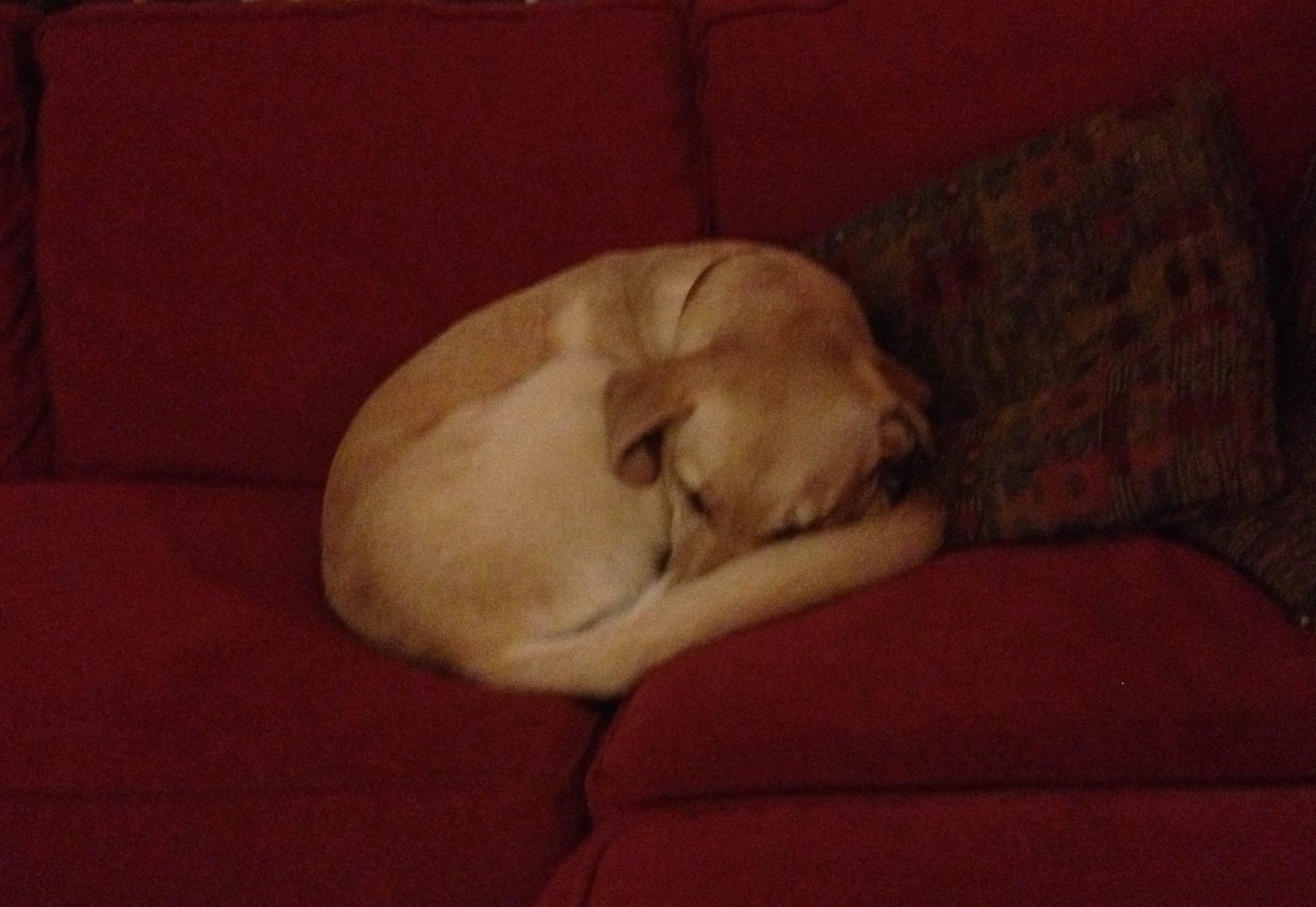
Katy, my donut dog, deep in sleep.

Katy, my donut dog, deep in sleep.

One of the great joys in life is owning a dog you absolutely adore. For me that is my sweet seven year old yellow Labrador retriever, Katy. We got Katy as a one year old rescue dog from the wonderful rescue group, Saving Grace, in North Carolina. She surprised us by chewing just about everything including more than one down-filled pillow. (Did you know that a down pillow contains a million and a half down feathers? Neither did I until I had to clean up the ‘snow filled’ house on several occasions.) Seriously, we quickly found out that this bundle of energy needed really long, hard exercise. For Katy, this came in the activity of fetching. Even today she still runs so fast that people comment on it. And she fetches until you stop throwing the tennis ball. My neighbors are used to dropping off bags of used tennis balls, all for Katy’s pleasure. She definitely has her fans. Who can resist a lovely, very silly dog who won’t live without her beloved tennis ball?

This poem is my tribute to my dear Katy. As you can see from the picture above, she loves to curl up like a donut (what dog doesn’t love this position?).

Donut Dog by Mary Kendall

Donut Dog by Mary Kendall

Eye on the prize!

Eye on the prize!

A ball is always close by.

A ball is always close by.

Even old tennis balls need a nap.

Even old tennis balls need a nap.

Due North: A Winter Poem

Due North © 2014 by Isotell

Due North © 2014 by Iosatel

There are nights in the winter
once the leaves have fallen away,
when sometimes I wake in the dark,
hearing the distant, plaintive sound

of a single train a few miles away
as it crosses over a country road
or maybe it’s to warn off deer
that pause too long on the track.

The train travels due north,
and in the blackness of the night
the train’s dark sounding
brings back fragmented images
of my childhood life up north.

North, where winter’s silver skies
are layered in clouds most
of the year, and where snow
begins to fall early and deep.

North, where my family lived
in the rust belt of Lake Erie,
where strong winds raced across
the lake with bone-chilling cold.

The lake effect meant snowstorms
that went on for hours, even days
on end. Times when all of us gathered
together happily, knowing school
would be cancelled the next day.
Night was peaceful back then.

In the morning, we’d make our
way through the thigh high snow
and help shovel the walk, leaving
tall tunnels of snow on either side.

Our boots would crunch on frozen
snow, fingers painfully cold, but
that never stopped us from a snowball
fight or playing king of the mountain,
or sledding, tumbling, rolling in snow,

or making lovely snow angels
all over the yard. Those were the
carefree days of childhood, when
we didn’t worry about time or the
future or much of anything.

And for a while the thick snow
continued to fall, covering the tracks
of cars, birds and anything else
that dared to wander outside
on those interminable winter days.

Now, no longer in the north,
I lie in bed remembering such
simple times, times of being together
as we coasted down the snow hills,
all six of us tucked in tightly together

until halfway down when the toboggan
shifted and just after the pull to the left,
we capsized, all of us scattered down the hill,
laughter ringing out so loud as we fell,
each of us ready to give it a go again.

Tobagganing in the Snow

Tobagganing in the Snow

My thanks to the photographer, Iosatel, for use of the photograph, Due North, which appeared on his blog, The Obvious and the Hidden, 03/11/2014

Water Song

water_texture2379

Water Song

Water, the color of night,
so very still
not even a wave
breaks the glass surface.

Fear is sometimes
like this, submerged
so far it is hidden
from the conscious self,
safely buried
and unable to rise
to the top again.

Dark thoughts swim
against the current
of common sense, but
they meet no resistance
that far down.

The Second Lamentation of Demeter ~ (Poetry and Myth)

Narcissus, 1912 by John William Waterhouse

Narcissus, 1912 by John William Waterhouse

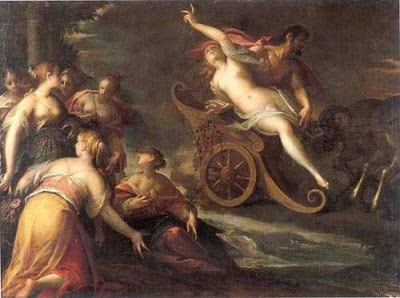
Persephone’s abduction by Hades is swift, violent and over so quickly that no one hears her scream except for Hecate, a goddess who helps Demeter find out where she has gone. Could there be anything worse for a mother than to lose a child? Demeter’s grief is profound. This is the Second Lamentation of Demeter.

The Rape of Proserpine, Hans Von Aachen, 1587

The Abduction of Persephone, Hans Von Aachen, 1587

To hear me read this poem, please click on the link below and wait a few seconds for it to begin.


The Second Lamentation of Demeter

The earth groaned, then opened briefly.
That’s all it took.

He appeared out of nowhere
Like a wild flume of fire,

The flickering golden chariot with
Four black stallions at full gallop.

He sprang upon her so quickly
That when the earth closed back

Upon itself like a wound healed over,
All that was left was a circlet of flowers

That she and the daughters of Oceanus
Had been stringing together. Irises, roses,

Violets, hyacinths, and the faded blossoms
Of sweet narcissus plucked by her hand.

The scar in the earth and grasses torn apart
Were all that told the story.

I always knew he watched her…
I sensed when he was around.

Clouds gathered overhead,
Shadows clothing him in darkness,

Hades,
To whom sunlight is a stranger.

My sweet Persephone is gone now,
Gone with him.

O, horror…
My sweet child is his.

circlet of flowers 2

Persephone’s abduction is well represented in art. It is my personal opinion that one need look no further than the magnificent sculpture done by Bernini in 1622. The details of the hands and arms as well as the force and resistance between their two bodies is powerful. Persephone’s tear stained cheek tells us more than any words can.

Gian Lorenzo Bernini, The Rape of Proserpina, 1622, Galleria Borghese in Rome

Gian Lorenzo Bernini, The Abduction of Persephone, 1622, Galleria Borghese in Rome

(detail)

(detail)

(detail)

(detail)