
Poem for my Father, a Soldier
(for Jan Ciosmak, d. 1955)
Only 20 when you left home,
Fleeing the war in Europe.
Leaving behind all you knew,
Leaving behind your parents,
And your eight sisters.
You, the only son.
Coming to a country, but not
Knowing the language or customs.
Not having any waiting friends.
That took courage.
When you told your family
That you were leaving, knowing
They’d never see you again
Or you them,
What went through your mind?
Did your mother weep uncontrollably?
Did your father pat you on the back?
Did your family urge you to flee?
Did they fear invaders and death?
No stories came down to us,
And so no stories now remain.
Time passes.
All I remember is being told
How you fled the big war in Europe,
Only to be conscripted here
To fight in your new country,
The US Army calmly taking you,
You who were already uprooted
And leading you back
Over the ocean, back over the sea.
I’m sure the irony was not lost on you.
This time you wore Army khaki.
Did you wear it proudly?
A brand new uniform all crisply pressed,
Thick leather boots ready for
The fields and the trenches.
A soldier now, they said.
They prepared you well, it seems.
You survived the trenches, and
You survived Meuse-Argonne.
Did you understand the French?
Was English now your tongue? Did
Your ears yearn to hear the consonant
Rich language of your first home?
Time passes.
What was it like standing hidden
In earthen trenches, the acrid air,
The bullets spent, shell casings underfoot?
How many other boys suddenly
Grew into men in those French fields?
I picture you there, not knowing,
Wondering how your family was.
And you, all alone.
Could you understand enough
To hear someone’s dying words
Or maybe to learn the story about
A young family waiting back home?
Did you share your own promises
And hopes or were you silent?
Time passes.
And then it stopped.
On the eleventh hour of the eleventh day
Of the eleventh month,
all fighting stopped.
Sudden and eerie silence.
What was it like to realize
You were now safe, and
Had your life ahead of you?
A life. Your life.
You had it free and clear.
You were one of the lucky ones.
Why you but not them?
Did you grieve during the dark
Nights of all the loss you’d seen?
Or did you push it all deep inside
Letting it exist in its own private place?
The price of freedom is so dear.
The loss of soldiers, so much life
And stolen youth. The veterans
Who made it back in pieces,
Who were never the same,
Could never be the same.
No one left unmarked.
Yes, the price of freedom is so very dear.
A price paid over and over in so many wars.
Time passes.
Long after you died, and I was finally grown,
I found your Army papers that said only
That you were honorably discharged
And had fought in those famous battles
In such faraway, strange places.
The places you lost your youth
And became a seasoned veteran,
A man of courage, a solider who was
One of the lucky ones. I hope you wore
Your uniform proudly, knowing that you
Were one of so many brave men.
French, English, Polish, American,
The list goes on for the victors.
But I mourn all who were lost.
On all sides.
So many mothers wept, and it continues
Even today. The loss is great,
But freedom is never cheap.
We who sit and write these poems,
Read those books, watch those movies
About wars, any wars, all wars,
Must always remember those who
Fought, those who served.
Those who died.
Those who survived.
They all served.
They all sacrificed.
Let those scarlet poppies bear witness
To the blood shed by all who have gone to war.
Let the trenches remain closed,
Let the flowers grow so that farmer’s
Fields remain at peace,
Remain at peace forever.
Time passes.
War passes.
Courage remains.
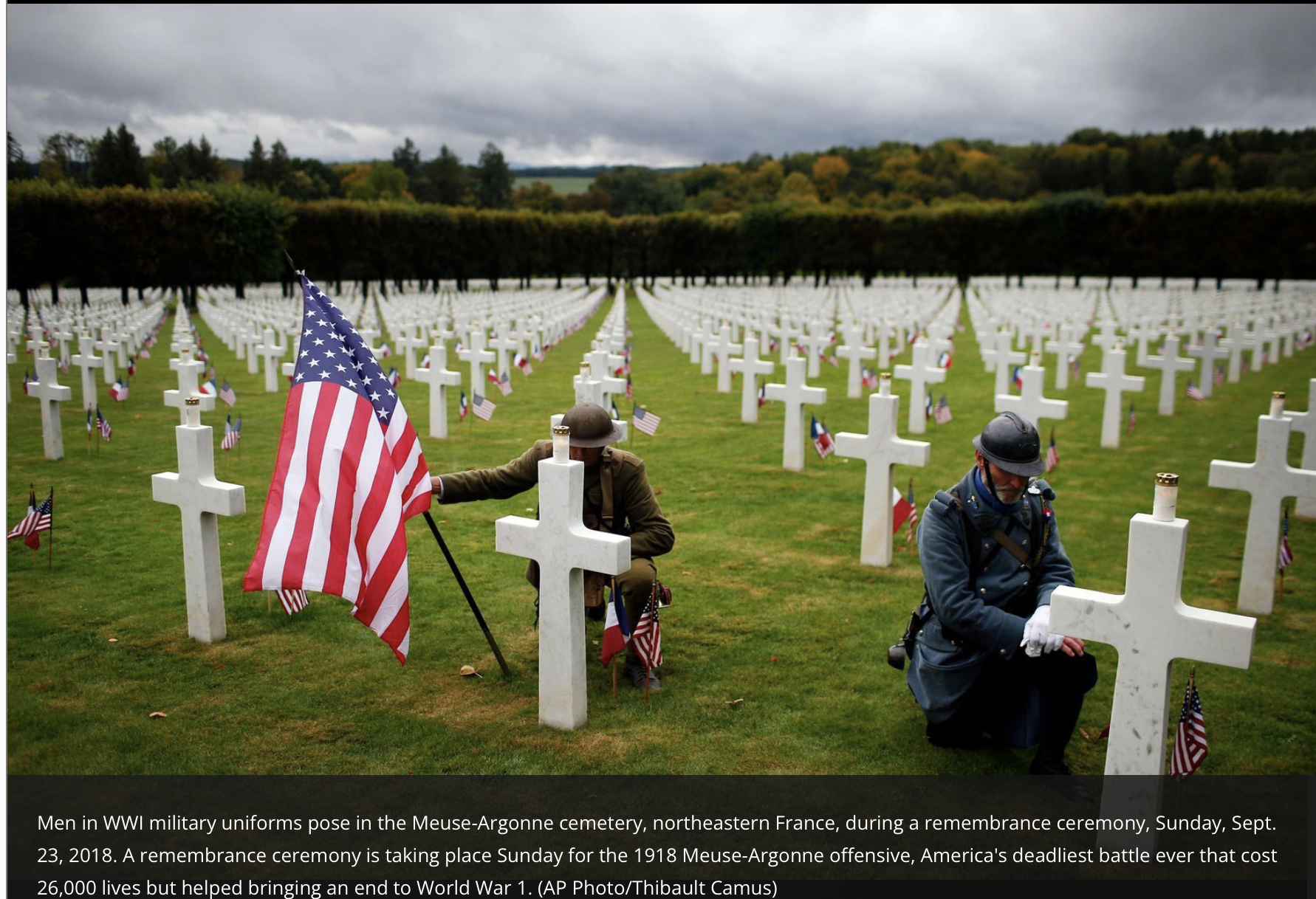
Note: I’m now 78, but my much older father fought in WWI in France, shortly after emigrating to the United States of America. I barely knew him. I never knew his story. But he had his story just as we all do. Why he left Poland and his family while so young is not recorded. No one is left to answer those questions. The one certainty is that he did his civic duty when called. He fought in one of the bloodiest battles in France. It’s nearly impossible to imagine all he saw, did, witnessed.
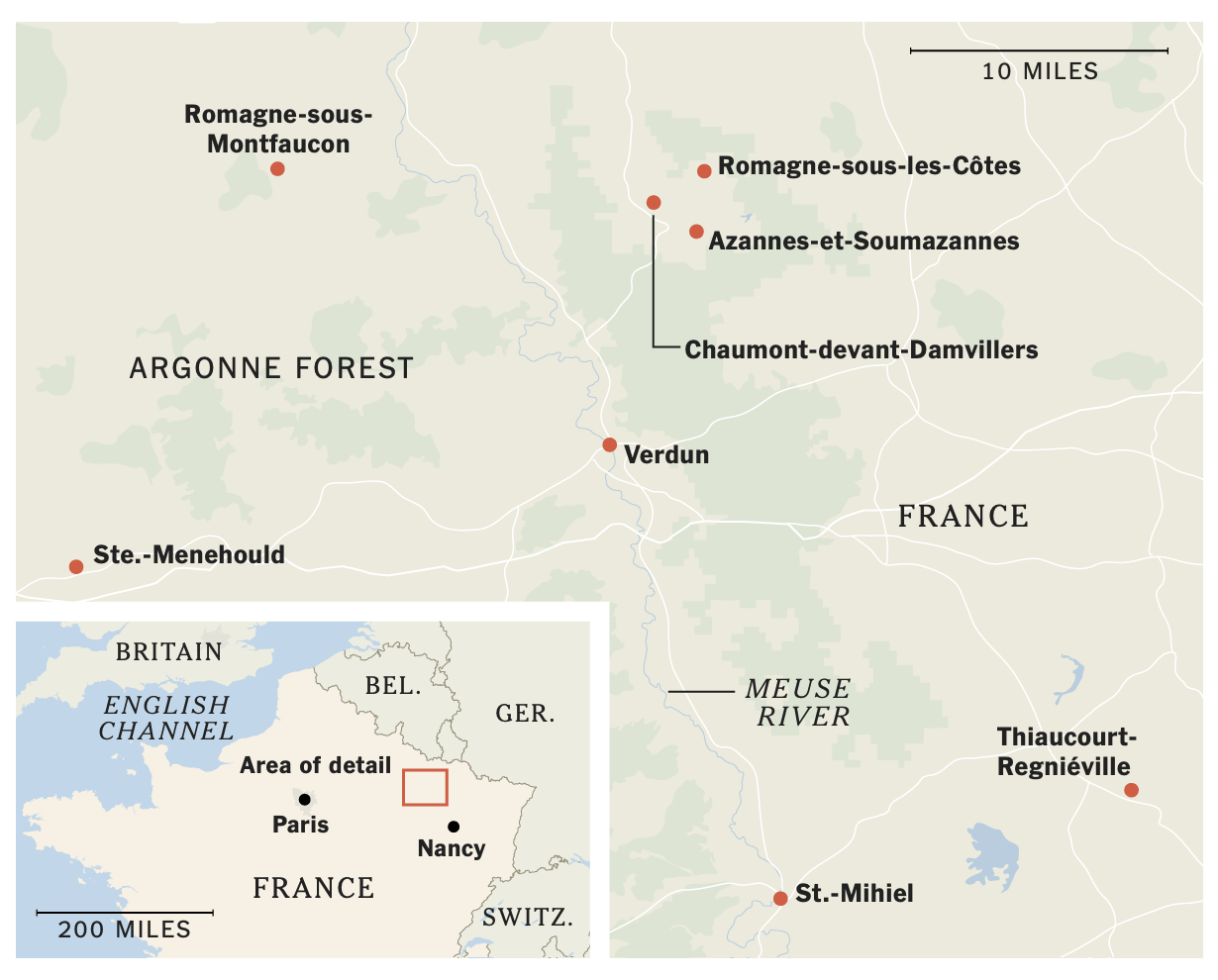
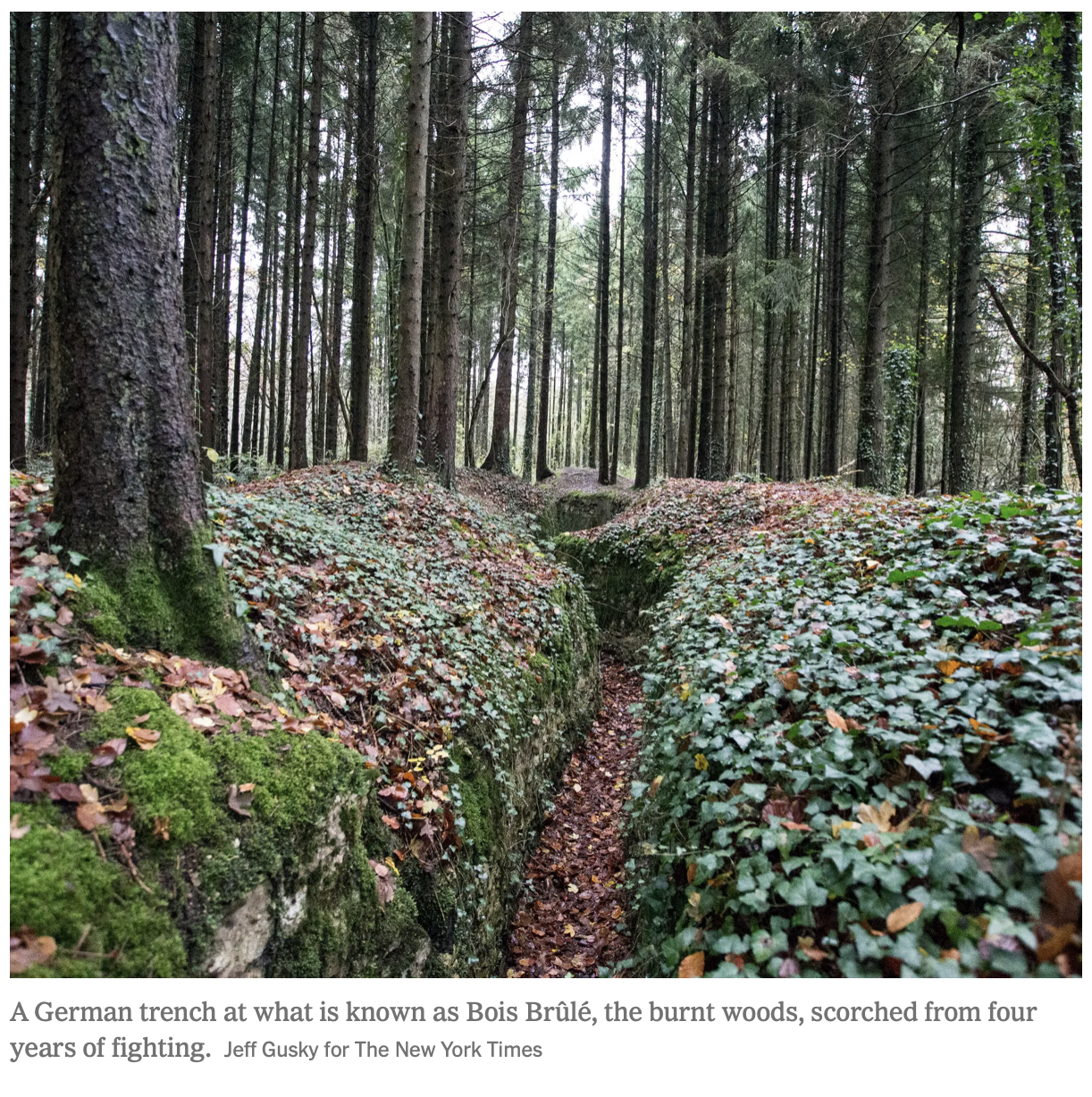
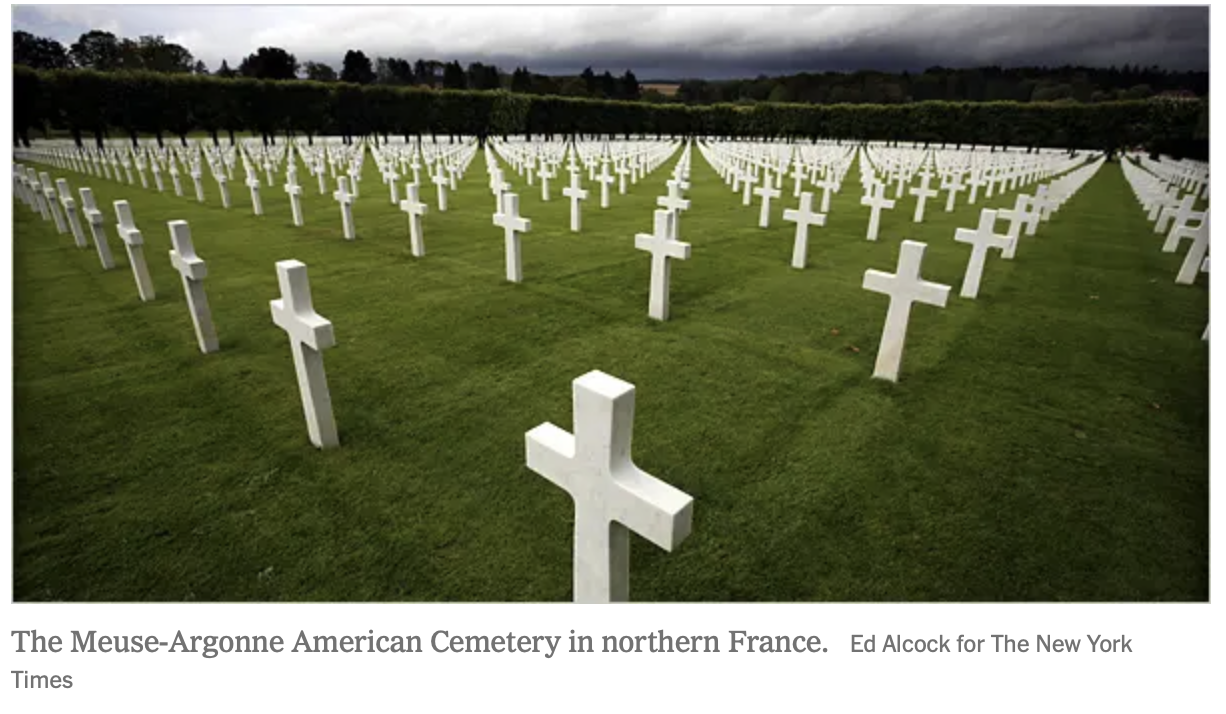
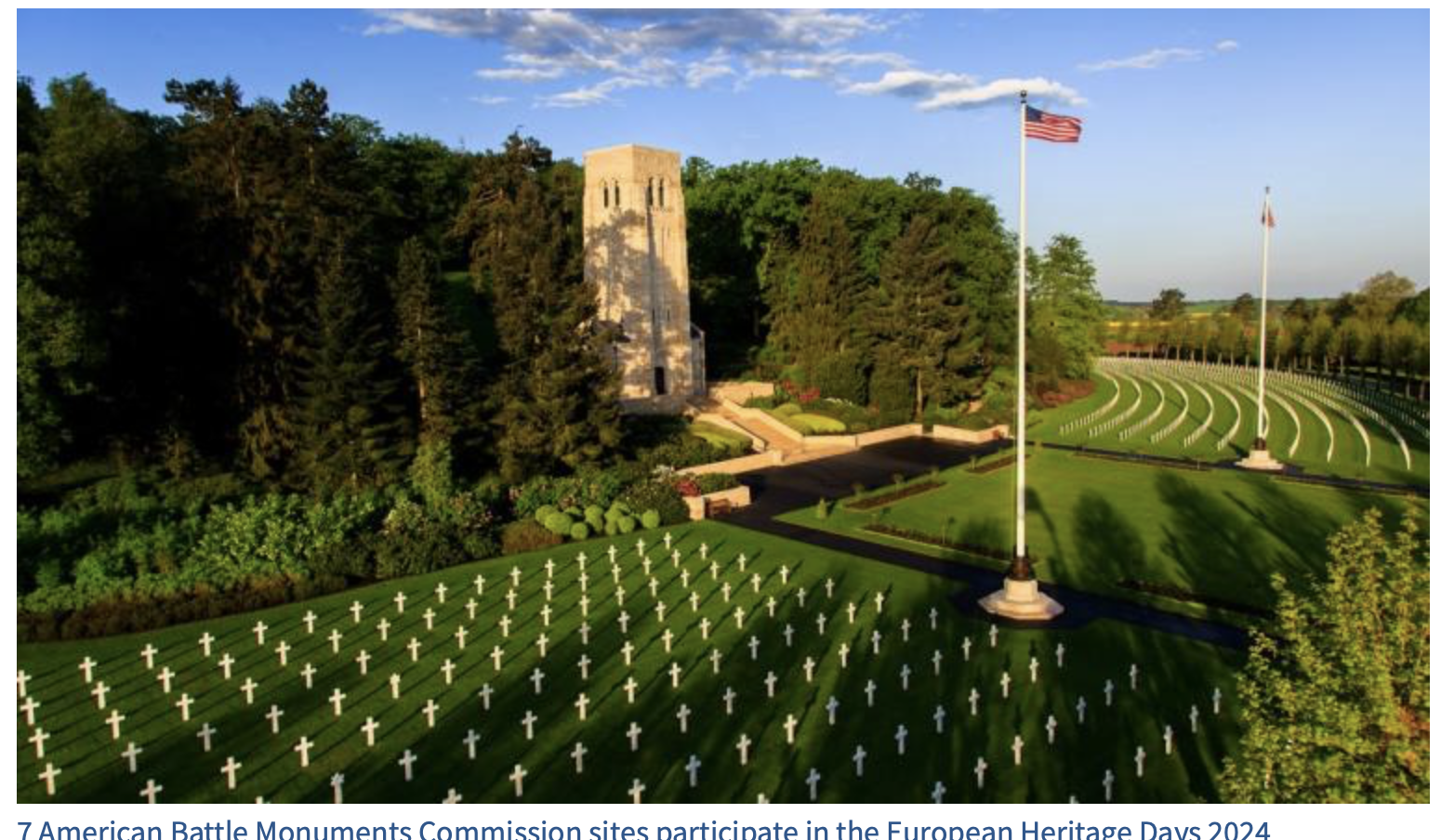
Below are a few photos I found alongside some excellent articles in the New York Times on the Battle of the Meuse-Argonne.




 A Poet in Time