Tanka on a May Morning

In the past five months I have been studying my much beloved tanka, haiku and small poems in order to become a better writer. Writers–and poets–need to keep growing as they go.  As part of my interest in these lovely small poem forms, I have joined a number of exception online groups of poets who post their own writing. On several of the sites, “prompts” are given and sometimes a picture is given. People respond as they wish or not. Often comments are given. I can’t tell you what a thrill it is to get a “like” or even a comment by one of these poets who are so gifted and accomplished tanka and/or haiku poets, but even without the ‘likes,’ it feels wonderful to be a little more confident about sharing poems publicly. This morning, I’m posting several tanka I wrote this week to specific prompts.

~

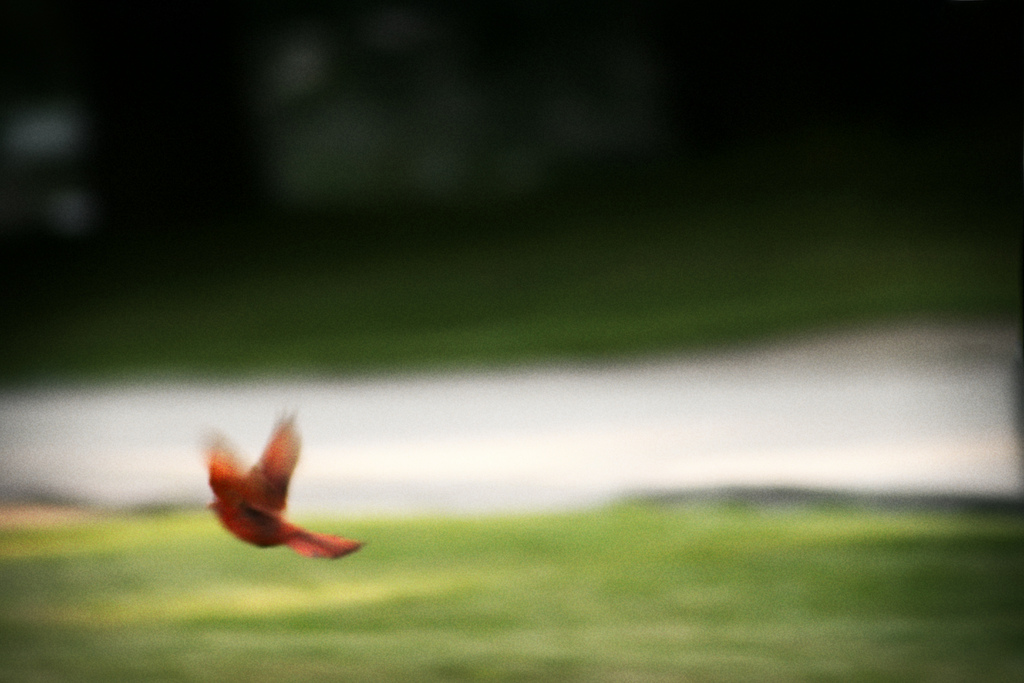
1    [prompt: celebration of color]

Photograph (c) Kristin Sanderson

Photograph (c) Kristin Sanderson


scribbles

of scarlet red

in the shrubs—

two cardinals

take flight
~

  1.  [prompt: full moonrise, unforgettable moon]


Photography (c) by Cab Treadway

Photography (c) by Cab Treadway

cloud masquerade

tonight—

the moon is hidden

from your

wanton gaze


~


3    [prompt: how you share your journey]

old cobblestones

so hard to cross—

without speaking

I take your arm

and we walk on

old cobblestones in cornwall


~

4    [prompt: flutes..music…]

plum-tree-picture

sweet song

hidden in the plum tree–

a nightengale

gives itself

away

nightingale1

~

faded beauty…

faded beauty haiga

Sounds of Summer Evenings by Mary Kendall (Where I Live Poetry & Photography Series)

I’m so excited to have a poem of mine included in the “Where I Live Poetry and Photography Series’ by Silver Birch Press. They have published two other poems of mine in other series, and It is always an honor to be included among their marvelous poetry selections. Thank you, Silver Birch Press!
.
Wherever you live, no matter where you might be, nighttime in summer reveals a very different world of sound. During the day we hear birds, breezes, people, mowers, airplanes, cars or sometimes just bees and hummingbird wings. At night, however, we must totally rely on our hearing to grasp all the different sounds that play out in the night chorus. Here in the south, in North Carolina where I live, summer nights are especially noisy. From frogs and owls to whipoorwills and katydids, there are times when it is absolutely deafening. I wish I had the expertise to identify all the different frogs our small garden pond must be home to. There is one frog that sounds much like what I imagine an alien creature would be like—high-pitched, very shrill and almost dizzying in its persistent song. It’s irritating enough to go inside.

.
Then there are the “call and response” night singers. I love those most of all. I can sit a long while listening to them. Occasionally I hear an owl, but lately it seems there are fewer around. I remember when we regularly had barred owls nesting in our woodland garden. Catching sight of one was always impressive, but hearing one in the middle of the night was truly haunting. I love to sit outside in our screened-in porch when it is dark. The dog often comes and sits with me listening and keeping me company. She makes no sound herself, knowing that we are the polite and attentive audience to this vast chorus of night.

.

Here is an audio recording of me reading this poem. Just click on the link below, wait a few seconds, and it will begin.

.


silverbirchpress's avatarSilver Birch Press

qing_yang
Sounds of Summer Evenings
by Mary Kendall

Sometimes at night I sit outside
In the screened-in porch out back.

In the darkness, the rustling leaves
Of the tall beech trees are blowing.

The katydids call to one another,
An evening of antiphonal refrain.

On nights when a heavy rain falls,
All you can hear are the tireless frogs

Chorusing in the garden pond.
The deep lone bass, the shrill soprano,

This diverse and discordant choir
Seems to be one of rhapsodical joy.

And then there are times when an owl
Soundlessly lands in a nearby tree

And startles me with its resonant call,
Letting me know it’s now on watch.

Two times more it calls, low and deep.
I rise and go, time now for me to sleep.

NOTE FROM THE AUTHOR: Northern by birth, I have lived for more than 35 years in North Carolina. Our summer nights are…

View original post 141 more words

Sky the color of hyacinths…

waves swell then break

~ ~

I’m still very new as a haiku poet, so it is with caution that I’ve ventured out to try an actual haiga. A haiga combines art and a haiku. Since I lack all painterly skills, I’m combining my haiku with a photo that I love. I’ve done this in a slightly similar way on my blog with tanka and some autumn haiku. However, I consider this to be my very first true haiga.

~~

What is Haiga?  

Haiga is a Japanese concept for simple pictures combined with poetry, usually meaning haiku. In Basho’s time, haiga meant a brushed ink drawing combined with one of his single poems handwritten as part of the picture. In our day and age, haiga can be watercolor paintings, photographs or collages with a poem of any genre that is integrated into the composition. Sometimes the poem is handwritten or it can be computer generated, depending on the artist’s taste.”  (This definition of haiga is by the poet, Jane Reichhold on her website,  Ah Ha! Poetry.)

~~

Note on Photograph:

This beautiful photograph is by an Icelandic photographer known to me only as KariK on Flickr. It was posted and thus copyrighted in (c) 2011. It has been posted thousands of times online and almost never with an attribution to him. By doing a ‘backward’ image search I was able to find him on flickr. His photographs, most of nature, are magnificent.  This is what he wrote for this particular picture (translated from Icelandic):

Reykjanestá:  This location is unique for the fact that there can see the ocean ridge walk on 1 and, Mid-Atlantic Ridge, which separates the prefabricated North America and Europe.

KariK, (c) 2011

This Sacred Place

bare woods

THIS SACRED PLACE

There is a place near here I like to sit,
a place where the slanted rays of winter sun

warm the bare trees; where water drips
into the pond trickling notes of a wordless song.

Sitting with silence, the mind begins to quiet and
breathing settles. Thoughts come, then disappear,

and equanimity envelops me with a healing spirit,
the soul of this bare winter woodland.