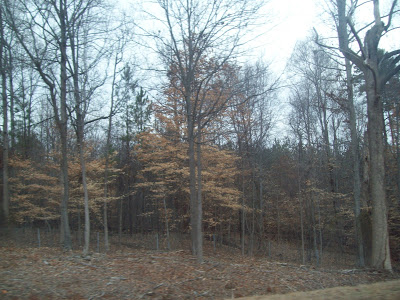
This Sacred Place

bare woods

THIS SACRED PLACE

There is a place near here I like to sit,
a place where the slanted rays of winter sun

warm the bare trees; where water drips
into the pond trickling notes of a wordless song.

Sitting with silence, the mind begins to quiet and
breathing settles. Thoughts come, then disappear,

and equanimity envelops me with a healing spirit,
the soul of this bare winter woodland.


The Broken Promise: Orpheus and Eurydice, poem by Mary Kendall (Mythic Poetry Series)

A second poem of mine in the Silver Birch Press Mythic Poetry Series! I’m delighted they selected this one.

I’ve done an audio clip of me reading this poem. Click below if you care to listen.


silverbirchpress's avatarSilver Birch Press

orpheus-returns-from-the-pursuit-of-eurydice
The Broken Promise: Orpheus and Eurydice
by Mary Kendall

If only he had kept his promise, she’d be there.
All it took was one glance, a quick turn,
a meeting of the eyes and then she vanished.

How long did he stand there staring at where she had been?
When did he realize that she was lost to him forever?

How sad the stars were that night,
tumbling through the black sky
in mournful arcs;
even the moon turned its face away.

As he lead her out toward the ledge,
did she gasp at her unsure footing?
She with her snake-born limp,
trying hard to keep pace through dark tunnels
winding up to the craggy precipice?
Was this what tempted him to look?

His glance came so naturally,
that of the husband who worried
his wife might stumble and fall.
His trust in her never wavered and yet
he looked…

View original post 158 more words

Due North: A Winter Poem

Due North © 2014 by Isotell

Due North © 2014 by Iosatel

There are nights in the winter
once the leaves have fallen away,
when sometimes I wake in the dark,
hearing the distant, plaintive sound

of a single train a few miles away
as it crosses over a country road
or maybe it’s to warn off deer
that pause too long on the track.

The train travels due north,
and in the blackness of the night
the train’s dark sounding
brings back fragmented images
of my childhood life up north.

North, where winter’s silver skies
are layered in clouds most
of the year, and where snow
begins to fall early and deep.

North, where my family lived
in the rust belt of Lake Erie,
where strong winds raced across
the lake with bone-chilling cold.

The lake effect meant snowstorms
that went on for hours, even days
on end. Times when all of us gathered
together happily, knowing school
would be cancelled the next day.
Night was peaceful back then.

In the morning, we’d make our
way through the thigh high snow
and help shovel the walk, leaving
tall tunnels of snow on either side.

Our boots would crunch on frozen
snow, fingers painfully cold, but
that never stopped us from a snowball
fight or playing king of the mountain,
or sledding, tumbling, rolling in snow,

or making lovely snow angels
all over the yard. Those were the
carefree days of childhood, when
we didn’t worry about time or the
future or much of anything.

And for a while the thick snow
continued to fall, covering the tracks
of cars, birds and anything else
that dared to wander outside
on those interminable winter days.

Now, no longer in the north,
I lie in bed remembering such
simple times, times of being together
as we coasted down the snow hills,
all six of us tucked in tightly together

until halfway down when the toboggan
shifted and just after the pull to the left,
we capsized, all of us scattered down the hill,
laughter ringing out so loud as we fell,
each of us ready to give it a go again.

Tobagganing in the Snow

Tobagganing in the Snow

My thanks to the photographer, Iosatel, for use of the photograph, Due North, which appeared on his blog, The Obvious and the Hidden, 03/11/2014

Dining with the Woodpeckers

pileated suet

While visiting my brother and his wife this summer in East Aurora, New York, we experienced a truly wonderful and unexpected visit from three pileated woodpeckers at the suet feeder Jim had filled. His wife, Paulett, said the woodpeckers were frequent visitors to their lovely back garden. This was a first for me. Although I’ve been an on again, off again birdwatcher for most of my adult life, I’ve only seen one pileated woodpecker in person before. Seeing three at the same time was simply brilliant. Watching their acrobatics as they fed on the suet, flew back and forth to peck at a tree, and generally manoeuvered their rather large bodies in amazinglying agile ways was pure delight. After a feeding frenzy, they flew away and it felt amazingly still and empty where they had been. Much like a visit with beloved family and friends, the ‘after’ part comes all too soon and leaves a void in our hearts. This poem is dedicated to Jim and Paulett, two of the kindest and most caring people I know. Thank you for sharing your home, your family and your amazing woodpeckers with us.

pileated 5

Dining with the Woodpeckers

In the late August garden
The quiet afternoon now

Comes to a languorous close.
Out of nowhere, a flash of red,

Bright scarlet crests crowning
Zebra-patterned feathers.

Three Pileated woodpeckers
Begin to feast at the suet feeder,

Fluttering, flying tree to tree,
Tree to feeder, alternately

Pecking at thick maple bark,
Then shifting to soft silky suet.

The youngest, now the size of its parents,
Joins in to grab his share, and father

And mother dutifully give way.
For a few Cirque des Oiseaux moments

All three woodpeckers hang right side up
And upside down, their brilliant red heads

Flash like stop lights in the early evening sun.
We sit around the table eating an early supper

And sipping local wine. Conversation drifts
As we watch in these avian acrobatics.

Just as quickly as they arrived, so soon are
They are gone. More wine is poured,

Seconds of hot buttered corn and fresh
Heirloom garden tomatoes are passed

From one to the other. Like the birds,
We share this meal together, enjoying

The richness of what the day has given.
A light wind blows the leaves outside,

A beautiful evening for us to be together
Knowing that summer will end all too soon.

Picture by Beth Brandkamp

Picture by Beth Brandkamp

Water Song

water_texture2379

Water Song

Water, the color of night,
so very still
not even a wave
breaks the glass surface.

Fear is sometimes
like this, submerged
so far it is hidden
from the conscious self,
safely buried
and unable to rise
to the top again.

Dark thoughts swim
against the current
of common sense, but
they meet no resistance
that far down.

The Second Lamentation of Demeter ~ (Poetry and Myth)

Narcissus, 1912 by John William Waterhouse

Narcissus, 1912 by John William Waterhouse

Persephone’s abduction by Hades is swift, violent and over so quickly that no one hears her scream except for Hecate, a goddess who helps Demeter find out where she has gone. Could there be anything worse for a mother than to lose a child? Demeter’s grief is profound. This is the Second Lamentation of Demeter.

The Rape of Proserpine, Hans Von Aachen, 1587

The Abduction of Persephone, Hans Von Aachen, 1587

To hear me read this poem, please click on the link below and wait a few seconds for it to begin.


The Second Lamentation of Demeter

The earth groaned, then opened briefly.
That’s all it took.

He appeared out of nowhere
Like a wild flume of fire,

The flickering golden chariot with
Four black stallions at full gallop.

He sprang upon her so quickly
That when the earth closed back

Upon itself like a wound healed over,
All that was left was a circlet of flowers

That she and the daughters of Oceanus
Had been stringing together. Irises, roses,

Violets, hyacinths, and the faded blossoms
Of sweet narcissus plucked by her hand.

The scar in the earth and grasses torn apart
Were all that told the story.

I always knew he watched her…
I sensed when he was around.

Clouds gathered overhead,
Shadows clothing him in darkness,

Hades,
To whom sunlight is a stranger.

My sweet Persephone is gone now,
Gone with him.

O, horror…
My sweet child is his.

circlet of flowers 2

Persephone’s abduction is well represented in art. It is my personal opinion that one need look no further than the magnificent sculpture done by Bernini in 1622. The details of the hands and arms as well as the force and resistance between their two bodies is powerful. Persephone’s tear stained cheek tells us more than any words can.

Gian Lorenzo Bernini, The Rape of Proserpina, 1622, Galleria Borghese in Rome

Gian Lorenzo Bernini, The Abduction of Persephone, 1622, Galleria Borghese in Rome

(detail)

(detail)

(detail)

(detail)