As a follow up to my last blog, I’m reblogging this second lamentation that dates back to November 4, 2014.
Which classic myth would YOU choose to write a poem about? What grabs your mind and heart both?
The Second Lamentation of Demeter
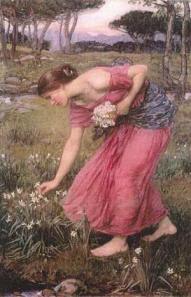
Narcissus, 1912 by John William Waterhouse
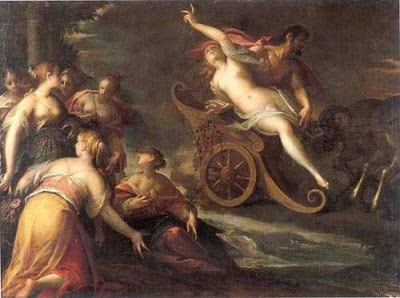
Persephone’s abduction by Hades is swift, violent and over so quickly that no one hears her scream except for Hecate, a goddess who helps Demeter find out where she has gone. Could there be anything worse for a mother than to lose a child? Demeter’s grief is profound. This is the Second Lamentation of Demeter.
The Abduction of Persephone, Hans Von Aachen, 1587
To hear me read this poem, please click on the link below and wait a few seconds for it to begin.
The Second Lamentation of Demeter
The earth groaned, then opened briefly.
That’s all it took.
He appeared out of nowhere
Like a wild flume of fire,
The flickering golden chariot with
Four black stallions at full gallop.
He sprang upon her so quickly
That when the earth closed back
Upon itself like a wound healed over,
All that was left was a circlet of flowers
That she and the daughters of Oceanus
Had been stringing together. Irises, roses,
Violets, hyacinths, and the faded blossoms
Of sweet narcissus plucked by her hand.
The scar in the earth and grasses torn apart
Were all that told the story.
I always knew he watched her…
I sensed when he was around.
Clouds gathered overhead,
Shadows clothing him in darkness,
Hades,
To whom sunlight is a stranger.
My sweet Persephone is gone now,
Gone with him.
O, horror…
My sweet child is his.
Persephone’s abduction is well represented in art. It is my personal opinion that one need look no further than the magnificent sculpture done by Bernini in 1622. The details of the hands and arms as well as the force and resistance between their two bodies is powerful. Persephone’s tear stained cheek tells us more than any words can.
Gian Lorenzo Bernini, The Abduction of Persephone, 1622, Galleria Borghese in Rome
Here it is January 2026. My blog has been quiet this year for a number of reasons too long to list. But the most obvious reason is that of a block or mental ‘resistance’ to writing. Last year in 2024, I turned to sharing a few older poems of mine that I love. It was a good reminder to me of why I loved writing.
Today, WordPress showed me my latest stats. I rarely look at these anymore, but one thing I notice each time I see an update is that some of the poems I wrote relating to classical myths seem to be accessed the most. I wonder if, in this sad and tumultuous world and country (mine being the USA), we turn to mythology to find answers to timeless questions that appear and reappear over a lifetime. Who are we and why are we here? What is it we are looking for? What really matters? I am now 79. Those questions and many more have come up time and time again, and the answers have been quite varied over eight decades. What do you, dear reader, think?Why do we cling to myths and tales from long ago and from cultures we know only though history books, literature or art? I’d love to know what you think.
To honor some of these poems, I’m going to post my two Lamentations of Demeter, one at a time. To save some work, I’ll post the whole original poet from my blog. I hope you find some meaning in each of them or perhaps a way to think of something beyond our wild world of today.
British Museum GR 1885.3-16.1 (Terracotta C 529), AN34724001
Here is the original 2014 posting:
.
I’ve been looking over my writing notebooks written a while back but unread by anyone other than myself or my husband. The myths of Demeter and her daughter, Persephone, fascinate many including me. For a number of reasons these myths seem to appeal especially to women. Many of the great living women poets have written brilliant poems about Persephone (e.g., Louise Glück and Eavan Boland). The story is timeless.
.
In today’s poem I’ve written a Lamentation of Demeter. Demeter, the goddess of the harvest and grains, is often referred to as the mother-goddess since she represents fertility on earth. Her importance is indisputable. When she mourns for her missing daughter, Persephone (who has been abducted by Hades and taken down into the underworld by force) the seasons stop. Things stop growing and the earth begins to die before Persephone’s father, Zeus, intervenes. You know the story, but it is worth re-reading if you haven’t read any mythology for a while.
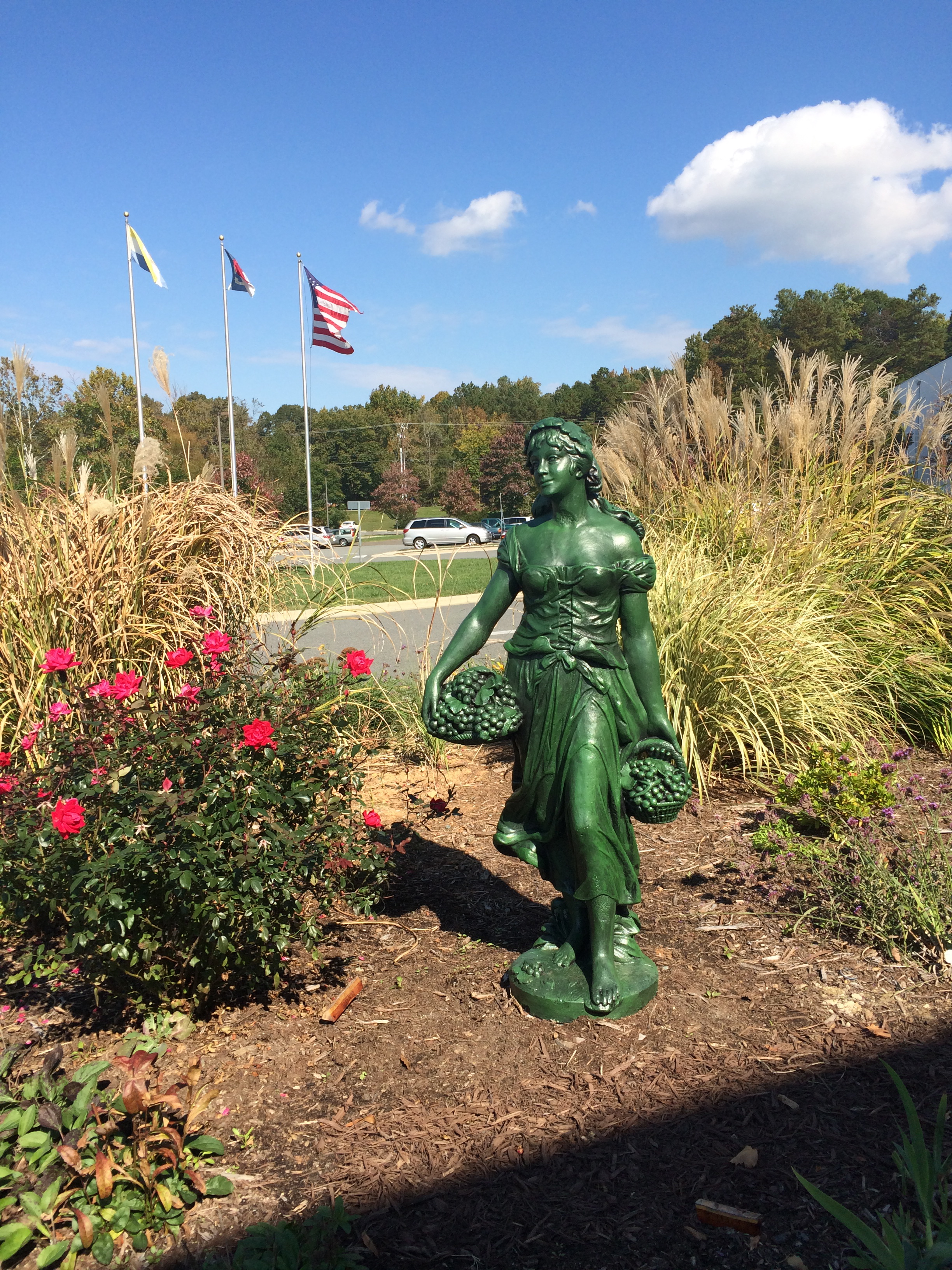
Demeter statue in front of my gym in Hillsborough, North Carolina
.
So what is a lamentation? The Oxford English Dictionary defines it simply: “The passionate expression of grief or sorrow; weeping.” Anyone who has grieved knows instinctively what it is to lament the loss of someone who is dearly loved. The feeling is painful and deep, and I think this resonates within us all. Demeter mourned her daughter’s abduction to a point where the earth nearly perished. This poem begins with her not yet knowing all that has happened. I picture her as a mother desperate to know what has happened to her child.
.
This is one of two lamentations of Demeter I’ve written. The second will follow at some point.
Demeter
.
To listen to an audio recording of me reading this poem, click on the link below and wait a few seconds for it to begin:
.
.
The First Lamentation of Demeter
.
How is it that I don’t know where she has gone?
I warned her.
I told her time and time again not to trust them,
that there were those who so longed for her
they would stop at nothing.
And who was right?
Like all girls her age, she could be headstrong,
believing her own mother too old
to understand those yearnings.
I warned her.
Last night I watched the dog star rise up.
Its magnificent beams were like beacons
that might lead me to my lost child.
Why is it the stars are silent?
O, Sirius, your brilliant rays reach down
to us and yet your silence is puzzling.
Surely you saw where she went, my only child.
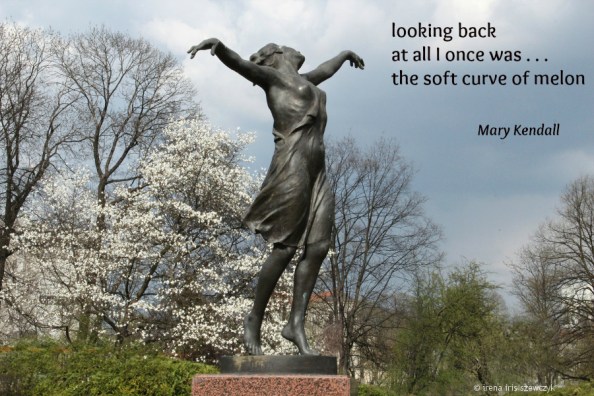
In Frameless Sky 4, editor Christine L. Villa paired my haiku/senryu with a another lovely photograph of Irena Iris Szewczyk. My thanks go to IrenaIris Szewczyk and to Christine L. Villa, editor of Frameless Sky.
Words by Mary Kendall
Photograph by Irena Iris Szewczyk Frameless Sky 4, Summer 2016
It’s time to try something new on my blog now that I’ve reached the one year anniversary. I’m adding an audio version of this poem, “My Attic is Full.”
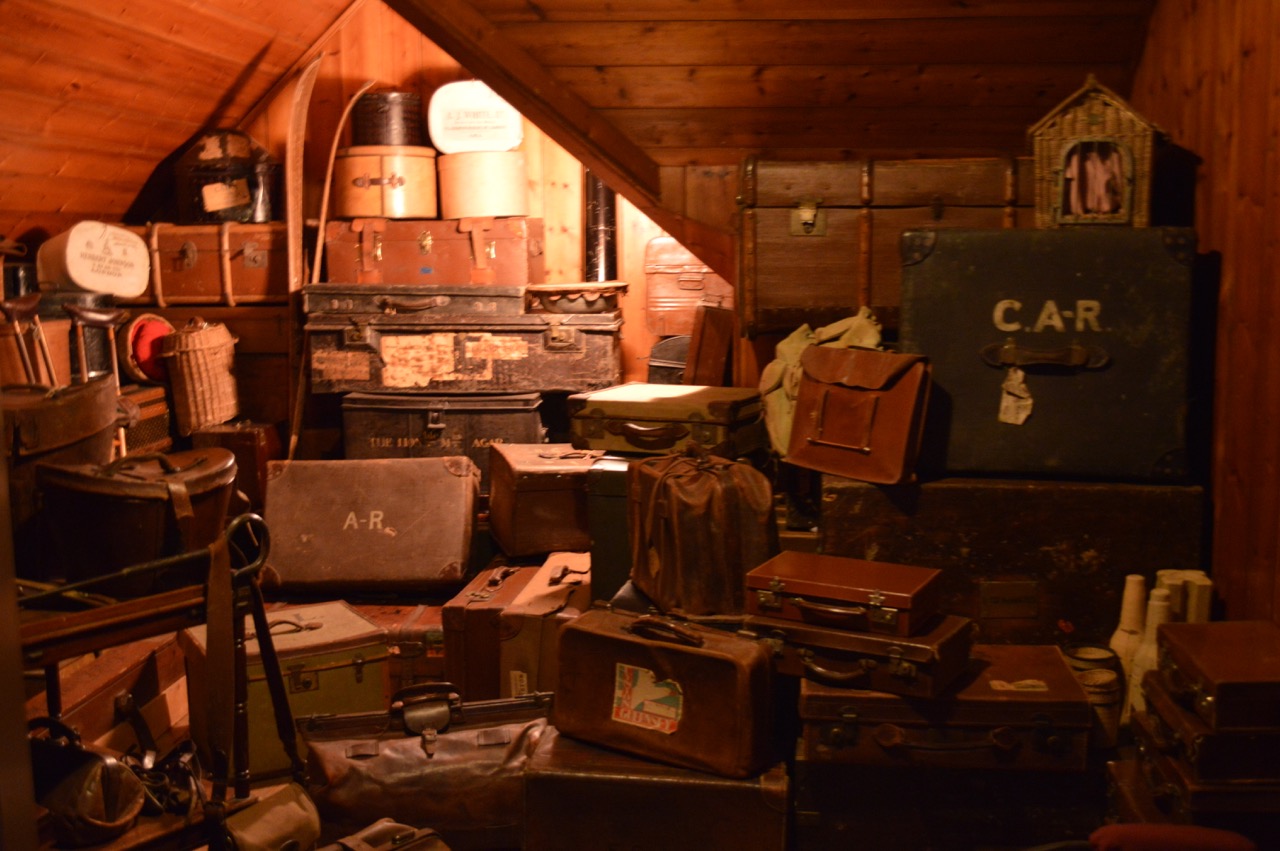
This week’s poem was written in 2011 for a friend I worked/taught with, Jean Sotelo Coene. Somehow we got to talking about cleaning attics and about all the treasures hidden up there and how hard it was to part with things. Jean mentioned her grandmother’s handbag and all the stories it held and that was it…a tiny seed of a poem was planted. I don’t know how those things come to be while others never take hold. I wrote the poem and gave it to Jean as a little present. I love to gift poems to just one person. For that reason, no one has read the poem except for each of us.
Today I was going through some lovely photos from a trip to Cornwall in 2013. [See Bedford Square +2, my travel blog for the whole story of that visit if interested.] We had visited a small manor house, Lanhydrock. [http://www.nationaltrust.org.uk/lanhydrock/] Part of our wanderings allowed access to the attic. Of course it was beautifully staged as were all the rooms in the house, but seeing these pictures this morning was too hard to resist. I worked on the poem today, changing words here and there, adding in a whole stanza and then deleting it. In the end, I liked the first version best. Only a few words are different from the one I handed to Jean.
This poem is dedicated to the memories of all grandmothers who gave us so many wonderful stories to listen to, to dream about, and to share.
To hear the audio, simply click below. I am not much of a professional reader so please bear with me.
My Attic is Full
The attic needs cleaning. It seems so simple, but it isn’t easy to throw old things away. There is always the worry we might forget those we loved, the ones crossed over.
Old boxes hold memories and clothing. Do you hear the stories held in the silence? A flowery print dress of soft lawn cotton holds the story of when it was freshly laundered and worn in the days of the mid-summer sun.
An old leather purse might tell you where she went and what she wore. Inside, a handkerchief delicately edged in tatted lace is tucked away.
How often she must have clutched it in her hand to wipe away tears or sneezes, stifle laughter or mop her brow. Even now the linen is redolent of old damask roses from the flower garden.
Beyond the piled boxes of her belongings are clothes from her husband so long mourned. She kept them up here all those years, the only way to keep him near.
Don’t you wonder how often she came up into this dark attic, pulled the light string, unfolded a crisp white shirt and held it to her nose, eyes tightly closed longing for the scent that had faded from his pillow?
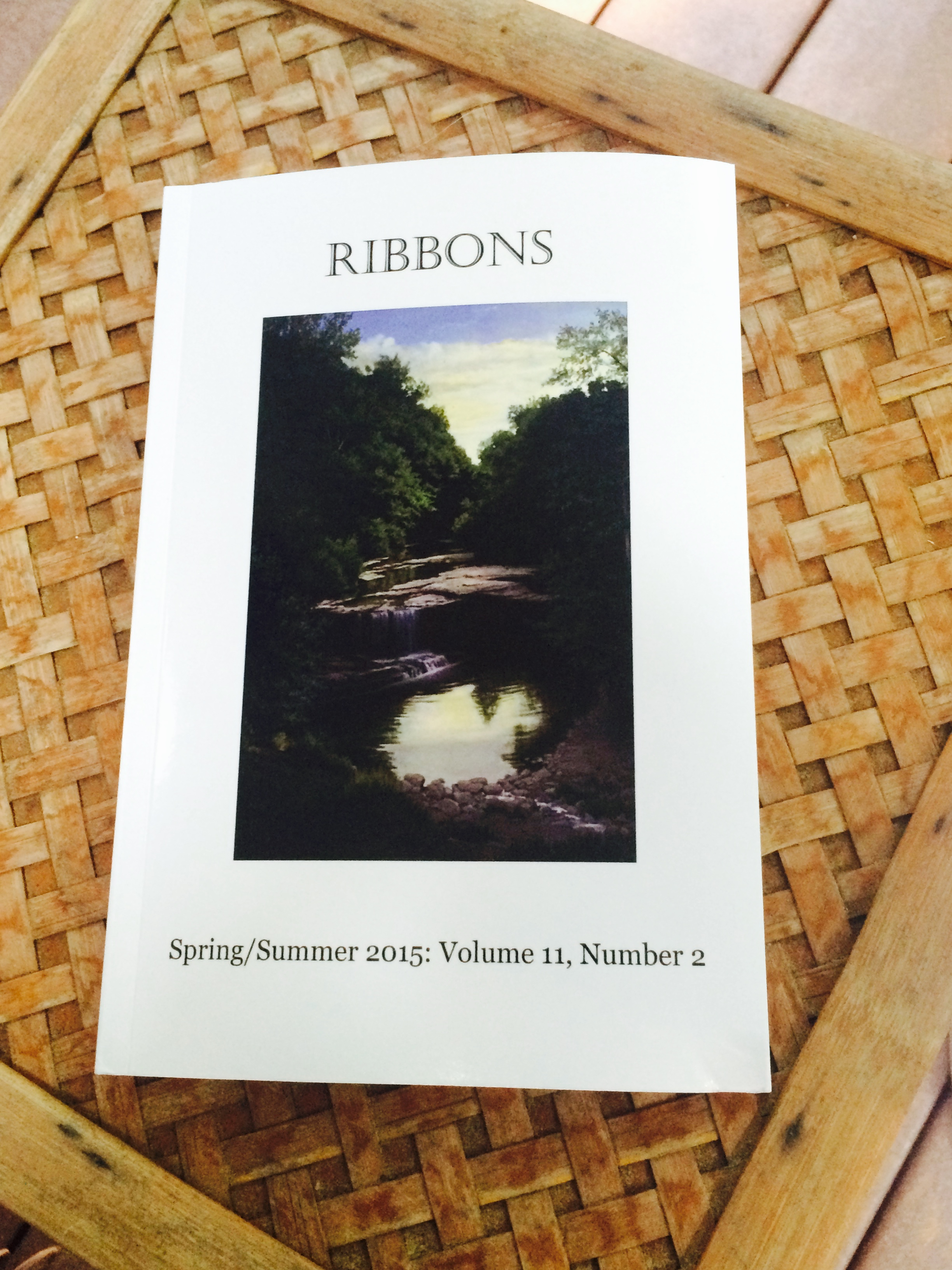
I’ve had the good fortune of having two tanka published in RIBBONS, the journal of the Tanka Society of America: Ribbons–Spring/Summer–2015, Volume 11, Number 2.
lost in the pages
of a book my mother loved–
a sly narrator
speaks volumes of truth
while skirting the end
Tanka Cafe, Ribbons–Spring/Summer, Volume 11, Number 2, 2015
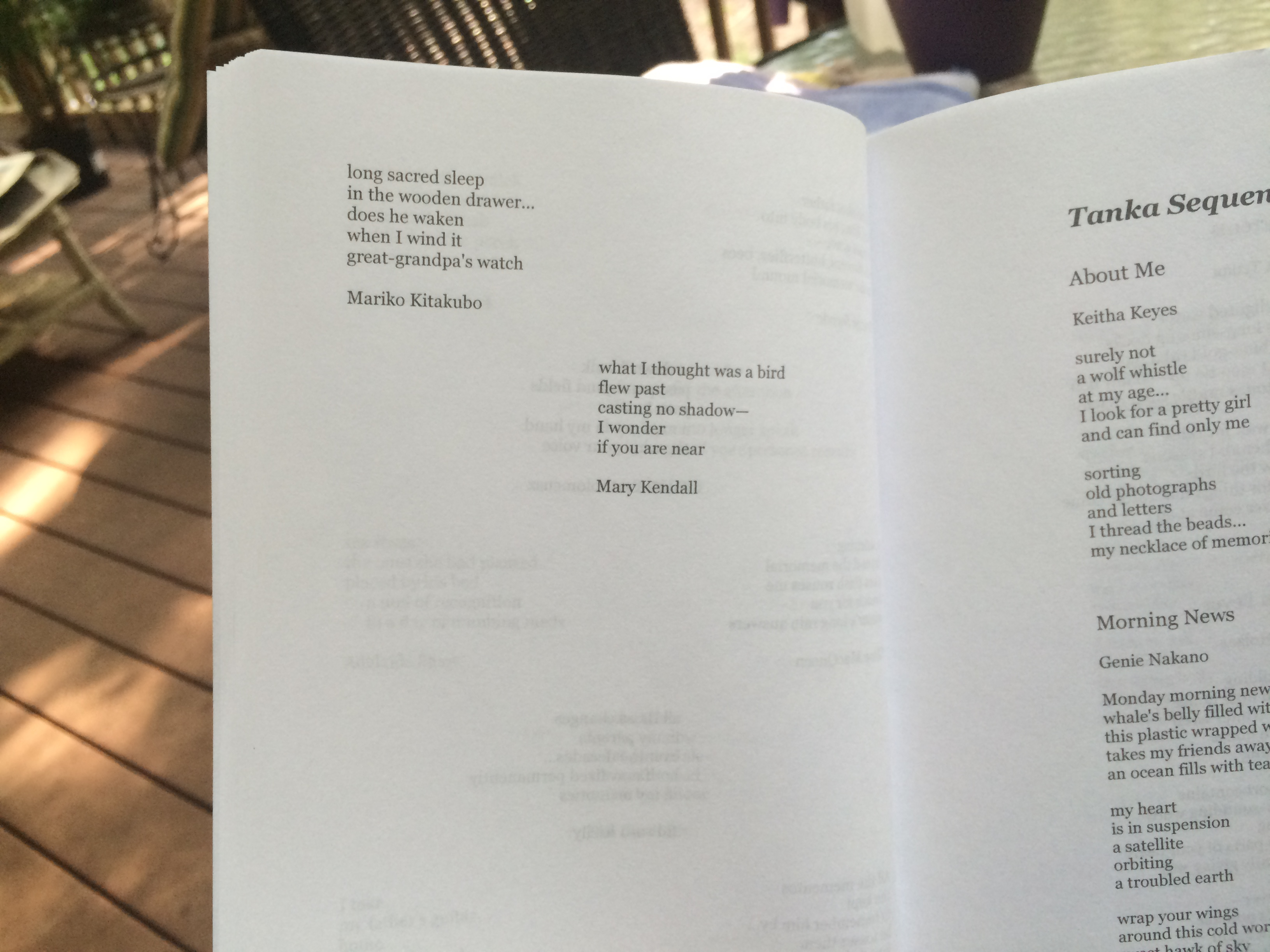
what I thought was a bird
flew past
casting no shadow–
I wonder
if you are near
Ribbons–Spring/Summer, Volume 11, Number 2, 2015
It is always a thrill for any poet to open up a journal and find her/his own poem nestled in among those of gifted writers. The truly excellent online journals of poetry in both tanka and haiku are really schools of learning for me. I go there to read, to fall in love with poems, and to learn from the very best writers. There is no better way to learn. Read, read, write. So, on the rare occasion, one of my poems makes it into those pages (paper or virtual), my heart is filled with joy.
The north wind answered, “It rushed by while you were busy doing other things.”
“And how did we not notice it was passing?” we puzzled.
The south wind replied, “Perhaps the sun blinded you so you could no longer see.”
“Did any of us notice the days grew long and the nights shorter?” we wondered.
The east wind smirked, “You focused so much on clouds that you missed the stars.”
“Why must it come to an end so soon?” we questioned.
The west wind whispered, “You’ve done what you must. Now it’s time to go.”
Photograph (c) 2015 by Harald Illsinger
With kind thanks to photographer Harald Illsinger for allowing me to use this beautiful photograph of the gull in the morning sky. The top photograph was taken by me in London, 2015.







 A Poet in Time