Another Love Poem…


tuileries chairs

Photograph (c) 2010 by Patti Chronert


Another Love Poem…

If you’d like to hear me read this poem, please click on the link below. Wait a few seconds for it to load. I hope you enjoy both listening and reading this love poem.


 Another Love Poem…

~ To my husband and partner of forty years ~


We walked along in the Tuileries
alone among the chestnut trees,

morning sky of crisp pale gold
so many paths we have strolled,

and still we wander, just us two,
my heart never very far from you.

We stop to sit and watch the birds
green park chairs, unspoken words,

plain sparrows chirp, so unadorned
no beauty lost, no beauty mourned.

Simple thoughts are often most true—
no man was ever loved more than you.


1-IMG_1155

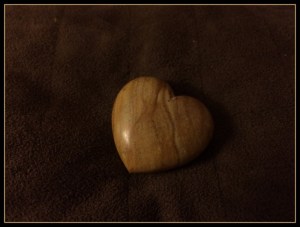
Heart Stone by Mary Kendall


The meaning of sanglant…

vive_la_liberte_long_live_freedom_french_13_cm_x_13_cm_square_invitation_card-re2d5c72c48e1454e9b216dea9682b7a2_zk9yz_324


A story in the NY Times story last Sunday said, “France is spending nearly 1 millions euros a day on the heightened security, part of a renewed surge in European military spending as governments declare terrorism a permanent risk.”.

.

One million euros a day to combat terrorism. What a high price for liberty! The words, “Liberté, Fraternité, Egalité” are known to most of us. The French fought long and hard for democracy, and still, the battle continues. Part of democracy is tolerating dissension, but dissension can come at great risk and price. The French (and other democratic countries) are committed to fighting terrorism at great financial cost. Sadly, this means also at a cost of human lives. Still, there is no other choice…freedom must be protected by all who believe in democratic rule.


The following tanka was written as a reflection on the real cost of defeating oppression. It is a brief poem by choice.


a wash of red

under café tables

in silence

we learn the meaning

of sanglant


lady-liberty

For your reference:

Article:

http://www.nytimes.com/2016/02/01/business/international/europe-training-financial-firepower-on-terrorism.html

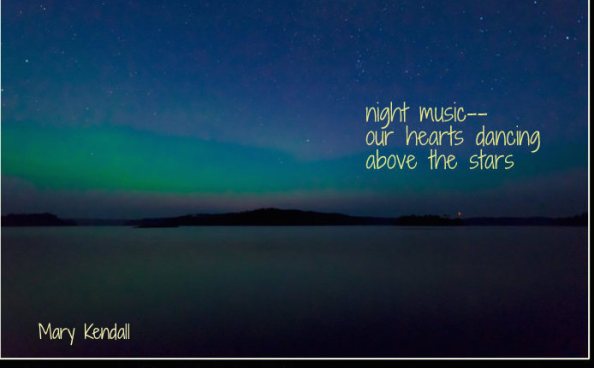
Night Music (haiga)


night music haiga


This photo haiga was created by me as a response to a prompt: ZENITH. This is one day in NaHaiWriMo (National Haiku Writing Month) on Facebook during the month of February.

Brushing Your Hair

1-IMG_1141


Brushing Your Hair

In the last month you ask me a favor.
Will I brush your hair when you have passed?
You seem to want to greet whatever comes
looking your best. I give my promise.

Each day when I come home, I offer
to brush your hair, but you say no,
maintaining the independence
you have always shown.

Later, in hospice, I no longer ask.
I hold your hands, rubbing lotion in,
skin so fragile, like a butterfly wing.
It is time now to make the last ablutions.

I clean your face and brush your hair,
your sleeping eyes flicker
under paper-thin lids, pale blue veins
tracing their course across them.

I imagine your mother tenderly holding you,
stroking your cheek, watching you dream
in her arms—her newborn daughter
with milky breath.

Ninety-one years separate us, your two watchers.
One joyously bringing you into the world;
the other sitting silently in the dim-lit room,
keeping watch over you through the night.          


1-IMG_1133


The poem, “Brushing Your Hair” is from my chapbook, Erasing the Doubt (c) 2015, Finishing Line Press.


Mary, Mary…poem by Mary Kendall (SAME NAME Poetry and Prose Series)

A new poem just up at Silver Birch Press. Click at the bottom to get to the original on the SBP site.

silverbirchpress's avatarSilver Birch Press

kate maberlyMary, Mary…
by Mary Kendall

Unwanted.
Unloved.
Shunned.
Spoiled.
Rude.
Aggressive.
Obstinate.
Outspoken.
Contrary.
Sour.
Gloomy.
Dismissive.
Shut away.
Alone.
Alone.
Alone.

Your attributes, little Mary.
A long list.
No one liked you.
Except for me.

Not true. There were others.
Your sweet Indian Ayah, who fed you,
washed you, dressed you, taught you,
tolerated your contrary ways, angry words,
miserable frown. She held you close,
rocked you after nightmares and dark dreams,
fanned you in the hot Indian summers.
She sang to you—mellifluous, soothing songs.

Your mother denied your existence, hid you away from view,
just as later, you’d find your cousin Colin, hidden away, too.

Denial.
What damage it did.
What pain it caused.
Like a plant held too long in a small pot,
its roots pot-bound and crippled,
Colin, unwanted and denied like you.

Unwanted.
Unloved.
Denied.

My family separated when I was just five,
I felt…

View original post 514 more words

Bits & Pieces


IMG_1083


I had three haiku published in issue #61 of hedgerow, a journal of small poems last week. 


old nest box…                                    
a flurry of blue birds
before the snow


(hedgerow #61)


roasted chestnuts–
how could I forget
your laughter?


(hedgerow #61)

.

my dog leaps
into still night water
to fetch the moon


(hedgerow #61)


fountain pen 1


Dream Time 2


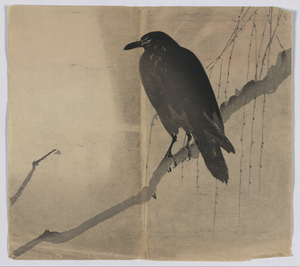
1-crow's ebony wings haiga Jan 20, 2013, 1-31 PM 2622x1966

This tanka art piece is the second in my Dream Time series of poems. To read the first poem in the series (on this blog), follow this link:

Dream Time 1

As you’ll notice the two poems are quite different in style and content, but I’ve grouped them together in Dream Time since both were written while poised on that slender edge of dreaming into another time and place. 


pen divider

A Special Word of Thanks:

A big thank you to my dear husband, Ritchie D. Kendall, who took this photograph on a hill in Greenwich in 2013 when we were living in London. 


Library of Congress Japanese woodprint

Crow on a Willow Branch, Japanese woodprint, Library of Congress woodprint


Small Poems for a Cold Winter Day

10365995_10202268232493804_406270307332669213_n


In my last posting here,  I put up a new haiga that was just published in cattails, January 2016, the journal of the United Haiku and Tanka Society, but I was really very fortunate this time round in having three other poems published in the same issue: a haiku, a senryu, and a tanka.


cattails, January 2016, haiku, p. 8:


winter—
each day closing in
on itself


cattails, January 2016, tanka, p. 4: 


chased away
by a gang of crows
the red-tailed hawk—
being different
is never easy


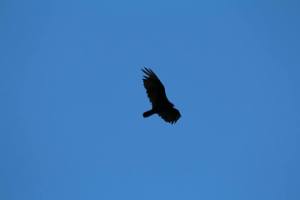
cattails, January 2016, senryu, p. 9:


black Friday—
the vultures circle
round and round


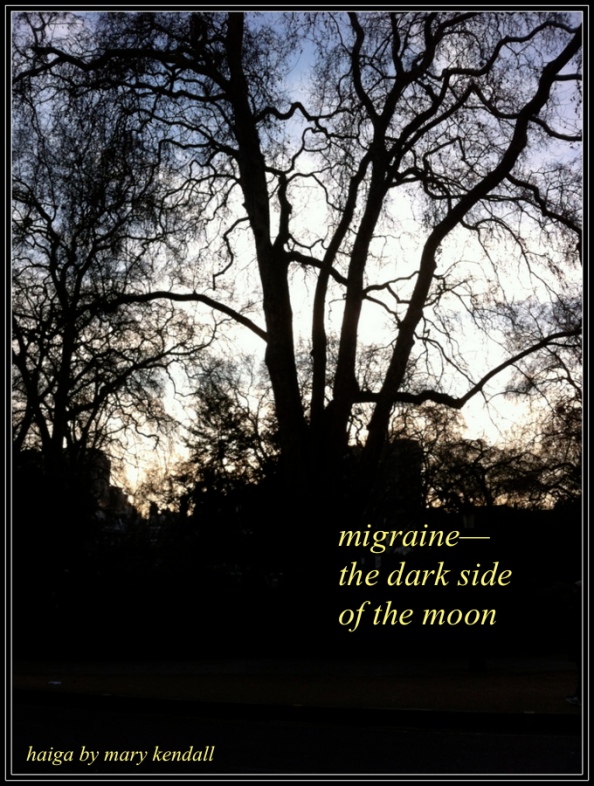
Migraine (haiga)

Published in cattails, January 2016:

Kendall migraine haiga 1

haiku and photography by Mary Kendall (c) 2016

A New Page! All My Recent Publications on One Page


fountain pen 1


I’ve added a new page to this blog: POEMS RECENTLY PUBLISHED

It is part of the main menu of my blog. I will update it as I publish poems. Here is a link as well:

http://wp.me/P4PYsb-A7

but the simplest thing is to go right to the top of the blog and click on the new page!

I hope this will let readers find what they are looking for. A number of people have privately asked me what and where I’ve been publishing work. This new page answers the question. One note: if a main entry to a piece isn’t in the main part of my blog, I will always add the poem on this separate page.

Questions? Just ask!


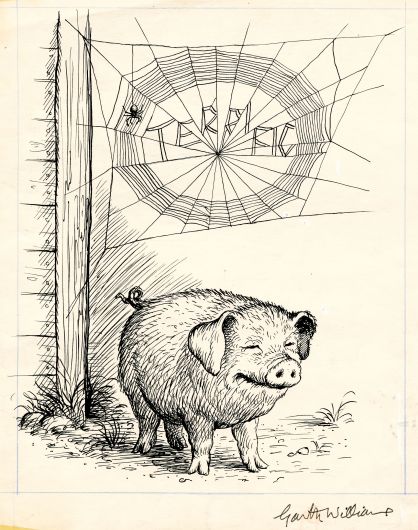
Charlotte’s Story: Haiku for Wilbur by Mary Kendall (ME, IN FICTION Poetry and Prose Series)

silverbirchpress's avatarSilver Birch Press

Charlottes-Web-Terrific-Garth-Williams1Charlotte’s Story: Haiku for Wilbur
by Mary Kendall

“My Words”

my words—
who knew what a story
we’d become?

“First Friend”

a friend—
something my kind
never knew

“The Unexpected”

new friend—
silken parachutes in spring wind
bestow surprises

“Silken Words”

silken words…
hearts woven together
in their own story

“Some Pig”

little did they know
how special you were—
some pig!

“Terrific”

a real friend
who accepted me as I am…
terrific!

“Radiant”

just knowing
you have a good friend…
this radiant heart

“I Told You”

out of nowhere
grows the best thing…
kindness of spirit

“Humble”

humble—
your kindness of heart
my friend

“The Fair”

harvest moon—
who knew how high
we’d fly?

“Templeton”

even a rat
can help a friend..
who knew?

“My Time”

time for rest
my voice a whisper
…alone now

“Good-bye”

no need to worry—
our memories will live on
in your heart

“Death”

View original post 261 more words

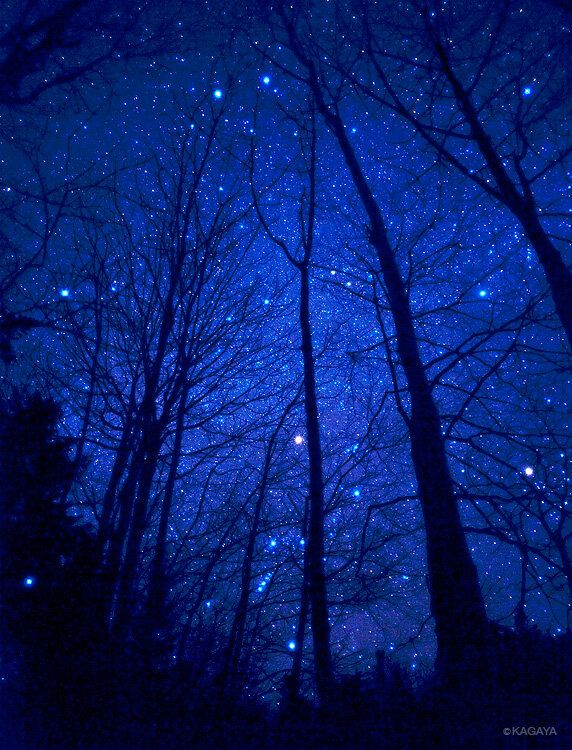
Winter Night Sky (a tanka)

starry night sky kayaga

Starry Sky (c) Kayaga


how could the moon

show its face

without light

…how could the stars

sing us songs?


journal and pen


Beauty in Broken Pieces

spiral-clock

New Note as of March 11, 2016: This poem has just been published on a favorite online journal called Ekphrastic: Writing and Art on Art and Writing. A link to the journal:  http://www.ekphrastic.net/ekphrastic/beauty-in-broken-pieces-by-mary-kendall

~ ~ ~

Readers of this blog don’t always notice its subtitle: One Poet’s Practice. I like to practice. I like to experiment. All poets do. Without stretching the mind, you fall into the pattern of repetition. Each poem starts sounding like the last or the next.

I have been writing a lot in short form poetry–haiku, haiga, tanka, and other small poems. Today, in an effort to go in a completely different direction, I offer you a very long, rambling poem–quite unlike me, I know. It is called “Beauty in Broken Pieces,” inspired by a lovely photograph taken in Dublin, Ireland by India Leigh Lassiter, herself a talented writer as well as photographer. Thank you, India, for allowing me to use your picture as a starting point for this poem.


To hear me read this poem, please click on the link below (give it a minute to load):


India blue spiral

Blue Spiral, Dublin, Ireland (c) 2015 photograph by India Leigh Lassiter


Beauty in Broken Pieces…


Perhaps it was once a deep blue vase,
holding seven pale pink peonies
freshly cut one May morning…

the silence shattered
suddenly when
she lost her balance,

grabbed
the oval table

and together
crashed down,

one in splintered pieces,
the other dazed
watching the water
slowly spread
under the petals.

Or perhaps…

it was packed away in a doctor’s study,
an old cabinet filled with bottles…
cobalt blue bottles with faded labels,
the dark blue hinting of hidden secrets,
dangers that lay in long-dried residue
of those bottles that were shattered
and thrown upon a fire
that raged for hours,
flaring up in vivid hues
of acid green
and mustard yellow,
tipped with amber,
azure and moon,
the air once heavy
with poison
and dreams.

Or…maybe

there was no story.

Do you believe the whole really is bigger
than the sum of its parts?
And please, don’t let’s forget
there is always
perspective.

Large things are large,
but small things
are also large
if seen
close
up.


It is lovely, this small mosaic
made of glass in shades of blue,

blue so dark,
it might still hold the sound
of the ocean from the sand
that washed up and back
over and over

dancing on the ocean floor

before it became
the glass
we see…

for what is glass
but sand
and fire,

beach
and
star?

even
a simple
spiral
mosaic
in shades
of blue, pearl and silver
might hold the deep bass song
of the darkling ocean,
the glimmering
whispers
of clouds
above,

patterns spiraling through nature
like our thoughts about beauty,
reality or memory’s truth

Fibonacci gave it his name,
the Greeks gave it meaning
with their golden ratio…
it exists everywhere
… a simple nautilus shell,
the sunflower’s seed head
that turns to the sun,
and following its cue, the pinecone,
the hurricane, even the galaxy, the cosmos

and here with this Irish glass spiral
we come full circle of woman
with camera, snapping
a photo, capturing
the balance of
silvery bits
and pearl
to blue
done
just
so
.


goniatite-fossil-pasieka

goniatite-fossil


Fly me to the moon…haiku for the season

moon2

Full Moon of the Winter Solstice (c) 2010 Martin Liebermann


As I post this, it is the morning of the winter solstice of 2015. Where I live in Chapel Hill, North Carolina, the winter solstice officially happens tonight at 11:49 pm, EST. Wherever YOU are, it will happen at a different hour or perhaps the same. Readers of this blog come from all over the world–one of the joys in blogging is seeing the list of countries of readers–and I love imagining the moon going through its magical phases for each of you. Tonight, the solstice. Later this week, a full moon. What more could we want?


These are some of my earliest haiku:


WINTER MOON HAIKU

First published on Poets Online (c) Mary Kendall

Later used as lyrics in “Winter Moon” by Paul Carey, a piece for women’s chorus in (c) 2011.


night snow
boughs dreaming
of first blossoms


Fog filled woods~
even the winter moon
has lost its way


a winter walk
footprints
tell no tales


the blue moon
silently closes the door
upon the year


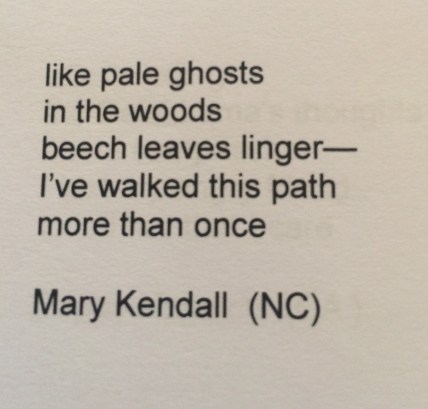
Pale Ghosts…

photo by jim clark, American Beech Trees

American Beech Trees, (c) Photograph by Jim Clark

It was a very exciting moment last week for me to open up the latest issue of Moonbathing, a journal of women’s tanka, and see one of my own tanka included. To be in the company of so many very talented tanka poets is a highlight of my year.

Published by poet and editor, Pamela A. Babusci, Moonbathing is a journal that showcases the many sides of tanka. The poems cover a wide variety of experiences, emotions and subjects…and all written by talented women poets.

Here is my tanka:

IMG_0868


IMG_0867

Moonbathing is edited and published by Pamela A. Babusci


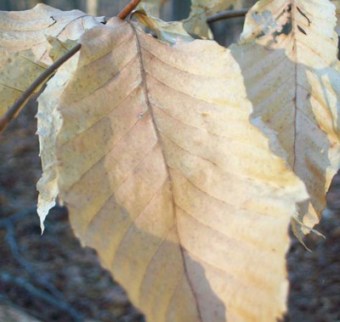
Beech Leaves by Walter Reeve

American Beech Leaves, (c) Photo by Walter Reeves

The Gleaners

The Gleaners

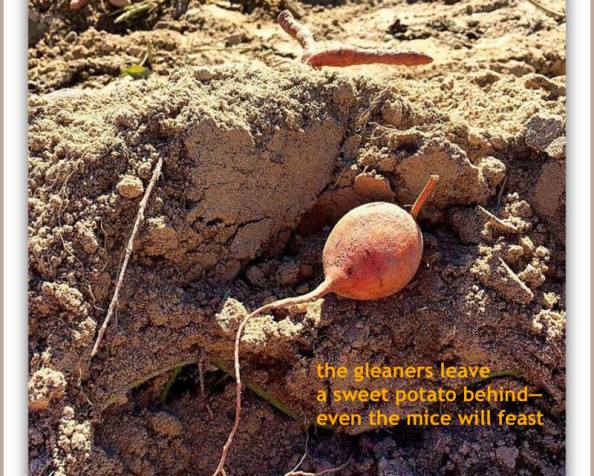
This beautiful photo was taken by a friend, Patti Hardee Donnelly. Patti is a Middle School Language Arts Teacher at the same school I retired from. Each grade level does regular community service, and the activities are varied. Last month, Patti took her Middle School Advisory to spend an afternoon of gleaning sweet potato fields. As they were working through the fields, Patti took this photograph. She very kindly let me ‘borrow’ it for this haiga.

The concept of gleaning is an ancient one. So long as people have planted fields of crops, others have followed in their wake to glean whatever food might be left behind. It doesn’t matter if the vegetables are picture perfect, so much as they provide food for those who are without. Taking a group of middle class students who are in no danger of starving is a very purposeful way of both doing community service and providing a life lesson to the students. The gleaned sweet potatoes do end up on dinner tables of people who are happy to have healthy, fresh produce. The students who do the gleaning, perhaps for the first and last time of their lives, surely learn a lot about the facts of poverty and hunger. They learn a lesson in simple compassion. How often do most of us come face to face with the pain of hunger? The answer for the majority of Americans is ‘rarely.’

Here in the United States, we have just celebrated Thanksgiving, a time in which we feast and share our meal with those we love. Soon our thoughts will move on to Christmas, Hannukah, Kwanza, winter solstice, New Year’s and a whole period of seasonal gift giving, sharing food and good spirit. Let’s stop for just a minute and think about all we are fortunate to have–we who go to bed in a comfortable place after having had adequate meals. For December, I’m going to spend some time thinking about the concept of gleaning, both the physical and metaphorical. Having borrowed Patti’s beautiful photo and ‘gleaned’ it for my haiga, I hope I can find other ways to give back to the world.

Thank you, Patti Hardee Donnelly, for allowing me to use this picture, but thank you also for teaching your students about the importance of compassion and service to others. I will always celebrate and salute teachers like you who make a real difference in so many lives.


the gleaners

Jean-François Millet (1814-1875)
Gleaners, also called, The Gleaners
1857
Oil on canvas
H. 83.5; W. 110 cm
© RMN-Grand Palais (Musée d’Orsay) / Jean Schormans


Kamakura Beach 1333: Artist’s choice in Rattle’s Ekphrastic Challenge

Screen Shot 2015-11-20 at 8.35.28 AM

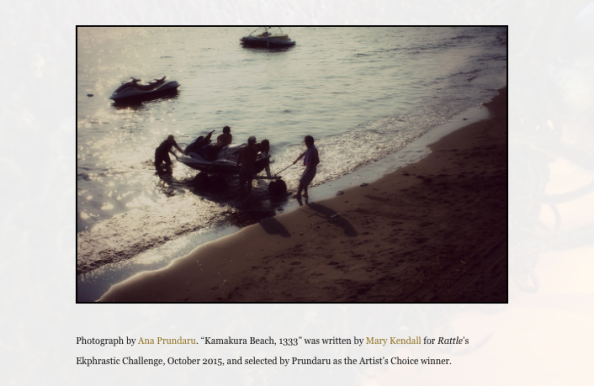
I am both speechless and honored by the selection of my poem, “Kamakura Beach, 1333” as the artist’s choice of the October ekphrastic challenge by Rattle, one of the finest contemporary poetry journals. The artist/photographer is Ana Prundaru. My thanks go to Ana for selecting my poem for this challenge. I am deeply touched by her very thoughtful and generous comments.


Artist's Comments.jpg

To read the poem or listen to the audio on Rattle, here is the link:

http://www.rattle.com/poetry/kamakura-beach-1333-by-mary-kendall/

Note: there is an audio of me reading the poem on the Rattle page but I’ll include it here as well:

~

Kamakura Beach, 1333                                          


The sea washed scarlet that night.

The tide rushed in—swelling and breaking—washing
all traces out to sea on the waves of Kamakura Beach.

You know nothing of this, you who long for adventure
and pleasure—youth who search desperately for meaning
in lives that are too rich, too busy, and still so poor.

Your small boats arrive in early evening, the carmine sunset
at your back, and you quickly gather driftwood, tinder, and
fallen black pine branches to burn. You light the fire.

A trail of smoke begins funneling up to the starry sky.
The fire burns hot and one by one, you feed it twigs, boughs,
pine cones bursting into streams of sparks and wild flames.

And in your wanton rambling, one girl grows silent—she alone
hears the hallowed chanting, the cries of battle, the shrieks
of arrows piercing skulls, the stench of life exiting too abruptly.

She wanders over shallow rocks, her hand touching stone,
knowing the pain hidden in the silence of eight hundred years.
The rest of you are unaware…you laugh too loudly, move

too fast, not noticing the shifting colors of the setting sun.
Listen and you will hear the shogun cries of warriors and farmers
that once shook the sacred sands of Kamakura Beach.

Can you smell the fierce fires, the burning buildings,
the blazing rafters crashing and lighting the darkening sky?
Can you hear the screams of those buried here long ago?

Time slipped by like swifts at dusk darting in the fading sky.
The fire raged on and on, and lives were ravished in a
single breath. It was our fate to die on Kamakura Beach.

With Samurai mind and clean, sharp blows, the sacred sword
was swift. One by one, we died…each of us choosing honor,
this bleak beach now strewn with bones, bodies and blood.

You who come to visit—feel the cool churning lapis blue water,
and see the late sun boldly brush red on sand, water and waves.
Remember us—we who lie buried on Kamakura Beach.

Let your fires roar, let them spark in comets to the stars.
Under the dark night skies long written in indigo and ink,
we will walk together here on Kamakura Beach.

Morning tide will come—swelling and breaking—washing
your presence out to sea— remembering our final night,
a night of fire and blood, bone and bodies on Kamakura Beach.

The sea washed scarlet that night.


~

Here is the broadside link:

Click to access EAOct2015.pdf

Rattle also posted a download of a broadside that includes poem and picture side by side. It is so beautifully done with the shadows of the boat creating a subtle image under the poem. Very appropriate to this particular poem, I think.


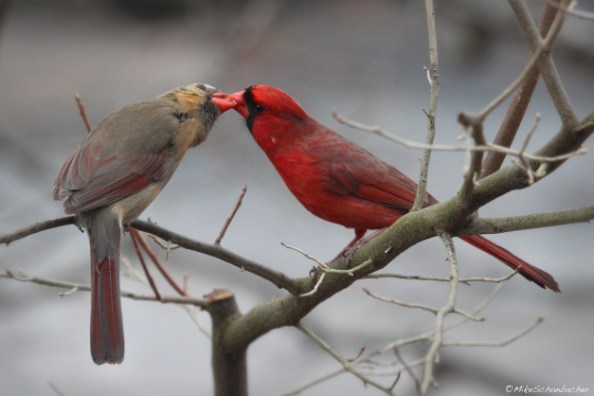
The Gleam in His Lusty Eye


Woods Hole, MA - 3/30/14


From the window

I watch the cardinal

shuck a sunflower seed,

and, beak to beak,

like a passionate kiss,

he passes it to her,

his paler partner.

I imagine then

that I see the gleam

in his lusty eye.


sunflower seeds

Note on Photograph: I can find no other attribution for this photograph other than it was taken in Woods Hole, Massachusetts in 2014. It has appeared in a number of online birding sites. My thanks to the anonymous (but talented) photographer for capturing this tender moment.

Swallows: Three Haiku

Today, on Ekphrastic: writing and art on art and writing,  as part of their 20 poem challenge, I have three haiku to go with a gorgeous picture of swallows.

To read the poems and see the art in the original publication, please click on this link:

http://www.ekphrastic.net/ekphrastic/swallows-by-mary-kendall

The artwork is  “Swallows” by Benjamin Chee Chee

Ekphrastic 2 Swallows


(1)

frail beauty—

scissoring the sky

on indigo wings


(2)


hope . . . soaring on wingless winds


(3)


taking leave—

gathering courage

as you fly


pocket_watch_buried_in_the_shallow_beach_AFR-IJ-14804


My thanks to editor, Lorette C. Luzajic, for including these haiku.


My Mother’s Voice…a poem of loss

Today, my favorite haiga was published in a favorite journal, Gnarled Oak. It is a lovely home for this haiga. Here it is along with the link to Gnarled Oak (check out all the great poetry in this journal). The editor, James Brush, releases one poem a day, a custom I love. It’s always a joy to see what each day holds. My thanks goes to James for accepting this piece.

My Mother’s Voice


My Mother's Voice haiga


.

beautiful border for blog


This haiga was originally posted on this blog on June 14, 2015.

Love Poems: After Forty Years (more tanka this week and a haiga, too)

In my last posting, I mentioned that this was a week of poems being published. Last time it was two tanka in Ribbons, this time it is two other tanka…and one haiga in a very beautiful and favorite journal of mine: hedgerow: a journal of small poems. Editor Caroline Skanne produces this publication weekly (it goes out on Friday afternoon, a highlight of the week for so many of us). This issue is #55. I’ll provide a link to the journal at the end of this posting so you can go and read all the other wonderful poems and visit mine. I’m so proud to be included with so many excellent poets.

My two tanka here are love poems. My husband and I were married in 1978, but we’ve been together for forty years. Where does the time go?

After Forty Years

you take my hand
when we walk together…
the last leaves
nearly
gone

.

a single glance
from your grey eyes
shifts
my world—
the earthquake of you

.

The haiga published in hedgerow #55 originally appeared in this blog. I am thrilled to have it officially published in an edited journal of this caliber.  Here it is.

Meditation Haiga (glass table)

I hope you all enjoy these poems. If you have a favorite, let me know.

When you have time, please visit the journal these were published in:

hedgerow #55, posted on November 13, 2015:  https://hedgerowpoems.wordpress.com/2015/11/13/55/

red pen2

A Windfall of Tanka

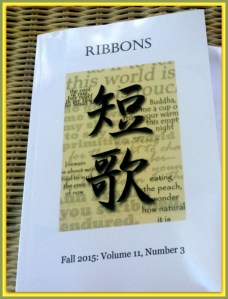
This has been a lovely month for me in the poetry world with a bunch of things published. I’ll do this in several postings so viewing is easier. Early this week I had two tanka published in the Fall 2015 issue of Ribbons, the official publication of the Tanka Society of America. It is such an honor to have work appear in this journal. Two wonderful editors offer a wonderful chance for me to learn and grow as a tanka poet.

1-IMG_0707
p. 30 (regular part of Ribbons):

sometimes
it begins with a slight fissure
hidden inside…
still I wonder
why it had to end

Time-Can-Wait

p. 21 (in the Tanka Cafe)

fresh water
cleansing, nourishing–
letting the earth
grow green
once more

freshwater

Salted Feathers

bird-feather-13486506267nW

To listen to an audio of me reading this poem, just click on the link below. Give it a few seconds, and it will start.

salt shaker

Salted Feathers

I was four when you told me the story
that if someone wanted to capture a bird
they must sprinkle its tail with salt.

We went outside, salt shaker in hand,
not sure what we really planned to do.
In the end, it was a tiny sparrow foraging

for fallen seeds or tiny insects on the other
side of the chain link fence at the back
of the yard. You told me to go ahead and

sprinkle it. My hand would not fit through
the opening link square with the shaker.
Blindly I tossed a spray of salt that landed

more on you and me than any place else.
The little bird was spared, and he continued
rummaging around in the grasses, indifferent

to the plans made by two small girls who
had no real idea what it was to take away
the gift of flight. No salted feathers for him.

All I remember now is that I felt something
happen inside when the little bird looked
at me and, in the way of all birds, off it flew.

1-chain link 1 (1)

Drifting Along…

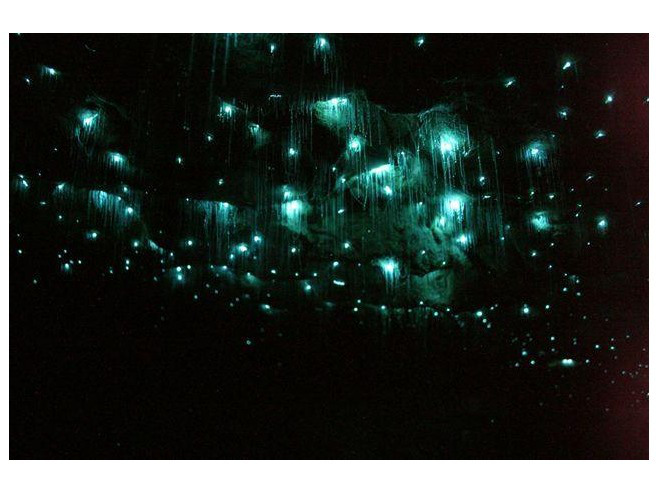
glowworms 2

Today I feel a deep pride and happiness that a poem that has taken 15 years to complete has been published in one of my favorite poetry journals–The Whirlwind Review. This journal has a focus poetry following a spiritual path, and the current issue has a theme of journeying. That made it a perfect place to submit this poem, Drifting Along. My deepest thanks goes to editor, Jill Jepson, herself a writer I greatly admire.

New Zealand is a land far away from my own, but it is a spiritual homeland of sorts. After visiting there in July 2000, a twenty-five year silence in my writing of poetry ended after a spiritual experience I had on South Island. The beauty of the country and the kindness and friendliness of the people made this a trip I will never forget.

.

The link to the poem:  http://www.writingthewhirlwind.net/Kendall.html

Audio:  If you care to listen to me read this poem (and I hope you will–this is one of my most favorite poems), click on the link below. Give it a few seconds to load.

.glowworms 1

Drifting Along

.                            Visiting Waitomo Caves, New Zealand

There are moments when I wonder if one day
I will drift too far, too deep into my mind,
a world where fragmented thoughts,
memories and feelings might be lost forever.

The last trip.
A one-way ticket.

Traveling halfway around the world, we are
in New Zealand, the land of Aotearoa,
‘the land of the long white cloud.’ Driving
south, we arrive in the Maori heartland.

From Rotorua with its dizzying sulfuric scent,
we hike past brilliant springs, steaming lakes
and hot, bubbling mud pools where it seems
as if the underworld might hover just below
the surface of this ancient thermal valley.

One morning we go to see Pōhutu Geyser.
After a while, I wander from the path only to be
unexpectedly splashed by a small spurt of water
that was invisible until I came too close.

The Maori guide tells me that I’ve been blessed
by the spirits. Brushing off the still warm spray
of water, I hope she is right. I want to believe.

Driving through this world of rolling green
volcanic hills, we finally reach the Waitomo Caves.
As we wait for our boat, I feel a pulse in the land—
I know we are standing on sacred ground.

With our inner clocks all timed out, we begin
the dark journey into the heart of the cavern
Skimming silently through the still waters,
the young boatman leads us far into the blackness
of a cave that tunnels in so far, we lose all light
and sense of where we are. Our eyes now adjust
to this obsidian underworld, and it seems that
we have begun to cross into unending nighttime.

Everyone in the boat is silent. To be this close
to the infinite expanse of darkness,
to transcend time and self—this is a place
for stillness…and so it is.

With only the lapping of water against the boards,
the boat slips along. Although we came here
knowing what was hidden in this hollow, no one
is prepared for the full beauty of what is there.

I look up and see endless strings of glowworms—
glowworms hanging so high up, they become
numberless strands of summer stars—pale green fires
in these underground heavens whose ghostly translucence
leaves me feeling as if I am asleep somewhere,
not wanting to wake up from this ethereal place
in which I float between two worlds.

The boat glides quietly in the gentle sway of water,
and it is then that I begin to fear we have drifted too far.

I can remember no way back.

No signposts.
No markers.
No trail of crumbs.

glowworms 3 glowworms-at-waitomo map of NZ

My thanks to the New Zealand Tourist Bureau for the magnificent pictures shown above.

The Mutability of Memory

All of us have memories. Good memories. Bad memories. Memories we love to revisit over and over. Memories we push far back, hoping they will disappear. Some memories are vivid, while others are dreamy and vague. A few are very, very real as if they just happened, but others feel as if they stories that happened to someone else rather than us.

Memories can be haunting. Memories can be triggered by all sorts of things—from a taste that evokes brilliant memories from early childhood to a scent of burning leaves that reminds us of an autumn long gone.

It began with a prompt in March 2014 in Poets Online to use a first line from an Emily Dickinson poem as our own poem title and then to write a new poem. This was one of my favorite prompts because it asked me to do something I had never considered. I do read Emily Dickinson’s poetry from time to time. I puzzle over her words and meanings. I spend a fair amount of time thinking about what she meant and how she did it. She never ceases to amaze me or probably any of her readers. To borrow a first line from her seemed a bit like stealing something sacred. And then the fun began–going through all of her first lines (which, of course, have also become the titles of her otherwise untitled poems)–and selecting one to work with. The prompt suggested we not read (or reread if we had read the poem a while back) Emily Dickinson’s version until our own version was complete. Fair enough.

After going through the list of first lines of Dickinson, I had to eliminate all those I knew. That meant excluding some wonderful poems I knew and loved. It also meant I had to find a poem that was unknown to me. Oddly enough the one I ended up with is a well-known poem of hers, but I couldn’t remember reading it (failure of memory on my part perhaps?), so I chose it. I love this line. “The Past is Such a Curious Creature.” Don’t you love the very idea of it, calling the past a curious creature, personification with such crisp alliteration?

Following the instructions, I did some thinking of what the line meant to me, what it brought forward. That’s how poets work. It can be rather vague to those who don’t write, but all poets know that a simple line can bring to life so many things. A poem comes from someplace deep inside, a place we’d love to explore but we only get glimpses of it. It took me a while to write the poem and to rewrite it. I wasn’t sure I wanted to submit it for quite some time. I even tested out a few other lines as prompts, but I returned to this irresistible line that Dickinson wrote. Here is the poem I finished and submitted. When the final poems were published, it was fun to read all of them. The other writers did a wonderful job. Some wrote in a style resembling hers. A few wrote in rhyme. I did none of that. Mine was in free verse, dictated only by the ideas and images that spilled out.

My poem:

THE PAST IS SUCH A CURIOUS CREATURE  (Line taken from Dickinson’s Poem CXXVII)

The past is such a curious creature
capable of creating such marvelous lies
that we begin to believe as we hear them
said again and again, forgetting that
there are those who love to distort
the truth and let it spill out and break
into brittle bits & pieces that are left
on the street to be kicked and crushed
until the shards are too small to see.

The past writes a story of its own choosing.
Its pen might be inked in faulty memory;
its paper might be marked in things that
did happen as well as those that did not.

This story is examined with the lens
of exaggeration and embellishment
until the tale that remains
is now so embedded in our minds
that we can no longer know
what was real and what was not.

And now for the inspiration piece, the poem written by Miss Dickinson:

THE PAST IS SUCH A CURIOUS CREATURE  (Poem CXXVII)
by Emily Dickinson (Complete Poems, 1924).

Part One: Life CXXVIII

The Past is such a curious creature
To look her in the face,
A transport may receipt us
Or a Disgrace.

.
Unarmed if any meet her,
I charge him fly!
Her faded ammunition
Might yet reply!

Although the prompt suggested reading the original poem after our own was nearly complete and then comparing where we were going, I opted to read Emily Dickinson’s only after my poem was more or less complete.

In Emily Dickinson’s poem, her personification of the past as a feminine being is a surprise. Then she tells us that as we remember the past, it might reveal a hidden delight or a remembrance of something disgraceful or shameful. That said, she moves to the second stanza and urges the reader to be aware that if the past memories are ignored, there might be consequences that would take us with surprising force. How true. Memories that are suppressed can and just might tumble out to reveal an unfathomable nightmare. Or more.

My own poem chose a different path. It opted for examining the past by questioning the mutability of memory. Is the past always the past? Is it constant? Or is its story one that changes in the retelling and perspective of the storyteller? My point of view came arose from the self-examination of a few haunting memories from my own early childhood. These particular memories were negative, but they were mine as I perceived them.

In asking one of my sisters about her perception of these same events, her memory was quite different from my own. So, which was true? Either one? Both? True for her, and true for me, even with different observations and conclusions? I spent a long time trying to figure it out but was unable to do so. My past. Her past. Our past. Memory can change and distort with time, age, experiences, contemplation, It does present some good leads for poems, but it does not answer the question as to what that unhappy childhood memory really was all about.

Poetry allows us to raise questions and to examine possibilities. It is not psychotherapy, nor is it scientific. What it does do is give the poet a way to explore personal stories and experiences and to turn them into something that goes far beyond the individual self. It offers each reader a chance to follow along and even to join in, adding their own experiences and memories into the mix.

What do YOU think about the mutability of memory? Can we ever answer all of the questions we have about the past?
.

.
(Note: part of this posting appeared on my other blog, Bedford Square +2)

Some Small Poems for the Autumnal Equinox

autumn haiga 2015

This morning I woke up knowing a change was in the air. With intermitent gusts of wind, my garden feels different. From my porch where I sit writing this, I hear cardinals talking to one another in soft chirpy sounds, not full song. A nuthatch scampers up and down the tree trunks hoping to find a tasty insect for its mid-morning snack. What is clearer though is the background sound–the small insects that hum and buzz in notes I can’t clearly discern. All I hear is a constant high pitched sound–but it is a soft sound, not the commanding songs the cicadas sing. A chickadee now scolds someone, probably my dog who is suddenly interested in wandering in our back woods.

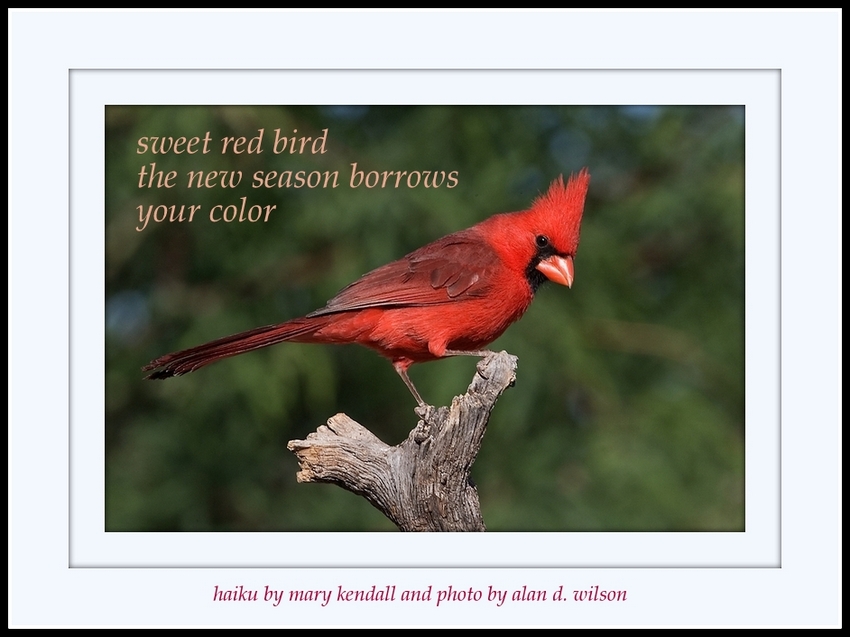
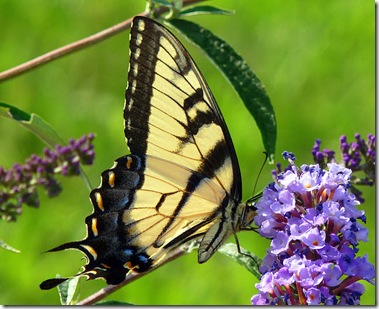
The breeze comes and goes. Wind chimes sing their beautiful songs. Leaves shudder and flow in the wind, then settle down to stillness. A large robin sits in the birdbath drinking in the water, probably for the last time before it makes its long migration down to southern Florida. Now a flock of crows jeers at something, most likely the red-tailed hawk that lives nearby. And since I’ve sat here long enough, a single butterfly sips from the last flowers of the purple buddleiah bush. It is a yellow swallowtail and probably the very last one I will see this year. There have been no others all week. A female cardinal visits the other bird bath. Luckily these beautiful red birds don’t migrate from here. They will stay all winter long, and I will put birdseed out for them each day. 

Autumn has always been my favorite season since I was a little girl. I grew up in the northern climate of Buffalo, New York where the lake winds brought the strong Canadian coolness and fall was often upon us in early September. Not so here down south. Here, North Carolina weather can change in an hour. We can have this first taste of fall and tomorrow might bring back the heat of summer.

Life in the United States changes with this season since children return to school, vacations are pretty much over, and everyone settles in. I find myself cooking soups once again. Last night I made Italian Wedding Soup, a perfectly delicious way to welcome the change in seasons. 

Fall or autumn? I grew up calling it ‘fall’ and with the obvious falling of leaves, that word makes good sense, but the poetic side of me loves the word ‘autumn.’ I love saying the word, hearing it, feeling it on the tongue. Autumn is delicious! And ‘autumnal’ is divine. Who can resist the beauty of this season? Not me.

Here are three other poems–two tanka and one haiku– to welcome this special season and day of the autumnal equinox.

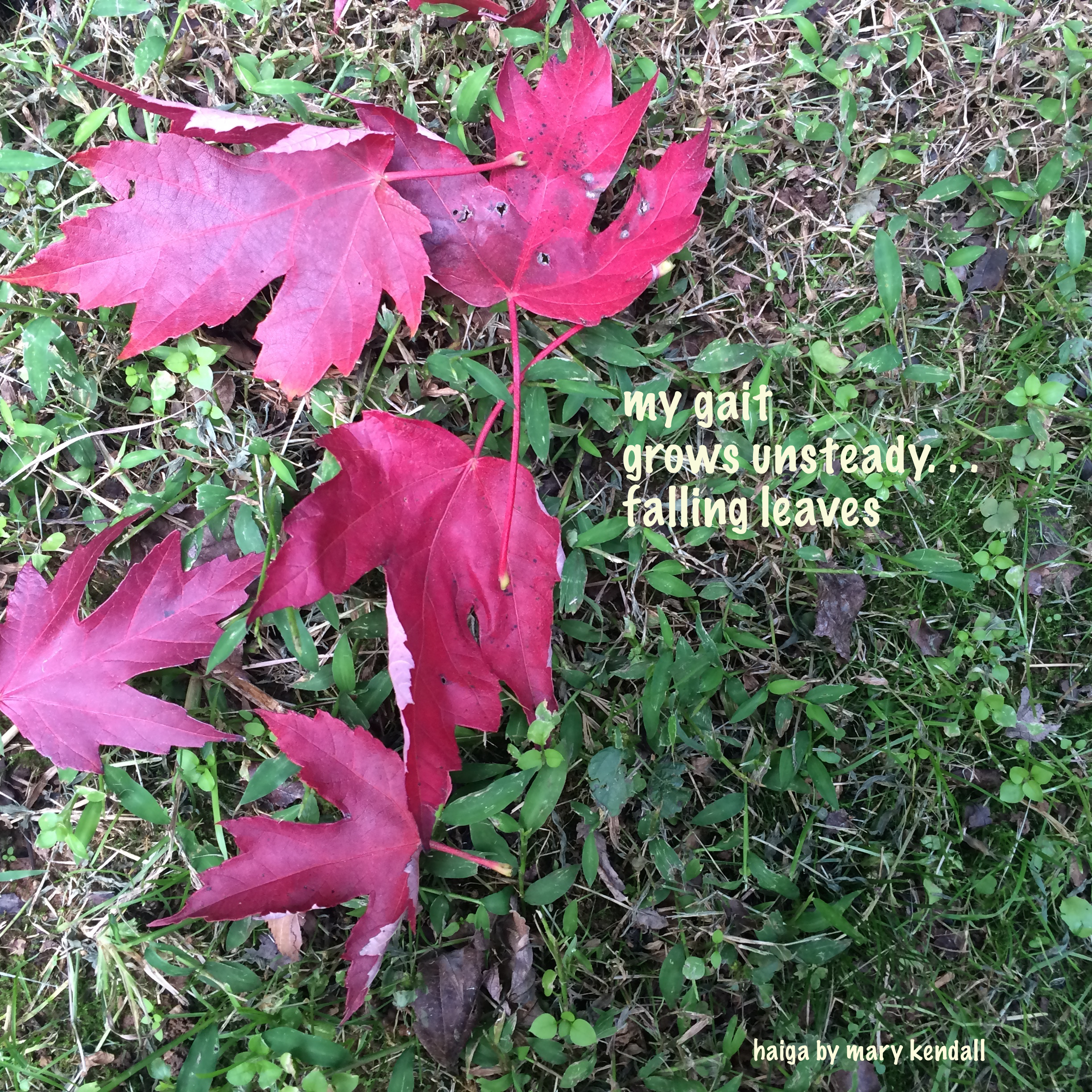
Autumn-leaf-on-a-rock-960x640

daylight
and nighttime
in a slow dance—
tomorrow one
will lead

~

Gold Autumn Leaf

~

autumnal equinox…
the moment when day
matches night

~

leaves_texture4982

~

autumn’s equinox
when time is equal—
if only one day
people
could be like this

~

Red Leaves

Almost Surrendered: On Being and Nothingness ~ An Ekphrastic Poem


So, what IS ekphrastic writing or art?

As many of you know, I love art. I love going to art museums, galleries and art shows. Art history has always been one of my passions, so it’s natural enough that ekphrastic art and writing has captured my interest. A very simple definition of ekphrastic poetry is writing a poem in response to a work of art. It can be descriptive or it can be a response of any sort to the piece. There are no restrictions, no limits, and that by itself is something that has great appeal. The same goes in reverse–an artist might create a piece in response to a written work. My own blog has poems written about ancient Greek mythology, and in each posting I’ve included beautiful works of art that are ekphrastic responses to the myths.

This particular poem was a response to a show of the artwork of Ronna S. Harris that was held at the Turchin Art Center at Appalachian State University in Boone, North Carolina. My husband and I fell in love with her work and this particular painting has haunted me for nine years. This poem is my response to it. My thanks to the artist for her permission to use this painting here and in the journal it was recently published in. I hope some of you will wander over to her own website to look at the gallery of paintings she has there. I still dream of owning one of her works of art.  Her website:  http://www.ronnaharris.com


Note:  My thanks to editor Lorette C. Luzajic for publishing this poem on September 13, 2015 in Ekphrastic: writing and art on art and writing:

http://www.ekphrastic.net/ekphrastic/almost-surrendered-on-being-and-nothingness-by-mary-kendall


small Almost Surrendered

Painting:  Almost Surrendered, by Rhonna S. Harris, 1992.
Picture used with permission of the artist.


Click the link below if you’d like to hear me read this poem. It takes a few seconds to load.


Almost Surrendered: On Being and Nothingness                                                  


The gallery was empty, the artist unknown to us.
Strangers to her work, we walked in quietly,
speaking in whispers about the way she painted
a rich purple aubergine or the clear, shimmering water
in blown-glass bottles. Illusion so real it was perfect.
Her paintings seemed direct but insinuated that
something might be hidden just beyond our view.

From fruits and windows, vegetables and doorways,
suddenly there was a room full of large paintings of figures,
mostly nudes with evocative names like “Pieta” or
“Architecture of the Perfect Man.”

We stopped in front of one called “The Marriage.
It showed two figures lost in thought, in separate worlds.
It reminded me of what marriage is like for some after
so many years together. Still, silence doesn’t always speak
of distance but of an understanding of hearts.

And there, on the left wall, was “Almost Surrendered.”
A pale naked woman with arms by her side, palms stretched up
in prayer or supplication. She was translucent, existing half here,
half there. Behind her was a closed window. She wore a gold chain.

Was she a memory, a body giving way to death or being reborn?
Or was this ghostly surrender all illusion, a message
to women who have given too much of themselves?
A woman who had lost herself in trying to be everything.

Could she be a dream?

You moved on to the next picture and then the next,
but I stood there staring at this vanishing woman and
wondered who it was who really had surrendered.

Was she any woman?

Could she be me?

You reappeared, and together we moved on.
This time round, I found myself thinking about windows
in pictures, of what lay beyond the glass the artist
drew, surrendering myself to what she didn’t show,
what she concealed in her mind like a stage curtain pulled back
just enough to hint that maybe others stood on the other
side, looking back at us from a completely different angle.

Would they study us closely, marveling at our verisimilitude?
the lovely glazes of color so skillfully applied, built up so
carefully to a level of opacity that suggested real inner depth?

Would they compare us to the other figures in the gallery
and wonder why we were not painted as a man and a woman
fading from view, surrendering to a love spoken in silence?


(c) The Guardian

(c) The Guardian

Is Mythology More to Your Liking?

Now that it is early autumn, we tend to stay inside more and even read more (at least that’s my experience). Someone recently asked me if I would do the audio recording for some of my mythology poems on this blog. I had done one already, so it does seem natural to now do the others. I hope you like them. My style of reading isn’t dramatic, and I do try hard to avoid “poet voice,” something I dislike very much. Hopefully my readings are pretty natural, maybe too natural for those who do like more drama. I guess it’s all a matter of taste.

By clicking on each link, you will be directed to the original posting for the poem but with the audio now included. I hope you like them.

Grief

                     Grief

The First Lamentation of Demeter:

The First Lamentation of Demeter ~ (Poetry and Myth)

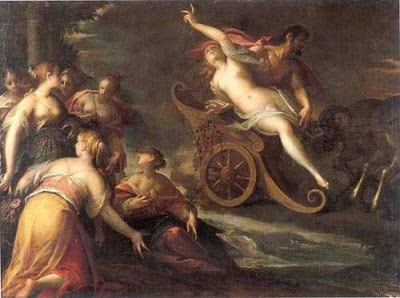
The-Abduction-Of-Persephone-By-Hades

The-Abduction-Of-Persephone-By-Hades

Second Lamentation of Demeter:

The Second Lamentation of Demeter ~ (Poetry and Myth)

feather-lake-russia_71645_990x742

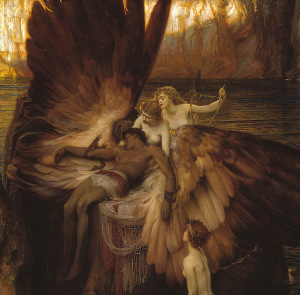
Icarus I

https://apoetintime.com/2014/10/10/icarus-i-poem-by-mary-kendall-mythic-poetry-series/

dark-lake

Icarus II

Icarus II (Poetry and Myth)

And, while we are at it, here is one other poem on this blog linked with mythology:

Orpheus and Eurydice by Rodin, Metropolitan Museum of Art

Orpheus and Eurydice by Rodin, Metropolitan Museum of Art

The Broken Promise: Orpheus and Eurydice

The Broken Promise: Orpheus and Eurydice, poem by Mary Kendall (Mythic Poetry Series)

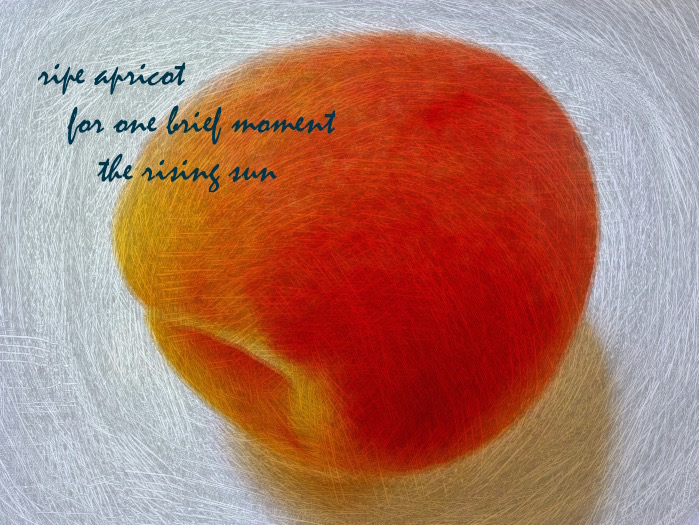
Ripe Apricot (a haiga)

This haiga was just published in a new haiku anthology, “Behind the Tree Line”, the first anthology of Wild Plum journal.  To be included is an honor. My thanks to the editor, Gabriel Sawicki, who has published this anthology and who also publishes Wild Plum Journal. This was my first attempt at using art software to alter a photo into something new. (Yes, I need a lot of practice!!)


apricot haiga brush


.

A Poem for 9/11: Against the Evidence…

9/11 Memorial

9/11 Memorial

On September 11, 2001 I was far from retirement and very much still teaching in the Lower School. Sometime mid-morning, I had a short break and took a walk to the office where I heard the news that the first tower had fallen. We all know what happened next. We all remember what we were doing that morning.

Life changed then for all of us in this country. I recall the many conversations among teachers and staff about how to explain the horrendous news to the children (ours were grades 1-4), how to answer questions, how to help worried and anxious parents.

I remember the next day when we all gathered around the flag pole and watched as the flag was raised to half-staff, and some thoughful words we spoken and we shared our minute of silence and then sang the National Anthem.

I remember looking at the small children, tears finding their way down my cheeks (and those of all the faculty, it seemed) realizing the world of all these little ones was forever and irrevocably changed.

That night, after dinner, I sat outside in my garden. The weather was fine in the early September evening down in North Carolina. I watched the clouds float by in the sky, and I listened to the birds. I wrote a poem.

It is this poem I offer you today, fourteen years later. The poem is unaltered except for adding three lines to the second to last stanza later. I’m posting this on my blog on 9/11/15. Fourteen years after that horrible day, and our world feels far more out of control, far more filled with hatred and distrust of all who “aren’t like us” both here and abroad. The news has been filled with the tragic pictures of refugees, especially the unforgettable picture of the small toddler whose dead body lay on the sand at the edge of the water. Again we all wonder why it is men and women can’t live in peace.

Here is my poem. It won’t change the world. It won’t do much of anything in fact. Very few will ever read it. Yet, still, I offer it to you and hope that each of us can, in our own way, pray for peace today and every day.
.

If you care to listen to me read this poem, please click on the link below and wait a few seconds for the recording to begin.


.
In Memoriam, September 11, 2001

.

Against the evidence I will continue
to hope when there is no reason to hope.
Against the evidence I will continue
to search for life among the piles of rubble.
Against the evidence I will continue
to believe there is goodness in hearts when it seems
all else lies corrupted in darkness.

.

For in the hours that held madness,
in the hours of chaos and death,
as the billowing smoke darkened the skies
and the hearts of all people, there came
the night sky with air blowing clean,
revealing the stars that sit in their cold thrones
watching all of this without judgment.

.

Against the evidence I will continue
to find beauty in the dusky slate-colored sky.
Against the evidence I will continue
to find reasons to offer hope to a young child who cries.
Against the evidence I will continue
to look past the senselessness and try to find meaning
where there is none right now.

.

For in the days ahead there will be scenes
that the heart can simply not fathom,
sounds that ears would rather not hear,
sights that shatter our innocence
and feelings of inviolable space.

.

And the stars sitting in their cold thrones
watch down on us and now begin to weep
for the sadness of what man can do to man.
And the stars, as they see us, continue to burn,
their own surfaces fired with blue-flamed explosions,
the heat of their hearts now filled to bursting
as they watch, as they sit, as they shine
from those thrones so distant, so far above

.

Against the evidence I will continue
to find brilliance in the soft silvered stars.
Against the evidence I will continue
to look for their fiery tears falling down
on a world filled with terror and pain.
Against the evidence I will continue
to believe that one day it will all end.

.

Written on September 12, 2001 by Mary Kendall

Dove photo by Merlune

Dove photo by Merlune

Summer’s End

Photo by Gary Brichford, (c) 2015

                                                Photo by Gary Brichford, (c) 2015

Today’s poem is a slight detour down the road that leads to summer’s end. I’ve chosen to present an acrostic poem, a form I always enjoyed using when writing with children during my years of teaching. Acrostic poems are delightful and often funny, but as shown here, they can be serious and even tender.

You can hear me read the poem if you click on the link below and patiently wait a few seconds for the recording to begin.

.

Summer’s End

.

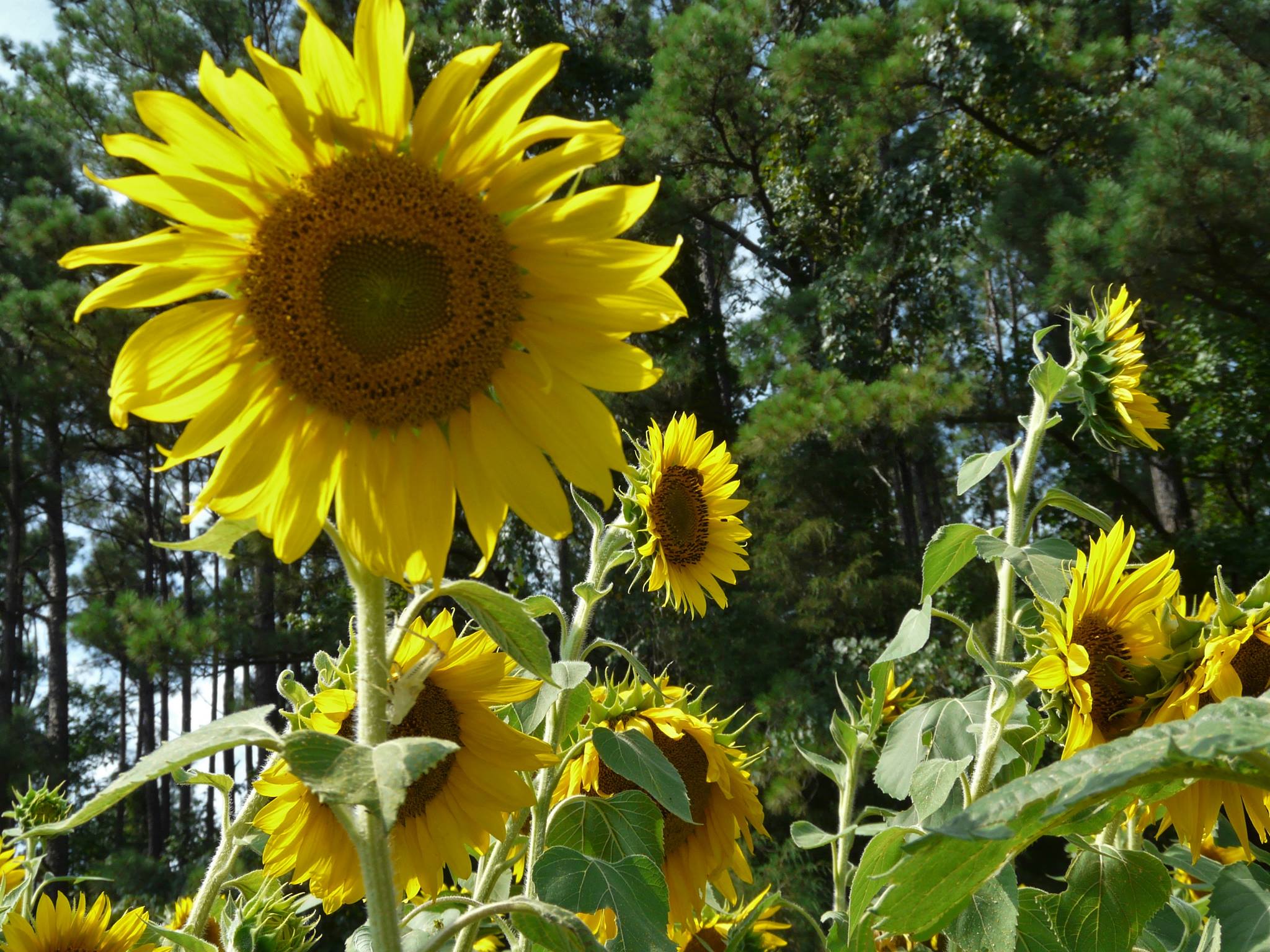
Sunflowers bloom tirelessly all summer long

Unwavering in their deep devotion to the sun

Multiplying day by day, the fields grow yellow

Making everyone stop to look

Elegant with their tall, swaying stalks

Regretting nothing, they give themselves to this season

Surrendering ripe seeds to the redbirds and finches that gather round

.

Photo by Betty Risotto, (c) 2015

Photo by Betty Rizotti, (c) 2015

.

Even summer must come to a close

No one is ever spared the final moment

Depleted of seed, sunflowers begin to bow their heads in sleep

Photo by Jan Monson, (c) 2015

     Photo by Jan Monson, (c) 2015

Photo by Gary Birchford

Photo by Gary Birchford, (c) 2015

Photo by Gary Brichford, (c) 2015

Photo by Gary Brichford, (c) 2015

Photo by Gary Brichford, (c) 2015

Photo by Gary Brichford, (c) 2015

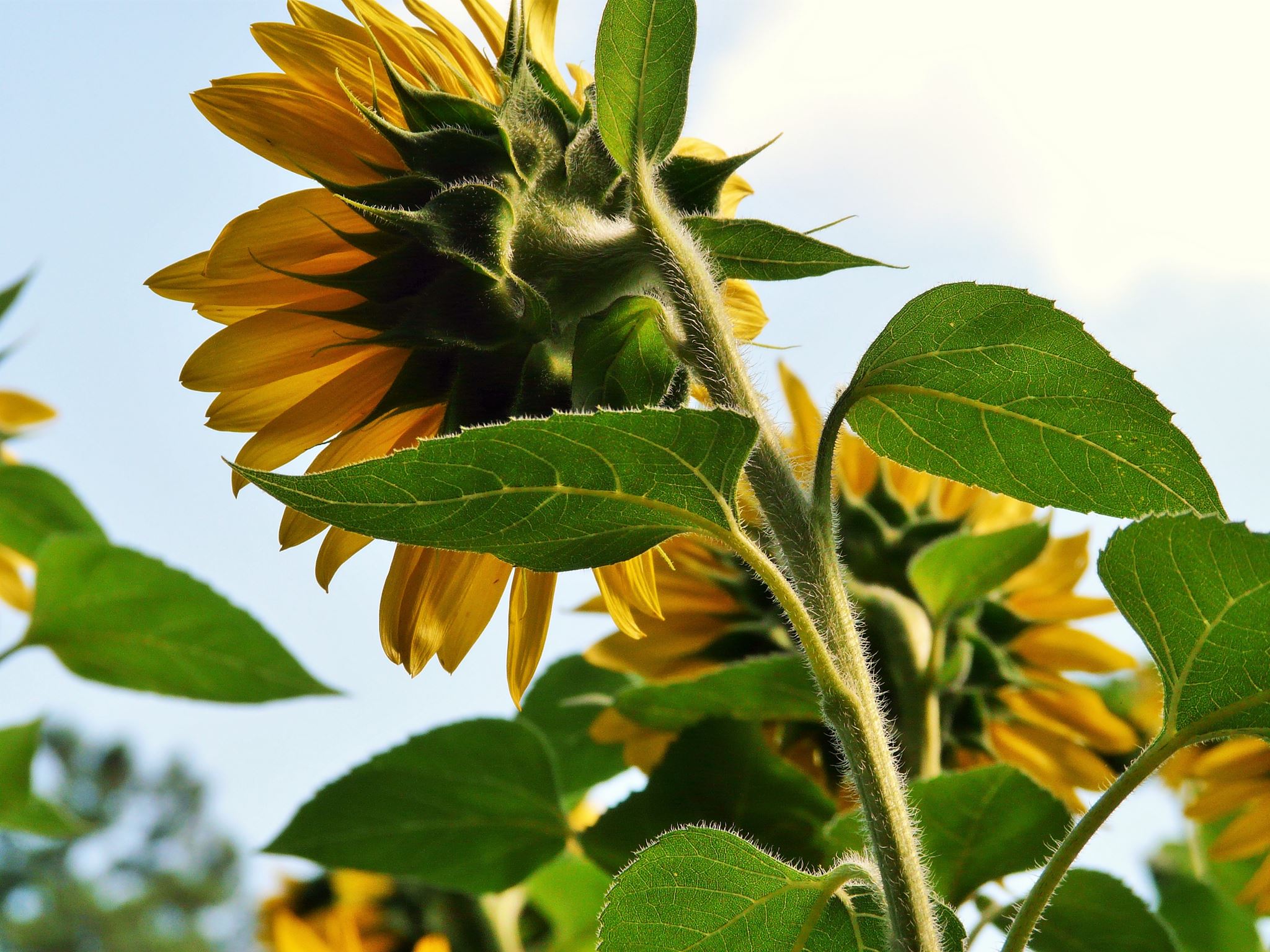
Several photographers are responsible for the beautiful sunflower photographs in this blog. The two with the goldfinches are shared by Betty Rizzoti (middle right photo) and Jan Monson (middle left photo). Many thanks to each of them for these great captures. All the rest of the photographs are by Gary Birchford whose photographs, when posted on FaceBook last month, inspired this poem as a goodbye to summer. Thank you Gary for your ever generous heart in allowing me to use these pictures.
.

Photo by Gary Brichford, (c) 2015

Photo by Gary Brichford, (c) 2015

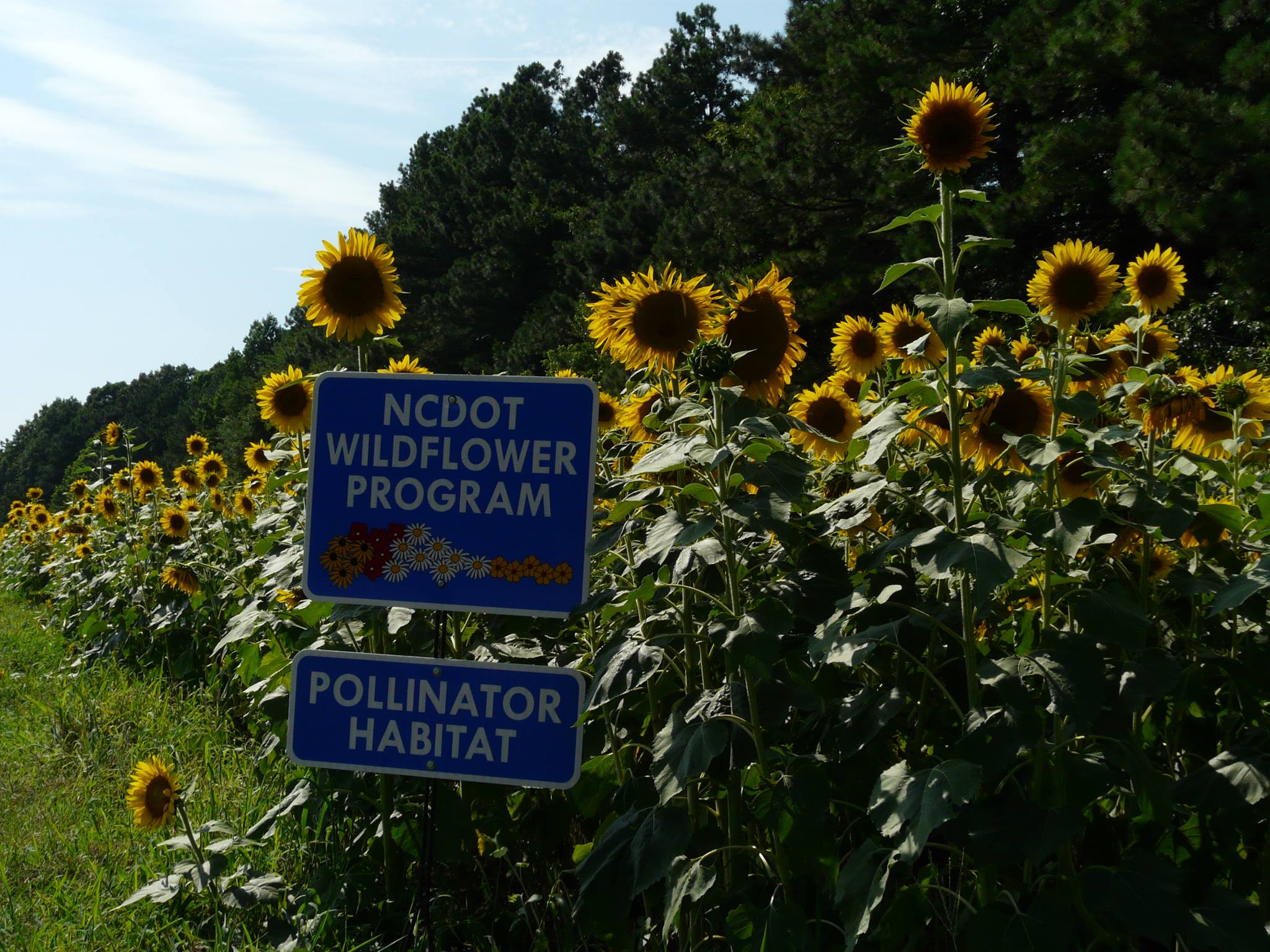
One final note: Gary Brichford took this set of sunflower pictures from an interesting source. They were on the side of a major highway in central North Carolina as part of a government project. Please see the picture below for details. Isn’t it great to know that our Department of Transportation is involved in Pollinator Habitats. What better place could they find. Imagine how many people drive past and smile at the ever beautiful sunflowers.

.

Photo by Gary Brichford, (c) 2015

                             Photo by Gary Brichford, (c) 2015

.

On the fence

Fence ~ Photograph by Randy Baker (c) 2015

Fence ~ Photograph by Randy Baker (c) 2015

Randy Baker is a friend who loves the southern countryside and captures it beautifully in his photographs. Like many, he considers his pictures to be “just photos” and not art. He is modest about his talents for capturing beauty in a split-second shot. To me, this is art at its best.

I’ve held on to this picture all summer. It’s such a simple picture, and yet it is a perfect picture. Its subject is straight-forward–it’s a photo of a fence in the countryside. Yes, there are lots of fences. But look closely at this picture. The most noticeable feature is the upright stake, but it’s not just a pre-milled wooden stake. It’s a section of a tree still covered in bark. It also has a section that once was part of a limb and now appears to be almost a mouth sharing its thoughts with us on this cloudy summer day. The texture, the color of the bark, and then the color and texture around it in the grass and the wild flowers to the right and the cut and fallen grasses in front–all of these make it a photo you want to study for a long. I have certainly done just that.

This picture also made me want to re-read Robert Frost’s wonderful poem, The Mending Wall. I spent a whole morning reading and rereading that magificent poem and then reading some critical interpretations of it. I left refreshed and in still very much in awe of Frost’s brilliance. No wonder everyone remembers that poem or at least the famous lines it has given us. So this picture also gave me this–a little detour into rereading one of the great American poems that I hadn’t picked up in decades.

But Randy’s picture is not of a wall in need of repair or mending. It is a wall made of air, wire and wood. An entirely different type of barrier from a stone wall. The purpose is the same–it demarcates land ownership, and it keeps something out–or in. That is what got this poetic mind going.

What does a fence really do?

Here are my responses to the question of what a fence is or might be. I’ve looked at this picture so many times, and this single picture has inspired quite a few poems. These are very brief poems–sketches in verse, plus there is one poem about fences as a metaphor for our own need to be guarded at times.

.


the only real fence is in my head

.

.

on the fence—
am I in
or am I out?

.

.

Clichés abound
when it comes
to fences.

.

And here is a poem for all of us who guard our hearts so closely:

.
My Fence


What do they —or you—
know about my fence,
and how carefully
I chose to build it?

Can you guess
how long
it took to build it?

A lifetime of habit,
carefully constructed
and often hidden habits,

a life spent half in fear
of being judged
unkindly, unfairly,

with malice
in another heart.

10434141_10202268232853813_7378458471908543899_n


Note
: I would like to thank Randy Baker for allowing me to use this beautiful photograph that he took in the beautiful mountains of Virginia. It is a picture I would like to have framed and hanging near my writing desk. Randy, your pictures are always inspiring and bring a clarity to both the mind and heart. Thank you so much.

.

Transformation and the Ineluctable Signs of Ageing, prose poem by Mary Kendall (My Meta-Morphosis Series)

My thanks to Silver Birch Press for including my poem in this wonderful series. I have been enjoying reading all the poems posted, each so different from the others.

silverbirchpress's avatarSilver Birch Press

Takahashi_Biho-No_Series-Dragonfly_and_lotus-00034829-030804-F06
Transformation and the Ineluctable Signs of Ageing
by Mary Kendall

This is not my first transformation. No, it happened way back when—six decades and then some, and I find myself no longer who I thought I was just ten, twenty or even thirty years ago. Those were other lifetimes, times I lived through, times I felt so alive, enjoyed, loved, and times I remember, but those were lives I knew I had passed through completely.

I have the evidence.

Now, going further back in time—forty or fifty years ago, it all begins to change. It starts to slow down—slow—slow—slow—as if someone has put a finger out and touched the spinning world—and now it slows down enough as if I must to look for a place to rest.

This viewing backwards makes me dizzy—dizzy—dizzy enough to want to keep traveling back to the end, which in fact is the beginning, and…

View original post 500 more words

Who Am I?

32-2015-04-05 15.23.45

Who Am I?

I am just a wisp,
a vision caught
at the edge of your eye.

I am just a thought,
a touch on the arm
you almost don’t feel.

I am just a memory
pulled back down to earth.

I am just an image
of what could be
but is not.

.

To hear me reading this poem, simply click on the link below. Wait a few seconds for it to begin.

IMG_0613

This poem originally appeared in The Aroostook Review, May 2006

.

Note: the rainbow picture is my own, but the beautiful purple flower is by Yolanda Litton, one of my favorite photographers.


Sonnet: The Meteor Shower (Get Ready for the Perseids)

Perseid-Aug-12-2013_UT

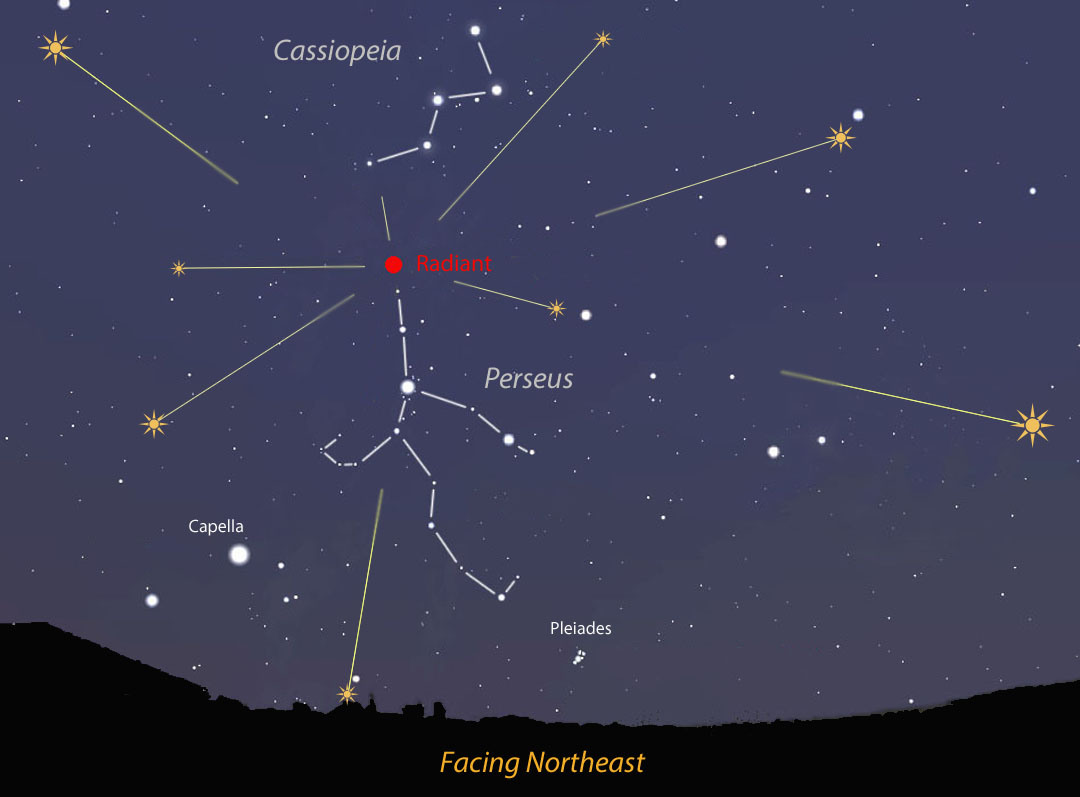
“Multi-photo composite showing Perseid meteors shooting from their radiant point in the constellation Perseus. This year’s Perseid shower will peak on August 12-13 (Wednesday night-Thursday morning) with a meteor a minute visible from a dark sky.” Credit: NASA

Excellent information source : http://www.universetoday.com/121599/kick-back-look-up-were-in-for-a-great-perseid-meteor-shower/

“Every August, the night sky is peppered with little bits of comet debris in what we call the annual Perseid meteor shower. In 2015, the Perseids will peak on Aug. 12 and 13, with up to 100 meteors per hour possible for observers with clear, dark skies, according to NASA. The Perseids are bits of the comet Swift-Tuttle and often create the most amazing meteor shower of the year.”  (www.space.com)

Perseid-radiant-mine-generic_edited-1

Now that you know all about the great Perseid Meteor Shower of 2015, get your blankets ready, and go out before dawn on August 13.

My poem in honor of this spectacular celestial show is a sonnet called, “The Meteor Shower.” Written a few years back, it has never been published. I thought it would be nice to post it this week and share it with a few readers other than myself. 

The sonnet form I chose was the Spenserian sonnet form, invented by poet Edmund Spenser:     

a b a b     bc b c     c d c d     e e

I’ve provided an audio clip below to listen to with the poem or while you look at the beautiful pictures above or the lovely one following the poem.  (Note: audio takes a few seconds to begin after you press the play button.)

The Meteor Shower


But who can hold the stars? Let us look then,
Let us hear what songs the skies are singing
As we lie here on the dewy grass when
The Perseids start their wild summer dancing,

And we are so enraptured, not thinking
Of anything but this heavenly sight,
Unable to look away from shooting
Stars that sprint and leap, now left, then right.

Beneath this show, on such a timeless night
As life stands still, we glance at every star
In wonder that pieces of debris might
Create syncopated movement from afar.

Such beauty holds us quiet, but these thoughts
Betray the silence hidden in our hearts.

perseid-shower

My Attic is Full

AUDIO COMES TO MY BLOG!

It’s time to try something new on my blog now that I’ve reached the one year anniversary. I’m adding an audio version of this poem, “My Attic is Full.”


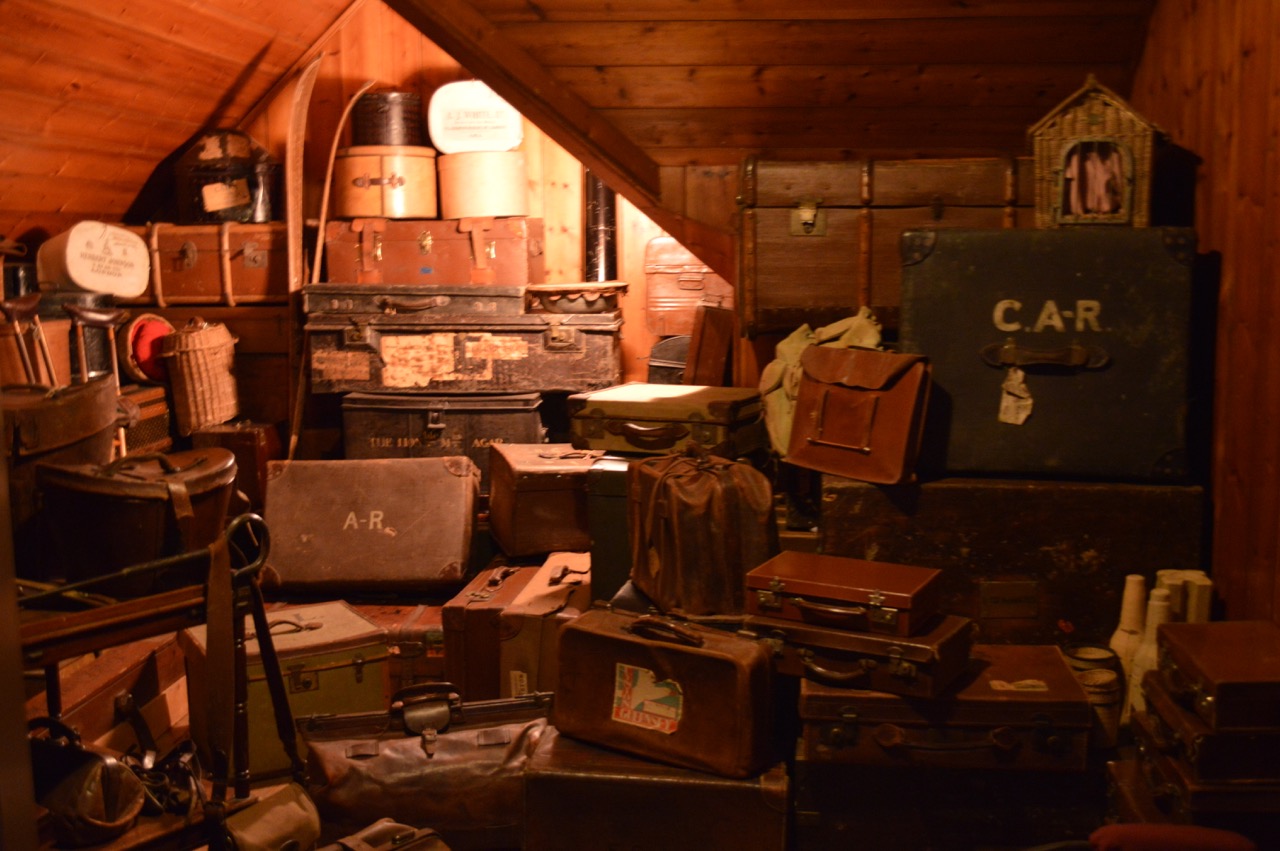
DSC_0262

This week’s poem was written in 2011 for a friend I worked/taught with, Jean Sotelo Coene. Somehow we got to talking about cleaning attics and about all the treasures hidden up there and how hard it was to part with things. Jean mentioned her grandmother’s handbag and all the stories it held and that was it…a tiny seed of a poem was planted. I don’t know how those things come to be while others never take hold. I wrote the poem and gave it to Jean as a little present. I love to gift poems to just one person. For that reason, no one has read the poem except for each of us.

Today I was going through some lovely photos from a trip to Cornwall in 2013. [See Bedford Square +2, my travel blog for the whole story of that visit if interested.] We had visited a small manor house, Lanhydrock. [http://www.nationaltrust.org.uk/lanhydrock/] Part of our wanderings allowed access to the attic. Of course it was beautifully staged as were all the rooms in the house, but seeing these pictures this morning was too hard to resist. I worked on the poem today, changing words here and there, adding in a whole stanza and then deleting it. In the end, I liked the first version best. Only a few words are different from the one I handed to Jean.

This poem is dedicated to the memories of all grandmothers who gave us so many wonderful stories to listen to, to dream about, and to share.

To hear the audio, simply click below. I am not much of a professional reader so please bear with me.


610980-bigthumbnail

My Attic is Full

The attic needs cleaning. It seems so simple,
but it isn’t easy to throw old things away.
There is always the worry we might forget
those we loved, the ones crossed over.

Old boxes hold memories and clothing.
Do you hear the stories held in the silence?
A flowery print dress of soft lawn cotton
holds the story of when it was freshly laundered
and worn in the days of the mid-summer sun.

An old leather purse might tell you where
she went and what she wore.
Inside, a handkerchief delicately edged
in tatted lace is tucked away.

How often she must have clutched it
in her hand to wipe away tears or sneezes,
stifle laughter or mop her brow.
Even now the linen is redolent of old
damask roses from the flower garden.

Beyond the piled boxes of her belongings
are clothes from her husband so long mourned.
She kept them up here all those years,
the only way to keep him near.

Don’t you wonder how often she came up
into this dark attic, pulled the light string,
unfolded a crisp white shirt
and held it to her nose, eyes tightly closed
longing for the scent
that had faded from his pillow?

Lovely tatted edging-22maids-of-honor22-by-mary-konior.jpg

Lovely tatted edging-22maids-of-honor22-by-mary-konior.jpg

Summer Poem 2 ~

.
dragonfly wings

My thanks to my dear friend and photographer, Yolanda Litton for allowing me to use her beautiful picture of the Provençal countryside.

One Year of Blogging…Some Thoughts

Clock Room in the Musée d'Orsay, Paris, France

Clock Room in the Musée d’Orsay, Paris, France

This week marks the one year anniversary of this blog, A Poet in Time. I began it at the end of July 2014 after much thought. My goal at the time was very simple. I wanted a way to discipline my writer’s mind into producing a passable poem each week. They could be brand new, reworked lines shaped into a new incarnation, or experiments in new forms for me. Yes, I hoped someone would read them, otherwise, why use a blog? I’ve never had expectations that many people would read my writing. I’ve been too reluctant to submit many of my poems for submission. I’m too thin-skinned to deal with the rejections that come with the publishing game, so I’ve just gone about with writing on my own terms and in my own way. A blog seemed like fun. I like writing in general. A blog could showcase a poem, but it could also help me move in the direction of a community of poets who, like me, liked reading poetry.

Now that I’ve made it through a year of blogging, I guess I need to decide if it was worth it. Did it meet my goals? Did I discipline myself enough to post a poem a week? Did I meet other writers? Find other interesting blogs?

coffee-and-journal-scribblr-suite

I discovered right away that the world of blogging is immense. On Word Press alone, there are hundreds of thousands of blogs. Poets all over the place! I’ve spent a lot of time reading many of the blogs. Some held little interest for me. A few really intrigued me and I readily subscribed to those. I learned the proper blog etiquette:  it’s always polite to acknowledge when someone comments on a posting. If someone follows you, you should at least go and visit their blog, read through a good number of their postings and perhaps leave a comment or two. Following another blogger is harmless enough. It doesn’t obligate you to anything. I quickly learned that some people “follow” you simple to get you to follow them back. I guess I was too old not to realize that the world of young bloggers is a competitive one where numbers count. I read a few postings on why this was important, and then I went back to my quiet ways of reading blogs I felt had excellent writing and ideas.

Early Morning at Bagnegrole (Photo by Yolanda Litton)

Early Morning at Bagnegrole, France  (Photo by Yolanda Litton)

I also discovered the world of art here in WordPress. The number of artists and photographers is also very large. Excellence is there, and I fell in love with a number of photography sites. I found early on that a beautiful photograph was not just great art in itself, but some seemed to inspire poems. It happened quite spontaneously and it began with a professional photographer on WP who always kindly gives me permission to use his breathtaking black and white photographs to a wildlife photographer on FaceBook who is equally generous at letting me use his work. Then, it moved to people I know. I’d see friends’ photographs on FaceBook and very quickly I could see who posted pictures I found irresistible. That was an unexpected bonus. Some were people I knew well. Others were people I worked with but never got to know. It made me realize how complex people are. Everyone has gifts that are there, but often they aren’t visible. I began to really enjoy FaceBook simply because it now gave me much more insight into people I’m acquainted with.

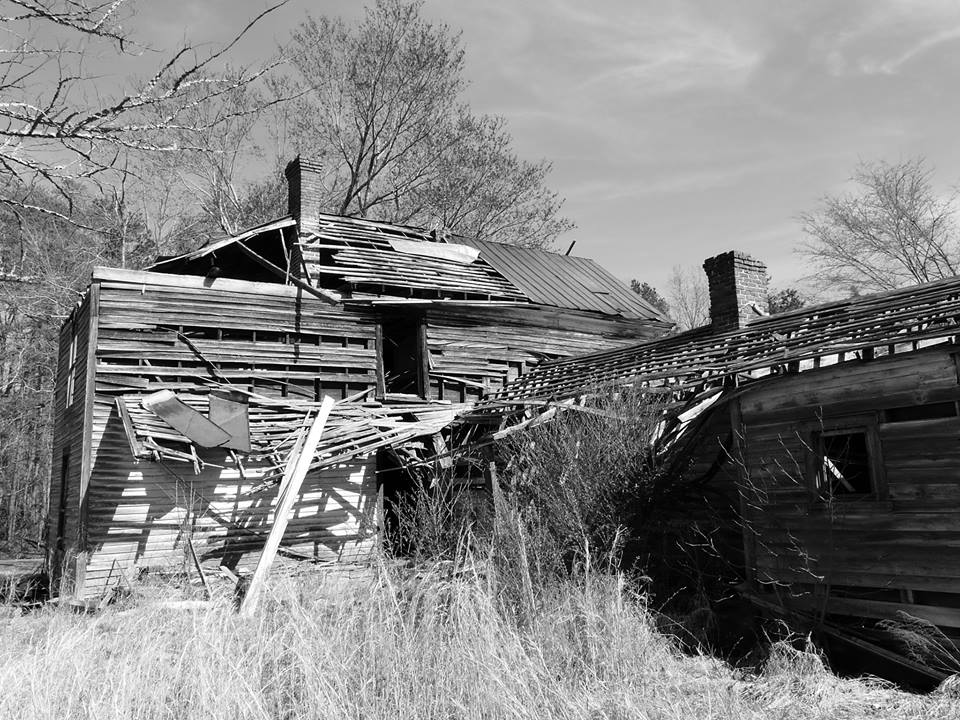
Old home in Eland, North Carolina, photograph by Gary Brichford (c) 2015

Old home in Efland, North Carolina,  Photograph by Gary Brichford (c) 2015

I also discovered that FaceBook has its own private poetry world. There are hundreds of poetry related sites, most of which never interested me. I’d subscribe for a while and then get overwhelmed by the sheer volume of work that just didn’t do much for me. Everyone is different of course. My work isn’t flavor of the month for many people. (Even that metaphor would turn off many poets who only live on the ‘edge.’) But gradually I found there were private FaceBook writing sites that were full of excellent poets all of whom have the same purpose of learning to write better. Prompts are frequently presented and people respond in posts. You can ask for advice or guidance and you get it. I fell in love with three such sites all focused on small poems and English versions of Japanese forms of poetry such as haiku and tanka. I then found a number of the poets had their own blogs, which I follow whenever I can. I did learn that most poets who have made their names in the published poetry world use blogging more as a vehicle for presenting what has already been published. No one seems to use it as I do, but that’s ok.

Now, as the one year anniversary is here, I’ve been trying to rethink my goals and how I’d like to continue on from here–or whether or not I even wanted to blog. I looked at all my postings. I certainly did meet my quota of a poem a week. Sometimes more than a week would pass and then I’d post several poems. That was fine in my book.

I took a lot of the narrative around a poem out as I went on. I felt I didn’t need to tell my readers what a specific form was unless it really was something my closer friends (who aren’t writers) might like to know. The poems generally speak for themselves, as they should do.

I’ve toyed with putting some separate pages on the blog, separating poems by genre where it applies. Right now I lack the technical know how about the best way to do this.  Obviously, I have some homework to do.

I’ve also toyed with the idea of a separate page on which to post poems by other people that I’m reading and whose work I absolutely love. I’m not sure about this–it might wander too far away from my simple blog.

As for followers, I have gotten exactly 7,600 views as of today. I know those aren’t all ME, so I guess people are reading. I don’t have a huge following, but I never expected to have that. I quickly learned that the majority of visitors never leave comments or even hit a ‘like’ button. Perhaps they visited and didn’t find anything they liked. Perhaps they just never bother with ‘likes.’ No matter. I’m just glad people do wander around and read things here and there. Perhaps my only regret is that new visitors tend to only read the latest postings. They rarely wander back a year. I loved my first poem I posted about a trip to Edinburgh and the Scottlish Highlands I’d just returned from. But those early poems only have three or four likes at most.

Occasionally someone will repost a poem and then I’ll get a slew of visitors on a period of a few days. That’s always a surprise that makes me smile. A few become followers.

Of the people who leave comments, it tends for the most part to be the same people, but those are all people i love. I love their blogs. I love their thinking. I appreciate the time they take to make a comment. Who doesn’t love knowing your words speak to someone on some level? I do love it…a lot!

I will, for now, continue as I began. The need for a poem a week is no longer needed. I write a lot now. I choose only to post what I feel is my best.

Chapbook 2

In the past year, I published a chapbook with Finishing Line Press. It is called ERASING THE DOUBT, and the whole experience has been very satisfying and exciting for me. Working with professional editors, seeing the typed poems be turned into a very pretty book–and then there is the cover, the beautiful picture by Christine Ellger, a photographer from Dresden who let me use her picture just like that! Amazing how kind people can be. It was such joy to send her a copy of the completed and published book.

Time-Can-Wait

So, where do I go from here? i’ve come up with a few goals to carry me through the next year.

  1.  Post poems I feel are my best work that I want to share with others.
  2. Perhaps separate poems by genre (if I can figure out the way to do this).

  3. Get a few more followers who genuinely like poetry.

  4. Be a good fellow blogger and visit other blogs consistently and leave them some feedback.

  5. Hope that my friends and family will venture over to my blog now and then.

  6. Sharing posts–add some postings that aren’t poems. These will be my ideas about writing or something I’m reading, etc.

  7. Continue to use photography and art in my blog. I would be thrilled to have someone submit a picture to me to use as an inspiration. Will that day ever come?

  8. Continue to be inspired by just about everything in life.

If you’ve read this far, you are probably either a close friend, my husband or me. Thanks for taking time to read this posting today. I hope you’ll come back again soon to browse around.

Mary

Dove photo by Merlune

Dove photo by Merlune

Pearl ~ a haiga

One of my earliest postings on this blog was of a haiku on a pearl. Having begun creating haiga, a combination of a haiku and a piece of art or a photograph. I reworked this poem, and this is the result. It is now finally finished. I only wish I could give full attribution to the original photographer, but I could find none after searching for quite a long time. I did alter the color to suit this poem. My thanks to all fine arts photographers who always inspire.

.

Pearl Haiga

.

On Growing Older…

On my pillow haiga 2015

Two Tanka slip into Ribbons

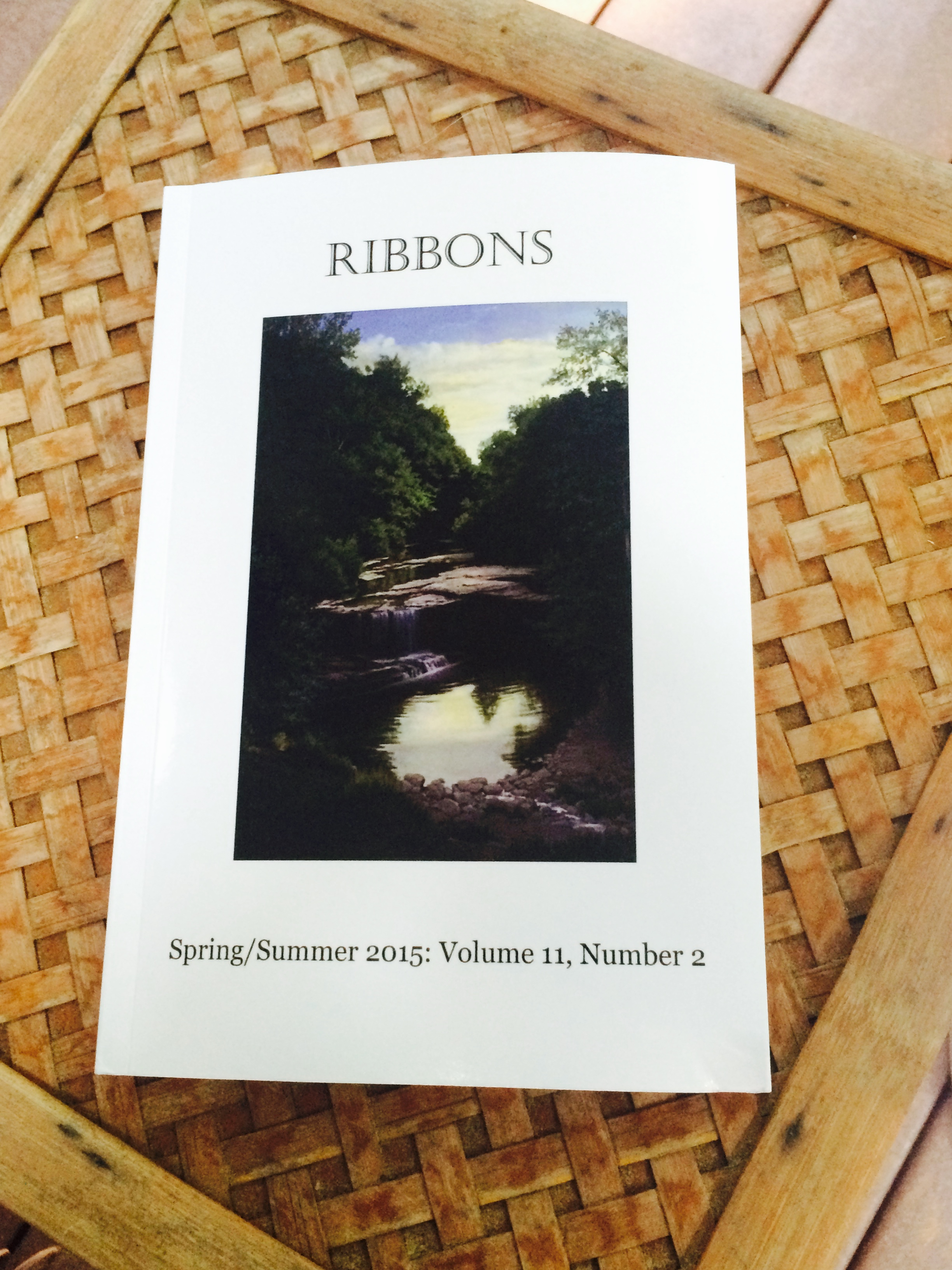
I’ve had the good fortune of having two tanka published in RIBBONS, the journal of the Tanka Society of America: Ribbons–Spring/Summer–2015, Volume 11, Number 2.

IMG_8691


lost in the pages

of a book my mother loved–

a sly narrator

speaks volumes of truth

while skirting the end


Tanka Cafe, Ribbons–Spring/Summer, Volume 11, Number 2, 2015


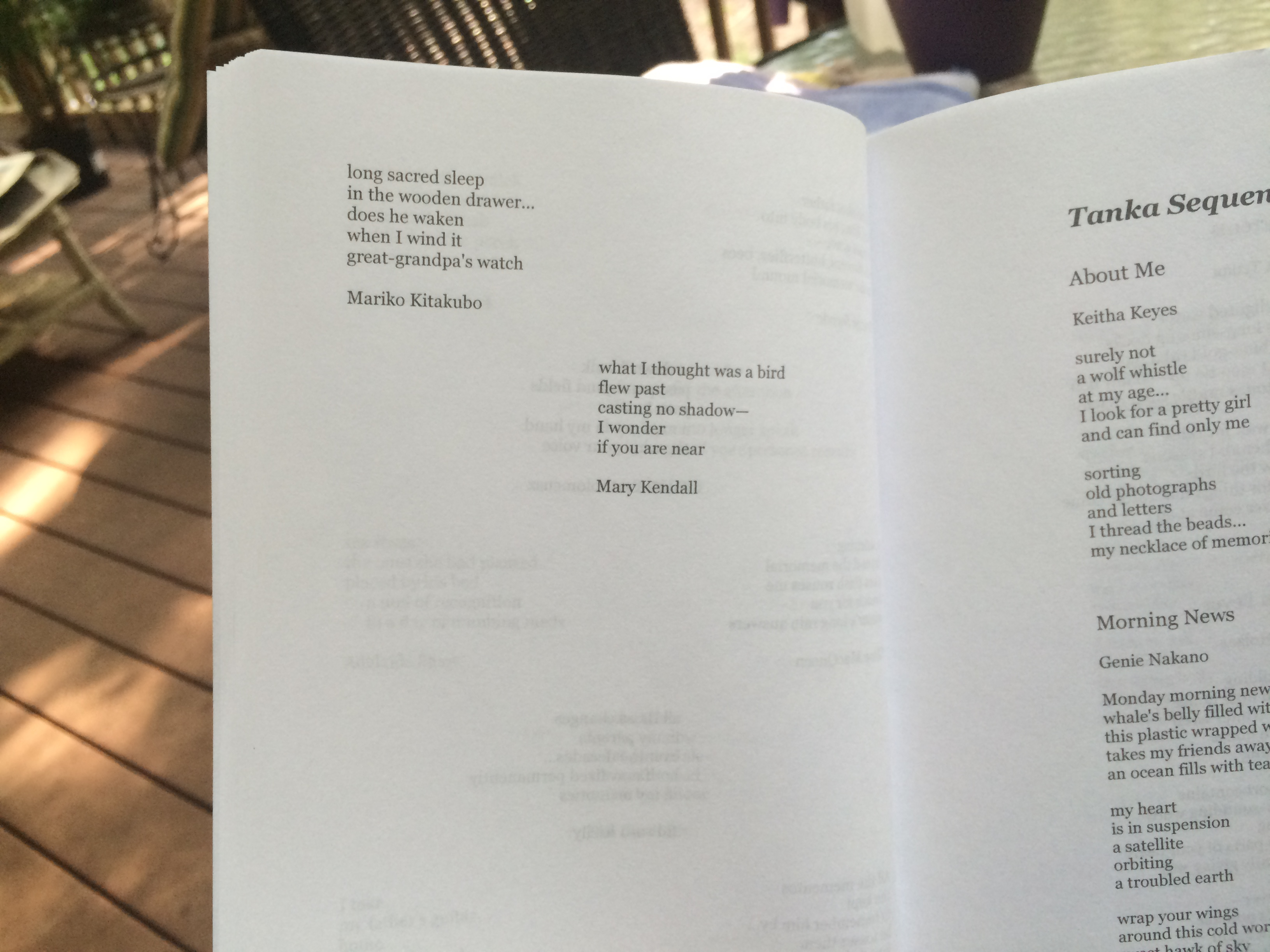
what I thought was a bird

flew past

casting no shadow–

I wonder

if you are near


Ribbons–Spring/Summer, Volume 11, Number 2, 2015


It is always a thrill for any poet to open up a journal and find her/his  own poem nestled in among those of gifted writers. The truly excellent online journals of poetry in both tanka and haiku are really schools of learning for me. I go there to read, to fall in love with poems, and to learn from the very best writers. There is no better way to learn. Read, read, write. So, on the rare occasion, one of my poems makes it into those pages (paper or virtual), my heart is filled with joy.

IMG_8699


Summer Poem 1~

Here in the southern part of the USA, thunder and lightning are not uncommon in summer. Days can be very hot and humid, and late afternoon lightning storms often break up the quiet of the day. Rain, when it comes, often fails to bring relief but instead adds to the high humidity. Still, there are times when just listening to the thunder and seeing the clouds grow thick and dark overhead becomes a magical experience. My friend, Jeanna Clever List, took this photograph while her family was on vacation on the coast of North Carolina. Its drama and beauty is truly exceptional.

My thanks, Jeanna, for allowing me to use your beautiful photograph to complete my haiga.


1-Sky Drums Haiga 2015 Jul 2, 2015, 2-56 PM 1244x960

A Girl Who Wished for an Elegant ‘e’ by Mary Kendall (All About My Name Poetry Series)

I am both delighted and honored that Silver Birch Press selected a poem of mine for their wonderful series of ‘All About My Name’ poems. The whole series of Name Poems is well worth reading…so please do just that!

silverbirchpress's avatarSilver Birch Press

Mary Kendall
A Girl Who Wished for an Elegant ‘e’
by Mary Kendall

1. My Name

My name at birth was Mary Ann.
Grandpa called me Manya.
The old Polish mid-wife called me Marisha.
Daddy called me Marishka.
Momma called me Mary Ann.
Not one felt right to me.

I was six and my names felt wrong.
I was a nameless princess
in my child’s dreamy mind.
It was a lot like finding Cinderella,
fitting the perfect foot into the slipper,
only no prince would rename me.
I had to do it by myself.

2. A Plan

Once I learned to read and write,
the problem became clear.
Mary Ann looked too plain,
like a little cat without a curlicue tail.
It just didn’t balance.

I knew if I could add an ‘e’ to Ann, it
would become the beautiful Mary Anne.
A name worthy of me. Oh, I had such dreams!

View original post 641 more words

June Haiku 3

11257577_10200630947691981_8340666552913688599_n

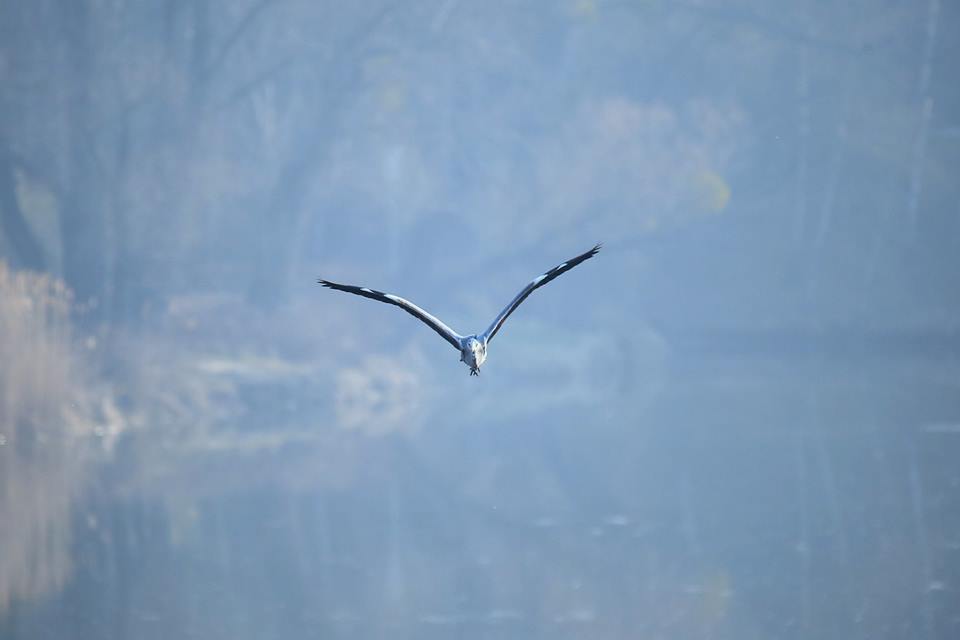
in the rushes—

standing so silent

a lone blue heron

tranquil water

The photograph of this Great Blue Heron is anonymous, sadly. I could not trace this internet picture to a specific site or photographer. Whoever you may be, I thank you for creating a beautiful picture of this gorgeous creature.

June Haiku 2

weathered wood—

memories of youth

drifting away


Old Boat ~ Photograph by Mike Keville, (c) 2015

Old Boat ~ Photograph by Mike Keville, (c) 2015

The theme of old, worn wood (see June Haiku 1) continues in this poem. Amazing how beautiful things retain their magic despite age.

My thanks to photographer, Mike Keville, for allowing me to use his gorgeous boat photograph for this haiku. The textures and colours of this photo inspire many poems.

June Haiku 1

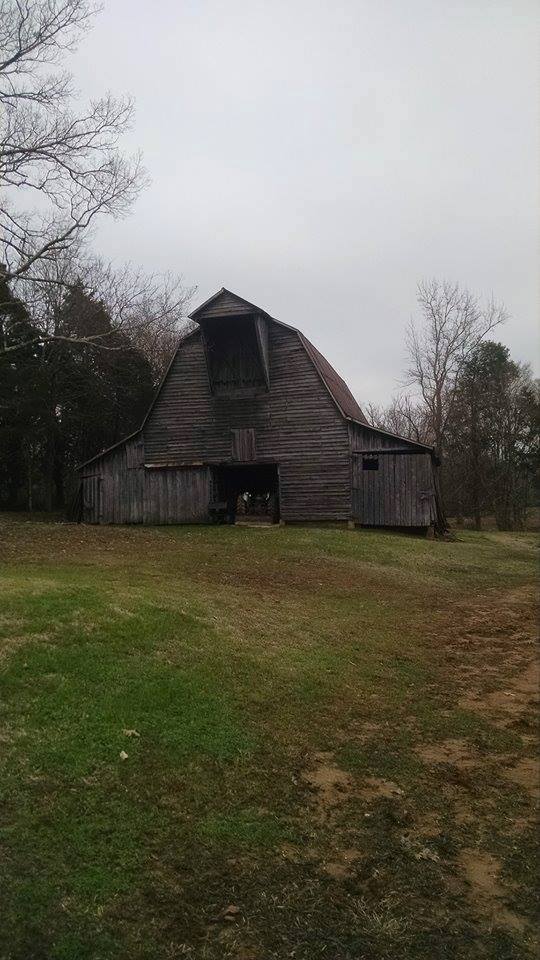
weathered clapboards–

does the old barn ever dream

of being a tree?

Barn in Spring Creek, Tennessee ~ Photograph (c) 2015  by Michael Todd

Barn in Spring Creek, Tennessee ~ Photograph (c) 2015 by Michael Todd

Note:  My thanks to Michael Todd for allowing me to use his beautiful photograph of an old barn in Spring Creek, Tennessee. Pictures like this are always such an inspiration.

Questions

London sky drama

Questions

    “Where did the time go?” we asked. 

The north wind answered, “It rushed by while you were busy doing other things.” 

        “And how did we not notice it was passing?” we puzzled. 

The south wind replied, “Perhaps the sun blinded you so you could no longer see.” 

         “Did any of us notice the days grew long and the nights shorter?” we wondered. 

The east wind smirked, “You focused so much on clouds that you missed the stars.”

         “Why must it come to an end so soon?” we questioned. 

The west wind whispered, “You’ve done what you must. Now it’s time to go.”

Photograph (c) 2015 by Harald Illsinger

Photograph (c) 2015 by Harald Illsinger

With kind thanks to photographer Harald Illsinger for allowing me to use this beautiful photograph of the gull in the morning sky. The top photograph was taken by me in London, 2015.
 

fallen petals… (haiga)

My Mother's Voice haiga

Two Small Poems

Two poems of mine were just published in the May 2015 issue of ‘cattails,’ the lovely online publication of the United Haiku and Tanka Society. I am truly honored once again by being included in the company of such excellent poets. My thanks to all of the editors, and especially to the main editor, an’ya.

Cattails

The first is a haiga.  My thanks to my good friend, Debbie Nemer Suggs who gave me permission to use her lovely photo (c) 2015 with my haiku.

haiga fiddlehead

~

and the other poem is a haiku:

Rosehips by Midori

Rosehips by Midori

petals fall—
we gather rosehips thinking
only of tea

​~

Photo by Tanya of Lovely Greens Blog

Photo by Tanya of Lovely Greens Blog

Irisation: A Lesson

Photography © 2015 by Farnaz Mojab Soheili

Photography © 2015 by Farnaz Mojab Soheili

A Lesson

For just one moment
the sky stopped time,
and we gazed upward
to where an angel
lit the clouds
like a row of pure white candles,
and the flames flickered
in many hues
and spoke to us in sweet silence,
reminding us that life is brief,
a momentary blur.

A lesson we forgot.

hands of time

Note: My thanks go to my friend, Farnaz Mojab Soheili, for allowing me to use her wonderful photograph of this magnificent cloud rainbow that appeared for just a moment. As a teacher who was with a group of fourth grade students on the playground, the cloud phenomenon was pointed out to her by a student. She looked up in time to see it shift into this beautiful formation. A rainbow in the clouds is called iridescence or irisation:  “When parts of clouds are thin and have similar size droplets, diffraction can make them shine with colours like a corona. In fact, the colours are essentially corona fragments. The effect is called cloud iridescence or irisation, terms derived from Iris the Greek personification of the rainbow…. Iridescence is seen mostly when part of a cloud is forming because then all the droplets have a similar history and consequently have a similar size.”

[http://www.atoptics.co.uk/droplets/irid1.htm]

Irises

The Starry Night

The Starry Night by Vincent Van Gogh, 1889, Museum of Modern Art, NYC

                       The Starry Night by Vincent Van Gogh, 1889, Museum of Modern Art, NYC

The Starry Night

It is silent tonight.

In the ever flowing
river of the night,
a boat of darkness

sails by
as wave upon wave
of stars flow,

then crest,
then
fall,

and silently subside,
consumed by another wave
until nothing is left,

just flickering light
of celestial glowworms
that hang

in the cave of night—
languid star strands
from the heavens.

The moon
could tell stories
if it chose.

It is silent tonight.

Van Gogh Moon

Tanka on a May Morning

In the past five months I have been studying my much beloved tanka, haiku and small poems in order to become a better writer. Writers–and poets–need to keep growing as they go.  As part of my interest in these lovely small poem forms, I have joined a number of exception online groups of poets who post their own writing. On several of the sites, “prompts” are given and sometimes a picture is given. People respond as they wish or not. Often comments are given. I can’t tell you what a thrill it is to get a “like” or even a comment by one of these poets who are so gifted and accomplished tanka and/or haiku poets, but even without the ‘likes,’ it feels wonderful to be a little more confident about sharing poems publicly. This morning, I’m posting several tanka I wrote this week to specific prompts.

~

1    [prompt: celebration of color]

Photograph (c) Kristin Sanderson

Photograph (c) Kristin Sanderson


scribbles

of scarlet red

in the shrubs—

two cardinals

take flight

~

  1.  [prompt: full moonrise, unforgettable moon]


Photography (c) by Cab Treadway

Photography (c) by Cab Treadway

cloud masquerade

tonight—

the moon is hidden

from your

wanton gaze


~


3    [prompt: how you share your journey]

old cobblestones

so hard to cross—

without speaking

I take your arm

and we walk on

old cobblestones in cornwall


~

4    [prompt: flutes..music…]

plum-tree-picture

sweet song

hidden in the plum tree–

a nightengale

gives itself

away

nightingale1

~

In Luxembourg Gardens, Paris

Chairs in Luxembourg Gardens, Paris by Mary Kendall

Chairs in Luxembourg Gardens, Paris by Mary Kendall

In Luxembourg Gardens, Paris     

A stairwell of shadows invites us to sit.
Empty chairs bask in the late spring sun,

Waiting for readers who choose to sit,
slipping into the borrowed lives of books.

Waiting for lovers to pull two chairs aside,
stealing time away from the world.

Waiting for an old man with a limping dog,
passing time away from his silent rooms.

Waiting for the widow who longs for the sun,
savoring the warmth like a delicate embrace.

Waiting for the disheveled girl who waits,
sipping a café crème with a guarded look.

Waiting for a businessman to eat his lunch,
savoring silence, no rumble of demands.

Waiting for the grandpère missing his children,
wondering what it is they do continents away.

Waiting for weary tourists who sit and rest,
whispering in languages you don’t speak.

Waiting for a tumble of clouds to sweep the sky
just as this sweet day slips into the waiting night.

Time passes.
People pass.
Memories pass.

Another day will come.

faded beauty…

faded beauty haiga

Acceptance

Acceptance, photograph by Iosatel (c) 2015

“Acceptance”  Photograph by Iosatel (c) 2015

Should you wish to listen to the poem, click on the link below. It will take a few seconds to begin.


Acceptance 

There—on the far side of memory’s window—
You stand there on the outside looking in.

Distanced, safe from the rawness of our lives,
You are given a choice whether to judge us

Now or see if we try to make amends, to heal
The hearts that have been torn at the edges,

Frayed by the refusal to forgive, and let others
Move on, a final repentance, a simple lesson

Of learning to forgive our own mistakes, our
Choices or the decisions we came to regret.

Life is not all black and white, but endless shivers
Of grey, silver, and ebony; hues of cream, ivory

And moonlight, and beautiful colors begin to bleed
Into our fabric when we accept others as they are.

Paths get worn by walking, grass just wears away.
Road crosses road, briefly intersecting, and then

Leading to new and unexplored places where
There might be answers if we put aside our slanted

Views and look well beyond our differences.
Beneath this fragile shell of life we are the same.

Why is this simple lesson so hard to learn?

 dove and monkey

Note:  The main photograph (at the top of this page) used with this poem is a beautiful piece by the photographer, Iosatel. It appears on his photography blog, The Obvious and the Hidden, http://theobviousandhidden.com.

His black/white pictures are both beautiful and mysterious. Along with the intriguing pictures are his titles, which never fail to interest his many followers. This photo was entitled, “Acceptance.” It was this that began this poem. My warmest thanks to Iosatel for allowing me to use this photograph with my poem, ‘Acceptance.’

Forget Me Not…

Forget-Me-Not by SarahharaS1 (c)2013

                                       Forget-Me-Not by SarahharaS1 (c) 2013

~

Don’t Forget Me When I’m Gone

~~

Don’t forget me when I’m gone.
I’ll be there thinking about you.

Don’t forget me in my silence.
I’ll bring you back a poem. 

Don’t forget me when you’re sad.
I’ll be ready to understand your tears.

Don’t forget me when life is good.
I’ll be happy to laugh along with you. 

Don’t forget me if the glass breaks.
I’ll be there to sweep up the shards. 

Don’t forget me when you doubt.
I’ll listen to your words spill out.

Don’t forget me in the dark.
I’ll bring you a small violet star.

Don’t forget me when I leave.
I’ll return. I always will

Forget-Me-Not, photograph by Flowers HD.com

Forget-Me-Not, photograph by Flowers HD.com

Once

Old home in Eland, North Carolina, photograph by Gary Brichford (c) 2015

Old home in Efland, North Carolina, photograph by Gary Brichford (c) 2015

Once

The door is ajar, waiting for someone to come in,
But no one comes now except for you, you who
Climbed through overgrown grasses circling the house.

Wanderers like you come sometimes, looking for things
They once knew, remembering those they have lost, and
Places that they once loved, places they called home

Once this was home. Families lived here, died here.
Brides moved in and babies came, some were lost,
But most grew into fine young folk. Wars came, and

With them a generation of men might disappear. Yes,
Sickness came but so did love. Life was full then. Every
Home is made of lumber and nails, people and dreams.

Once the fire would have been lit on short winter days,
Keeping us warm, the heat drying wet wool mittens and
Mended socks. Flames burning so hot that our cheeks

Grew red while ice-cold winds knocked on the walls.
Flames burned down to chalky ashes during the night,
While we slept two to a bed and sometimes three.

Father was up early to stir the embers, add hickory logs,
Small broken branches and sticks the children gathered.
From this, he coaxed new flames to burn again all day.

You stand here now today, a cold Saturday in March,
Camera in hand, waiting to capture something, but
What that is you don’t know. Not much is left to share.

Once there were so many stories about the families—
Brothers, sisters, cousins, uncles and aunts. Their
Stories are gone for good but once they were here.

Without warning, memories of your own childhood
Rush into these walls, so real you can almost feel them,
They come so fast—an unasked for surprise.

If you listen hard enough, you hear children laughing
At the three young pups who are worrying the chickens,
And momma running out to chase them with her broom.

But it’s the inside of the house that pulls you back.
Looking up at broken rafters, you study the timbers:
Was it was fire or ice that brought down the roof?

Look hard and you might see momma sitting there near
The fire, the flames giving her light to do her mending.
Here she would sit and work. Sometimes she sang,

Her voice a clear soprano, ours a mix of everything else.
Daddy might take down pawpaw’s fiddle, and begin
Tuning it slowly string-by-string, note-by-note.

If you were the lucky one that day, he might ask you
To rosin the bow for him. Those were the good days
When they’d play our favorite songs or hymns.

But the best part was always the last, when they played
Old timey tunes, foot tapping music we loved.
We’d start dancing together, our shoes pounding hard

Like wild thunder on the old wooden floorboards.
It would echo so loud, we’d dance even faster
And then, exhausted, we finally had to stop.

A small redbird perches up on the open eaves,
Straw in its beak. It is nesting here in the house.
Can you hear its mate singing an ode to early spring?

If you listen to the silence, you might hear the whispers.
Or maybe it’s nothing, lost memories, old stories and
Wind blowing through the open roof, the broken floor.

~ ~ ~
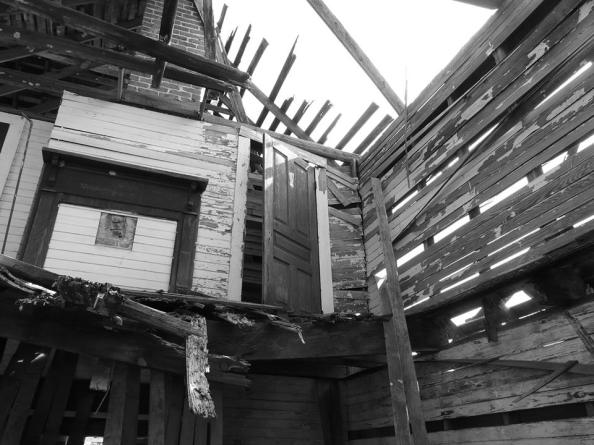
Old Home in Efland, North Carolina, photograph by Gary Brichford (c) 2015

Old Home in Efland, North Carolina, photograph by Gary Brichford (c) 2015

Photographs by Gary Brichford © 2015

Note of Thanks to Gary Brichford, I am honored that you’ve allowed me to use your beautiful photographs of this old house that still stands in Efland, North Carolina. Your pictures make the past so real. Many thanks, my friend.

Old Home in Efland, North Carolina, photograph by Gary Brichford (c) 2015

Old Home in Efland, North Carolina, photograph by Gary Brichford (c) 2015


cardinal nesting

Blood Moon (Tanka)

Blood Moon Tanka

A plea for ending hatred:

This week the news was filled with the grand and rare beauty of the appearance of a Blood Moon eclipse and the absolute horror and non-sensical murder of Christian students in Kenya by Islamic fanatics. When, oh, when will the world stop hating?

“Early Thursday five shooters from the Somali-based al-Shabaab terrorist organization swept through a university in the Kenyan town of Garissa, shooting Christian students. They knew who to kill because they ordered students to recite an Islamic prayer. Those who could were spared. Those who could not were shot dead, about 147 so far. Police killed four of the terrorists and captured the fifth.”    (from the Wall Street Journal)

Note: This beautiful photograph of the Blood Moon is not mine. I found it through a google search, but it’s exact origin is unknown. I thank the photographer whoever he or she is for creating such a beautiful capture of this event.

Frozen Moments

Frozen Moments (c) 2015 Harald Illsinger

                                             Frozen Moments (c) 2015 Harald Illsinger

FROZEN MOMENTS

It doesn’t matter that your words were shouted
In a peal of sparking anger, anger spewed
In moon-white flames tinged with flicks—
Sapphire blue and poppy red and yellow.

Burning so hot and fast, those thoughts
Consumed themselves and all
Nearby, including what remained
Of hope
For change…
Your change,
Your transformation.

And when the fire burned down,
All that was left were the ashes of your anger.

Small chars of memories…
Frozen moments of who you were…
Once—
Long Ago.

Unable to forgive—even yourself,
You are locked in the ice of stagnation,
The ice of inner struggle.

Frozen fire—
No thaw,
No shift,
No change.
No redemption.

Frozen
Moments
Forever.

old_pocket_watch_buried_1774093

Note: Many thanks as always to Harald Illsinger for the use of his exquisite photograph, Frozen Moments (c) 2015. His work always serves as such wonderful and unexpected inspiration.

Dark-Eyed Juncos, a Tanka

I’d like to share a tanka that is currently appearing in Ribbons, Tanka Cafe, Winter 2015

Junco, photo by Kathy Adams Clark

Junco, photo by Kathy Adams Clark

winter light 

shadows linger low

behind us—

dark-eyed juncos

scurry past our feet

Juncos, photo by Brian Cunningham

Juncos, photo by Brian Cunningham

This poem appeared in Ribbons, Tanka Cafe, Winter 2015
This is the publication of the American Tanka Society,

Spring Equinox (haiga)

spring equinox kendall haiga

Haiga by Mary Kendall

This was written for a prompt on the spring equinox for a favorite small poem poetry group I belong to called “seize the poem.” I’m enjoying creating this mix of haiku and photography, and I think I finally got the words correctly balanced on the picture, so I’m sharing it here as well. The photo is my own taken in the sculpture garden of the Rodin Museum in Paris this month.

Sounds of Summer Evenings by Mary Kendall (Where I Live Poetry & Photography Series)

I’m so excited to have a poem of mine included in the “Where I Live Poetry and Photography Series’ by Silver Birch Press. They have published two other poems of mine in other series, and It is always an honor to be included among their marvelous poetry selections. Thank you, Silver Birch Press!
.
Wherever you live, no matter where you might be, nighttime in summer reveals a very different world of sound. During the day we hear birds, breezes, people, mowers, airplanes, cars or sometimes just bees and hummingbird wings. At night, however, we must totally rely on our hearing to grasp all the different sounds that play out in the night chorus. Here in the south, in North Carolina where I live, summer nights are especially noisy. From frogs and owls to whipoorwills and katydids, there are times when it is absolutely deafening. I wish I had the expertise to identify all the different frogs our small garden pond must be home to. There is one frog that sounds much like what I imagine an alien creature would be like—high-pitched, very shrill and almost dizzying in its persistent song. It’s irritating enough to go inside.

.
Then there are the “call and response” night singers. I love those most of all. I can sit a long while listening to them. Occasionally I hear an owl, but lately it seems there are fewer around. I remember when we regularly had barred owls nesting in our woodland garden. Catching sight of one was always impressive, but hearing one in the middle of the night was truly haunting. I love to sit outside in our screened-in porch when it is dark. The dog often comes and sits with me listening and keeping me company. She makes no sound herself, knowing that we are the polite and attentive audience to this vast chorus of night.

.

Here is an audio recording of me reading this poem. Just click on the link below, wait a few seconds, and it will begin.

.


silverbirchpress's avatarSilver Birch Press

qing_yang
Sounds of Summer Evenings
by Mary Kendall

Sometimes at night I sit outside
In the screened-in porch out back.

In the darkness, the rustling leaves
Of the tall beech trees are blowing.

The katydids call to one another,
An evening of antiphonal refrain.

On nights when a heavy rain falls,
All you can hear are the tireless frogs

Chorusing in the garden pond.
The deep lone bass, the shrill soprano,

This diverse and discordant choir
Seems to be one of rhapsodical joy.

And then there are times when an owl
Soundlessly lands in a nearby tree

And startles me with its resonant call,
Letting me know it’s now on watch.

Two times more it calls, low and deep.
I rise and go, time now for me to sleep.

NOTE FROM THE AUTHOR: Northern by birth, I have lived for more than 35 years in North Carolina. Our summer nights are…

View original post 141 more words

Meditation on the Moment

The following poem of mine, “Meditation on the Moment” was originally published in a book called, True Belonging: Mindful Practices to Help You Overcome Loneliness, Connect with Others, and Cultivate Happiness (c) 2011 by Jeffrey Brantley, MC, DFAPA and Wendy Millstine.

Dr. Jeffrey Brantley was my first meditation teacher in the Duke Integrative Medicine MBSR program. His wife, Mary Brantley, introduced me to the practice of Metta (Loving Kindness). Through both of these teachers my life was forever changed in a most beautiful way. I wrote this poem for Dr. Brantley and he first used it in meditation classes and later asked to publish it in his book. This was an honor I will always hold very close to my heart.

137163__rain-the-glass-drops_p

Meditation on the Moment

When I am ready,
I close my eyes
and focus on the breathing;
awareness of air
passing through the nose
down through the body;
the belly rises, falls,
rises again ~
its slow rhythm
setting the tone.

Next, focus on the body,
accepting it for once
as it is right now,
here in this moment,
for the moment
is all we have.

Breathing in,
breathing out,
shoulders soft,
no striving
to get somewhere
for there is no place
to be but here.

No judging of self,
simply letting it be
in the moment
for the moment.

Rain pounds against the glass
this February evening.
The image begins with sound
transforming into a thought.

Raindrops falling,
each one perfectly formed
but then releasing,
allowing itself to lose
what it was alone,
becoming instead
part of something more.

167929__the-rain-drops-the-branch_t

Poem by Mary Kendall, 2007

Haiku for today…

IMG_7621

barely spring–

rowers churning water

 silver slips away

610980-bigthumbnail

Sky the color of hyacinths…

waves swell then break

~ ~

I’m still very new as a haiku poet, so it is with caution that I’ve ventured out to try an actual haiga. A haiga combines art and a haiku. Since I lack all painterly skills, I’m combining my haiku with a photo that I love. I’ve done this in a slightly similar way on my blog with tanka and some autumn haiku. However, I consider this to be my very first true haiga.

~~

What is Haiga?  

Haiga is a Japanese concept for simple pictures combined with poetry, usually meaning haiku. In Basho’s time, haiga meant a brushed ink drawing combined with one of his single poems handwritten as part of the picture. In our day and age, haiga can be watercolor paintings, photographs or collages with a poem of any genre that is integrated into the composition. Sometimes the poem is handwritten or it can be computer generated, depending on the artist’s taste.”  (This definition of haiga is by the poet, Jane Reichhold on her website,  Ah Ha! Poetry.)

~~

Note on Photograph:

This beautiful photograph is by an Icelandic photographer known to me only as KariK on Flickr. It was posted and thus copyrighted in (c) 2011. It has been posted thousands of times online and almost never with an attribution to him. By doing a ‘backward’ image search I was able to find him on flickr. His photographs, most of nature, are magnificent.  This is what he wrote for this particular picture (translated from Icelandic):

Reykjanestá:  This location is unique for the fact that there can see the ocean ridge walk on 1 and, Mid-Atlantic Ridge, which separates the prefabricated North America and Europe.

KariK, (c) 2011

One Snow Haiku

Snowfall by Debbie Suggs

Snowfall by Debbie Nemer Suggs


Swiftly falling snow

Our footprints disappear ~

Were we ever there?


snow symbol

I would like to thank my dear friend, Debbie Suggs, for the use of her beautiful snowfall photograph (c) 2015.  Debbie and I wrote and published a book, A Giving Garden, in 2009. Her beautiful photographs have always inspired me.

The Eagles Have Landed…

800px-bald_eagle_fish

THE DECORAH EAGLES…JOIN THE FAN CLUB!

The eagles landed some time ago and have carefully rebuilt and replenished their nest. I am referring to the now famous Deborah Eagles out in Iowa. For several years now, I’ve been one of their fans watching the live camera feed. The first egg has been laid, and the camera is showing mom sitting on it as the wild winds blow past here high up in a cottonwood tree.

eggshell2

The first egg was laid a day ago. It will hatch in 35-39 days if all goes well.

eagles together close up of egg

Watch it, if you dare. You just might get hooked on this fascinating bit of eavesdropping.


Raptor Resource Project Decorah Eagle Cam, Decorah, IA

***LIVE CAMERA LINK:  http://www.raptorresource.org/falcon_cams/decorah_eagle_xcel.html

[All citations from: http://www.thedecoraheagles.com]


I first watched them in 2011 and was fascinated by the eagles but also by the avid eagle watchers. I learned more about eagles and raptors than I thought I would. For instance, this first egg that was just laid will hatch in 35-39 days. These particular nesting eagles have been very successful, very attentive parents. If you have children or grandchildren, nieces or nephews or if you teach, I can’t recommend this more highly. Technology gives us a beautiful glimpse into the world of these powerful, beautiful birds.
 
And, since this is my poetry blog, here’s my poem that I wrote for the first eagles I watched learning to fly. Hard to imagine that they need to “learn” but they do indeed. My poem is dedicated to the eagles.
 
out of the nest

And Then It Flew

Older by only days, the first-born eagle
Was the first to branch, the first to fly~

Young eyes studying the world beyond the tree,
It now stood on a limb, lifting its wings over

And over, learning how to battle erratic gusts,
Learning how to channel the waiting wind,

Understanding now what it would be like to fly.
Again and again, those powerful wings fluttered,

Starting and stopping, gaining strength and nerve,
Gathering courage for that first awkward jump

Until one morning it lifted off the branch and flew,
Joining its parents in capturing the wind, trusting

That once it had made that leap, it too would fly.

His first flight.

His first flight.

On Growing Old Together, a Love Poem

water-beautiful-clouds-sky-macquarie-lake-sunset_121-71208

This love poem was written for my husband. We met in 1974, forty years ago. It really does seem like  last year. Growing older together has been a gift to both of us. We have shared so much and grown so much. Love is the one constant in the equation we call life.

This poem is dedicated to my beloved husband and to all who have loved and been loved.


The link below will give you the option of hearing me read the poem. Click on it if you wish to listen. (It takes a few seconds to begin.)


On Growing Old Together                                                 

Will you scatter me over water
or throw me to the winds,
letting me float away?

Will your ashes mingle
with mine one day
when you too are gone?
Ashes to ashes…

Will you take my hand again
and hold me close against the wind?
Will your eyes always smile with mine?
Dust to dust…

Will our hearts travel as one
no matter where that might be?
Will our love be forever?
Ashes to ashes, Soul to Soul.

Two Hearts Beat as One by Alexandru 1988 (Deviant Art)

Two Hearts Beat as One by Alexandru 1988

Dream Time 1

610980-bigthumbnail

I’m working on a series of poems based on dreams. The draft is tentatively titled, Dream Time.

For years I didn’t dream. Oh, I know I did. Science can prove we dream. I just didn’t remember them at all. When my doctor put me on a new medication, a surprising side effect was very vivid dreams. Colorful dreams, strange dreams, confusing dreams, and beautiful dreams. I loved this unexpected gift, and so I have been working on cultivating how to recall dreams. We all know that dreams are quickly lost upon awakening. If they aren’t written down or recalled consciously, they float back to where they came from.

I’d like to share one of these dream poems today. This poem is loosely based on a very strange dream I had about chasing a bus. It was very disorienting to say the least. Of course, I checked dream meanings online, and I read that to dream of missing a bus is a very common dream. It tells of someone not sure of the path in which they are headed or if they missed an opportunity by hesitating, or even perhaps that they are faltering in a relationship. But none of these fits my dream of being lost in a city I know but looking totally different. A city in which no one can tell me its name or the direction in which they are heading. Please remember the poem is not a literal retelling of the dream as a journal would do. It is a poem and thus a product of the imagination.

The Missed Bus

Dream Time 1  ~  The Missed Bus

The missed bus
pulls away
from the curb,
picking up speed
faster than I can run.

In my sleep I am able
not only to run fast
but shout loudly enough
in a stranger’s voice
that might be heard
if only the driver
would catch
a glimpse of me
in the mirror
as I chase
the departing bus
on a street
I don’t know,
in a direction
of which
I am unaware.

Running so fast,
shouting
until my voice
gravels to a rasp,
my legs and arms
feather darkly
and suddenly lift up.

I am flying
above the bus

waiting for it
to stop or even slow,

but it speeds on
its course.

Sailing down
I see it is empty,
hurtling fast
somewhere,
nowhere,
unguided, and
with lowering wings
I fly into the open
side window,

my fingers emerging
from dusky feathers

I grasp the wheel
in desperation,
my foot able
to hit the break.

The stop is sudden,
my head rolls
forward fast
into the glass.

Only silence,
and absolute
stillness
now,

the wind
speaks of
something
I can’t
quite hear.

I awake
in my bed, heart
pounding,
head throbbing,
dizzy,
relieved.

Outside,
in the tall tree
the crow
watches
from his branch.
Even he is silent
for once.

Morning starts
to erase the night,
and the mist
begins to thin
in parts.

A new day
is waiting.


The Crow by Oana Stoian, (c) 2010

The Crow by Oana Stoian, (c) 2010

Longing for the Winter Sun

Photograph by Harald Illsinger (c) 2015

                                                          Photograph by Harald Illsinger (c) 2015

Ever since I began this blog in late July, 2014, I’ve noticed how often I am inspired by beautiful photographs I come across. Word Press photography blogs are some of my favorites, but photographs appear elsewhere, too. Harald Illsinger’s beautiful nature photographs never fail to dazzle his fans and friends, and that includes me. This picture above is one he labeled, ‘Longing for Winter Sun Light.’

Mid-winter can be dreary, dark, depressing for so many of us. This picture is the antidote to all of that. The colors are so brilliant that our eyes can’t stop looking at this picture without murmuring something about how magical it is or how much like a painting it is. This is one photograph I would love to have sitting before me at my writing desk. Thank you, Harald, for allowing me to use this brilliant picture. Your elegant Viennese light is very special indeed.

Longing for the Winter Sun

river running roughly
winter chill set in

deep, deep
into the bones

waiting for warmth,
cold winter light

sun frozen in place,
color splashed

across the water;
the swans are quiet,

now nestled deep
in the grasses,

this simple knowing
when land offers

respite, relief
from wild waves

and frigid ripples,
river running deep

old_pocket_watch_buried_1774093

Many thanks to photographer, Harald Illsinger, for allowing me to use his beautiful photograph, ‘Longing for Winter Sun Light’ (c) 2015)

Remembering Winter Wash Days

Laundry Day  by Andrew Wyeth

Laundry Day
by Andrew Wyeth

How many of you readers remember the scent of clothes and sheets dried outside in summer? That fragrance is something you never forget. All the fabric softeners in the world can’t duplicate it. In our busy world clothes dryers are something we all use. I can’t imagine hanging clothes out to dry at my stage of life. However, while we are living in London, our flat has a nice washer/dryer combination unit. British machines are very difference from American ones. This one is smaller and takes much, much longer to run a cycle. The dryer often leaves clothes slightly damp. Luckily the flat is well equipped and we have two small folding laundry hangers where I can hang things out to finish drying. I don’t mind doing this at all. It reminds me of my childhood when we always hung laundry outside out of necessity. Even in cold, cold weather.

The following poem was written a few years back for a prompt on PoetsOnline (see http://www.poetsonline.org) about laundry. While several poets chose the metaphorical allusions of hanging one’s laundry out or dirty laundry, the prompt evoked in me a sharp image of having to scramble to pull half-frozen clothing off the line before the snow came.

laundry in winter

ON WINTER WASH DAYS

On winter wash days, those on the cusp
of warmth, we hung out the clothes
with numb fingers, feeling the curtain
of clouds closing in.

Those were the days when the sun
often hid, and the cold never left at all.

Fabric froze hard, and dresses
and shirts grew solid and stiff.
Rows of sheets, towels and clothes
waved wildly, like pages of a book
flapping in the wind.

In late afternoon, we took it all down,
clothespins snapping shut as each piece
was pulled, placed in the wicker
basket and taken inside.

The darkness closed in early
those mid-winter days, the
evening star sometimes rising
before the icy moon.

(c) 2009, Mary Kendall

wicker laundry basket

Burnt Toast

Marcel Proust had his fragrant shell-shaped madeleine and linden flower tea. I have my burnt toast.

How often have you found that a simple smell can carry you back in time or far away? It happens to all of us, the sense of smell being strongly linked to evoking memories. Scientists can now prove this through brain scans, but artists and psychiatrists have long noted how taste and smell work with long-past memories far more than other senses. Proust says it so eloquently:

“When from a long distant past nothing subsists, after the people are dead, after the things are broken and scattered, taste and smell alone, more fragile but enduring, more unsubstantial, more persistent, more faithful, remain poised a long time, like souls, remembering, waiting, hoping, amid the ruins of all the rest; and bear unflinchingly, in the tiny and almost impalpable drop of their essence, the vast structure of recollection.”

For Proust, it wasn’t simply the beautiful shape of the madeleine, but the smell and taste of the madeline dipped in the linden flower tea that brought back a flood of memories.

lovely madeleines and tea

The other morning as I waited for two eggs to boil, I made some toast. It was lovely whole grain bread bought in a farmer’s market here in London. I cut the slice a bit unevenly, and I think it was this that caused the bread to stay down too long in the toaster. I smelled it before I noticed the smoke. The bread was burnt. Feeling annoyed that I hadn’t caught this in time, I grabbed a knife and began to scrape the charred layer from the toast. You can guess where I am going with this, can’t you? In a split second or two a long forgotten memory came flooding back from my early childhood. The poem, “Burnt Toast” was written later in the week. Interestingly, as I wrote each draft, I imagined the smell of the burnt toast over and over.

burning toast

Burnt Toast

I burnt the toast.
The butter knife
rasped across
the too dark toast.
Sooty crumbs
flurried down
into the sink,
and the smell
of blackened bread
brought back memories
of momma doing this,
scraping the bad away.

Hazel eyes twinkling,
she’d tell us the burnt part
would whiten our smiles,
and we’d always laugh
at this silly joke,
never quite sure
if it might not be true.

But one lost slice
was one less meal,
and she was unwavering.
We would never
know the hunger
that hovered close by.

Even to this day,
I have a strange fondness
for slightly charred bits of food,
my mother always standing there,
at the edges of my memory.

burnt_toast430x300

Ginger Tea

steaming tea pot

1.

curls of steam
a pot of ginger tea
fragrant this night

2.

silent crow …
holding tight in
winter wind

Crow on a Willow Branch, Japanese woodprint, Library of Congress woodprint

Crow on a Willow Branch, Japanese woodprint,    Library of Congress

Winter Moon Haiku

full moon clairmont courier

Winter Moon Haiku

These haiku were first published PoetsOnline in response to a prompt for winter haiku. In the summer of 2011, I was contacted by the American composer, Paul Carey, who asked permission to use the haiku for a commissioned composition. These were used as lyrics for “Winter Moon” by Paul Carey, a piece for women’s chorus in 2011. The work was premiered on December 8, 2011 by the Clark College Women’s Choir (directed by April Duvic).

Sadly, I’ve never gotten to hear the musical piece since I’m on the east coast and Clark College is in Vancouver, Washington. It would be my dream to get a download of that performance, but enough time has passed that I believe that won’t happen. Still, it was a true honor to be asked to use my haiku in a composition.

I’ve decided to post these haiku today because yesterday was the first full moon of the new year, 2015. Often called the Wolf Moon or Old Moon, the full moon is always a magnicent display for us to observe. I have always felt I could write more freely and easily during a full moon, though I have no proof of that. It’s just a gut feeling of a single poet.  Because these were published as part of a composition, the haiku won’t appear in any journals, so I’d like to share them with the readers of this blog. Otherwise they lie dormant in my poetry folder along with so many of their friends.

I offer good wishes to each of you for the new year. 

tsuki-moon


night snow

boughs dreaming

of first blossoms

Winter

Fog filled woods~

even the winter moon

has lost its way

WOLF_MOON_CANU-2015JAN05_022145_923.jpg

a winter walk

footprints

tell no tales

Full Moon


the blue moon

silently closes the door

upon the year

End


A Simple Love Poem

snail clock

Since my last posting, my husband and I have flown across the Atlantic and are settling into the faculty flat in Winston House, Bedford Square, London. Quite a beautiful place to live for four months ago. Some of my readers know all about this because they followed my travel blog (Bedford Square + 2), which will continue on a non-Word Press platform. If you are curious, you can find it through this link: http://marykendall2.blogspot.co.uk

We lived here two years ago, spending the spring term and following it with five weeks on the continent. This time ’round we will be here for four months. The flight was, for once, not too bad way back in coach class. The pilot surprised us all by taking off exactly on time and arriving at Heathrow Airport 50 minutes early. For real.

Jet-lag is something that seems to get worse with age, and both of us fell fast asleep at 10 pm on New Year’s Eve. At the stroke of midnight we both woke to what sounded like an awful ruckus. It took only a few seconds to figure out it was the fireworks along the Thames. From our windows we couldn’t see the fireworks directly. What we did see was the sky turning beautiful shades of pink, green, purple, white…and flashes of sparkling white rockets. By sticking my head out the window I figured out that I could see some of the fireworks and those were dazzling enough to me in my exhausted state.

(we didn't see this from our window, but the sky was quite similar)

(we didn’t see this from our window, but the sky was quite similar)

After about 12 minutes of this sound and light show in this ancient city, my husband quickly fell back to sleep while I remained wide awake for an hour. It gave me some quiet time to make a cup of tea, sit down in the darkened living area and think about our many visits to the UK and to London in particular.

Our first trip to London and England was back in 1977 when we were young and energetic enough to walk absolutely everywhere. Another summer we spent about a month in London following a month in Oxford where R. did research, and I enjoyed exploring parks, museums, shops, streets. In 1989, we brought the first group of students over on this Honors London program sponsored by my husband’s university. We lived in Hampstead that year, and we loved it. Our son was in nursery school, so I made friends of some spectacular women. The Heath was there for daily walks and our local library was next door to the Keats house. After we checked out our books, my little son and I would go sit in the garden of the Keats House and read stories together. It didn’t ever get better than that for me. Sometimes simple acts or simple gestures are better than anything.

In 2013, we returned to London and were housed in beautiful Winston House that now is home for this London Honors program. It was a very wonderful time for us and for the students. We’ve kept in touch with many of them. And now, in 2015, we are unexpectedly back again for four months. A new group of students will arrive on January 10th, and the term will have begun.

I will continue my travel blog if anyone is interested. Since this blog is devoted to my poetry writing practice, I thought I’d begin the new year with an old poem. I published it in 2013 in my Bedford Square + 2 blog as a Valentine’s gift to my husband. Since his teaching and research have given us both so many wonderful stays in this beautiful country, I’d like to share a very simple love poem I wrote for him. Love is not tied to a single day or week or year, and sometimes simple things like strolling in a beautiful place help you reaffirm your love and relationship.

couple walking arm in arm

If you might like to listen to me reading the poem, simply click on the link below. It takes a few seconds to begin.


Taking Your Arm

I took your arm for the first time in so many years.
Was it the cold damp air that made me reach out?
Was it the need to feel safe in the noisy city streets?

Slipping my fingers into the crook of your arm,
the warmth of your soft wool coat was comforting.
I felt grounded and balanced by your strength.

Through the busy London streets we walked,
much of it in silence, a silence built on
knowing that words aren’t always necessary.

I glanced down at our booted feet. Our steps
kept time, first left, then right, left, then right,
finding the rhythm of these unknown streets.

my new pen 1

For RDK, London, February 14, 2013
Originally published on Bedford Square + 2
http://marykendall2.blogspot.co.uk/2013/02/a-simple-valentine-for-one-i-love.html


This Sacred Place

bare woods

THIS SACRED PLACE

There is a place near here I like to sit,
a place where the slanted rays of winter sun

warm the bare trees; where water drips
into the pond trickling notes of a wordless song.

Sitting with silence, the mind begins to quiet and
breathing settles. Thoughts come, then disappear,

and equanimity envelops me with a healing spirit,
the soul of this bare winter woodland.


Wild Water ~ Three Tanka

wild water


Wild Water: Three Tanka


1.

throughout the long day

the wild water crashes

again and again—

memories of you silently

slip under water


2.

as evening comes

the tide begins to swell

in the empty sound,

one lone boat

longing to set sail


3.

foghorn rasping

deep and low—

a bleak song

of ships surrendering

to savage waves


Moments of Gold

(Photograph © 2014 by Harald Illsinger)

(Moments of Gold  © 2014 by Harald Illsinger)

flapping

five times twice

he hovers

over the pale swans

in a shimmering dance

golden feather 10

My thanks to photographer Harald Illsinger for the use of his beautiful picture, “Moments of Gold” (c) 2014

Frosted Rosebud

(Photograph © 2014 by Harald Illsinger)

(Photograph © 2014 by Harald Illsinger)

Frosted rosebud
caught in the night,

Awakening to the fog
of a December dawn.

This sweet pale rosebud
delicately iced over,

Thin slick of frost
lightly brushed on

As if an angel chose
to paint, capturing

The morning’s canvas
where season changes        

To season, autumn
turning into winter,

Short days giving in
to long nights of silence

As your fragile calyx
gives you up to the day.


old_pocket_watch_buried_1774093Many thanks to photographer Harald Illsinger for allowing me to use his beautiful photograph, ‘Frosty Morning,’ (c) 2014)

Small Poems of Grief

Grief, by iosatel, (c) 2014, The Obvious and Hidden blog: http://theobviousandhidden.com/2014/11/04/grief/

Grief, by Iosatel, The Obvious and Hidden blog, (c) 2014

1.

only the bereaved know
they needn’t speak in whispers,

grief is never
completely silenced


2.

rush of water
a broken branch drifts by
what will be left?


3.

Unending days of darkness
that never let you forget.


4.

Saturated, as if the clouds
had wrung themselves out
all at once, watching what
would then ensue


5.

sitting at the window
watching the rain
despondent days
of unexhausted sadness
trying to let go


6.

forgetting you
was never an option


7.

grief exhausts
but holds on,
rain continues
to fall


8.

thirty-five years and still I mourn you,
sometimes waking and imagining you there


9.

darkness deepens
into the black of night

lightning signals
thunder cracks,

but it is the loss of you
who took your life
that makes me ask
why it had to be

 ~~~

My Note of Thanks to the photographer, Iosatel, for his beautiful picture, Grief, which was first posted on his blog, The Obvious and the Hidden on 4/11/14. This photograph is copyrighted (c) 2014 by the artist himself.

I Wish I could Undo…

"Broken Mirror" by Edward Van Helgen @ deviantart.com

“Broken Mirror” by Edward Van Helgen @ deviantart.com

For quite a few years now, one of my favorite poetry sites online has been POETSONLINE (see http://poetsonline.org). This site introduced me to presenting poetry online for others to read and it also taught me what fun it can be to write to a specific prompt. The site’s administrator, Ken Ronkowitz, has several blogs, several of which focus on poetry. His prompts are always very well thought out, amply illustrated with poetic examples, they never fail to offer a good challenge to both an experienced writer or someone new to writing poetry. This past summer, Ken presented an interesting prompt that began with Carl Sandburg’s poem, “Mag”:

“The prompt this time out was to write a poem about a negative wish (or wishes) – a wish to undo, wishes that change the past. Those are the wishes that pull you right back to the present and have you thinking about the future.”

The poems written in response to the prompt were published this fall. I wanted to share mine here on my own poetry blog to reach a broader audience. I think the problem is poor self-esteem and distorted sense of self-worth isn’t uncommon in women in America. I struggled with it all my life and just when I think I’m in control, something might happen and make me backslide. I’d say that 97% of the time, my rational self is in control and keeps that negative thinking in check. I do regret having wasted so much of my life feeling inadequate or not worthy of being valued in so many ways. I know I’m not alone. I hope any person reading this poem will think about it and someone they know who struggles with this issue and perhaps, do something to help her (or him) learn to embrace their own self-worth.

Self-portrait in colored pencil

Self-portrait in colored pencil


If you’d like to listen to the poem, click on the link below and wait a few seconds for the audio to begin.


I Wish I Could Undo…

All the time
I wasted waiting for life to happen,
As if there would be a perfect moment
When the stars aligned just so,
Or my sails swiftly caught the wind,
And the ivory moon was full.

I thought it would just happen.

All the time
I wasted loathing who I am:
Never good enough, smart enough,
Thin enough, clever enough,
And if that weren’t already enough,
I somehow felt that if I said it enough,
I really might be transformed,
Emerging a butterfly and not a moth.

I would be smarter, beautiful, wittier,
And I’d dance with agile grace.
At last it became quite apparent:
I would never be ‘enough’ for me.

All that time
I wasted wishing myself away.
If only I could undo all of that,
And take back time…and use it well.
I’d whisper a simple incantation
To my younger self:

You were enough, more than enough
In your very own way.

Apple in Mirror

Apple in Mirror

First published on PoetsOnline.org under “Negative Wishes,” August 2014


“I Wish I Could Undo…” (c) 2014, Mary Kendall

Donut Dog ~ a Visual Poem

Katy, my donut dog, deep in sleep.

Katy, my donut dog, deep in sleep.

One of the great joys in life is owning a dog you absolutely adore. For me that is my sweet seven year old yellow Labrador retriever, Katy. We got Katy as a one year old rescue dog from the wonderful rescue group, Saving Grace, in North Carolina. She surprised us by chewing just about everything including more than one down-filled pillow. (Did you know that a down pillow contains a million and a half down feathers? Neither did I until I had to clean up the ‘snow filled’ house on several occasions.) Seriously, we quickly found out that this bundle of energy needed really long, hard exercise. For Katy, this came in the activity of fetching. Even today she still runs so fast that people comment on it. And she fetches until you stop throwing the tennis ball. My neighbors are used to dropping off bags of used tennis balls, all for Katy’s pleasure. She definitely has her fans. Who can resist a lovely, very silly dog who won’t live without her beloved tennis ball?

This poem is my tribute to my dear Katy. As you can see from the picture above, she loves to curl up like a donut (what dog doesn’t love this position?).

Donut Dog by Mary Kendall

Donut Dog by Mary Kendall

Eye on the prize!

Eye on the prize!

A ball is always close by.

A ball is always close by.

Even old tennis balls need a nap.

Even old tennis balls need a nap.

The Broken Promise: Orpheus and Eurydice, poem by Mary Kendall (Mythic Poetry Series)

A second poem of mine in the Silver Birch Press Mythic Poetry Series! I’m delighted they selected this one.

I’ve done an audio clip of me reading this poem. Click below if you care to listen.


silverbirchpress's avatarSilver Birch Press

orpheus-returns-from-the-pursuit-of-eurydice
The Broken Promise: Orpheus and Eurydice
by Mary Kendall

If only he had kept his promise, she’d be there.
All it took was one glance, a quick turn,
a meeting of the eyes and then she vanished.

How long did he stand there staring at where she had been?
When did he realize that she was lost to him forever?

How sad the stars were that night,
tumbling through the black sky
in mournful arcs;
even the moon turned its face away.

As he lead her out toward the ledge,
did she gasp at her unsure footing?
She with her snake-born limp,
trying hard to keep pace through dark tunnels
winding up to the craggy precipice?
Was this what tempted him to look?

His glance came so naturally,
that of the husband who worried
his wife might stumble and fall.
His trust in her never wavered and yet
he looked…

View original post 158 more words

The End of Autumn

Red Leaves

                                                                                     “In my End is my Beginning”

The End of Autumn

How could we pass through autumn
without thinking about life.

Life and death.

Life and birth.

Birth and death.

The book ends of our existence
with pauses of space in between
waiting for us to write the chapters
that will fill the empty volume
that eventually defines a life.

Golden Leaves

These photos were taken by me at the Duke Hospice at The Meadowlands in Hillsborough, North Carolina. This hospice is set on an old farmstead in rural Orange county. The hospice and grounds are a wonderful gift to all who pass through.

Quotation embroidered by Mary, Queen of Scots

Quotation embroidered and worn by Mary, Queen of Scots

Due North: A Winter Poem

Due North © 2014 by Isotell

Due North © 2014 by Iosatel

There are nights in the winter
once the leaves have fallen away,
when sometimes I wake in the dark,
hearing the distant, plaintive sound

of a single train a few miles away
as it crosses over a country road
or maybe it’s to warn off deer
that pause too long on the track.

The train travels due north,
and in the blackness of the night
the train’s dark sounding
brings back fragmented images
of my childhood life up north.

North, where winter’s silver skies
are layered in clouds most
of the year, and where snow
begins to fall early and deep.

North, where my family lived
in the rust belt of Lake Erie,
where strong winds raced across
the lake with bone-chilling cold.

The lake effect meant snowstorms
that went on for hours, even days
on end. Times when all of us gathered
together happily, knowing school
would be cancelled the next day.
Night was peaceful back then.

In the morning, we’d make our
way through the thigh high snow
and help shovel the walk, leaving
tall tunnels of snow on either side.

Our boots would crunch on frozen
snow, fingers painfully cold, but
that never stopped us from a snowball
fight or playing king of the mountain,
or sledding, tumbling, rolling in snow,

or making lovely snow angels
all over the yard. Those were the
carefree days of childhood, when
we didn’t worry about time or the
future or much of anything.

And for a while the thick snow
continued to fall, covering the tracks
of cars, birds and anything else
that dared to wander outside
on those interminable winter days.

Now, no longer in the north,
I lie in bed remembering such
simple times, times of being together
as we coasted down the snow hills,
all six of us tucked in tightly together

until halfway down when the toboggan
shifted and just after the pull to the left,
we capsized, all of us scattered down the hill,
laughter ringing out so loud as we fell,
each of us ready to give it a go again.

Tobagganing in the Snow

Tobagganing in the Snow

My thanks to the photographer, Iosatel, for use of the photograph, Due North, which appeared on his blog, The Obvious and the Hidden, 03/11/2014

Dining with the Woodpeckers

pileated suet

While visiting my brother and his wife this summer in East Aurora, New York, we experienced a truly wonderful and unexpected visit from three pileated woodpeckers at the suet feeder Jim had filled. His wife, Paulett, said the woodpeckers were frequent visitors to their lovely back garden. This was a first for me. Although I’ve been an on again, off again birdwatcher for most of my adult life, I’ve only seen one pileated woodpecker in person before. Seeing three at the same time was simply brilliant. Watching their acrobatics as they fed on the suet, flew back and forth to peck at a tree, and generally manoeuvered their rather large bodies in amazinglying agile ways was pure delight. After a feeding frenzy, they flew away and it felt amazingly still and empty where they had been. Much like a visit with beloved family and friends, the ‘after’ part comes all too soon and leaves a void in our hearts. This poem is dedicated to Jim and Paulett, two of the kindest and most caring people I know. Thank you for sharing your home, your family and your amazing woodpeckers with us.

pileated 5

Dining with the Woodpeckers

In the late August garden
The quiet afternoon now

Comes to a languorous close.
Out of nowhere, a flash of red,

Bright scarlet crests crowning
Zebra-patterned feathers.

Three Pileated woodpeckers
Begin to feast at the suet feeder,

Fluttering, flying tree to tree,
Tree to feeder, alternately

Pecking at thick maple bark,
Then shifting to soft silky suet.

The youngest, now the size of its parents,
Joins in to grab his share, and father

And mother dutifully give way.
For a few Cirque des Oiseaux moments

All three woodpeckers hang right side up
And upside down, their brilliant red heads

Flash like stop lights in the early evening sun.
We sit around the table eating an early supper

And sipping local wine. Conversation drifts
As we watch in these avian acrobatics.

Just as quickly as they arrived, so soon are
They are gone. More wine is poured,

Seconds of hot buttered corn and fresh
Heirloom garden tomatoes are passed

From one to the other. Like the birds,
We share this meal together, enjoying

The richness of what the day has given.
A light wind blows the leaves outside,

A beautiful evening for us to be together
Knowing that summer will end all too soon.

Picture by Beth Brandkamp

Picture by Beth Brandkamp

Water Song

water_texture2379

Water Song

Water, the color of night,
so very still
not even a wave
breaks the glass surface.

Fear is sometimes
like this, submerged
so far it is hidden
from the conscious self,
safely buried
and unable to rise
to the top again.

Dark thoughts swim
against the current
of common sense, but
they meet no resistance
that far down.

The Second Lamentation of Demeter ~ (Poetry and Myth)

Narcissus, 1912 by John William Waterhouse

Narcissus, 1912 by John William Waterhouse

Persephone’s abduction by Hades is swift, violent and over so quickly that no one hears her scream except for Hecate, a goddess who helps Demeter find out where she has gone. Could there be anything worse for a mother than to lose a child? Demeter’s grief is profound. This is the Second Lamentation of Demeter.

The Rape of Proserpine, Hans Von Aachen, 1587

The Abduction of Persephone, Hans Von Aachen, 1587

To hear me read this poem, please click on the link below and wait a few seconds for it to begin.


The Second Lamentation of Demeter

The earth groaned, then opened briefly.
That’s all it took.

He appeared out of nowhere
Like a wild flume of fire,

The flickering golden chariot with
Four black stallions at full gallop.

He sprang upon her so quickly
That when the earth closed back

Upon itself like a wound healed over,
All that was left was a circlet of flowers

That she and the daughters of Oceanus
Had been stringing together. Irises, roses,

Violets, hyacinths, and the faded blossoms
Of sweet narcissus plucked by her hand.

The scar in the earth and grasses torn apart
Were all that told the story.

I always knew he watched her…
I sensed when he was around.

Clouds gathered overhead,
Shadows clothing him in darkness,

Hades,
To whom sunlight is a stranger.

My sweet Persephone is gone now,
Gone with him.

O, horror…
My sweet child is his.

circlet of flowers 2

Persephone’s abduction is well represented in art. It is my personal opinion that one need look no further than the magnificent sculpture done by Bernini in 1622. The details of the hands and arms as well as the force and resistance between their two bodies is powerful. Persephone’s tear stained cheek tells us more than any words can.

Gian Lorenzo Bernini, The Rape of Proserpina, 1622, Galleria Borghese in Rome

Gian Lorenzo Bernini, The Abduction of Persephone, 1622, Galleria Borghese in Rome

(detail)

(detail)

(detail)

(detail)

The First Lamentation of Demeter ~ (Poetry and Myth)

 British Museum GR 1885.3-16.1 (Terracotta C 529), AN34724001

British Museum GR 1885.3-16.1 (Terracotta C 529), AN34724001

I’ve been looking over my writing notebooks written a while back but unread by anyone other than myself or my husband. The myths of Demeter and her daughter, Persephone, fascinate many including me. For a number of reasons these myths seem to appeal especially to women. Many of the great living women poets have written brilliant poems about Persephone (e.g., Louise Glück and Eavan Boland). The story is timeless.

In today’s poem I’ve written a Lamentation of Demeter. Demeter, the goddess of the harvest and grains, is often referred to as the mother-goddess since she represents fertility on earth. Her importance is indisputable. When she mourns for her missing daughter, Persephone (who has been abducted by Hades and taken down into the underworld by force) the seasons stop. Things stop growing and the earth begins to die before Persephone’s father, Zeus, intervenes.  You know the story, but it is worth re-reading if you haven’t read any mythology for a while.

Demeter statue in front of my gym in Hillsborough, North Carolina

Demeter statue in front of my gym in Hillsborough, North Carolina

So what is a lamentation? The Oxford English Dictionary defines it simply: “The passionate expression of grief or sorrow; weeping.” Anyone who has grieved knows instinctively what it is to lament the loss of someone who is dearly loved. The feeling is painful and deep, and I think this resonates within us all. Demeter mourned her daughter’s abduction to a point where the earth nearly perished. This poem begins with her not yet knowing all that has happened. I picture her as a mother desperate to know what has happened to her child.

This is one of two lamentations of Demeter I’ve written. The second will follow at some point.

Demeter

Demeter

To listen to an audio recording of me reading this poem, click on the link below and wait a few seconds for it to begin:


The First Lamentation of Demeter

How is it that I don’t know where she has gone?

        I warned her.

I told her time and time again not to trust them,
that there were those who so longed for her
they would stop at nothing.

        And who was right?

Like all girls her age, she could be headstrong,
believing her own mother too old
to understand those yearnings.

         I warned her.

Last night I watched the dog star rise up.
Its magnificent beams were like beacons
that might lead me to my lost child.

        Why is it the stars are silent?

O, Sirius, your brilliant rays reach down
to us and yet your silence is puzzling.
Surely you saw where she went, my only child.

        Will no one tell me where my Persephone has gone?

Grief-Statue

Four Late October Small Poems

Weaving Light 6 (c) 2012 by Karen McRae

Weaving Light 6 (c) 2012 by Karen McRae

1:

dusk winds weave
seed pods in silken strings
spirits dancing

2:

morning’s breath
slips by so silently
a shiver of frost

3:

perhaps a portent
of what winter will bring
this woven white light

4:

just as a cloud forms
and suddenly dissipates
so a thought begins

Weaving Light 13 (c) 2012 by Karen McRae

Weaving Light 13 (c) 2012 by Karen McRae

These beautiful photographs of Goat’s-beard seed heads are by the very talented Karen McRae. They appear on her blog: The Frayed Edges of Waking August 12, 2012 by Karen McRae) http://drawandshoot.me/2012/08/12/the-frayed-edges-of-waking/

Many thanks, Karen, for allowing me to use your breathtaking photos that inspired these four small poems.      

                                               ~ Mary ~

Weaving Light 11 (c) 2012 by Karen McRae

Weaving Light 11 (c) 2012 by Karen McRae

When a Heart Breaks

I’m not sure where this poem came from. It just happened. I was thinking about the sad loss of butterflies this summer and what that might mean to our environment, our gardens, our enjoyment of nature. Somehow, from that line of thought to the poem…well, how does one explain where things are born? I hope you enjoy this poem.

An audio of me reading this poem is available at the link below. Give it a few seconds to begin.


unraveled heart

When a Heart Breaks


Did you ever consider a heart is like a chrysalis?
Perfectly wrapped round and round, silken strands
layered one upon the other, locked together
in a solid embrace of fragile fibers.

This is what the heart is.

When a heart breaks, no one picks through
the fibers trying to separate the strands.
Yet it can be undone so easily.

Words can unravel it so quickly that it spins
like a frenzied top, leaving behind a trail
of weakened strings, no longer useful to anyone.

Icarus II (Poetry and Myth)

feather-lake-russia_71645_990x742

Swan Feather, Moscow by Veronika K. Ko (c) 2013

If you care to listen to me read the poem, just click on the link below and wait a few seconds for it to begin:


Icarus II

The hardest part was letting you go,
knowing  that once you sailed so high
it would be impossible not to try again.

With each pass you made, you soared
higher, more effortlessly; sweet-scented
beeswax noticeable as the air grew warmer.

Arms outstretched as if embracing the sun,
you changed course and flew even closer
before you shifted abruptly, a quick turning

of wings, now fighting the unexpected wind
with young muscles tensed and determined
to hold the course.

The descent was swift.
A feather fell
and then another.

Icarus I, poem by Mary Kendall (Mythic Poetry Series)


Click on the link below if you’d like to hear me reading this poem. Give it a few seconds to begin.

silverbirchpress's avatarSilver Birch Press

640px-Herbert_Draper_-_The_Lament_for_Icarus_-_Google_Art_Project
ICARUS I
by Mary Kendall

September was ready to slip into October
and autumn skies were filled with color

Clusters of clouds
suddenly dissolved
and let the sun peer through

I imagined you as Icarus taking a risk
and trying to fly high above your depression,

gliding for a while like a broad-winged hawk,
the cool air making you unaware

of just how close
to the sun
you flew

NOTE FROM THE AUTHOR: The story of Icarus has always fascinated me. I think as long as people have lived, some have always wished they could fly like the birds. There are so many beautiful paintings and drawings of this classic myth, but in my mind’s eye I see only the simple picture of water with a feather floating on it—a reminder of how easily a dream and a life can come to an end. My Icarus poems were written when…

View original post 187 more words

Daybreak (2)


Yes, this is the second time you’ve seen this picture in my blog. It was posted with a poem, Daybreak, in late August and now it reappears to accompany a second poem it also inspired, Daybreak II. A single picture on paper, on the screen or in the memory has a powerful, persuasive control of our imagination. This beautiful photo by my friend and photographer, Yolanda Litton, has done just that.


Early Morning at Bagnegrole (Photograph by Yolanda Litton)

Early Morning at Bagnegrole (Photograph by Yolanda Litton)

I’ve included an audio clip of me reading the poem. Click on the link below and wait a few seconds.


Daybreak  (2)


Waking up in at daybreak in the south of France
Is as if I were stepping into someone else’s life.

So far from my own home, this wistful morning fog
Rises slowly to reveal a house of soft honeyed stone.

The slope of a sharply pitched roof holds a tall chimney
Where the swifts are now resting after a long evening hunt.

Somewhere a rooster crows with the energy that only
The young can bring to a new day. Out of nowhere,

A soft gray cat tip-toes by, looks up at me and blinks
Its eyes in that inscrutable feline way and disappears.

I stand here leaning on the windowsill, wondering
What my life would be like had I been born here.

The smell of freshly brewed coffee wafts up from
The kitchen below. One lone church bell rings

Calling its faithful to prayer. But nature’s beauty
Is my religion, my serenity, my salvation, my Eden.


An Autumn Long Gone ~ a Reverie

An Autumn Long Gone ~ a Reverie  (prose poem)


An audio of me reading this prose poem can be heard by clicking the link below. It will take a few seconds for the sound to begin.


It was the year we lived in London, some 25 years ago, when autumn began like any other autumn. The fall, the changing, the color shifting, the soft breezes, the sporadic thick fog and the leaves dancing, even floating upward at times. What I hadn’t anticipated, being so far north for the first time, was how short the days grew. How dark it became earlier and earlier all during that autumn. The days were ‘closing in.’ That’s what they called it, and I loved that phrase. It brought a certain comfort of pulling heavy curtains closed and shutting out the darkness. It was a time for wearing coats and warm sweaters, and I dressed my son in practical English clothing and soft grey mittens while he ran ahead enjoying what was left of the day. He was only three, but he knew the delight in using what was left of the day’s sunlight. I learned to enjoy the simple pleasures around me that came with this quiet season. Victoria plums were my new delight. They appeared at the Greengrocer’s shop just as autumn set in, later replaced by apples—Bramley and Cox’s Orange Pippins, names that twirled on the tongue and tasted as good. Burning leaves were an unexpected, half-loved sensory pleasure. The smoke was pungent, but it brought back memories of childhood. I loved even the rasp of raking, bamboo or metal combs gathering leaves in sacred piles waiting their turn to be sacrificed in an autumnal pyre. In the English light, I found the colors were softer, quieter than the brilliance of New England woodlands. Each morning I left my son at school and then walked through Hampstead Heath. I found my own favorite route through woods and meadows up to the large ponds. Purchasing a single cup of tea that warmed my hands, I made my way to that empty bench that faced the pond. I thought about all the people it had held before. And every day without fail a lone Scottish piper played his bagpipes as if on cue. Each day I sat and listened. A world so far from my own. From where he stood near the peak of Parliament Hill, the mournful songs became a wordless chanting, charging the air with a lamentation to this closing season, every day briefer, softer than the day before.

Lost in Reverie (c) 2014 by Isotel, The Obvious and Hidden blog on WordPress (with her permission)

Lost in Reverie (c) 2014 by Iosatel, The Obvious and Hidden blog on WordPress (with his permission)

Four Autumn Haiku


Today is the first day of autumn, and for my writing practice in the next few weeks I’ll begin a series of autumn or fall poems. This is my favorite season, my soul season. I’ve done a few different types of haiku ranging from traditional 17 syllables to a poem in a single line. Do you have a favorite?

1.

biting into a Victoria plum, such guilty pleasure

253871

2.

spent blossoms–
the last swallowtail
sips alone

best swallowtail pic

3.

soup 1

the season’s first soup
almost ritually cooked
stirs our senses

4.

sweet windfall apples…
bruised memories
autumn of long ago

fallen apples

Modern English language haiku are not always seventeen syllables. A haiku can be many things, but always it is a brief poem with a strong image that evokes a season and a moment of time captured simply in lyrical language. Scroll to the bottom of today’s blog to find a list of essential qualities of haiku.

The following list from the wonderful journal, Heron’s Nest, lists important qualities that make a haiku.

 Here are some qualities we find essential to haiku:

  • Present moment magnified (immediacy of emotion)
  • Interpenetrating the source of inspiration (no space between observer and observed)
  • Simple, uncomplicated images
  • Common language
  • Finding the extraordinary in “ordinary” things
  • Implication through objective presentation, not explanation: appeal to intuition, not intellect
  • Human presence is fine if presented as an archetypical, harmonious part of nature (human nature should blend in with the rest of nature rather than dominate the forefront)
  • Humor is fine, if in keeping with “karumi” (lightness) – nothing overly clever, cynical, comic, or raucous
  • Musical sensitivity to language (effective use of rhythm and lyricism)
  • Feeling of a particular place within the cycle of seasons

The First Coyote

The First Coyote

Shadowed by trees, it was alert,
Watching those on the porch.
Tall, thin, a knife sharp gaze,
This coyote knew its way around.

The startled man cradled the cat
And called the nervous dogs back
Inside the house, far away from
This lurker in the evening woods.

Was it waiting for a squirrel or
Rabbit? You couldn’t tell this far
Away, yet clearly it was patient
And after tonight’s dinner.

How else could it survive
If not for foraging here and
There, waiting for a quick
Capture, meat for a day or two.

This was the first coyote seen
In the neighborhood, and now
I open the window late at night
To listen to it sing to the moon.